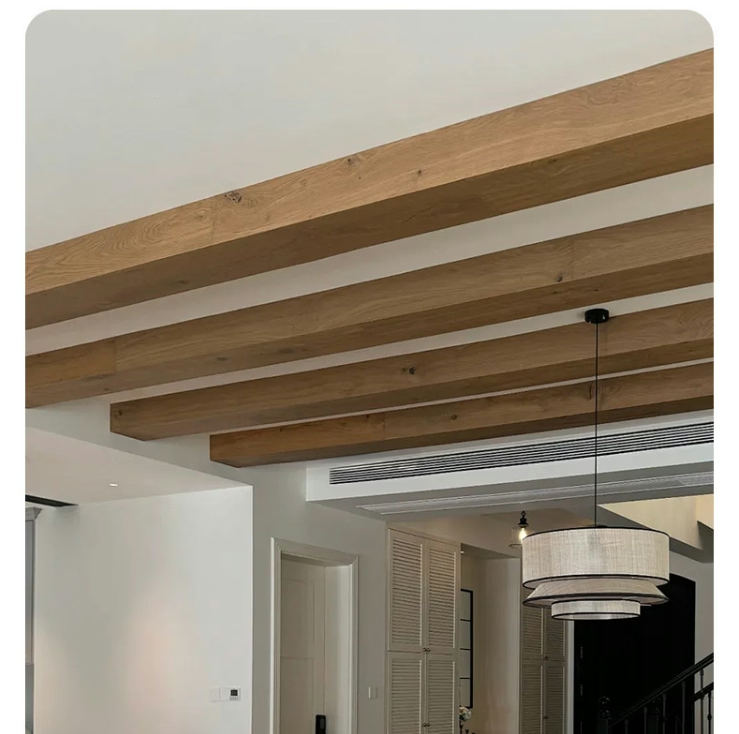
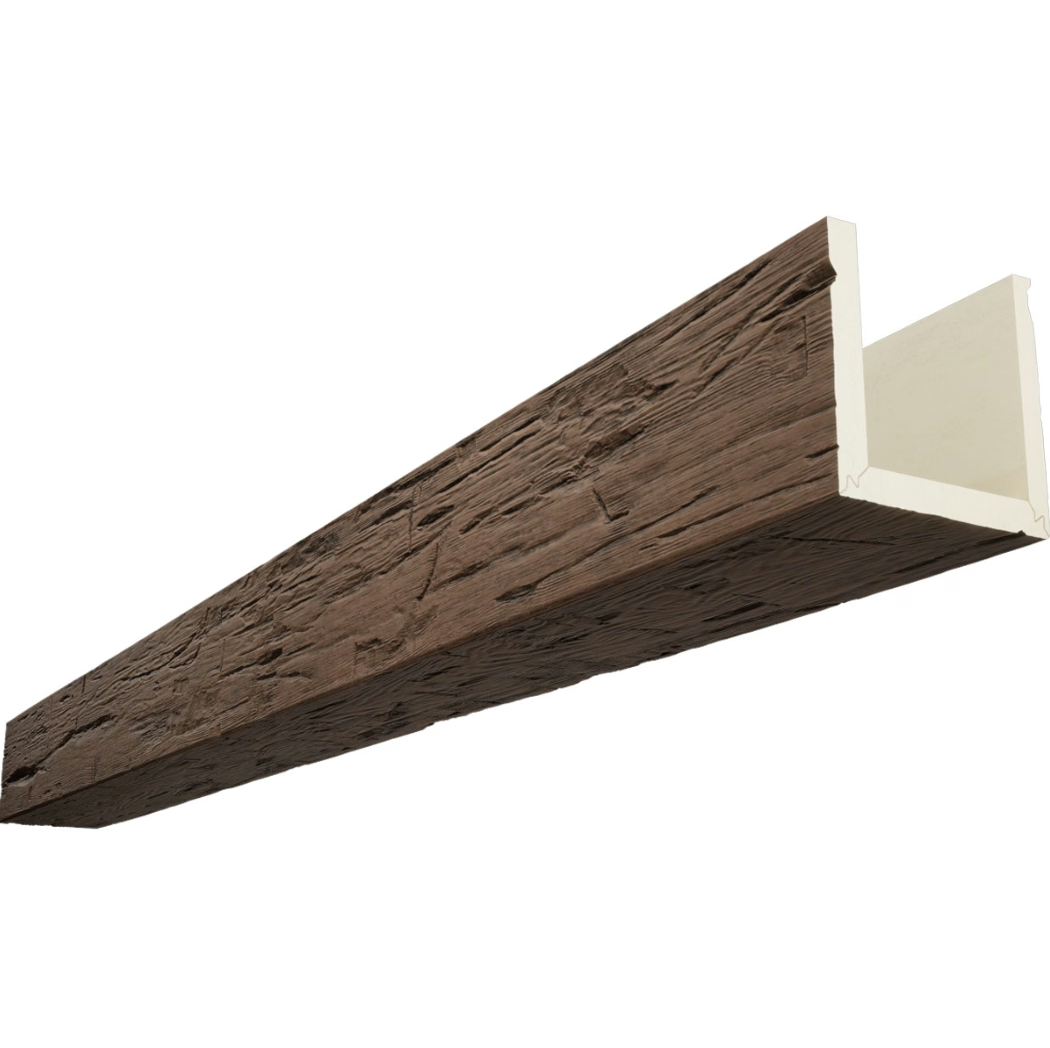
Apartment complexes age whether property owners invest in their maintenance or not. Deferred maintenance accumulates into obsolescence that drives tenant dissatisfaction and reduces rental income. Comprehensive renovations offer opportunity to update aging properties comprehensively, replacing worn finishes, outdated fixtures, and tired aesthetics with contemporary equivalents. Ceiling beam installations can transform communal spaces dramatically, but renovation logistics demand products that work with existing structures and tight construction schedules. Uniform faux wood ceiling beams address both requirements effectively.
Renovation Constraints That Shape Product Selection
Unlike new construction, renovations must work within existing conditions that cannot be altered without significant expense. Ceiling structures that were built decades ago for different purposes may not accommodate the installation methods that contemporary products assume. Support conditions vary across properties as different construction eras employed different standards. Products must adapt to these variations rather than requiring structural modification.
Resident disruption during renovations affects both satisfaction and lease renewal decisions. Construction noise and access limitations test tenant patience; projects that extend unnecessarily risk losing good residents who have alternatives. Materials that install quickly and cleanly reduce this disruption window. Faux beams that require minimal finishing work eliminate the dust, fumes, and extended schedules that painting or staining operations would create.
Budget constraints in renovation projects often prove tighter than new construction equivalents. Property owners undertaking renovation typically expect returns through increased rents, higher occupancy, or extended building service life. Every dollar spent must contribute to these outcomes; luxury materials that don't affect resident decisions represent wasted investment. Value-oriented products that deliver meaningful aesthetic impact at reasonable cost serve renovation economics better.
Common Area Transformation Opportunities
Apartment complex common areas often receive disproportionate attention in renovation budgets because these spaces set tone for entire properties. Lobbies, corridors, leasing offices, and amenity spaces all influence how prospective residents perceive the property and how current residents feel about their home choice. Ceiling beam installations in these spaces create immediate visual impact that communicates quality and care.
Lobby ceilings provide prominent display opportunities for beam installations. The first space residents and visitors encounter sets expectations for everything that follows. Beams can define functional zones within open lobby areas, add warmth to spaces that might otherwise feel institutional, and establish design themes that wayfinding signage and other elements reinforce throughout the property.
Corridor ceilings offer more modest but still significant opportunities. Long straight corridors can feel monotonous; periodic beam installations add visual interest that breaks monotony without interfering with traffic flow. The consistent appearance of uniform beams ensures that this interest appears throughout the property rather than varying unpredictably along corridor lengths.
Amenity spaces—fitness centers, business centers, community rooms, rooftop decks—benefit from beam treatments that elevate these functional areas beyond pure utility. Residents who use these spaces regularly appreciate environments that feel designed rather than simply finished. Beams contribute to this designed quality without requiring ongoing maintenance attention.

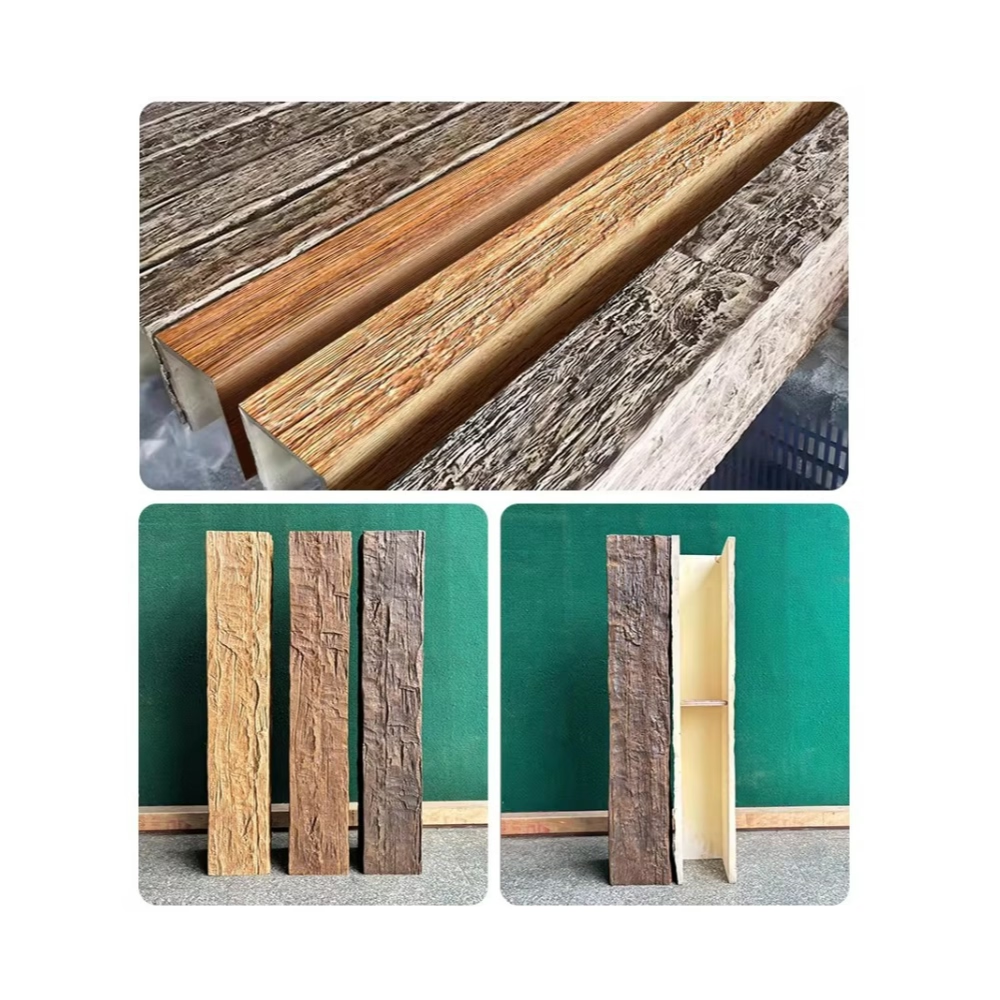
Logistics Management for Large Renovations
Coordinating material delivery for extensive renovations requires planning that accounts for storage limitations, installation sequencing, and contingency needs. Uniform faux beam products simplify this planning through their predictable characteristics.
Delivery scheduling aligns with installation progress when product dimensions, weights, and packaging are known quantities. Construction managers can plan receiving, storage, and staging based on exact specifications. The consistency of uniform products means that calculations made for early units apply to all subsequent units without adjustment.
On-site storage becomes more manageable with uniform products. Damaged pieces can be replaced with identical units from inventory rather than requiring reorders that delay work. Overage calculations become accurate because variability doesn't require additional buffer. The space needed for stored materials can be determined precisely rather than estimated conservatively.
Quantity verification at delivery catches discrepancies before they affect schedules. When every piece looks identical, missing or damaged units become obvious during unloading. New construction projects with varied natural wood pieces might not reveal shortages until installation reveals mismatches; uniform faux products expose problems immediately.
Installation Planning for Existing Structures
Renovation installations must accommodate whatever conditions exist rather than demanding ideal circumstances. Surveying existing conditions before specifying products identifies challenges that might affect installation success.
Ceiling structure locations may not align with ideal beam positioning. Joist spacing, existing mechanical systems, and structural elements create constraints that beam layouts must respect. Uniform faux beams' consistent dimensions simplify layout planning once structural conditions are documented; the unknown variables that natural wood would introduce don't complicate the process.
Support attachment requires evaluating what exists rather than what should exist. Older construction may feature ceiling systems that don't provide the attachment points that contemporary products assume. Identifying these limitations before ordering allows appropriate contingency planning rather than discovering problems mid-installation.
Clearance and access affect installation feasibility and cost. Beams that must navigate stairwells, elevators, or narrow corridors may face delivery limitations. The consistent dimensions of uniform products allow accurate clearance verification; unusual pieces of varied natural wood would be harder to evaluate in this regard.
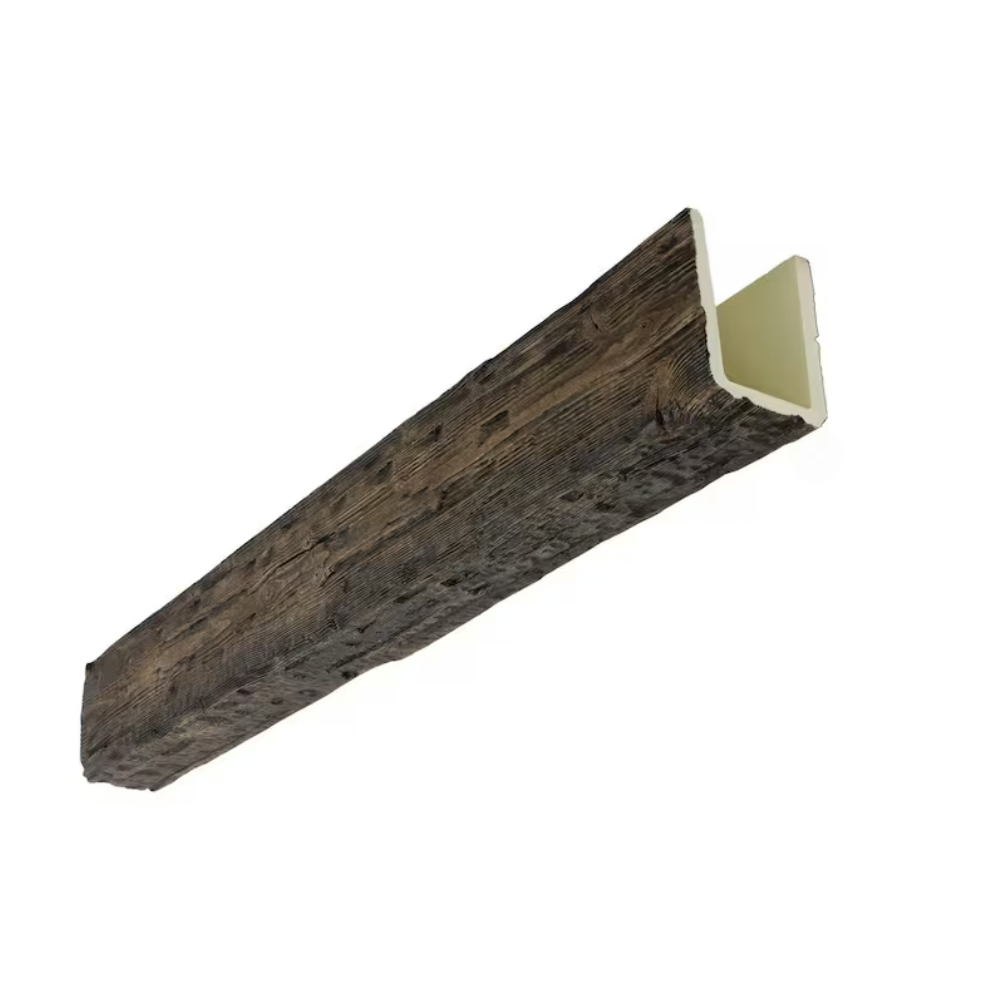
Achieving Renovation ROI
Property owners invest in renovations expecting returns that justify expenditure. Understanding how ceiling beams contribute to these returns helps justify material costs within project budgets.
Market positioning determines what renovations can reasonably expect to achieve. Luxury properties in strong markets can support premium finishes and extensive upgrades; working-class housing in weak markets may not justify significant investment. Beam installations should align with positioning strategy rather than representing either underinvestment or overbuilding.
Tenant attraction and retention metrics demonstrate renovation impact. Properties that maintain high occupancy rates and strong rental premiums demonstrate that residents perceive value justifying their choices. Tracking these metrics before and after renovation quantifies actual returns from aesthetic improvements including ceiling beams.
Operating efficiency affects long-term returns as well. Materials requiring minimal maintenance reduce ongoing operational costs. Faux beams that clean easily and maintain appearance without refinishing contribute to this efficiency. The initial material cost differential compared to cheaper alternatives may prove false economy if ongoing maintenance costs accumulate over years of service.
Technical References
ASTM standards cited in every specification
Test Data
Lab results from internal testing program
Updated 2026
Reviewed against current product specs