
Interior design has always been a conversation between tradition and innovation. When designers first began exploring faux timber beams for their projects, they discovered something remarkable: these architectural elements possess an almost chameleon-like quality that allows them to adapt seamlessly to virtually any cultural aesthetic. From the sun-baked terraces of Mediterranean villas to the minimalist sanctuaries of Japanese-inspired homes, faux timber beams have found their place as universal design companions.
The secret lies in their fundamental appeal. Wood, in its many forms, has been a building material across virtually every culture throughout human history. When we incorporate faux timber beams into interior spaces, we're tapping into something deeply primal—the connection to nature, the warmth of organic materials, and the timeless beauty that no synthetic alternative can truly replicate. However, genuine timber comes with limitations: weight restrictions, moisture sensitivity, installation complexity, and cost prohibitive for many applications. Universal faux timber beams solve these challenges while preserving the aesthetic essence that makes wood so desirable.
Adapting to Mediterranean and Spanish Colonial Styles
Mediterranean architecture celebrates warmth, earthiness, and indoor-outdoor flow. Spanish Colonial, Italian Renaissance, and Greek Island-inspired homes often feature exposed wooden beams as signature design elements. The challenge with authentic timber in these settings is that genuine wood beams typically require substantial structural support and can suffer in humid coastal environments. Faux timber beams manufactured from polyurethane solve both problems elegantly.
A designer working on a Spanish Colonial revival home in coastal California recently specified universal faux timber beams throughout the main living areas. The client wanted the authentic look of aged oak beams without the maintenance concerns that genuine timber would present in a seaside location. The installation team placed the beams in ceiling coffers and as exposed structural mimics, creating visual depth and authenticity that impressed even the most discerning traditionalists. What made this project successful was the beam selection—specifically choosing pieces with appropriate grain patterns and color variations that mirrored the weathered patina typical of century-old Mediterranean homes.
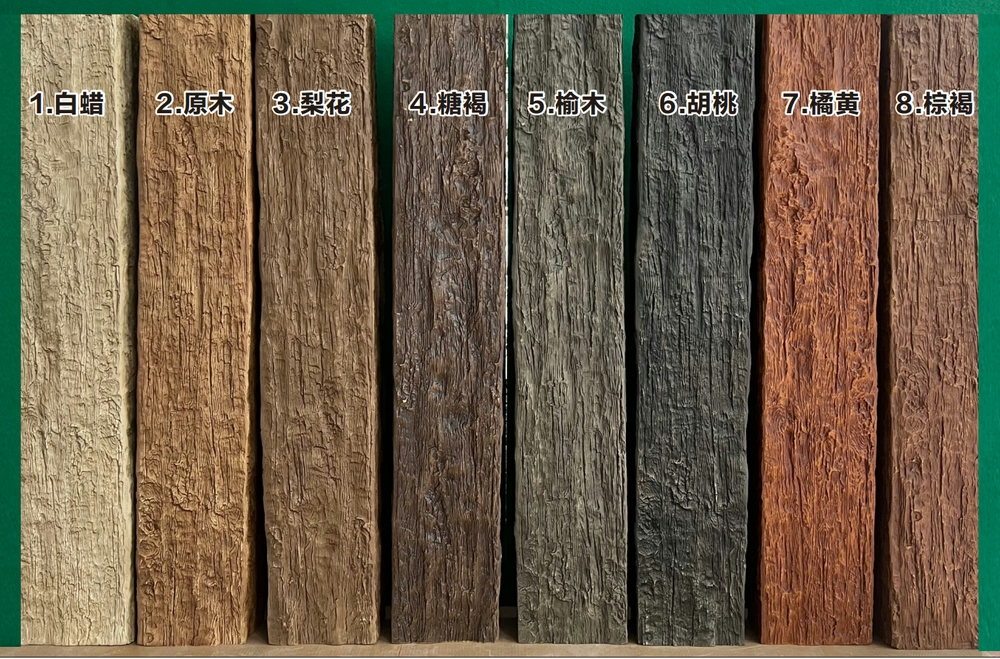
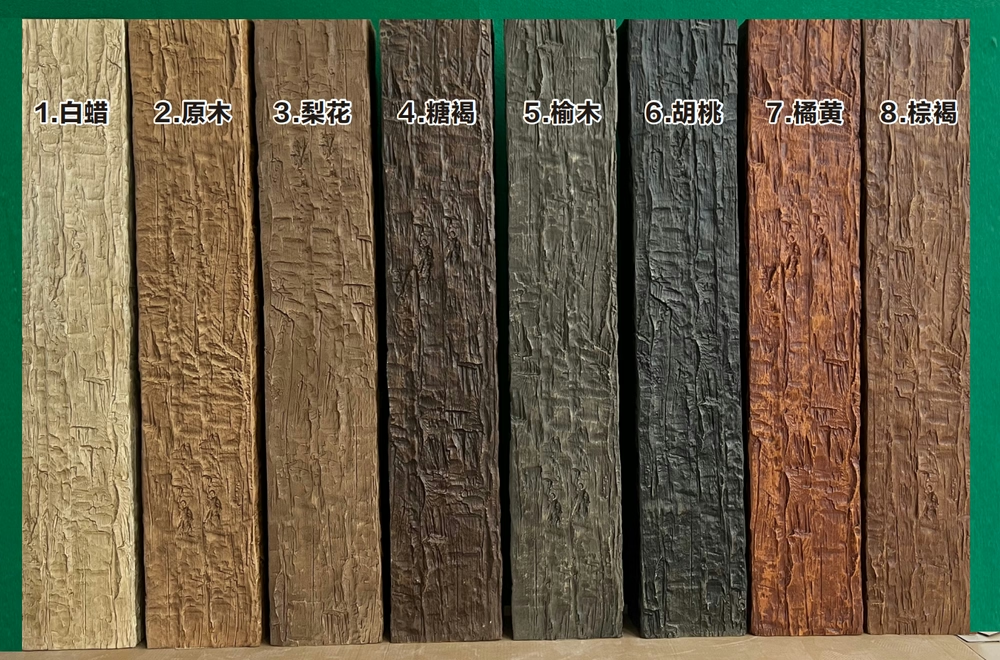
The versatility of universal faux timber beams becomes apparent when considering how they interact with other design elements. Spanish Colonial interiors typically feature terracotta tiles, wrought iron fixtures, and warm plaster walls. Faux beams in honey-toned finishes complement these materials beautifully while standing up to the temperature fluctuations and occasional moisture exposure that such environments present. Unlike real timber, polyurethane beams won't warp, crack, or attract the wood-boring insects that plague genuine structural elements in warmer climates.
Bridging Nordic Simplicity and Japanese Minimalism
Perhaps no design traditions seem more different at first glance than Scandinavian minimalism and Japanese Zen aesthetics. Yet both share core principles: reverence for natural materials, emphasis on craftsmanship, and the belief that spaces should promote calm and intentional living. Universal faux timber beams serve as perfect bridges between these seemingly opposite philosophies.
In Nordic design, timber has always held sacred importance. The same forests that provided shelter also inspired deep cultural connections to wood as a material. Contemporary Scandinavian interiors often feature light-toned woods, clean lines, and purposeful restraint. When designers incorporate faux timber beams into these spaces, they typically choose lighter finishes—perhaps birch or ash模拟—that echo the natural palette without overwhelming the carefully curated environment.
Japanese-influenced spaces present a different but equally fascinating application. Here, beams might appear in entryways, as part of sliding door frames, or as ceiling treatments in tea rooms. The key is restraint and proportion. Universal faux timber beams allow designers to achieve the visual weight and presence of traditional exposed beam construction without the massive scale that genuine timber would require. A single elegant beam can define a space, create visual rhythm, and honor traditional aesthetics while remaining contemporary in its material composition.
Global Applications in Commercial Spaces
The cross-cultural appeal of faux timber beams extends powerfully into commercial design. Hotels, restaurants, and retail environments increasingly seek design elements that feel simultaneously timeless and globally resonant. Universal faux timber beams provide exactly this—warmth that transcends specific cultural references while remaining sophisticated enough for luxury applications.
Consider a boutique hotel chain seeking design coherence across properties in London, Dubai, and Singapore. Each location must respect local sensibilities while maintaining brand identity. Universal faux timber beams offer a solution: the same beam profiles can work in the London property's industrial-chic aesthetic, the Dubai location's modern Arabic interpretation, and the Singapore hotel's tropical contemporary setting. The beams adapt through finish selection, lighting integration, and surrounding design elements while providing consistent structural visual language.
Restaurant designers face similar challenges. A global restaurant brand opening locations across multiple continents needs design flexibility that respects regional preferences while maintaining recognizable brand identity. Faux timber beams serve as unifying elements that guests immediately recognize as warm and inviting regardless of whether the cuisine is Italian, Japanese, or Mexican. The beams create acoustic benefits in dining environments—softening sound reflections that can make conversations difficult—while providing the aesthetic warmth that makes guests want to linger.
Technical Considerations for Global Installation
Understanding how universal faux timber beams perform across different climates and building codes requires attention to several technical factors. The polyurethane material composition offers inherent advantages: resistance to moisture, immunity to insect damage, and dimensional stability that genuine timber cannot match. However, proper installation remains crucial regardless of location.
Building codes vary significantly across regions, and faux timber beams typically serve as decorative elements rather than structural ones. This distinction actually simplifies compliance in many jurisdictions, as non-load-bearing decorative elements often face fewer regulatory requirements than their structural counterparts. Still, working with local contractors familiar with regional codes ensures smooth installations that pass inspection and satisfy building officials.
Climate considerations affect both material selection and installation methods. In regions with extreme temperature variations, polyurethane beams offer superior performance compared to genuine timber, which can expand, contract, and crack under such conditions. The material's consistent density and composition mean predictable behavior regardless of environmental stresses. For humid tropical environments, the moisture resistance of polyurethane prevents the rot and mold issues that plague authentic timber in such conditions.

Making Cross-Cultural Design Accessible
Perhaps the most exciting aspect of universal faux timber beams is their democratizing effect on interior design. Historically, the warm, rustic authenticity of exposed timber construction was available only to those with substantial budgets for genuine materials and the structural requirements they demanded. Wealthy estate owners, historic preservation projects, and commercial establishments with significant construction budgets could achieve these looks. Everyone else made compromises.
Faux timber beams change this equation fundamentally. The material's light weight means that virtually any ceiling structure can support installation—no structural reinforcement required. The manufactured consistency means predictable results without the frustrating variations that genuine timber presents. The material cost, while not negligible, represents a fraction of comparable genuine wood elements. Design possibilities expand dramatically when these practical advantages combine with aesthetic versatility.
For interior designers working with diverse client bases across global markets, universal faux timber beams represent genuine creative liberation. The same product family can serve a budget-conscious DIY enthusiast in Ohio, a luxury apartment developer in Shanghai, and a heritage hotel renovation in Portugal. Each project receives appropriate specification—the material remains constant while application varies. This consistency benefits everyone in the supply chain while expanding creative possibilities for designers and homeowners alike.
The universal nature of these beams isn't merely metaphorical. It represents genuine material properties—light weight, consistent quality, versatile aesthetics, and practical durability—that serve real human needs across cultural boundaries. When we speak of cross-cultural design applications, we're really celebrating the human desire for warmth, beauty, and connection to natural materials that transcend any single tradition. Universal faux timber beams make this connection accessible to everyone, everywhere.
Technical References
ASTM standards cited in every specification
Test Data
Lab results from internal testing program
Updated 2026
Reviewed against current product specs


