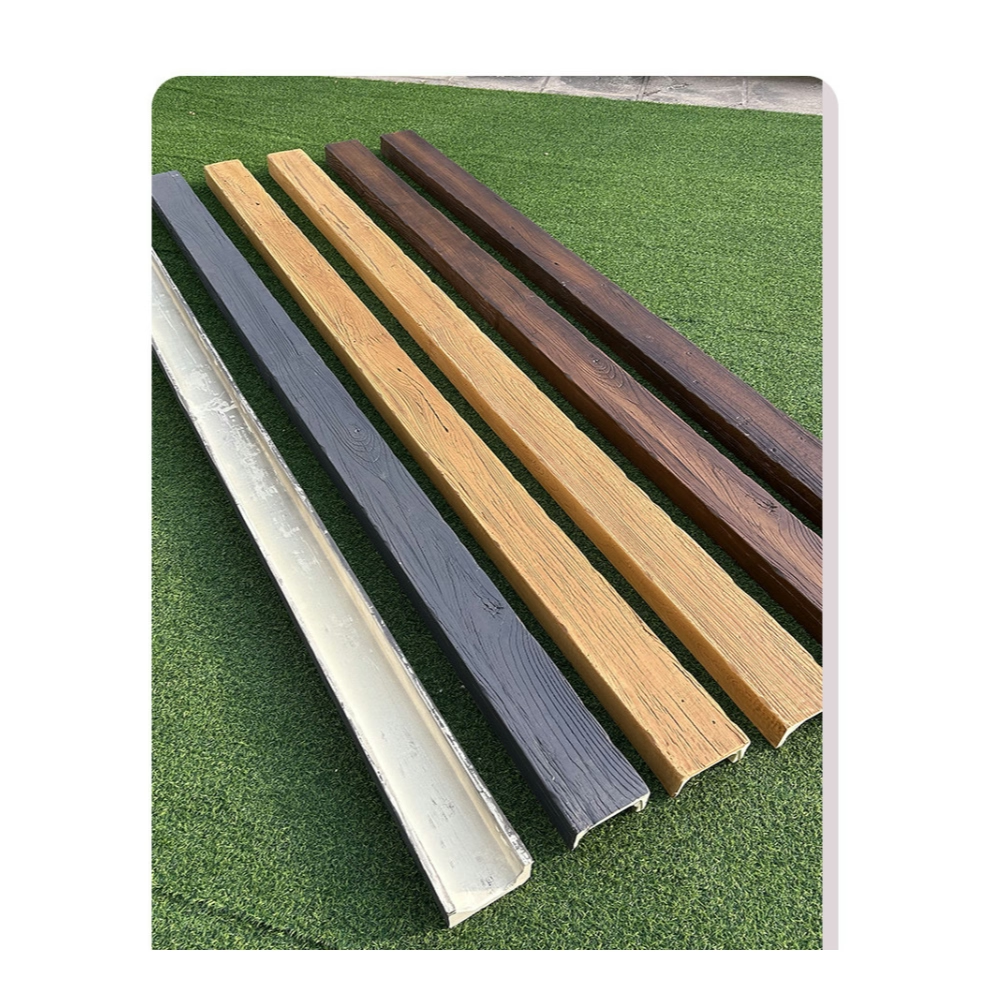
Ceiling renovation projects benefit enormously from standardization. When dimensions are consistent and predictable, planning becomes straightforward, ordering simplifies, and installation proceeds without the custom fabrication that adds cost and delay. Standard size PU faux beams capitalize on these advantages, offering ready-made options that fit the vast majority of residential and commercial ceiling applications without requiring special orders or custom manufacturing.
The construction industry has relied on standardization for centuries because it works. Standard dimensions enable predictable performance, simplify supply chains, and reduce costs through manufacturing efficiency. When beam dimensions follow established patterns, designers and homeowners can specify with confidence while installers can proceed without measuring delays. Universal standard size beams embody these principles, offering the most commonly needed dimensions as off-the-shelf products available for immediate installation.
Common Residential Beam Dimensions
Most residential ceiling applications fall within predictable dimension ranges that standard beam products address effectively. Understanding these common sizes helps homeowners and designers select appropriate products without extensive custom work.
Depth represents the most important dimension for visual impact. Standard depth options typically range from four inches to twelve inches, with six, eight, and ten inches covering the majority of applications. Shallower beams—four to six inches—suit contemporary spaces and rooms with limited overhead clearance. Medium depths—six to eight inches—work in standard residential applications where substantial visual presence without overwhelming scale is desired. Deep beams—ten inches and above—create dramatic impact in large rooms or where strong architectural statements are intended.
Width affects both visual weight and the appearance of authenticity. Standard width options typically span from three inches to twelve inches. Narrower widths—three to five inches—create delicate, refined appearances appropriate for contemporary settings. Medium widths—six to eight inches—balance presence with proportion, working well in most residential applications. Wide beams—ten inches and above—suggest substantial structural members, appropriate for rustic or traditional aesthetics where authentic-looking heavy timber is desired.
Length availability determines how beams can be installed. Standard lengths typically range from eight feet to sixteen feet, with twelve and fourteen feet covering the majority of applications. For longer spans, beams can be joined using splice plates or other techniques that create seamless appearance. Understanding available standard lengths helps plan installation layouts that minimize waste and optimize visual effect.
Standard Profile Styles
Beyond basic dimensions, standard size beams come in various profile styles that suit different aesthetic intentions. These profiles capture the visual characteristics of genuine timber while offering consistency that natural wood cannot match.
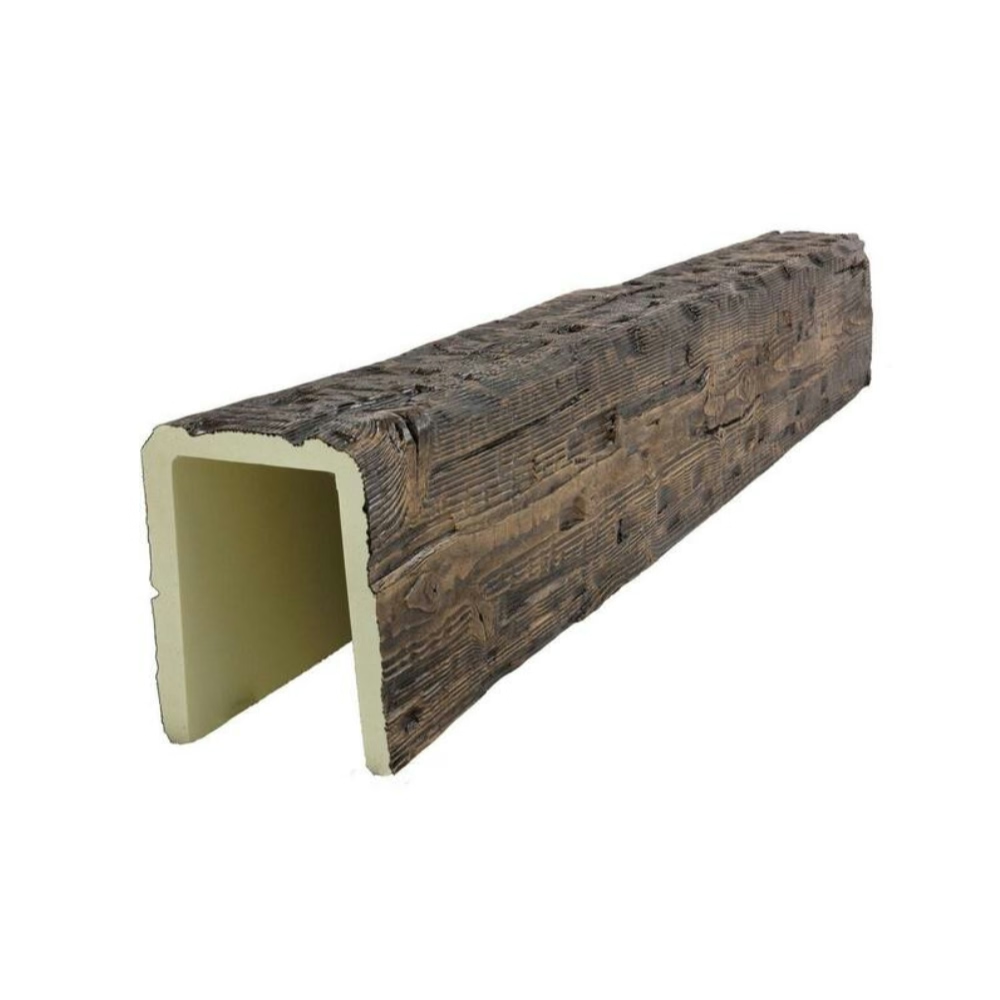
Traditional beam profiles feature substantial proportions with visible wood grain and natural variations. These styles suit rustic, farmhouse, and traditional interiors where authentic timber appearance is desired. The profiles might include curved undersides, varied edge treatments, and surface textures that suggest genuine aged timber.
Contemporary profiles present cleaner lines and more geometric forms. These styles suit modern and transitional interiors where the warmth of wood combines with minimalist aesthetic. Contemporary profiles typically feature straighter edges, more consistent surfaces, and less pronounced texturing than traditional styles.
Industrial profiles emphasize substantial depth and width with minimal detailing. These styles suit converted loft spaces, industrial-inspired interiors, and applications where beams should suggest heavy structural members. Industrial profiles often feature very square proportions and minimal surface treatment beyond color application.

Installation Efficiency Advantages
Standard size beams install more efficiently than custom products for several reasons that affect project timelines and costs. Understanding these advantages helps homeowners appreciate the value that standardization provides.
Planning efficiency starts before installation begins. With standard sizes, designers and homeowners can visualize completed projects accurately using product specifications alone. No waiting for samples, no custom drawings to review, no uncertainty about final appearance. The product dimensions and appearance are known quantities that inform decisions without requiring leap-of-faith commitments.
Ordering simplicity follows from standard availability. Most suppliers maintain inventory of standard size beams, enabling immediate shipment without manufacturing lead times. Expedited delivery becomes possible when products don't require custom production. For time-sensitive projects, this availability proves invaluable.
Installation speed increases with standard dimensions. When beam sizes match ceiling spacing exactly, mounting proceeds without modification. When beams must be cut to fit, installation time multiplies and waste increases. Standard sizes eliminate these complications, enabling faster installation that reduces labor costs and project disruption.
Quality consistency ensures predictable results. Each standard beam matches its specifications precisely, meaning the first beam installed looks exactly like the last. This consistency simplifies quality control during installation and ensures the completed project matches design expectations throughout.

Common Application Scenarios
Standard size beams serve most renovation scenarios effectively when properly selected. Understanding typical applications helps ensure appropriate specification.
Parallel beam installations represent the most common application for standard beams. Beams running in one direction across a ceiling create visual rhythm and architectural interest without complex coordination. Standard sizes work perfectly for these installations because the visual effect depends on beam spacing and proportion rather than exact dimensional matching to existing structure.
Cross-beam installations place beams perpendicular to ceiling joists or rafters, creating grid patterns that define ceiling sections. These installations work well in larger rooms or where multiple functional zones require visual separation. Standard sizes accommodate cross-beam installations effectively because the perpendicular orientation allows spacing adjustment to match available beam lengths.
Accent beam applications use single beams or small groups to create focal points. A beam crossing above a fireplace, dining table, or bed creates visual anchoring that organizes furniture and establishes hierarchy. Standard beams work excellently for these applications because the emphasis falls on visual presence rather than dimensional precision.
Coffer and tray ceiling enhancement uses standard beams to outline or cross recessed ceiling sections. These applications benefit from standard sizing because the beams follow existing architectural features that typically conform to standard construction dimensions.
Matching Standard Beams to Room Characteristics
Successful beam installation requires matching beam dimensions to room characteristics. Standard sizes provide excellent starting points, but understanding how dimension selection affects visual outcomes helps ensure satisfying results.
Room size and ceiling height work together to determine appropriate beam dimensions. Large rooms with generous ceiling heights can accommodate substantial beams that would overwhelm smaller spaces. Standard size ranges cover this variation, but selection should consider the specific proportions of the target room.
Furniture scale influences beam dimension choice. Rooms featuring large-scale furniture—substantial sectionals, oversized dining tables, extensive case goods—benefit from proportionally substantial beams that create visual balance. Rooms with more delicate furniture might feel overwhelmed by oversized beams, suggesting narrower standard options.
Existing architectural features constrain beam dimension selection. Windows, doors, and built-in elements might limit clearance or create visual conflicts with beam placement. Standard beams can be positioned to work around these features, but dimensional awareness during selection prevents problems during installation.
Cost Considerations
Standard size beams typically cost less than custom fabricated alternatives for reasons that benefit both suppliers and buyers. Understanding these cost dynamics helps homeowners appreciate the value proposition that standardization provides.
Manufacturing efficiency reduces per-unit costs for standard products. When suppliers produce consistent dimensions repeatedly, production processes optimize, waste decreases, and quality improves. These efficiencies translate to lower prices that customers receive.
Inventory availability eliminates premium pricing for custom orders. Custom fabrication typically carries additional charges for setup, engineering, and production runs that serve limited markets. Standard products avoid these premiums entirely, offering consistent quality at standard pricing.
Shipping efficiency favors standard dimensions. When beams fit standard packaging and optimize truck or container loading, transportation costs decrease. These savings flow through to customer pricing in ways that custom dimensions cannot achieve.
Installation cost savings compound these material advantages. Faster installation with standard beams reduces labor expenses. Fewer complications mean less chance of unexpected costs. Predictable outcomes enable accurate budgeting that custom work rarely provides.
When Custom Sizes Become Necessary
Despite the advantages of standard sizes, some applications genuinely require custom dimensions. Recognizing when customization becomes necessary helps homeowners avoid frustration while appreciating when standards suffice.
Unusually small rooms might require narrower beams than standard options provide. If a space measures only eight feet across and beams must leave adequate clearance, standard minimum widths might prove too substantial. Custom fabrication can provide narrower options that standard production doesn't offer.
Extremely large rooms sometimes require deeper beams than standard maximums provide. When ceiling heights exceed twelve feet or room dimensions create expectations for correspondingly substantial beams, custom production might become necessary to achieve appropriate proportions.
Non-standard spacing sometimes creates requirements for specific lengths that standard inventory doesn't cover. While beams can be joined or cut to size, certain applications benefit from single-piece installation that custom lengths enable.
Architectural features sometimes constrain beam selection in ways that standard dimensions cannot accommodate. Windows that project into ceiling space, unusual roof angles, or unique structural elements might require custom fabrication to achieve clean, professional results.
For the majority of ceiling renovation projects, however, standard size beams provide exactly what's needed: consistent quality, predictable performance, reasonable cost, and efficient installation. These benefits make standard beams the smart default choice that custom work supplements rather than replaces.
Technical References
ASTM standards cited in every specification
Test Data
Lab results from internal testing program
Updated 2026
Reviewed against current product specs