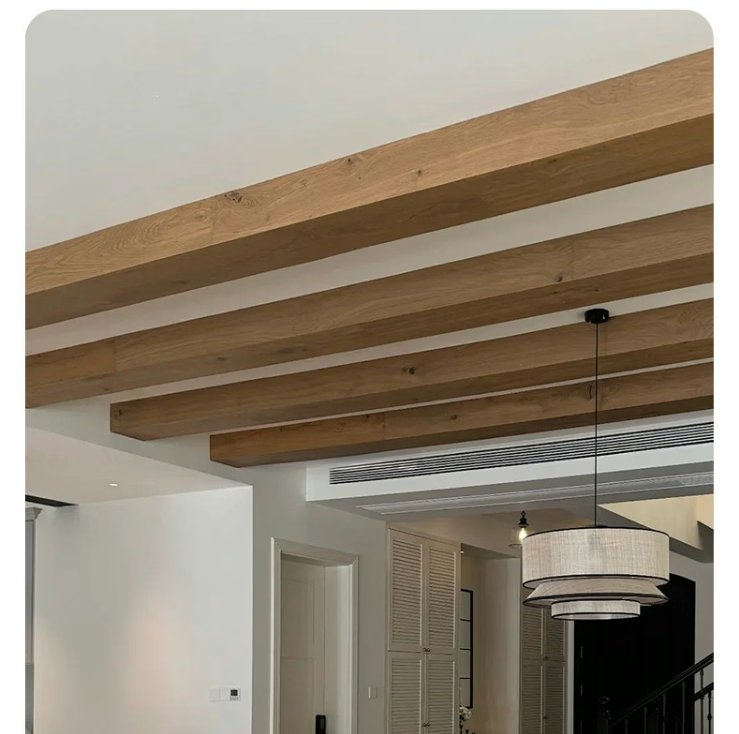
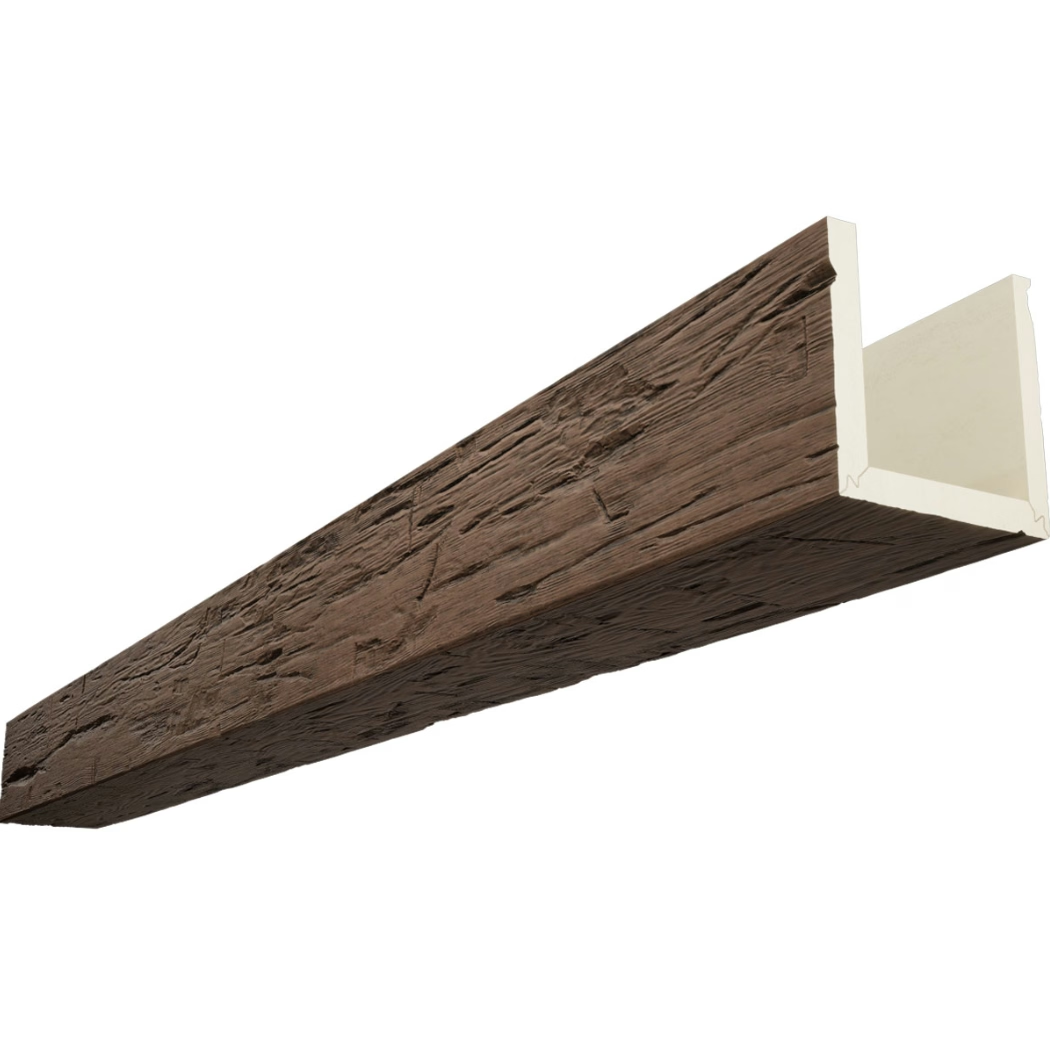
The dropshipping model has transformed how retailers approach inventory management, and this business approach works exceptionally well for oversized home improvement products like faux wood beams. By partnering with USA-based fulfillment centers, e-commerce businesses can offer extensive beam catalogs without the logistical challenges of maintaining warehouse space for these bulky items.

Faux wood beams present unique challenges that make dropshipping particularly attractive compared to other home improvement categories. The dimensional nature of beams requires specialized storage, handling equipment, and shipping arrangements that most small retailers cannot justify. A single beam might measure twelve feet long and weigh thirty pounds, creating storage and fulfillment complexities that scale poorly with inventory volume.
How Dropshipping Faux Beams Works
The dropshipping arrangement connects online retailers directly with fulfillment partners who maintain inventory, process orders, and arrange shipping to end customers. When a customer places an order through your store, you forward the order details to your fulfillment partner, who picks, packs, and ships the product while you retain the margin between wholesale and retail pricing.
This model eliminates the capital requirements of inventory purchase, the ongoing costs of warehouse space, and the operational burden of order fulfillment. Your business focuses on customer acquisition, marketing, and sales while the fulfillment partner handles the physical handling of heavy, awkward products. The partnership structure enables rapid scaling without proportional increases in operational complexity.
USA-based fulfillment becomes crucial for customer satisfaction in the home improvement market. Customers purchasing beams for renovation projects often need products within days rather than weeks. Local fulfillment enables two-day or even next-day delivery for many orders, meeting expectations established by major e-commerce platforms. This speed advantage often justifies premium pricing that improves profit margins significantly.
Partner Program Requirements and Structure
Most established dropshipping programs require applicants to demonstrate legitimate business operations before granting access to their product catalogs and wholesale pricing. Basic requirements typically include a business license, active e-commerce presence, and realistic order volume projections. Some programs offer tiered membership structures where higher wholesale prices unlock access to deeper discounts as order volumes increase.
Integration capabilities vary significantly between fulfillment partners. Premium programs offer direct API connections that automate order transmission, inventory updates, and shipping notification generation. These integrations reduce manual processing errors and enable real-time inventory visibility across your sales channels. Simpler programs might require email-based order submission, which works adequately for lower-volume operations but scales poorly as order counts increase.
Minimum order requirements and exclusivity provisions merit careful review before committing to any partnership. Some programs require monthly minimum purchases to maintain active status, while others impose geographic restrictions that prevent you from selling to customers outside specific regions. Understanding these constraints helps you select partners whose requirements align with your business model and growth objectives.
Financial Considerations and Margin Optimization
The economics of dropshipping faux beams depend heavily on product category, customer segment, and competitive positioning. Standard profile beams with mass-market appeal typically carry lower margins but higher turnover rates. Custom finishes, oversized dimensions, and specialty profiles offer better per-unit margins but appeal to narrower customer bases.
Shipping cost structure represents the most significant variable in dropshipping profitability. Faux beams are inherently expensive to ship due to their length and fragility. Fulfillment partners incorporate shipping costs into their pricing models in various ways, including flat-rate per-order fees, dimensional weight calculations, or pass-through carrier rates. Understanding these cost structures enables accurate margin calculations and informed pricing decisions.
Some dropshippers successfully differentiate through bundled offerings that combine beams with complementary products like mounting hardware, finishing supplies, or installation accessories. These bundles increase average order value and provide opportunities to capture margin on accessories even when beam margins prove thin. Effective bundling requires product knowledge and genuine utility rather than arbitrary combinations that customers perceive as artificial.

Operational Best Practices for Success
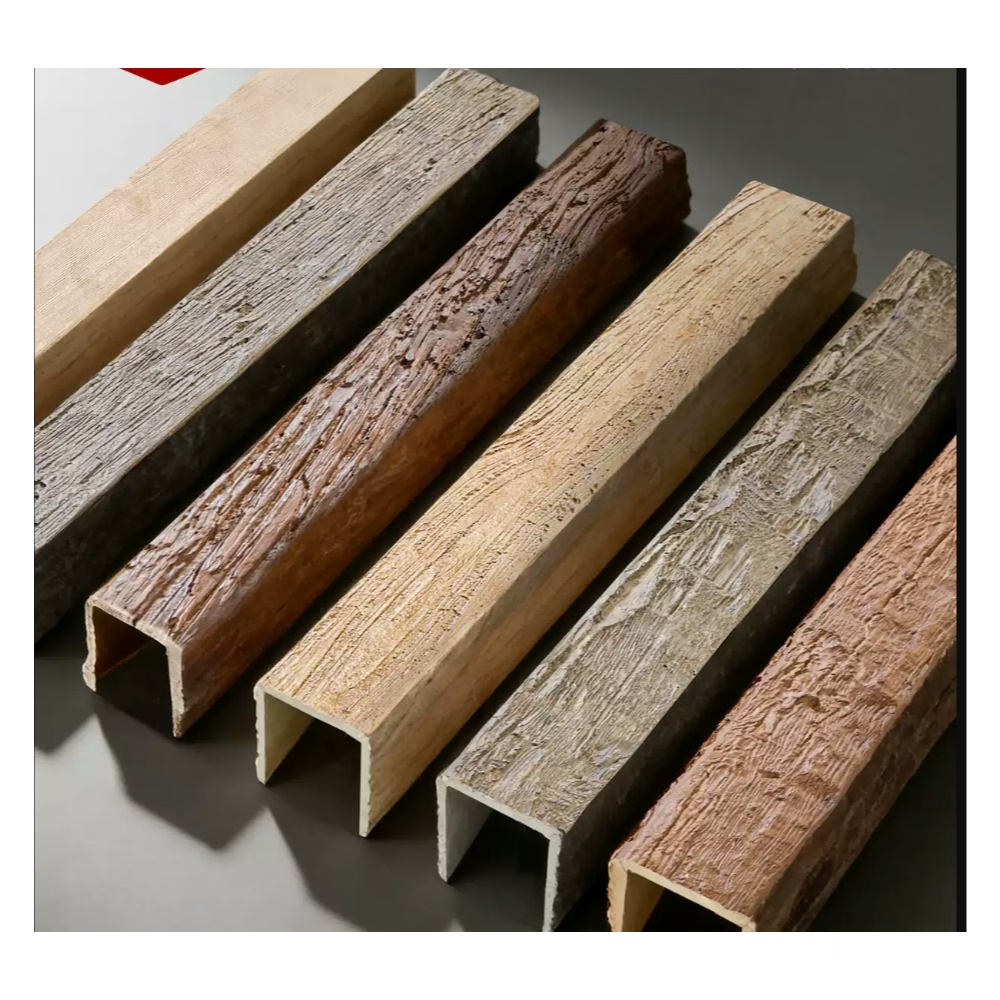
Product photography and detailed specifications prove essential for online sales of dimensional products. Unlike small items that customers can easily assess, beams require substantial visual information to build purchasing confidence. Invest in high-quality images showing texture details, color accuracy, and realistic scale references. Include measurements alongside common objects to help customers visualize the product in their spaces.
Customer education content distinguishes successful beam retailers from those struggling with high return rates and negative reviews. Since most customers lack experience ordering large building materials online, providing clear installation guides, mounting recommendations, and care instructions reduces post-purchase confusion. Video content demonstrating beams in realistic settings proves particularly effective for building purchase confidence.
Return policy negotiation with fulfillment partners can significantly impact your operational risk. Standard return periods might not accommodate the timelines customers experience when projects encounter delays. Extended return windows for unused items, restocking fee structures, and return shipping cost allocation all merit explicit discussion before partnership activation.
Building a Sustainable E-commerce Business
Long-term success in dropshipping requires moving beyond simple product arbitrage toward genuine value creation for customers. This might involve curated product selection that reflects design expertise, exceptional customer service that guides purchasing decisions, or installation resources that help customers successfully complete their projects. These differentiators justify premium pricing and build customer loyalty that transcends pure price competition.
Analytics and customer feedback loops enable continuous improvement of your product assortment and operational processes. Track which beam styles, finishes, and dimensions generate the most interest and highest conversion rates. Collect post-purchase feedback to identify common questions or concerns that might indicate opportunities for better product information or improved specifications.
Scaling your dropshipping operation requires systematic approaches to vendor management, customer service, and marketing optimization. As order volumes increase, manual processes that worked adequately at lower volumes become bottlenecks. Invest in automation tools that streamline order processing, integrate with accounting systems, and enable personalized customer communication at scale.
The dropshipping model offers compelling advantages for businesses entering the faux wood beam market without significant capital investment. USA-based fulfillment partnerships provide the infrastructure needed to deliver excellent customer experiences while keeping operational complexity manageable. Success requires careful partner selection, operational excellence, and genuine focus on customer needs that extend well beyond the initial sale.
Technical References
ASTM standards cited in every specification
Test Data
Lab results from internal testing program
Updated 2026
Reviewed against current product specs