Commercial building projects face stringent fire safety requirements that influence every material selection decision. Faux wood beams used in hotels, restaurants, offices, and public facilities must meet specific fire performance standards that ensure occupant safety while delivering the aesthetic warmth that natural wood provides. Understanding Class A fire ratings and their implications for beam specification helps architects and building professionals navigate these requirements effectively.

The Class A fire rating represents the highest classification for building material flame spread and smoke development performance. Materials achieving this rating limit flame spread across their surfaces, produce minimal smoke when exposed to fire, and demonstrate the ability to withstand fire exposure without significant structural degradation. These performance characteristics make Class A materials appropriate for high-occupancy commercial applications where fire safety remains paramount.
Understanding Fire Rating Standards
ASTM E84, commonly known as the Steiner tunnel test, establishes the standard methodology for measuring building material fire performance in the United States. The test exposes material samples to a controlled flame environment while measuring flame spread distance and smoke development index. Materials receive ratings based on these measurements, with Class A materials achieving flame spread indexes below 25 and smoke development indexes below 450.
The flame spread index measures how far flames travel across a material surface during the test duration. Lower numbers indicate better performance, with Class A requiring flame spread indexes at or below 25. For comparison, red oak hardwood flooring typically registers around 100 on this scale, illustrating why many natural wood products cannot achieve Class A ratings without significant chemical treatment.
Smoke development measurements assess how much smoke a material produces when exposed to fire conditions. High smoke production can pose significant dangers to building occupants during fires, making low smoke development critical for safe evacuation. Class A materials must demonstrate smoke development indexes below 450, ensuring visibility remains adequate for emergency egress.
Testing and Certification Requirements
Legitimate fire ratings require testing by accredited laboratories operating under established quality assurance protocols. Organizations like Underwriters Laboratories, Intertek, and similar testing agencies maintain the equipment and expertise needed to conduct ASTM E84 testing accurately. Products claiming fire ratings should provide documentation from accredited testing laboratories.
Test reports include detailed information about the specific product tested, including formulation, density, thickness, and surface configuration. Since fire performance can vary significantly based on these factors, the tested product must match the commercially available product for the rating to apply. Third-party certification programs verify ongoing production consistency to ensure products continue meeting tested specifications.
Building code compliance often requires documentation of fire ratings for materials used in commercial construction. Architects and contractors should maintain fire rating certificates as part of project documentation, available for inspector review during construction and for building management after occupancy. Missing or inadequate documentation can delay project approval or trigger expensive remediation requirements.
Advantages of Polyurethane for Fire Safety
Polyurethane formulations can be engineered to achieve excellent fire performance characteristics. Additive packages called flame retardants interrupt the combustion process, reducing flame spread and smoke production. Modern flame retardant technologies achieve Class A ratings while avoiding the environmental and health concerns associated with older chemical formulations.
The manufacturing process for polyurethane beams allows consistent incorporation of flame retardant additives throughout the material. Unlike surface treatments that might wear away over time, integrated flame retardants maintain fire performance throughout the product lifecycle. This consistency provides confidence that fire safety performance remains stable regardless of surface wear or age.
Structural consistency of manufactured polyurethane also supports reliable fire performance. Natural wood products vary in density, moisture content, and grain orientation, all of which can affect fire behavior. Factory-controlled production of polyurethane beams ensures consistent density and composition that translates to predictable fire performance across production batches.


Commercial Application Scenarios
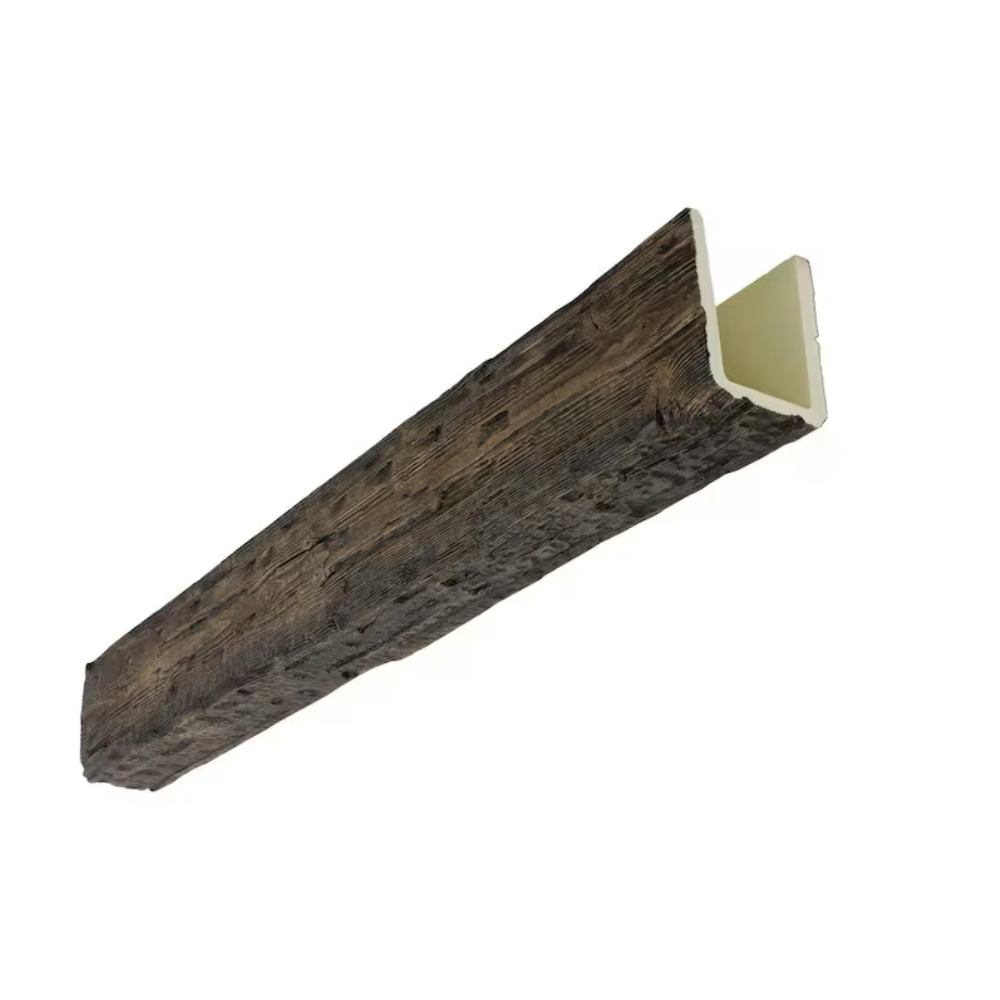
Hospitality venues including hotels, resorts, and restaurants frequently specify faux wood beams for aesthetic enhancement of lobbies, ballrooms, and dining spaces. Fire-rated products enable these installations while meeting insurance requirements and building codes that regulate public assembly spaces. The warmth and character that wood-look beams provide supports brand positioning and guest experience objectives.
Office buildings and corporate campuses increasingly incorporate biophilic design principles that emphasize natural materials and organic aesthetics. Fire rated faux beams allow these design approaches in open office areas, conference centers, and common spaces without compromising fire safety. The lightweight nature of polyurethane also reduces structural loading compared to genuine timber, potentially reducing construction costs.
Healthcare facilities face unique fire safety requirements due to occupant vulnerability and the presence of medical equipment. Faux wood beams in hospital lobbies, waiting areas, and administrative spaces create welcoming environments while meeting the strict fire performance requirements that protect vulnerable populations. The cleanable surface of polyurethane also supports the stringent hygiene requirements typical of healthcare environments.
Code Compliance and Specification
International Building Code (IBC) requirements for interior finish materials vary based on occupancy classification and building location. Most commercial occupancies require Class A or Class B ratings for ceiling finishes in egress paths and assembly spaces. Understanding the specific requirements applicable to your project ensures correct product specification from the outset.
Life safety codes beyond the IBC may impose additional requirements depending on building use and occupancy patterns. Assembly occupancies with high occupant loads, healthcare facilities with sleeping rooms, and educational buildings with young occupants often face stricter requirements than standard commercial occupancies. Professional fire protection engineering consultation helps identify all applicable requirements for complex projects.
Specification documents should clearly identify fire rating requirements and reference the applicable testing standard. Including specific test agency requirements and acceptable product alternatives provides clarity for bidding contractors while ensuring code compliance. Vague specification language creates interpretation risks that might result in non-compliant installations.
Professional Installation for Fire Safety
Proper installation maintains fire performance characteristics throughout the life of the building. Gaps, joints, and penetrations in fire-rated assemblies can compromise overall fire performance even when individual materials meet rating requirements. Professional installers understand how to maintain fire continuity across beam installations and adjacent building elements.
Attachment methods and hardware selection influence fire performance in subtle ways. Metal mounting hardware conducts heat differently than wood, potentially creating thermal bridges that affect adjacent materials. Adhesive selection for commercial applications should consider fire performance characteristics in addition to bonding strength. Documentation of installation materials and methods supports compliance verification.
Maintenance practices should preserve fire performance throughout the building lifecycle. Repainting or refinishing beams with surface treatments might affect fire ratings if the applied materials have not been tested in combination with the beam substrate. Cleaning methods should avoid degradation of surface coatings that might influence fire behavior. Establishing maintenance guidelines during specification ensures ongoing compliance.
USA-manufactured Class A fire rated faux wood beams provide the aesthetic warmth of timber while meeting the strict fire safety requirements that protect occupants in commercial buildings. Careful specification, professional installation, and appropriate maintenance ensure these products deliver lasting beauty and reliable fire performance throughout the life of commercial spaces.
Technical References
ASTM standards cited in every specification
Test Data
Lab results from internal testing program
Updated 2026
Reviewed against current product specs

