The American construction and renovation market continues to embrace faux wood beams as a cost-effective alternative to traditional timber. For businesses seeking reliable supply chains, working directly with original equipment manufacturers offers significant advantages that ripple through every aspect of operations.

When you eliminate intermediaries from the procurement process, you gain direct access to the people who actually craft these architectural elements. Factory direct relationships mean your specifications reach the production floor without translation or interpretation errors that can occur when multiple parties handle your orders. This direct line of communication becomes invaluable when you need custom dimensions, unique finishes, or specialized configurations that standard catalog items cannot provide.
Understanding OEM Manufacturing Capabilities
Original equipment manufacturers specializing in polyurethane faux beams have invested heavily in production technology that delivers consistent quality at scale. Modern injection molding and casting processes allow factories to produce thousands of units while maintaining tight tolerances on dimensions and surface textures. The polyurethane composition offers superior consistency compared to natural wood, eliminating concerns about knots, grain variations, or moisture content that plague timber products.
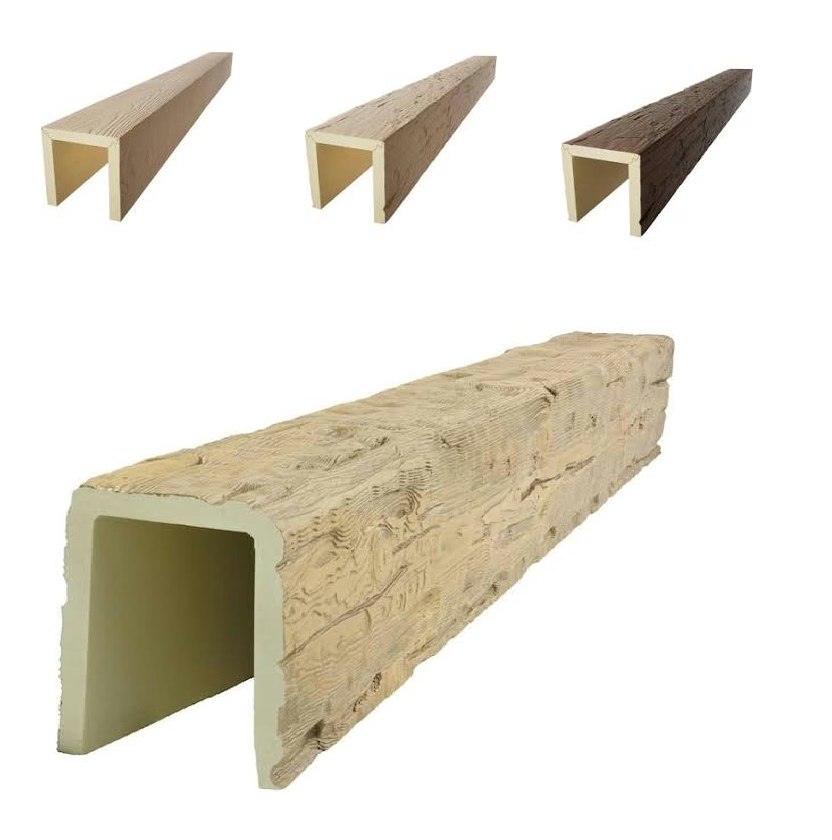
Factories serving the USA market typically maintain tooling for the most popular beam profiles, including classic V-groove, three-sided box beams, and decorative corbel designs. Beyond standard offerings, custom tooling development allows businesses to commission unique profiles that differentiate their inventory from competitors. Lead times for custom tooling typically range from four to eight weeks, with per-unit costs decreasing significantly once production volumes reach economical thresholds.
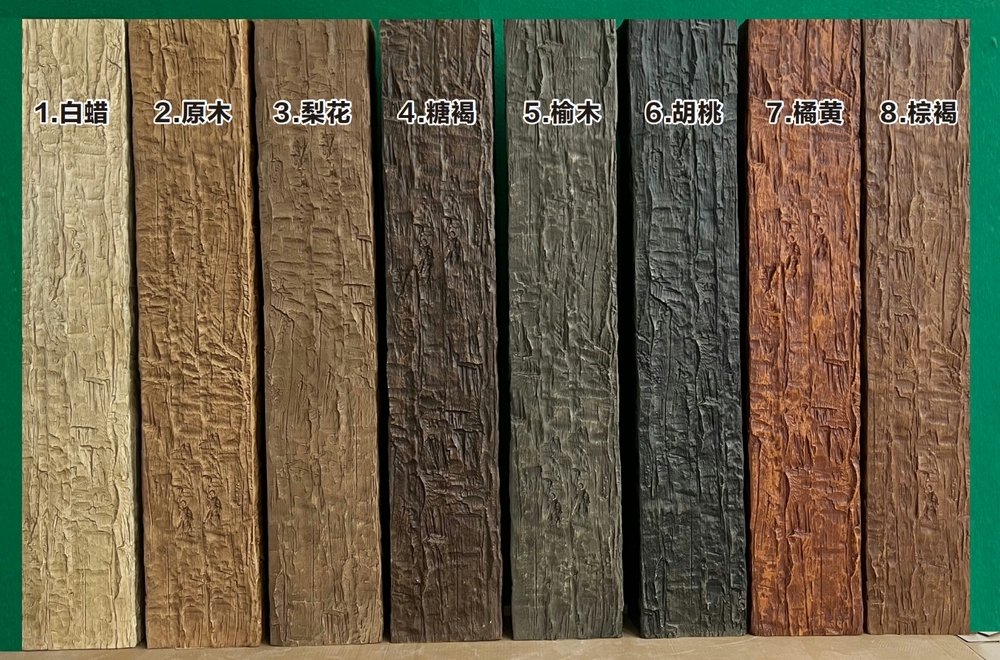
The material science behind polyurethane beams has advanced considerably over the past decade. Contemporary formulations offer improved UV stability, enhanced fire retardancy options, and surface finishes that convincingly replicate the look of aged oak, rustic cedar, or sleek mahogany. Factories can produce beams in any RAL color, enabling architects and designers to specify exact hues without the limitations of natural wood stains.
Quality Control Standards in Modern Facilities
Reputable OEM facilities implement multi-stage quality inspections throughout the production process. Raw material batches undergo testing for consistency in density, flexibility, and color accuracy. During production, statistical process control methods identify deviations before they result in defective units. Final inspection before packaging ensures that every beam leaving the facility meets the specifications agreed upon with the customer.
Documentation practices in professional manufacturing environments include certificates of compliance, test reports for fire ratings and structural properties, and detailed specifications sheets. This paperwork proves essential for commercial projects where building inspectors and project managers require verified performance data. Factory direct suppliers understand these requirements and maintain comprehensive records that can be supplied upon request.
Logistics and Distribution Advantages
Strategic positioning of inventory close to major American population centers reduces shipping costs and delivery times significantly. Factory direct suppliers often maintain partnerships with regional distribution centers or offer cross-docking services that consolidate shipments from multiple overseas production facilities. These arrangements can cut transit times from the Far East by 40% compared to standard ocean freight routes.
Full container load (FCL) shipments offer the most economical unit costs for high-volume orders. However, less-than-container load (LCL) options provide flexibility for businesses that cannot accommodate large inventory investments or have limited warehouse space. Understanding the trade-offs between these shipping methods helps procurement managers optimize their ordering strategies based on seasonal demand patterns and cash flow considerations.
USA-focused suppliers typically maintain domestic inventory positions that enable rapid fulfillment of reorders. While lead times from overseas production might span eight to twelve weeks, domestic safety stock programs can provide next-day or two-day delivery on popular SKUs. These programs require closer coordination between supplier and buyer but dramatically improve customer satisfaction metrics for retailers and contractors working on time-sensitive projects.

Customization Options for Market Differentiation
American retailers face intense competition from online marketplaces and big-box stores. Differentiation through exclusive product offerings becomes a critical strategic consideration. OEM relationships enable businesses to develop proprietary designs that cannot be sourced elsewhere, creating a competitive moat that protects margin and builds customer loyalty.
Private label programs allow businesses to market factory direct beams under their own brand identities. This approach works particularly well for specialty retailers serving the high-end residential market, where brand perception influences purchasing decisions significantly. Factory partners handle production, packaging, and sometimes even direct-to-consumer fulfillment, while the retailer maintains control over marketing, pricing, and customer relationships.
Custom color matching services have become increasingly sophisticated, with factories now capable of matching samples provided by architects or interior designers with remarkable accuracy. Digital color measurement technology ensures consistency across production batches, addressing historical concerns about variation between orders that plagued earlier generations of faux wood products.
Building Long-Term Supplier Partnerships
The most successful B2B relationships in this industry transcend simple transactional exchanges. Strategic partnerships between buyers and OEM factories create mutual incentives for quality improvement, innovation, and market responsiveness. Regular communication between design, sales, and production teams identifies opportunities for product improvements that benefit both parties over time.
Volume commitment programs offer price stability and allocation priority in exchange for forward purchasing commitments. These arrangements work well for businesses with predictable demand patterns, such as seasonal home improvement retailers or construction firms with steady project pipelines. The guaranteed order flow enables factories to optimize production scheduling, reducing waste and improving efficiency that translates to better pricing for committed buyers.
Joint product development initiatives can address emerging market demands before competitors recognize the opportunity. Factories with strong engineering capabilities can rapidly prototype new designs based on market intelligence provided by their USA partners. This collaborative approach to product development creates a continuous pipeline of fresh offerings that keep inventory interesting and drive repeat customer visits.
Navigating the complexities of international trade requires partners who understand customs regulations, import documentation, and compliance requirements specific to building materials. Factory direct suppliers with established USA market experience handle these details seamlessly, allowing buyers to focus on sales and service rather than bureaucratic procedures. The right OEM partner becomes an extension of your organization, sharing your commitment to customer satisfaction and market success.
Technical References
ASTM standards cited in every specification
Test Data
Lab results from internal testing program
Updated 2026
Reviewed against current product specs


