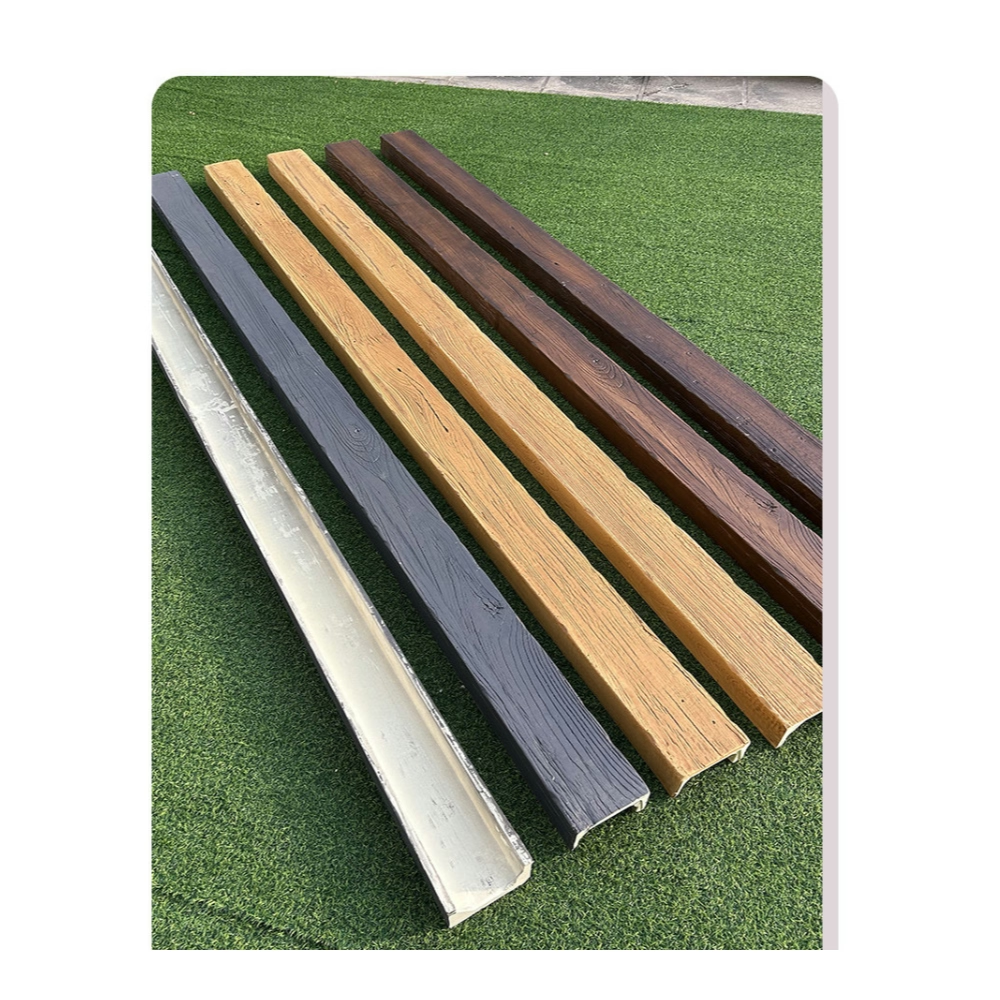
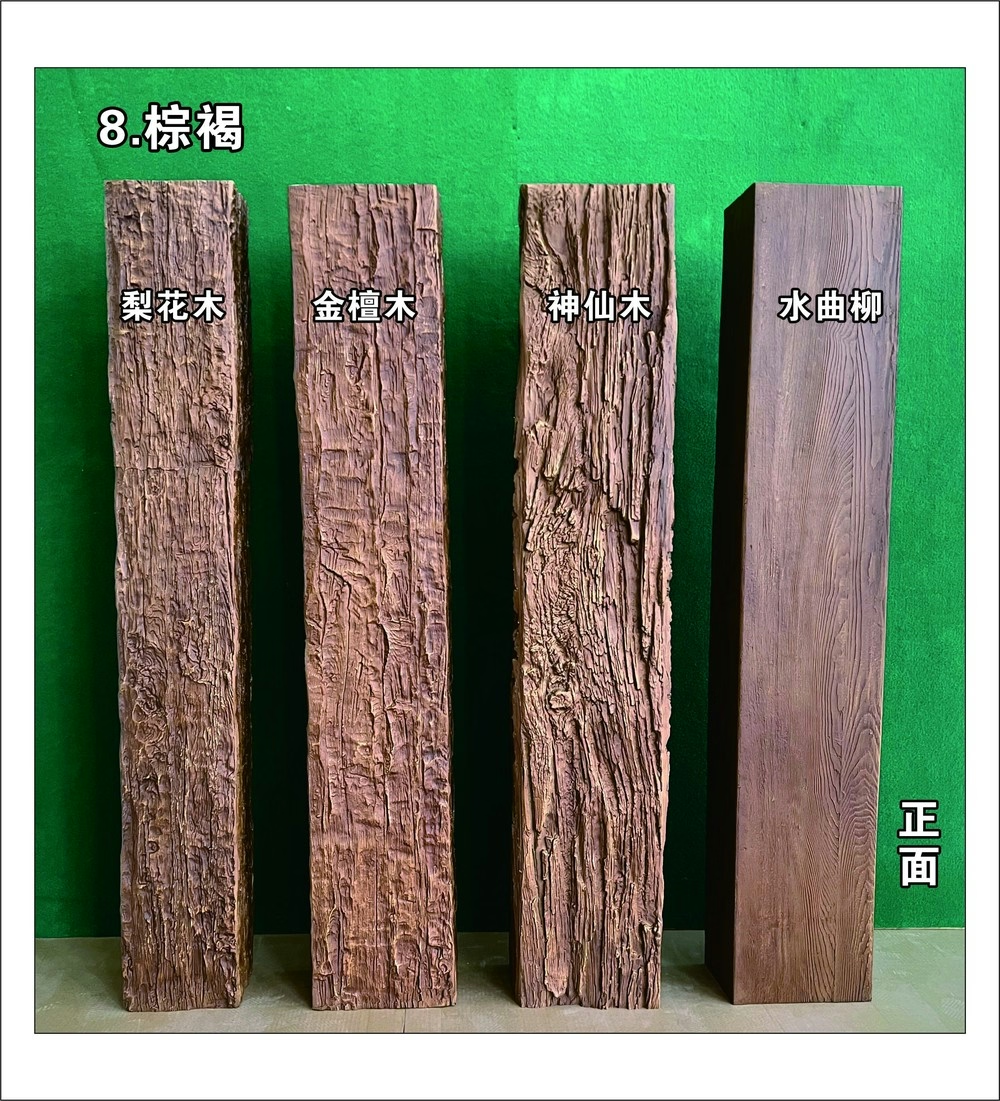
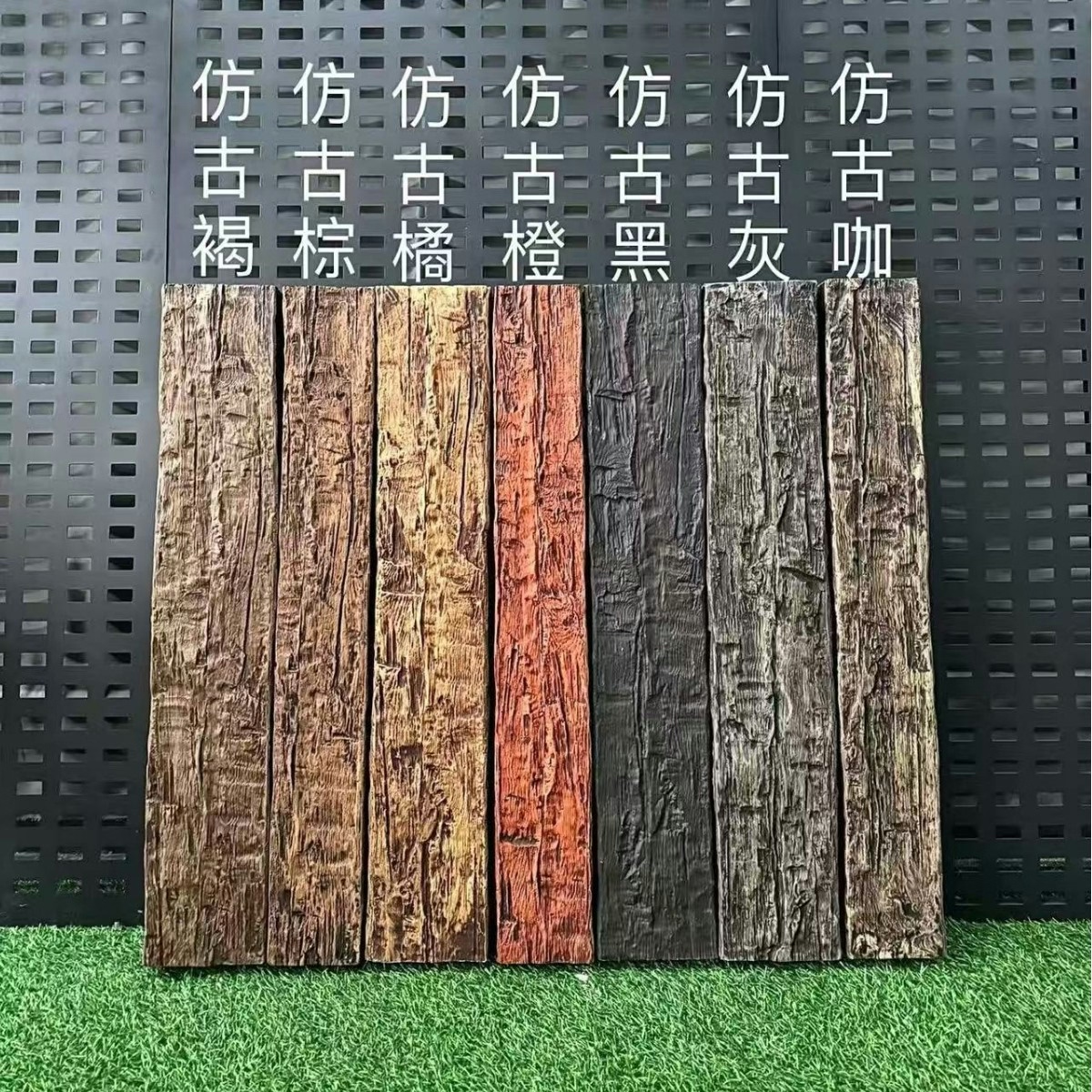
Installing decorative beams on drywall ceilings requires careful consideration of weight loads and proper mounting hardware. Unlike solid wood beams that demand substantial structural support, polyurethane faux beams offer a remarkably lighter alternative that works beautifully with standard drywall anchors when installed correctly.

The reduced weight of polyurethane beams fundamentally changes the installation equation. While a genuine timber beam might weigh six to eight pounds per linear foot, equivalent faux beams typically weigh one to two pounds per linear foot. This dramatic weight reduction means that a twelve-foot beam weighing around fifteen pounds total can be supported by a properly distributed set of drywall anchors rather than requiring ceiling joist attachment or extensive structural reinforcement.
Understanding Drywall Anchor Mechanics
Drywall anchors function by creating a mechanical connection between the screw and the wallboard material. Different anchor designs offer varying load capacities, and selecting the appropriate type for your beam installation determines whether your finished project remains secure over time or eventually fails.
Expansion anchors, the most common variety found in hardware stores, work by compressing against the inside of the drywall when the screw tightens. These anchors typically support between twenty-five and fifty pounds each, making them suitable for lighter beam applications. However, they require predrilling and provide only moderate resistance to shear forces, which become relevant when beams experience lateral pressure from air circulation or accidental contact.
Toggle bolts offer superior load capacity by distributing weight across a larger area of drywall. The spring-loaded toggle mechanism passes through the wall and opens on the hidden side, creating a stable anchor point. Heavy-duty toggle bolts can support up to one hundred pounds or more, providing ample margin for most faux beam installations. The trade-off involves a larger mounting hole and the need to access the space above the drywall during installation.
Hollow-wall anchors, also called Molly bolts, provide another option that combines ease of installation with reasonable load capacity. These anchors expand behind the wall surface as you tighten the central screw, creating a grip that resists both pull-out and shear forces. Professional installers often prefer hollow-wall anchors for ceiling applications because they maintain their grip even when the drywall experiences minor movement or settling over time.
Calculating Load Requirements for Your Beam
Before purchasing anchors, calculate the total weight your mounting system must support. A six-inch by eight-inch faux beam that spans eight feet weighs approximately ten to fifteen pounds. However, the mounting system must also account for any accessories attached to the beam, such as lighting fixtures or decorative elements, as well as dynamic loads from ceiling movement or vibrations.
Professional installers recommend calculating load requirements and then specifying hardware rated for at least three times the expected weight. This safety margin accommodates variations in drywall quality, installation technique, and environmental factors like humidity that might affect performance over years of use. For a fifteen-pound beam, this means selecting anchors rated for at least forty-five pounds of support capacity.
Weight distribution across multiple anchor points reduces the load on any single connection. A beam mounted with six anchors rather than four distributes the same total weight across more connection points, reducing the risk of failure if one anchor performs below specifications. Strategic anchor placement also allows you to position connection points directly over ceiling joists when feasible, combining drywall anchor support with the structural rigidity of the building frame.
Installation Techniques for Secure Attachment
Surface preparation significantly influences the long-term security of your installation. Clean the mounting surface thoroughly, removing dust, debris, and any loose paint that might reduce anchor grip. For ceilings, a vacuum followed by a tack cloth ensures optimal surface conditions for adhesive or mechanical attachment methods.
Mark anchor locations with precision, using a level to ensure your beam will hang straight and true. When mounting beams parallel to ceiling joists, position anchor points to hit joist locations when possible, even if this means spacing them unevenly. The added security of joist attachment justifies any minor aesthetic compromise from non-uniform spacing.
Pilot holes for anchors must match manufacturer specifications precisely. Holes that are too small prevent proper anchor insertion, while oversized holes allow anchors to spin freely without developing grip. Use a drill bit specifically sized for your anchor type, and test the fit before committing to full installation.

Adhesive Supplementation for Enhanced Security
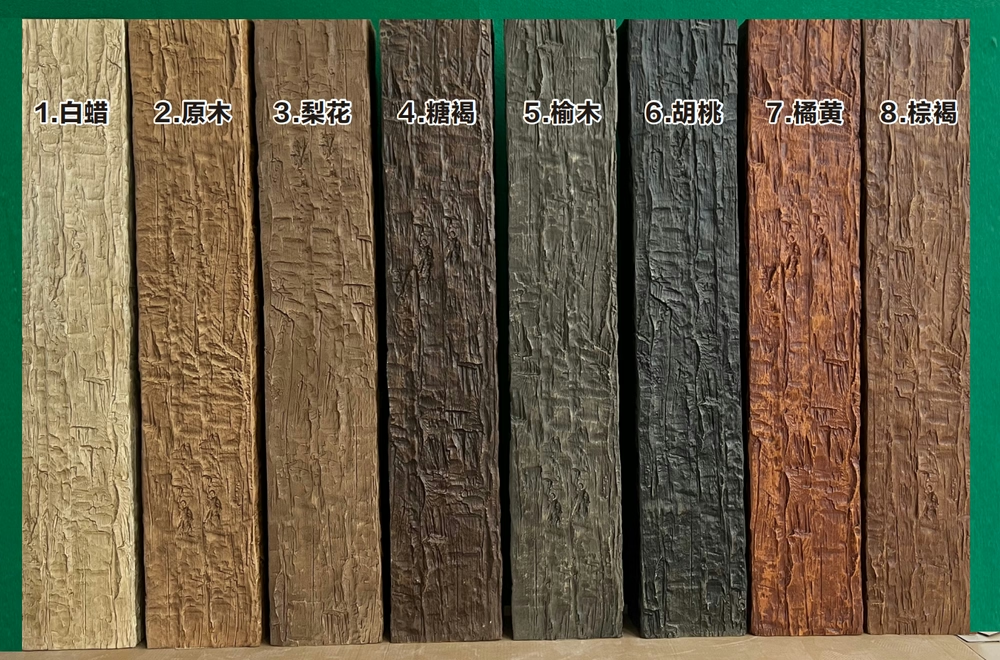
While mechanical anchors provide essential load-bearing capacity, supplementing with construction adhesive dramatically improves the long-term reliability of faux beam installations. The adhesive creates a continuous bond between the beam and ceiling surface, distributing loads more evenly and preventing the squeaking or shifting that sometimes develops with purely mechanical mounting systems.
Select a construction adhesive specifically formulated for polyurethane materials and ceiling applications. Standard wood adhesives may not bond effectively with the smooth surface textures of manufactured faux beams. Premium latex or hybrid polymer adhesives offer excellent initial grab combined with long-term durability, and they remain flexible enough to accommodate the subtle movements that occur in building structures.
Apply adhesive in a continuous bead along the center of the beam's mounting surface, keeping the application approximately two inches from edges to prevent squeeze-out when pressure is applied. For beams wider than six inches, apply additional adhesive beads near the edges to ensure complete coverage. The combination of mechanical anchors and adhesive creates a redundant support system where either component alone could sustain the load temporarily.
Common Installation Mistakes to Avoid
Relying solely on adhesive without mechanical anchoring ranks among the most common errors in faux beam installation. Adhesive bonds can degrade over time, particularly in environments with temperature fluctuations or humidity changes. Mechanical anchors provide insurance against adhesive failure, ensuring that your beams remain secure even if bond strength diminishes.
Underestimating the importance of weight distribution leads many DIY installers to use too few anchors spaced too far apart. A general rule requires anchor spacing no greater than twenty-four inches on center for ceiling installations, with closer spacing preferred for beams longer than six feet. Additional anchors near beam ends and joints provide crucial support at stress concentration points.
Failing to account for ceiling irregularities creates gaps between beams and mounting surfaces that detract from the finished appearance and potentially compromise structural integrity. Before mounting, use a straightedge to identify high and low spots across the ceiling. Shimming low areas with thin wooden strips or cardboard backing ensures uniform contact along the entire beam length.
Neglecting to check for electrical wiring, plumbing, or HVAC components above the ceiling plane can create dangerous situations during anchor installation. Before drilling any holes, use a stud finder with wiring detection capability to identify potential hazards. When in doubt, err on the side of caution and consult with a professional contractor before proceeding.
Following these guidelines ensures that your drywall anchor compatible faux wood beam installation provides lasting beauty and structural reliability. The lightweight nature of polyurethane beams makes professional-quality results achievable for determined DIY enthusiasts, while the techniques described here also serve as a foundation for more complex installation scenarios involving different mounting surfaces or structural configurations.
Technical References
ASTM standards cited in every specification
Test Data
Lab results from internal testing program
Updated 2026
Reviewed against current product specs