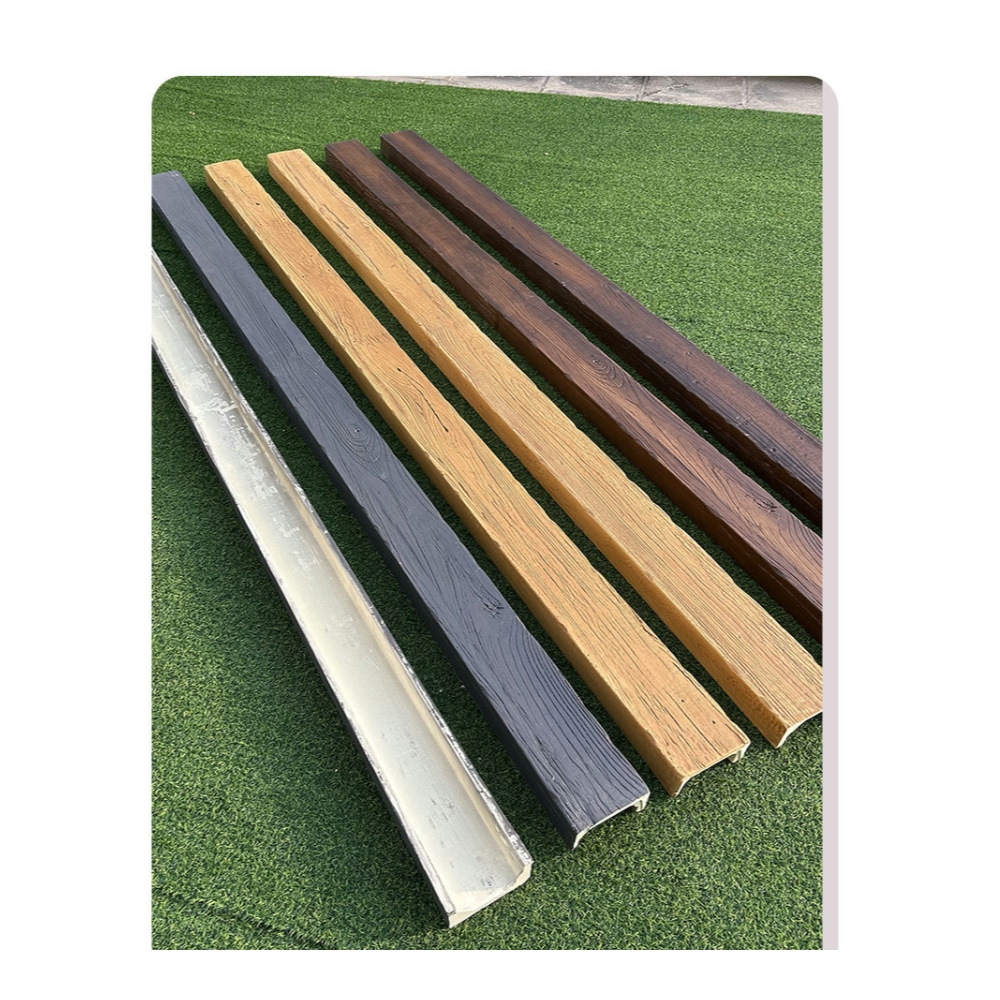
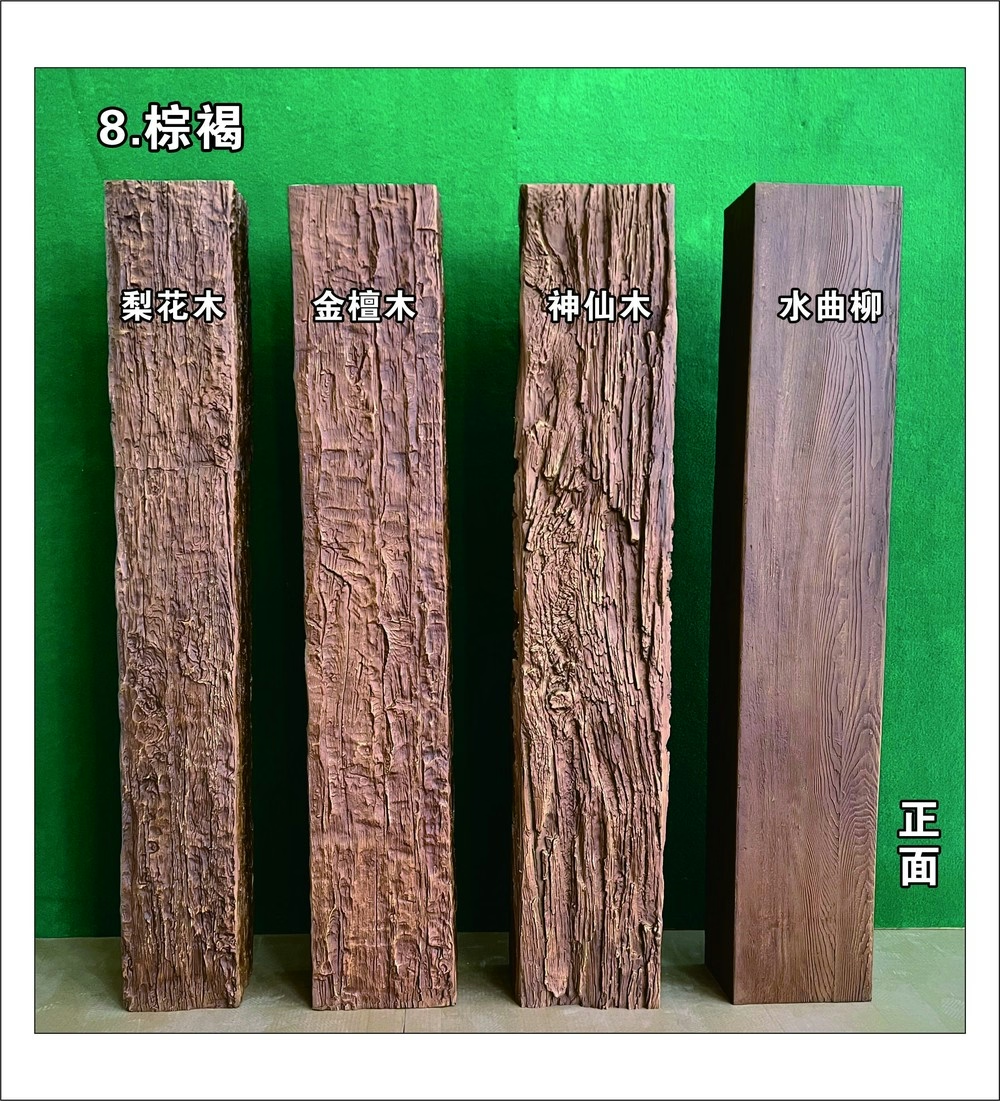
Time matters in construction and renovation projects. Whether homeowners racing to complete weekend improvements or contractors managing multiple job sites, mounting systems that accelerate installation without sacrificing quality deliver meaningful value. Polyurethane faux beams pair naturally with purpose-designed mounting hardware that transforms potentially complex installation into straightforward assembly.

Traditional beam mounting approaches borrowed from timber construction often prove unnecessarily complicated for lightweight polyurethane alternatives. Specialized mounting systems leverage the material's characteristics to deliver secure attachment through simpler mechanisms. Understanding these systems helps purchasers select products that match their installation requirements and skill levels.
Bracket-Based Mounting Solutions
Dedicated beam mounting brackets offer the fastest path to secure installation. These specialized brackets attach to ceiling surfaces and engage with corresponding features molded into the beam, creating mechanical connections that resist both downward load and lateral movement. Installation involves attaching brackets to the ceiling at measured locations, then simply engaging beams with the bracket system.
Adjustable bracket systems accommodate tolerance variations that inevitably occur in construction. Slight misalignments between ceiling joists, minor measurement errors, and beam dimension variations that might frustrate rigid mounting approaches become non-issues with adjustable systems. Setscrews, sliding channels, and pivot mechanisms enable fine-tuning after initial positioning without requiring bracket removal and reinstallation.
Corrosion-resistant materials in quality mounting brackets ensure long-term performance. Aluminum and stainless steel components resist the moisture and humidity that affect some environments. Plastic components in some systems provide adequate strength while eliminating corrosion concerns entirely. Material selection should match the installation environment, with humid spaces like bathrooms requiring more corrosion-resistant specifications.
Track and Rail Systems
Continuous track mounting provides exceptional alignment across long beam runs. Rather than positioning individual brackets, a continuous track attaches to the ceiling structure and accepts beam engagement along its entire length. This approach eliminates bracket spacing calculations and ensures perfectly straight alignment regardless of ceiling irregularities.
T-track systems work particularly well for multi-beam installations where beams run parallel or intersect. The continuous mounting surface provides consistent support across complex layouts without requiring calculations for each intersection point. Installation efficiency improves significantly when one mounting action secures multiple beam locations simultaneously.
Rail systems often incorporate wire management channels that simplify lighting and electrical integration. Recessed lighting fixtures, speakers, and other ceiling-mounted accessories integrate with rail-mounted beams more easily than with discrete bracket systems. This advantage proves significant for projects incorporating substantial electrical work within beam installations.
Adhesive Integration Approaches
Modern construction adhesives have evolved significantly, offering bond strengths that complement mechanical attachment methods. Premium polyurethane or hybrid polymer adhesives provide initial grab that holds beams in position during hardware installation, eliminating the frustrating sliding and shifting that complicates traditional adhesive-only approaches.
No-mess adhesive products reduce cleanup requirements and improve worksite conditions. These formulations expand minimally during curing, reducing squeeze-out that creates cleanup work. Clean removal from surfaces during the adhesive open time prevents permanent staining of adjacent materials. These practical improvements make adhesive-assisted installation more approachable for inexperienced users.
Adhesive consumption calculators help users estimate material requirements accurately. Over-purchasing adhesive wastes money, while under-purchasing creates frustrating mid-project supply trips. Online calculators or manufacturer recommendations based on beam dimensions and coverage rates ensure appropriate material ordering without excessive waste.

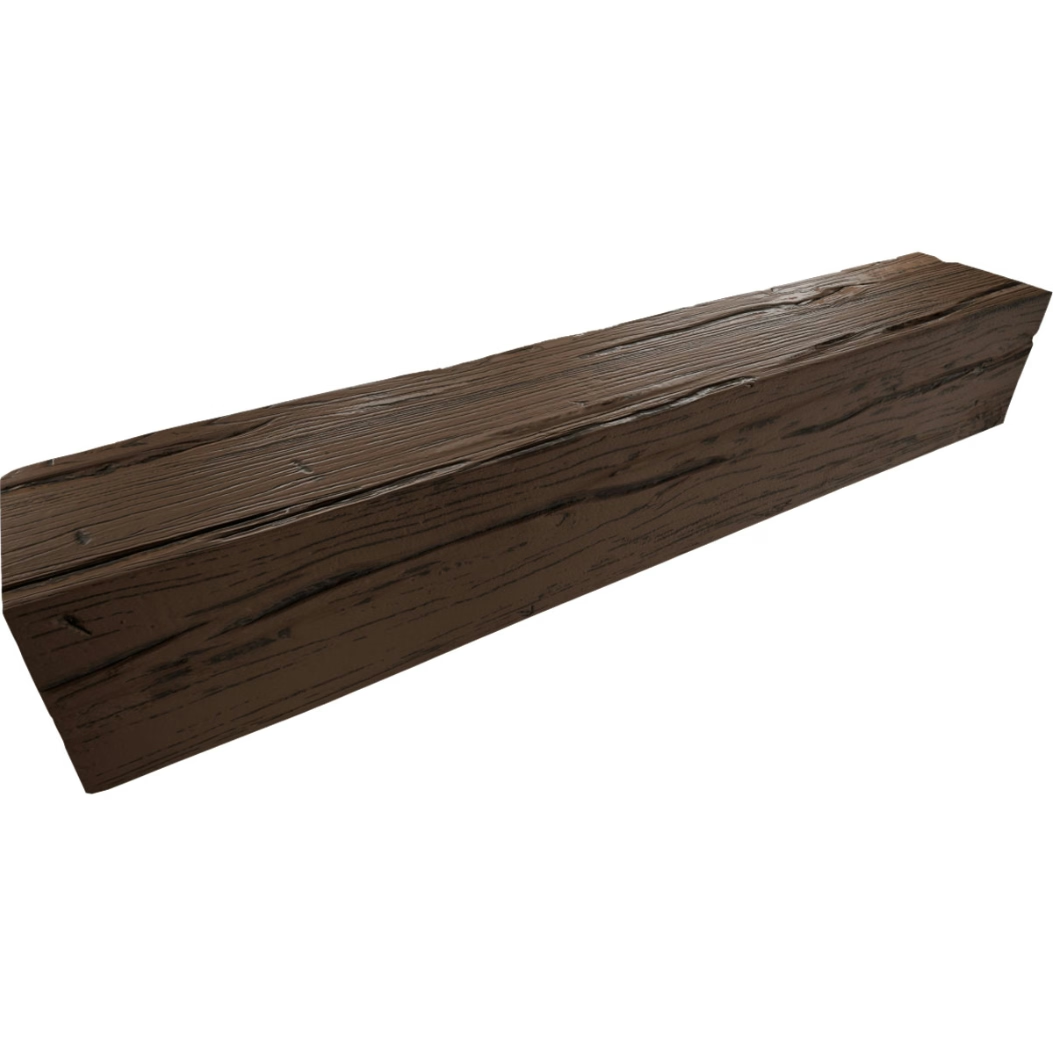
Fastening Hardware Essentials
Self-drilling screws designed for polyurethane materials drive quickly without predrilling in most applications. The optimized thread design engages material efficiently without cracking or splitting. Driver bits designed for these screws provide secure engagement that prevents cam-out and stripped heads.
Toggle bolt systems for ceiling installations offer exceptional load capacity in a simple package. Spring-loaded toggles pass through small holes and open behind the ceiling surface, creating anchor points capable of supporting substantial loads. Quick-install toggle bolts with captured bolt threads eliminate the awkward hardware handling that traditional toggle bolts require.
Zinc-plated or coated fasteners provide adequate corrosion resistance for most interior applications while keeping costs reasonable. Stainless steel fasteners warrant the additional investment in humid environments, exterior applications, or situations where concealed corrosion might create safety concerns before detection.
System Selection Based on Project Requirements
Simple ceiling beams in dry environments can leverage straightforward mounting approaches. Standard adhesive with discrete screw fastening often provides adequate security for lightweight beams in climate-controlled interior spaces. The simplicity of this approach minimizes both material costs and installation time.
Complex installations involving long spans, substantial loads, or challenging surfaces benefit from purpose-designed mounting systems. The additional investment in quality brackets and hardware pays dividends through faster installation, more secure attachment, and reduced callbacks for warranty issues. Professional contractors often standardize on proven mounting systems that deliver consistent results across varied project conditions.
Rental or temporary installations require mounting approaches that facilitate clean removal. Removable adhesive products, magnetic mounting systems, and mechanical attachments to temporary structures enable beam installations that do not permanently alter surfaces. These approaches serve applications like trade show displays, temporary event staging, and rental property improvements where damage-free removal matters.
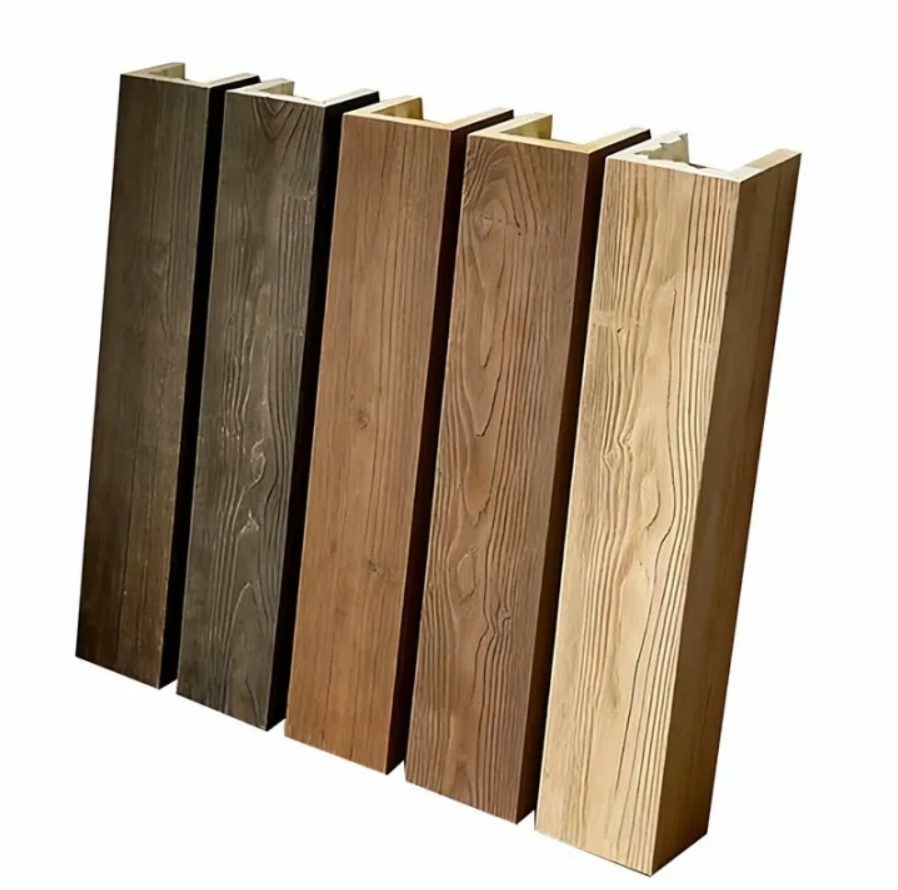
Maximizing Installation Efficiency
Pre-installation preparation dramatically affects installation speed. Pre-cutting beams to length, pre-assembling mounting hardware, and pre-positioning tools at the worksite eliminate mid-installation searching and fetching. Professional contractors develop checklists that ensure all materials and tools arrive at the job site ready for immediate use.
Two-person installation teams work more efficiently than solo operators for longer beams, even with lightweight polyurethane alternatives. One person positions and supports while the other handles attachment, eliminating the awkward reaching and repositioning that slows solo work. For truly solo DIY installers, temporary support mechanisms like adjustable stands or strategic partner boards provide the helping hands that are not otherwise available.
Quality verification during installation prevents callbacks that cost far more than the time saved by rushing. Checking level alignment before adhesive sets, verifying anchor engagement before moving to the next section, and testing adhesive cure before applying load all require minimal additional time while preventing problems that require expensive correction later.
User-friendly mounting systems designed for polyurethane faux beams make professional-quality installation achievable across a wide range of skill levels. The combination of specialized hardware, modern adhesives, and straightforward techniques transforms potentially intimidating projects into manageable tasks that deliver satisfying results efficiently.
Technical References
ASTM standards cited in every specification
Test Data
Lab results from internal testing program
Updated 2026
Reviewed against current product specs