Public spaces face abuse that private residences never encounter. Transit stations, parking structures, school corridors, and municipal buildings experience conditions ranging from accidental impacts to intentional vandalism. Materials in these environments must withstand punishment that would quickly destroy products designed for residential or controlled commercial use. Vandal-proof high-density polyurethane faux wood beams address these demanding requirements, providing the combination of durability and aesthetics that public space applications demand.
The engineering required to achieve genuine vandal-proof performance involves material formulations quite different from standard faux beam products. Density, impact resistance, surface hardness, and repairability all receive emphasis in products designed for challenging public applications. Understanding these requirements helps specifiers select appropriate products for their specific public space projects.
Public Space Durability Demands
Public facilities experience traffic volumes and usage patterns that stress building materials continuously. High ceilings and architectural beams in transit stations, airports, and public buildings see constant exposure to crowds, maintenance equipment, and environmental conditions. Materials must perform reliably despite this demanding usage.
Impact resistance becomes particularly important in public spaces where accidental impacts are inevitable. Luggage carts, furniture moving, and everyday pedestrian traffic create impacts that lesser materials cannot withstand. High-density polyurethane formulations provide the toughness that these conditions require.
Surface hardness affects both durability and cleanability in public applications. Hard surfaces resist scratching and marking while accepting cleaning treatments that remove graffiti and accumulated contamination. The combination of durability and cleanability keeps public spaces looking maintained despite challenging conditions.
High-Density Engineering
High-density polyurethane differs from standard formulations in molecular structure and physical properties. Increased crosslink density creates a more rigid material matrix that resists deformation under impact while maintaining the workability that installation requires.
The density increase affects multiple performance characteristics simultaneously. Impact resistance improves, surface hardness increases, and dimensional stability under temperature stress improves. These complementary benefits make high-density formulations particularly suitable for demanding applications.
Weight increase accompanying higher density affects installation handling but often remains manageable compared to natural wood alternatives. The trade-off between handling difficulty and performance improvement typically favors high-density products for public space applications where durability is paramount.
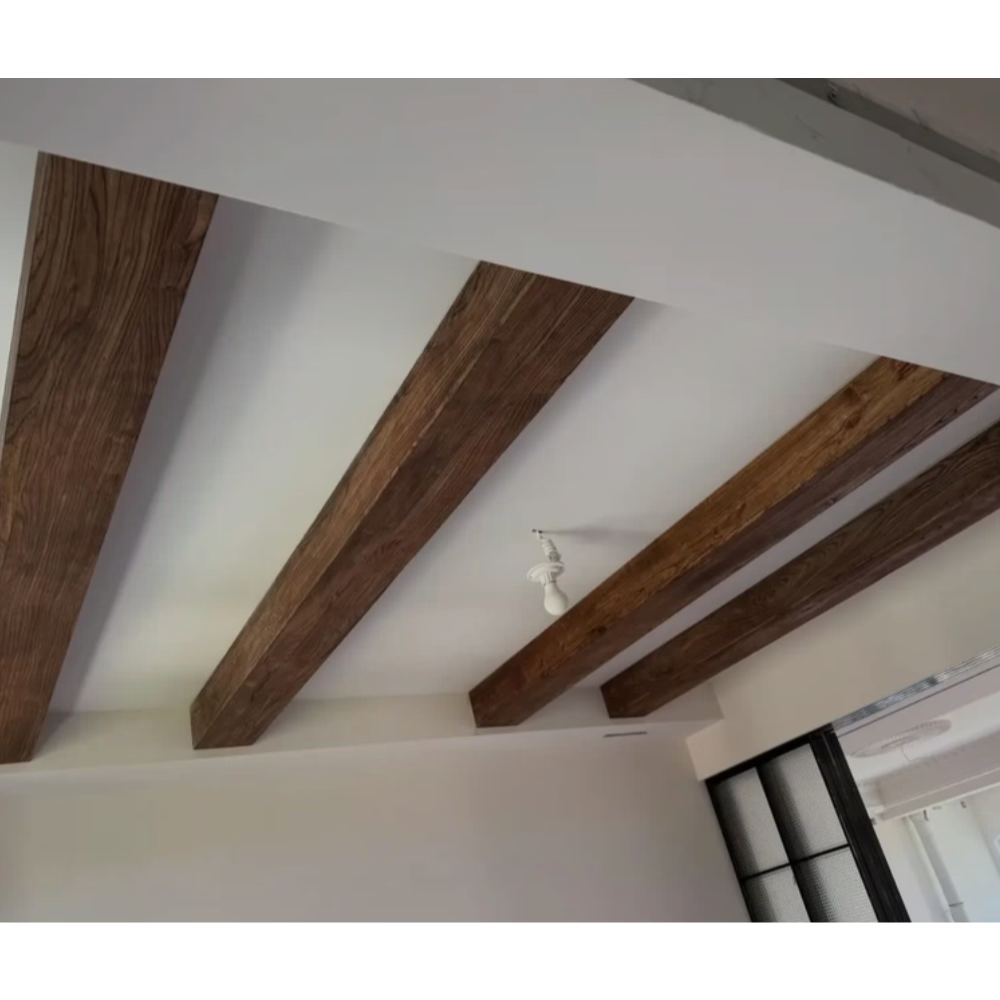
Vandal Resistance Features
Genuine vandal resistance involves more than impact tolerance. Chemical resistance allows removal of graffiti and marking without damaging beam surfaces. Solvent-resistant finishes accept paint removal treatments that would dissolve or stain lesser materials.
Scratch resistance maintains appearance despite contact with bags, equipment, and casual contact. High-density surface formulations resist the surface damage that dulls lesser products over time. This scratch resistance preserves the aesthetic investment that quality faux beams represent.
Repairability addresses damage that does occur despite enhanced durability. Products designed for public applications often accept field repairs that restore appearance without requiring complete replacement. This repairability extends service life and reduces lifecycle costs.
Transit and Transportation Facilities
Transit stations represent particularly demanding applications for faux beam products. High ceilings, extensive beam installations, and constant public traffic create conditions that test materials severely. Vandal-proof high-density products address these challenges with appropriate engineering.
Airport terminals, train stations, and bus facilities all benefit from the durability characteristics that high-density PU provides. The aesthetics of exposed beams contribute to wayfinding and spatial definition while the durability ensures that appearance remains maintained despite demanding conditions.
Maintenance in transit facilities often requires equipment access that can damage less durable materials. High-density formulations resist the impacts that maintenance activities inevitably create, maintaining appearance through repeated maintenance cycles.
Educational Facility Applications
Schools, universities, and libraries feature public spaces with unique durability requirements. Student traffic, furniture rearrangement, and the activity patterns of educational environments create continuous stress on building materials.
Classroom buildings, library atriums, and administrative spaces all may incorporate exposed beam aesthetics. High-density vandal-proof products ensure that these design elements remain attractive despite the demanding conditions educational facilities create.
Budget constraints in educational institutions make durability particularly valuable. Limited maintenance funding requires materials that perform reliably without constant attention. Vandal-proof beams reduce maintenance requirements while maintaining the aesthetics that quality educational environments require.
Municipal and Government Buildings
City halls, court buildings, and other municipal facilities present public spaces designed to project stability and permanence. The aesthetic contribution of exposed beams supports this architectural intent while the durability ensures that appearance matches the projected permanence.
High-traffic government buildings experience conditions similar to transit facilities and educational institutions. Vandal-proof products address the combination of heavy use and limited maintenance resources that characterize municipal operations.
Security considerations in some government facilities add requirements beyond simple durability. Products that don't shatter or splinter on impact provide safety advantages in certain applications. High-density polyurethane's solid construction addresses these security-conscious requirements.
Hospitality and Entertainment Venues
Hotels, theaters, and entertainment venues feature public spaces designed for both aesthetics and heavy use. The beam installations that create dramatic architectural effects must also withstand the conditions that busy venues create.
Convention centers, performing arts venues, and sports facilities all incorporate exposed beam elements that contribute to their architectural character. High-density vandal-proof products ensure that these aesthetic investments remain protected despite heavy public use.
Restaurant and bar spaces with exposed beams face additional challenges from food service environments. Grease, moisture, and the activity patterns of food service operations stress materials in ways that general public spaces may not. Vandal-proof products designed for these specific conditions address these specialized requirements.
Installation Considerations
High-density polyurethane requires installation techniques appropriate to its specific characteristics. The material's enhanced density affects cutting, fastening, and finishing compared to standard formulations. Experienced installers understand these differences and adjust their techniques accordingly.
Attachment systems for high-density products often require heavier fasteners or more robust mounting approaches than standard beams might need. The additional weight and enhanced impact resistance may affect the structural requirements for supporting systems.
Field modification of high-density products requires appropriate tooling. Standard woodworking tools work with the material, but blade selection and cutting technique affect both cut quality and tool life. Manufacturer guidance on appropriate tools and techniques supports quality installation.
Maintenance and Cleaning
Public space maintenance benefits from the cleanability that vandal-proof products provide. Surface finishes that resist staining and accept cleaning treatments maintain appearance through regular maintenance without requiring aggressive intervention.
Graffiti removal from vandal-proof surfaces follows protocols that won't damage the underlying material. Solvent-based removers, pressure washing, and paint-over approaches all may be appropriate depending on the specific finish and product design.
Regular cleaning in public spaces follows protocols appropriate for the specific facility type. High-density polyurethane accepts the cleaning treatments that public facilities require without degradation that might affect warranty coverage or appearance.
Lifecycle Cost Analysis
Initial cost of vandal-proof high-density products exceeds standard alternatives, but lifecycle cost analysis often favors the premium products. Reduced maintenance requirements, extended service life, and avoided replacement costs accumulate to meaningful total cost advantages.
Maintenance labor savings in public facilities can be substantial. Reduced cleaning frequency, eliminated refinishing, and minimal repair work all contribute to ongoing savings that offset initial cost premiums.
Replacement cost avoidance proves particularly valuable in public spaces where replacement often requires maintaining public access during work. The disruption and expense of replacing failed materials in public facilities often exceeds the cost of specifying adequate durability initially.
Selection Guidance
Product selection for public space applications should consider specific abuse levels and maintenance capabilities. Not all public spaces face equivalent demands, and matching product durability to actual requirements optimizes the balance between cost and performance.
Manufacturer guidance on appropriate applications helps ensure proper product selection. Products designed specifically for public space use carry specifications and testing that validates their performance in demanding conditions.
Warranty terms for public space applications often differ from standard coverage. Understanding warranty applicability to public space conditions ensures that coverage remains valid if claims become necessary.

Making the Vandal-Proof Choice
For public space applications requiring both aesthetics and durability, vandal-proof high-density polyurethane faux wood beams represent the appropriate solution. The investment in enhanced durability protects the aesthetic value these products provide.
Design professionals and facility managers increasingly specify vandal-proof products as standard for demanding public applications. The durability advantages justify the modest premium these specialized products carry.
The combination of authentic wood aesthetics and genuine vandal resistance makes high-density PU beams uniquely suitable for public spaces where both appearance and durability matter.
Technical References
ASTM standards cited in every specification
Test Data
Lab results from internal testing program
Updated 2026
Reviewed against current product specs


