Spacious interior design presents unique challenges that conventional room proportions rarely create. Large volumes, expansive surfaces, and dramatic sightlines require architectural elements of corresponding scale to maintain visual interest and human comfort. Vaulted ceilings exemplify this challenge, offering stunning spatial drama that can feel overwhelming without appropriate design intervention. Wood-look faux beams provide the warmth, scale, and visual complexity that vaulted ceiling interiors need to achieve their full potential.
The addition of beams to vaulted ceilings accomplishes multiple design objectives simultaneously. Beams break up vast ceiling planes into comprehensible sections. They add material warmth that softens what might otherwise feel stark. And they create visual weight that grounds the space and makes it feel inviting rather than intimidating.
Spacious Design Principles
Successful spacious design requires understanding how people perceive and respond to large volumes. Vast, uninterrupted planes can create disorientation and discomfort, while appropriately scaled elements help occupants understand and appreciate spatial grandeur. Beams contribute this essential scale reference.
Vertical proportion in vaulted spaces demands attention from designers. The height-to-width ratio affects how spaces feel, with extreme proportions creating challenging environments. Beam placement and orientation influence perceived proportions, potentially improving challenging ratios through careful visual intervention.
Light interaction becomes critical in spacious interiors where natural and artificial lighting can feel diffuse and directionless. Beams create surfaces that catch and reflect light in ways that add visual interest while helping define the character of the space.
Wood Appearance Benefits
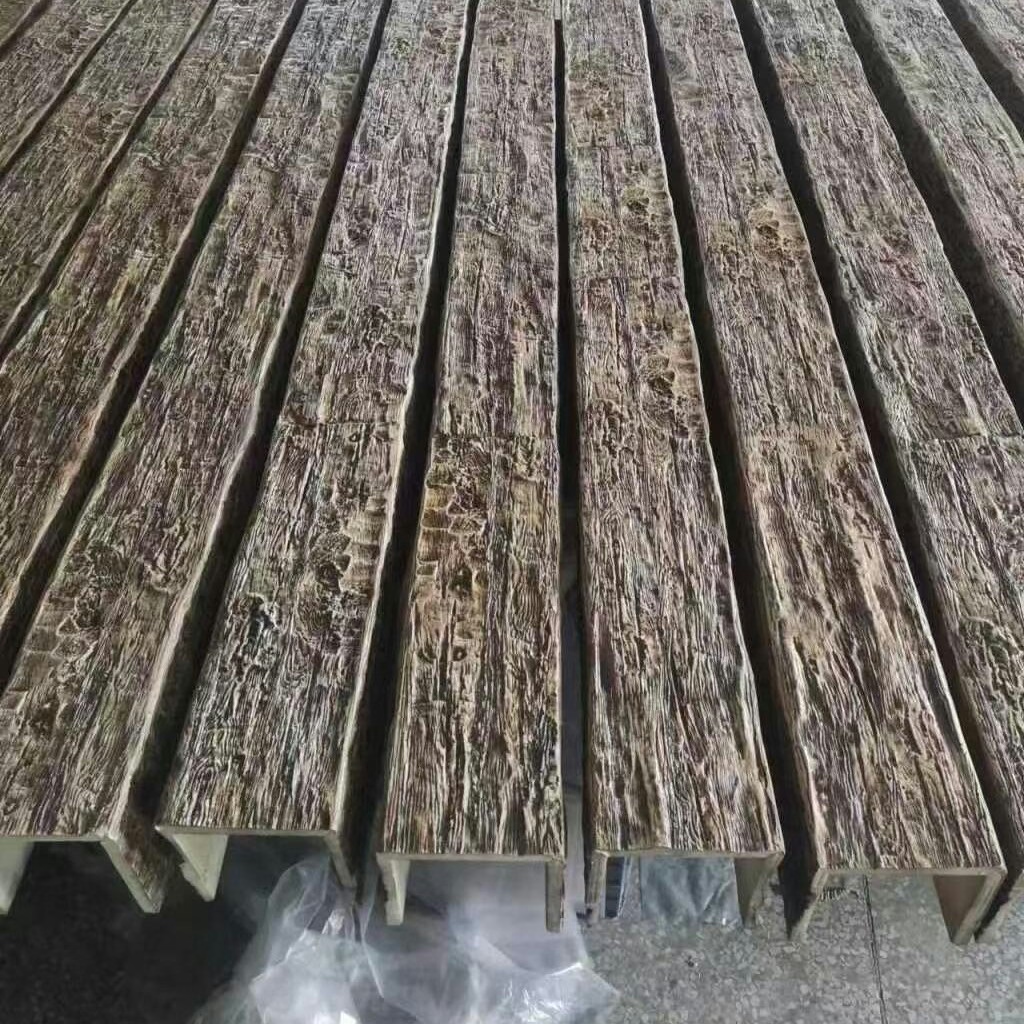
Wood appearance contributes warmth that metal, concrete, and other structural materials cannot provide. The organic character of wood grain, the subtle color variations, and the tactile quality all create impressions of comfort and craftsmanship that synthetic materials rarely achieve.
Faux wood beams capture these warmth benefits while delivering manufactured consistency and practical durability. The authentic appearance that quality products provide brings genuine wood character to vaulted ceiling applications without the maintenance demands natural wood would create.
Color temperature affects spacious interior comfort significantly. Wood tones fall in the warm end of the spectrum, counteracting the cool impression that large volumes of white or gray surfaces can create. This warmth proves particularly valuable in contemporary and minimalist designs where other surfaces may trend cooler.

Scaling for Dramatic Effect
Vaulted ceiling applications require beams sized appropriately for the spatial scale. Under-scaled beams disappear into the ceiling plane, failing to contribute meaningfully to the design. Appropriately scaled beams command attention and create the visual impact that justifies their inclusion.
Scale assessment should consider not just beam dimensions but the relationship between beam size and surrounding elements. Doorways, windows, furniture, and other features all interact with ceiling beams to create overall spatial impressions. Successful design coordinates all these elements harmoniously.
Proportion principles suggest that vaulted beams should be proportionally larger than their conventional ceiling counterparts. The same proportional relationship that works in eight-foot ceilings would appear trivial in fifteen-foot vaulted applications. Dedicated vaulted ceiling products address this scaling requirement.
Installation Strategies
Beam orientation in vaulted ceilings affects both aesthetic impact and structural perception. Beams running perpendicular to vault ridges create visual bands that subdivide the space effectively. Parallel orientation emphasizes length and can make spaces feel even longer than they are.
Spacing between beams influences both visual effect and proportional balance. Tight spacing creates visual density that may overwhelm in some applications while providing necessary detail in others. Wider spacing emphasizes individual beam presence while potentially leaving ceiling planes too sparse.
Combination approaches that mix beam orientations or sizes create visual complexity that adds interest to challenging spaces. Crossover patterns, main and secondary beam systems, and graduated sizing all provide design options for complex vaulted ceiling situations.
Light and Shadow Play
Vaulted ceilings often feature dramatic lighting conditions that beams can enhance or complicate. Skylights, clerestory windows, and angled artificial lighting create shadow patterns that interact with beam surfaces throughout the day.
Beam profile design affects how beams read under various lighting conditions. Deep shadows in beam recesses create drama, while flatter profiles may appear washed out in bright light. Understanding these lighting interactions helps guide profile and finish selection.
Artificial lighting systems often integrate with vaulted ceiling beams. Recessed fixtures between beams, surface-mounted fixtures on beams, and linear lighting in beam recesses all provide options for integrating artificial light with beam aesthetics.
Style Coordination
Wood-look faux beams accommodate diverse interior design styles through their appearance versatility. The same basic material can appear rustic or refined, traditional or contemporary, depending on specific finish and profile choices.
Contemporary spacious interiors benefit from clean-lined beams with minimal detail. The modern aesthetic typically favors smooth surfaces, consistent coloring, and precise proportions. These contemporary characteristics can be authentically achieved in faux wood products.
Traditional and transitional interiors may require more detailed beam treatments. Chamfered edges, decorative profiles, and textured surfaces support period-appropriate aesthetics. Variable texture options in quality products enable these traditional appearances effectively.
Material Advantages
Faux wood beams offer practical advantages beyond aesthetic versatility. Consistent quality ensures uniform appearance throughout installations, eliminating the inspection and sorting that natural wood requires.
Dimensional stability serves vaulted applications particularly well. Natural wood expands and contracts with humidity changes, potentially creating gaps and alignment issues over time. Polyurethane faux beams maintain their dimensions regardless of humidity conditions.
Lightweight construction simplifies vaulted ceiling installation. Large beams that would require significant structural support if made from real wood can be installed more easily when manufactured from lightweight polyurethane. This weight reduction affects both installation cost and structural requirements.
Maintenance Considerations
Vaulted ceiling maintenance presents access challenges that favor low-maintenance materials. The height and geometry of vaulted spaces often require lifts or scaffolding for access, making any required maintenance expensive and disruptive.
Faux wood beams eliminate most maintenance requirements that would create these access challenges. No periodic refinishing, no staining touch-ups, no rot repair—simply occasional cleaning that may be accomplishable with long-handled tools rather than lifts.
Dust and cobweb accumulation affects vaulted ceilings more visibly than conventional ceilings because of the lighting conditions. The smooth, cleanable surfaces of polyurethane beams accommodate this maintenance need more easily than textured natural wood surfaces.
Cost-Benefit Balance
Initial investment in quality wood-look faux beams should be evaluated against total lifecycle costs. The elimination of maintenance requirements, the consistency of appearance, and the durability of manufactured products all contribute to lifecycle value that offsets initial cost premiums.
Installation efficiency affects total project cost significantly in vaulted applications where access difficulties compound labor costs. The workability and lightweight nature of faux beams reduce installation time and the specialized equipment vaulted installations might otherwise require.
Long-term appearance maintenance for natural wood beams involves costs that faux products eliminate entirely. Professional refinishing services, the equipment access vaulted ceilings require, and the frequency of maintenance interventions all add to the true cost of natural wood alternatives.
Professional Design Value
The complexity of vaulted ceiling design benefits from professional design involvement. Designers experienced with spacious interiors understand the subtleties that distinguish successful vaulted beam installations from disappointing ones.
Professional specification ensures appropriate beam selection for specific spatial conditions. Scale assessment, lighting analysis, and style coordination all benefit from experienced design input that guides choices toward optimal outcomes.
Contractor coordination between designers and installers ensures that design intent translates successfully into built reality. Experienced vaulted ceiling contractors understand the practical challenges these installations present and can advise on approaches that achieve design goals efficiently.
Achieving Inviting Spaces
Wood-look faux beams transform vaulted ceiling challenges into design opportunities. The warmth, scale, and visual interest they provide create interiors that feel inviting rather than overwhelming, comfortable rather than intimidating.
Quality products deliver authentic appearance that enhances rather than compromises design integrity. The wood character that faux beams provide appears genuine to observers, achieving aesthetic goals without the limitations of natural material options.
For design professionals and homeowners pursuing vaulted ceiling interiors, wood-look faux beams provide the means to achieve spacious design goals with confidence. The combination of authentic aesthetics, practical durability, and maintenance-free service makes these products uniquely valuable in vaulted ceiling applications.

Long-Term Design Investment
Vaulted ceiling beam installations represent significant design investments that deserve protection. Quality faux wood beams maintain their appearance and structural integrity across decades of service, preserving the design vision that prompted their specification.
The absence of maintenance requirements means that vaulted spaces remain beautiful without demanding attention. This permanence protects design investments while freeing owners from the maintenance obligations that natural wood would impose.
Wood-look faux beams enable vaulted ceiling designs that inspire and delight through years of service. The authentic warmth and appropriate scale these products provide create interiors that reward inhabitants with beauty that endures.
Technical References
ASTM standards cited in every specification
Test Data
Lab results from internal testing program
Updated 2026
Reviewed against current product specs

