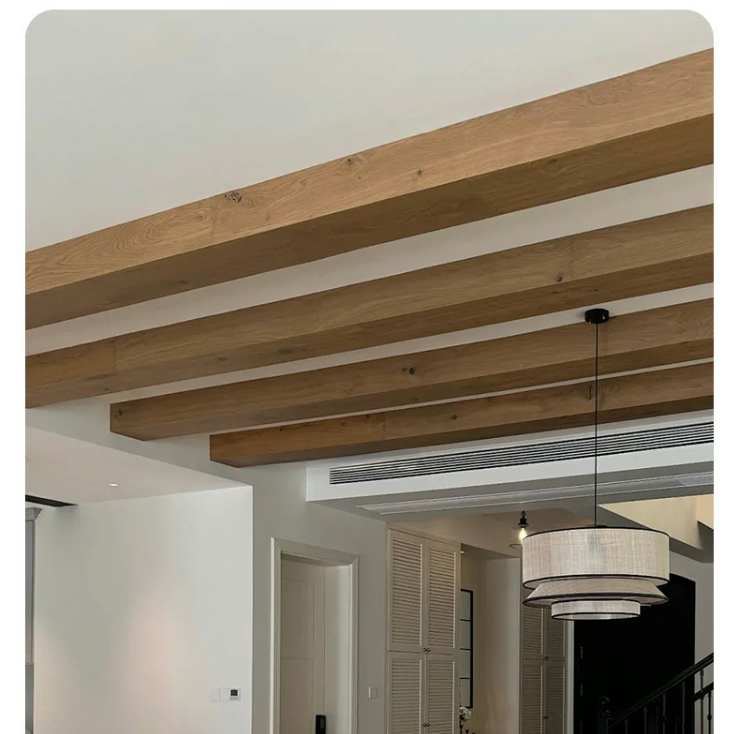
International trade platforms use certification systems to help buyers identify trustworthy suppliers among the many options available online. Gold Supplier certification represents one of the most recognized verification levels, indicating suppliers who have demonstrated business legitimacy and committed resources to their platform presence. Understanding what these certification levels actually represent helps buyers make informed supplier selections for premium faux wood ceiling beams.
Certification systems vary among platforms, and the significance of different certification levels differs accordingly. Some certifications indicate merely paid membership, while others require verification of business credentials, quality systems, or customer satisfaction. Understanding these differences prevents misplaced confidence in certification symbols that may not warrant the trust they appear to confer.
Understanding Supplier Certification Systems
Trade platform certification systems typically establish tiered supplier classifications based on verification depth and business commitment. Basic membership often requires only business registration, while higher tiers add verification of manufacturing facilities, quality systems, and customer satisfaction metrics.
Gold, Silver, and Bronze designations may indicate paid membership levels that include additional platform features. These paid tiers provide suppliers with enhanced visibility and buyer trust signals, but the payment alone doesn't guarantee product quality or service reliability.
Verified supplier designations require actual verification of business credentials, facility existence, and potentially production capability. These designations provide stronger confidence signals than simple paid membership, though verification depth still varies among systems.
What Gold Supplier Certification Means
Gold Supplier status typically requires suppliers to pay premium membership fees and submit to business verification processes. The verification usually confirms legal business registration, established facility presence, and basic operational capability. This verification provides baseline legitimacy assurance that unverified suppliers cannot match.
Ongoing Gold Supplier requirements often include minimum transaction volumes, response rate commitments, and customer satisfaction thresholds. These requirements ensure that certified suppliers actively maintain their platform presence and serve customers adequately.
Platform-trusted supplier designations go beyond basic Gold certification to indicate suppliers with demonstrated track records of successful transactions, positive customer feedback, and reliable performance over time. These designations provide stronger confidence signals than entry-level certifications.
Verification Depth Considerations
Business registration verification confirms that suppliers operate recognized legal entities. This verification prevents transactions with nonexistent or fraudulent entities but doesn't guarantee product quality or service reliability.
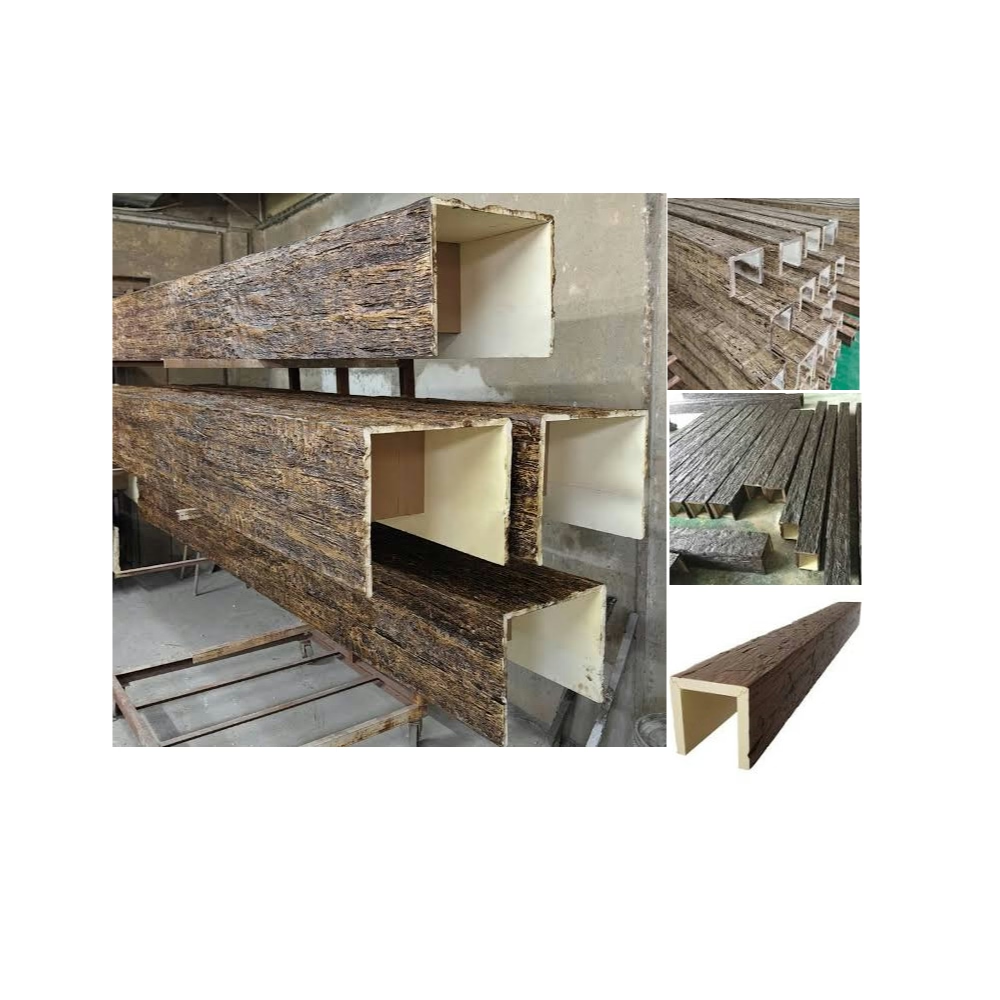
Manufacturing facility verification confirms that suppliers actually control production capabilities. Video verification, third-party audits, and on-site inspections all provide evidence of manufacturing operations beyond simple business registration.
Quality system verification indicates that suppliers maintain documented quality management practices. ISO certification, internal QC procedures, and testing capabilities all suggest suppliers who take quality seriously enough to invest in quality management infrastructure.
Red Flags in Certification Assessment
Certifications that lack meaningful verification requirements should receive less weight than those with substantive criteria. Paid membership programs that certify anyone willing to pay provide minimal assurance beyond payment willingness.
Verified badge claims without specific verification details raise questions about actual verification depth. Suppliers claiming verification without explaining what was verified may lack substantive certification to report.
Recent certification dates for new suppliers carry less weight than long-maintained certification status. Sustained certification over years suggests consistent performance, while recent certifications may indicate untested reliability.

Combining Certification with Other Research
Certification status provides one input among many for supplier evaluation. Combining certification assessment with direct communication, sample evaluation, and reference checking provides more comprehensive supplier understanding than any single method.
Due diligence should increase with transaction value. Small initial orders allow testing supplier performance before committing larger volumes, regardless of certification status. Certification provides starting confidence, but performance verification builds lasting trust.
Documentation requests reveal supplier transparency and professionalism. Suppliers willing to provide verification documents, certifications, and quality reports demonstrate confidence in their standing, while those who resist document requests may have something to hide.
Quality Assessment for Ceiling Beams
Ceiling beam quality depends on specific material formulations, manufacturing precision, and quality control rigor. Certification indicates business legitimacy but doesn't guarantee technical competence in beam manufacturing specifically.
Sample evaluation provides direct evidence of beam quality. Quality samples demonstrating proper density, authentic texture, and accurate dimensions indicate manufacturing capability that certification alone cannot confirm.
Testing capabilities for beam-specific properties indicate supplier understanding of product requirements. UV resistance testing, impact resistance verification, and dimensional accuracy checking all suggest suppliers who understand ceiling beam applications.
Communication Quality Indicators
Response quality often correlates with overall service quality. Prompt, thorough, and professional communication suggests suppliers who will serve well throughout transactions, while slow or unprofessional communication may indicate service quality problems.
Technical knowledge demonstrated in communication indicates supplier expertise. Representatives who understand beam specifications, installation requirements, and application considerations suggest manufacturers with relevant experience rather than generic traders.
Clarification willingness indicates supplier commitment to accurate transactions. Suppliers who ask clarifying questions rather than simply accepting orders demonstrate attention to detail that bodes well for order accuracy.
Transaction Protection Mechanisms
Escrow services provided by platforms protect buyer payments until delivery confirmation. This protection reduces risk when transacting with unfamiliar suppliers by ensuring payment occurs only after satisfactory delivery.
Trade insurance options cover various failure scenarios including nondelivery, quality mismatches, and supplier disputes. Understanding available protection mechanisms helps buyers select appropriate risk mitigation.
Dispute resolution processes provide recourse when transactions fail. Platform-mediated resolution offers more accessible remedies than direct legal action against international suppliers.
Building Supplier Relationships
Initial transactions test supplier performance and relationship potential. Small initial orders enable performance evaluation before relationship commitment, regardless of certification status.
Ongoing communication builds relationships that may yield benefits as volume increases. Established relationships often receive priority fulfillment, favorable pricing, and enhanced support that benefits both parties.
Performance feedback through platform reviews provides information for other buyers while potentially earning suppliers who value feedback. Constructive reviews that identify both strengths and limitations help other buyers while encouraging supplier improvement.
Long-Term Partnership Considerations
Sustained certification maintenance indicates ongoing supplier commitment to platform presence and service quality. Suppliers who maintain Gold or equivalent status over years demonstrate stability and reliability.
Volume growth with single suppliers builds relationships that yield preferential treatment. Suppliers who receive increasing business often reciprocate with service improvements and pricing favors.
Diversification across multiple certified suppliers provides supply security and negotiation leverage. Not depending entirely on single suppliers reduces risk while creating competitive dynamics that may improve terms across relationships.
Platform Comparison
Different trade platforms maintain different certification standards and verification practices. Understanding platform-specific certification meanings helps buyers interpret certification symbols appropriately across different platforms.
Platform reputation and buyer protection policies vary significantly. Established platforms with strong buyer protection provide more secure transaction environments than newer or less-regulated alternatives.
Fee structures and business models affect supplier composition on different platforms. Platforms with high membership fees may attract different supplier types than those with lower barriers to entry.
Making Informed Decisions
Gold Supplier certification provides useful starting information for supplier evaluation but shouldn't be the sole basis for purchasing decisions. Combining certification assessment with communication evaluation, sample testing, and reference checking provides comprehensive understanding.
Due diligence investment should scale with transaction value and risk. Larger orders, custom specifications, and new supplier relationships all warrant additional verification before commitment.
Ongoing supplier relationships built through successful transactions provide the most reliable quality assurance. Initial caution gives way to confidence as suppliers demonstrate performance over time.
Value of Certification Investment
Suppliers who invest in certification demonstrate commitment to their market presence and business legitimacy. This investment suggests providers who take their business seriously enough to meet platform requirements and maintain certification standards.
Premium faux wood ceiling beams from certified suppliers provide reasonable quality assurance beyond what certification alone indicates. Combined with appropriate verification, certification contributes to purchase confidence.
The combination of certified status, verified quality, and established relationship provides the highest confidence level for significant beam purchases. Each layer of verification adds to overall purchase security.

Confident Purchasing Decisions
Gold Supplier certification provides a useful signal in supplier evaluation but works best as part of comprehensive due diligence. Understanding what certification means and doesn't mean helps buyers calibrate confidence appropriately.
Premium faux wood ceiling beams deserve premium supplier selection processes. The investment in verification protects against problems that would cost more than the verification effort required to prevent them.
For buyers seeking quality faux wood ceiling beams through international sourcing, Gold Supplier certification represents a useful starting point. Thorough evaluation of certified suppliers completes the verification process that certification alone cannot provide.
Technical References
ASTM standards cited in every specification
Test Data
Lab results from internal testing program
Updated 2026
Reviewed against current product specs