
Design trends come and go with remarkable speed in the interior styling world. What's considered cutting-edge this year may feel dated within a decade. Savvy designers understand that successful projects require foundational elements that remain relevant even as finishing trends evolve. Decorative polyurethane beams occupy a unique position in this landscape—they deliver immediate visual impact while maintaining enough flexibility to accommodate changing tastes without replacement.
The material's inherent versatility deserves much of the credit for this adaptability. Polyurethane accepts texturing and coloring treatments that span the range from rough-hewn rustic to sleek contemporary. The same manufacturing process that creates deeply carved grain patterns for farmhouse applications can produce smooth, minimally textured surfaces for modern spaces. This range exists within a single material system, eliminating the need to source different products for different project styles.
Styling Across Design Traditions
Farmhouse and country interiors embrace decorative beams as essential character elements. Spaces designed around farmhouse aesthetics typically feature beams with pronounced texture—visible saw marks, prominent grain patterns, and finishes that suggest age and authenticity. The polyurethane versions capture these qualities convincingly while offering practical advantages that real reclaimed timber cannot match. No concerns about insects, rot, or inconsistent quality across beam lengths.
Transitional interiors blend traditional and contemporary elements, often featuring beams with refined textures and neutral finishes. A four-inch beam with subtle grain definition works beautifully in rooms mixing antique furniture with modern upholstery. The beams provide visual warmth without overwhelming delicate pieces or competing with statement art. Color selections in this context tend toward honey tones and natural wheat colors that read as wood without announcing themselves.
Contemporary and minimalist spaces present different challenges. Here, beams must contribute to an overall sense of clean design while still providing the visual interest that prevents spaces from feeling sterile. The solution often involves beams with architectural profiles—crisp lines, geometric shapes, and minimal surface texture. These beams read as designed elements rather than rustic additions, integrating seamlessly with contemporary finishes and furnishings.

Color Coordination Strategies
The finish on decorative beams influences the entire room's color story. Successful projects typically establish beam finish early in the design process, allowing other selections to respond to this foundational element. Working in reverse—selecting furniture and finishes first and then searching for coordinating beams—often produces less satisfying results.
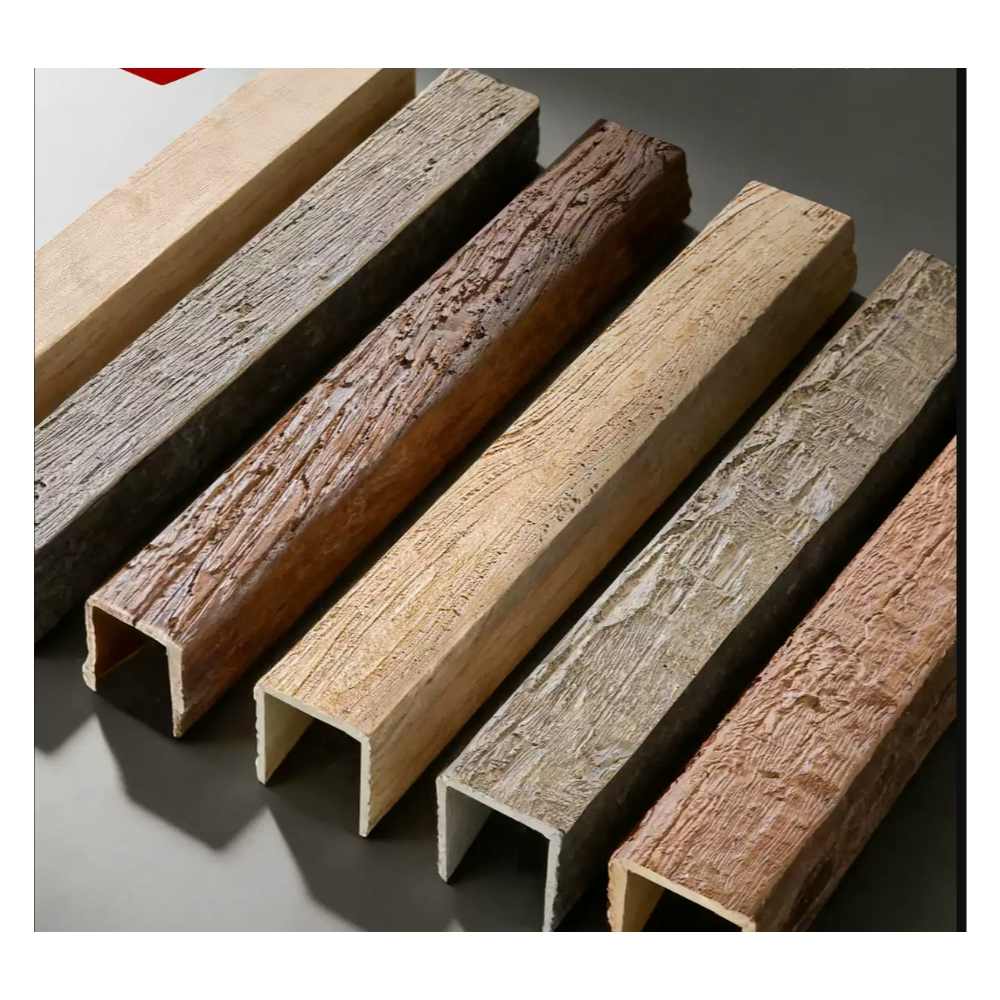
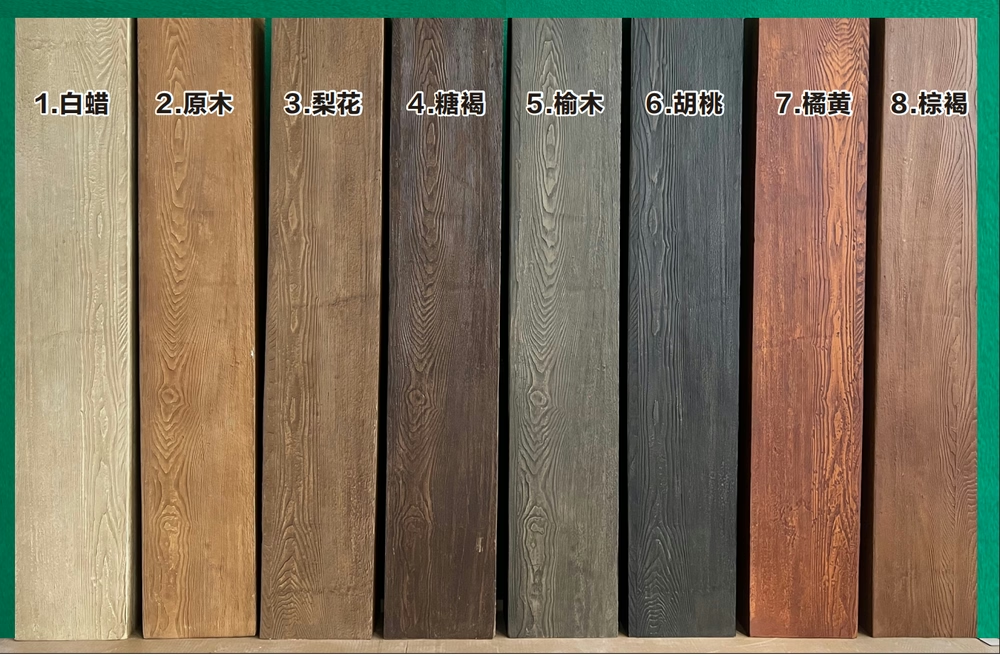
Light finishes work well in rooms with abundant natural light and contemporary furnishings. Whitewashed beams with subtle wood grain visible beneath the paint create warmth without weight, maintaining the open feeling that high-ceilinged contemporary spaces require. The key lies in achieving sufficient texture visibility; too-heavy paint application eliminates the wood character entirely.
Dark finishes anchor spaces and create visual mass where the design calls for it. Deep walnut and ebony tones add drama and sophistication, particularly effective in rooms with neutral wall colors and bold accent furniture. Dark beams also perform well in spaces with exposed brick or concrete, balancing industrial materials with organic warmth.
Mid-tone finishes offer remarkable flexibility, working across numerous color schemes without dominating or disappearing. Oak-toned beams adapt to both warm and cool palettes, supporting furniture and accessories rather than competing with them. This versatility makes mid-tones particularly appropriate for rental properties or commercial spaces where future tenants may have different aesthetic preferences.
Scale and Proportion Considerations
The visual impact of decorative beams depends heavily on their relationship to the surrounding space. A beam that feels perfectly proportioned in a cozy breakfast nook may appear trivial in a grand living room with twenty-foot ceilings. Conversely, massive beams that create intimate drama in large spaces would overwhelm smaller rooms entirely.
Standard ceiling beam installations typically use proportions that relate to room dimensions. In standard eight-foot ceiling applications, beams sized between four and six inches provide visible presence without dominating the space. Vaulted ceilings with ten-foot or greater heights can accommodate eight-inch or larger beams, creating dramatic focal points that draw the eye upward.
The spacing between parallel beams affects room character as well. Tight spacing—beams every four or six feet—creates a strong rhythmic pattern that works well in traditional settings. Wider spacing, with ten feet or more between beams, produces more subtle influence, adding interest without rigidly structuring the room. Some designers prefer single accent beams positioned asymmetrically for contemporary spaces, breaking from the predictable grid entirely.
Mixed Material Approaches
Sophisticated interior designs often combine decorative beams with other materials to create layered visual interest. Wood and metal pair naturally, with iron hardware and beam straps reinforcing rustic themes while contemporary spaces might incorporate sleek metal corbels or bracket supports.
Plaster and beams create interesting contrasts between smooth and textured surfaces. Beams traversing plaster ceilings establish dialogue between the organic texture of wood and the uniform finish of plaster. This combination appears throughout Mediterranean and Italian-inspired designs, where timber roof structures meet plastered interior surfaces.
Glass and beams represent an increasingly popular combination for modern projects. Beams framing skylight openings or defining zones within open floor plans provide warmth that glass alone cannot achieve. The material contrast—hard versus soft, transparent versus solid—creates visual complexity that rewards extended viewing.
Climate and Environmental Adaptability
One of polyurethane's most valuable characteristics involves its performance across environmental conditions. Real wood behaves unpredictably when humidity fluctuates—expanding during wet periods, contracting as conditions dry, and eventually developing gaps, cracks, or warping that compromise both appearance and structural integrity.
Polyurethane maintains consistent dimensions regardless of atmospheric conditions. This stability proves particularly valuable in challenging environments: coastal properties with salt air, mountain homes with extreme temperature variations, basements with persistent dampness. Installing decorative beams in these locations with real wood would require extensive treatment regimens and eventual replacement. Polyurethane eliminates these ongoing concerns.
The material also performs well in rooms with active fireplaces or wood stoves. While real beams require careful positioning relative to heat sources, polyurethane's thermal properties allow more flexible placement. The material won't char, crack, or become a fire hazard under normal conditions.
Discuss your specific project requirements with our design support team. We can recommend appropriate profiles, textures, and finishes based on your aesthetic goals and environmental conditions, ensuring your decorative beams provide lasting satisfaction.
Technical References
ASTM standards cited in every specification
Test Data
Lab results from internal testing program
Updated 2026
Reviewed against current product specs


