
The most memorable interiors rarely confine themselves to single design languages. A living room might anchor contemporary seating against rustic timber beams, or a dining space might juxtapose mid-century chairs with farmhouse tables beneath industrial lighting fixtures. These combinations create spaces that feel collected rather than purchased, personal rather than prescribed. The challenge lies in finding elements that bridge disparate influences without forcing artificial harmony.
Faux beams occupy a remarkable position in this design landscape. They carry inherent warmth and organic character that suggests tradition and craftsmanship, yet they present these qualities through modern manufacturing that allows unprecedented control over appearance. This duality makes them uniquely suited for eclectic interiors where elements from different periods and aesthetics must coexist.
Understanding Eclectic Design Principles
Successful eclectic interiors share several characteristics that distinguish them from random accumulation. First, they maintain color coherence across seemingly unrelated elements. A shared palette—perhaps grounded in warm neutrals with strategic color accents—pulls disparate pieces into conversation. Faux beams contribute significantly to this coherence, providing a consistent wood-toned element that appears throughout the space.
Texture creates another unifying thread. Eclectic spaces typically layer multiple textures—smooth upholstery beside rough textiles, glossy surfaces adjacent to matte finishes, natural materials paired with manufactured ones. Beams introduce consistent wood texture that appears deliberately chosen rather than accidentally included. This texture provides visual rest between more varied surface treatments.
Scale and proportion also matter in eclectic harmony. Elements don't need to match, but they need to relate. A massive antique armoire works alongside sleek modern shelving when both occupy similar visual weight in the room. Beams establish overhead presence that anchors lower furnishings without demanding coordination with specific pieces.
Selecting Beams for Mixed-Style Spaces
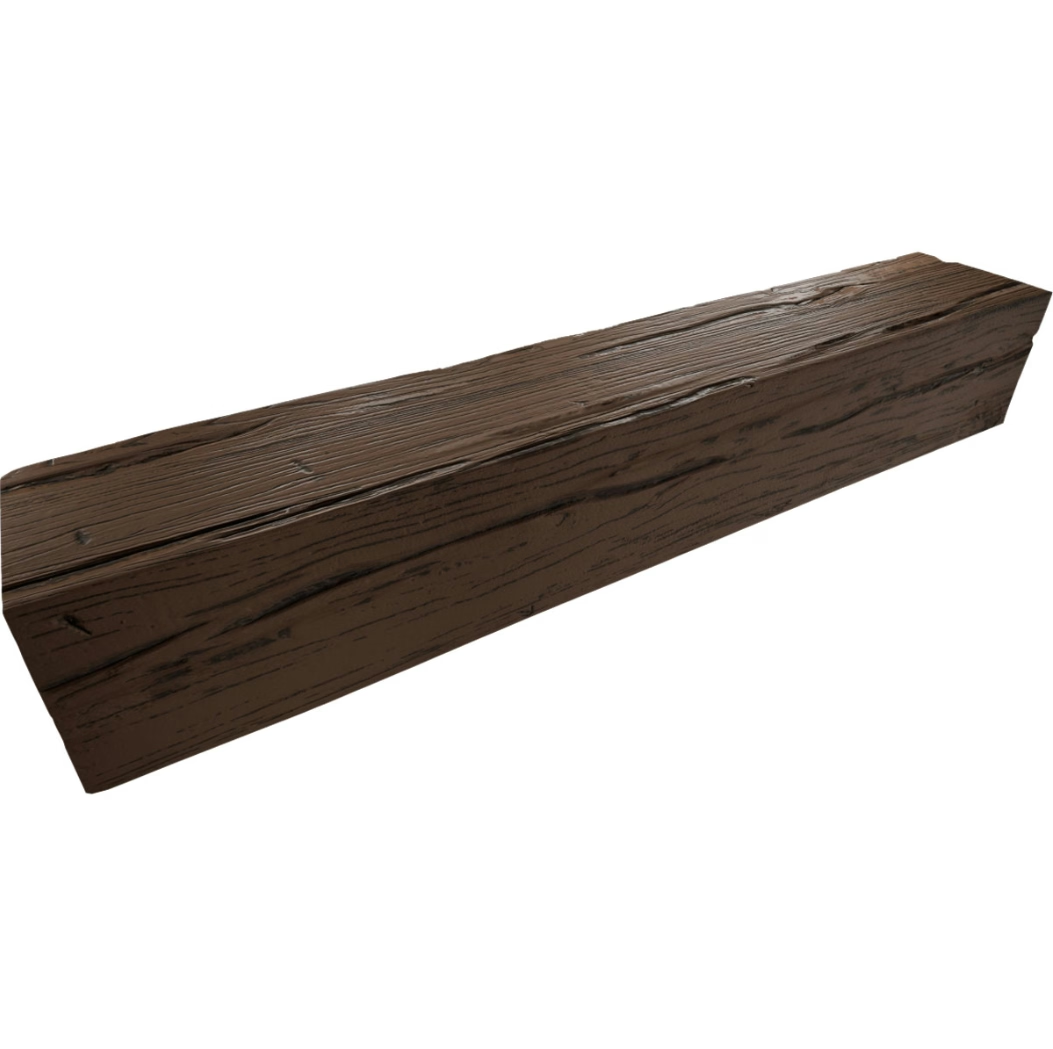
The texture and finish of beams dramatically influences how they interact with surrounding elements. In eclectic contexts, the goal typically involves creating bridges rather than matching precisely. A medium-textured oak finish connects naturally with both traditional wooden furniture and contemporary metal-and-glass combinations. The neutral wood tone accepts association with multiple color schemes while contributing warmth that neither metal nor glass can provide.
Beam profile influences overall room character as much as finish. Heavy, deeply textured beams reinforce traditional and rustic influences, adding weight and history to the space. Clean-lined profiles with minimal texture serve contemporary aesthetics better, providing warmth without strong stylistic statements. Transitional profiles occupy middle ground, supporting both directions without committing fully to either.
Eclectic spaces often benefit from unexpected beam applications. Rather than conventional ceiling placement, beams might wrap structural columns, frame doorways, or create partial-height room dividers. These unconventional placements add interest while demonstrating confident design choices. Polyurethane's lightweight nature makes these alternative applications practical where real timber would present installation challenges.

Creating Visual Connections
Effective eclectic design establishes visual links between seemingly unrelated elements. Beams serve this bridging function admirably by introducing wood grain patterns that echo across the space. A beam's grain may not match any specific wooden furniture piece, but the presence of wood as a material creates subconscious connection. This technique works particularly well when wooden elements appear in multiple rooms, creating continuity through repetition.
Color echo represents another effective strategy. If beams feature warm honey tones, introducing smaller wooden accessories with similar coloring throughout the space reinforces the connection. Throw pillow covers, picture frames, small decorative objects—each becomes part of a larger visual conversation anchored by the overhead beams.
Scale echo operates similarly. The bold presence of ceiling beams establishes a visual vocabulary of substantial, confident elements. Smaller-scale substantial objects—chunky textile patterns, oversized lamp bases, thick-framed mirrors—participate in the same design language without direct visual connection.
Balancing Complexity and Restraint
Eclectic interiors risk becoming overwhelming without moments of visual rest. The natural tendency in mixed-style spaces involves adding more elements to address perceived gaps, but successful design requires discipline about subtraction as well as addition. Beams provide substantial visual weight that allows surrounding areas to remain calmer without feeling empty.
Strategic beam placement can organize complex spaces by establishing hierarchy. A long beam running the length of a combined living-dining space creates a visual boundary that divides without physical separation. Furnishings grouped on either side relate to their respective zones while sharing the overhead beam's unifying presence.
Negative space around beams contributes to their effectiveness. Rather than crowding beams with decorative accessories, allowing them visual breathing room emphasizes their architectural significance. This restraint proves particularly important in eclectic settings where numerous other elements compete for attention.
Practical Considerations for Eclectic Installations
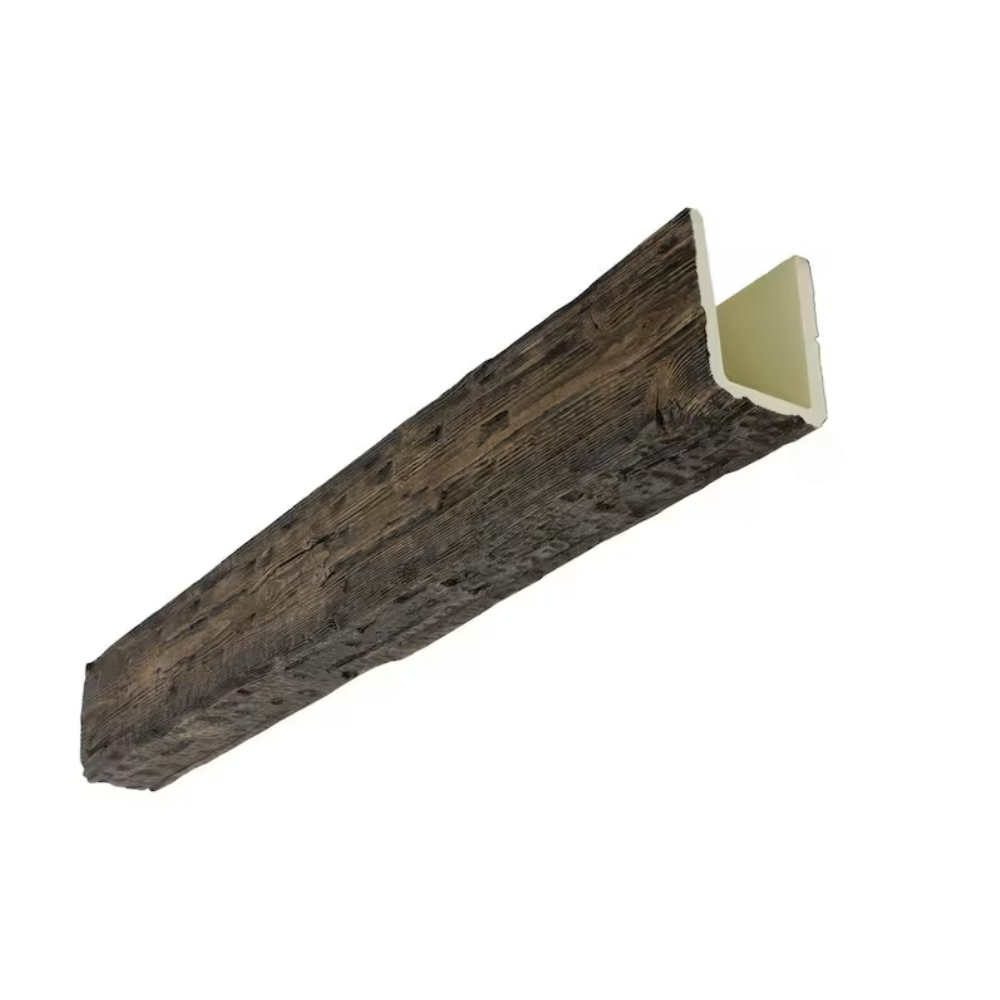
Polyurethane faux beams offer practical advantages that support ambitious eclectic designs. Their consistent quality means the beams you specify for one project will match subsequent purchases exactly—no searching through reclamation yards hoping to find compatible pieces, no variation between beams that disrupts visual continuity.
Installation flexibility enables creative placements that wouldn't be possible with structural timber. Beams can be positioned diagonally across ceiling corners, creating dynamic angles that energize static spaces. They can be cut and modified on-site for custom fitting around architectural features. They can be combined with other materials—metal straps, decorative brackets, integrated lighting—to create hybrid elements that further expand design possibilities.
Environmental performance matters in eclectic contexts particularly. Spaces combining vintage furniture, delicate textiles, and extensive artwork require stable conditions that won't stress these valuable elements. Polyurethane maintains consistent dimensions regardless of humidity fluctuations, eliminating concerns about wood movement affecting nearby items.
Our design consultation services can help you develop beam specifications that support your eclectic vision. Share your project scope, existing elements, and design aspirations, and we'll recommend appropriate profiles, finishes, and installation approaches to achieve cohesive results.
Technical References
ASTM standards cited in every specification
Test Data
Lab results from internal testing program
Updated 2026
Reviewed against current product specs


