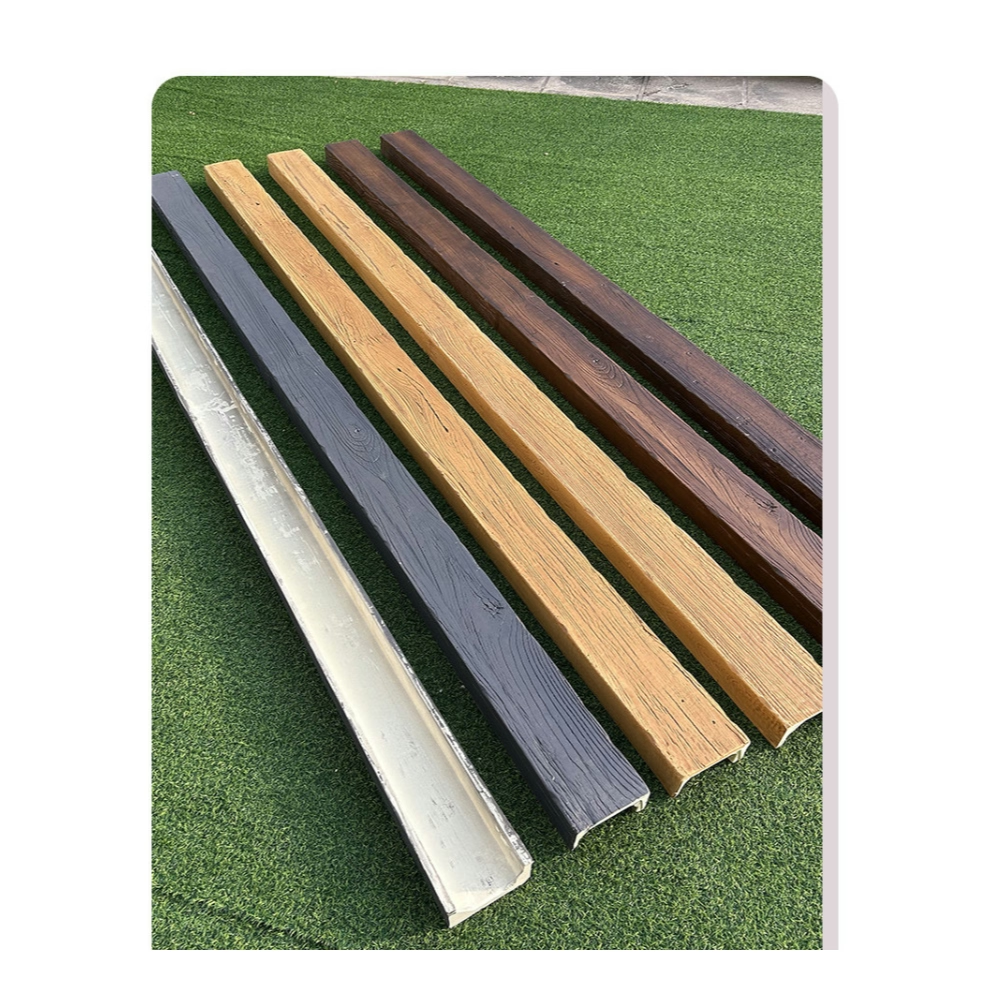
Whole-house renovations represent substantial commitments of money, time, and emotional energy. Property owners undertaking these projects naturally seek materials and treatments that justify the disruption involved. Every decision should contribute meaningfully to the final result, avoiding half-measures that require future remediation or compromise the transformation's completeness.
Ceiling beam installations contribute significantly to whole-house renovation outcomes in ways that extend beyond simple aesthetics. These architectural elements establish design themes that unify disparate rooms, create visual connections between renovated and existing spaces, and add perceived craftsmanship that distinguishes renovated properties from conventional listings.
Strategic Planning for Comprehensive Installations
Whole-house renovations benefit from systematic planning that addresses beam installations as integral components rather than afterthought additions. The planning sequence should establish design direction early, allowing beam specifications to inform adjacent decisions about finishes, furnishings, and lighting.
Consider how beams will function across different room types within the renovation scope. Kitchens, living areas, and master bedrooms might accommodate prominent installations, while bathrooms, laundry rooms, and smaller secondary spaces may work better with scaled-down treatments or no beams at all. This selective approach concentrates investment where impact is greatest while avoiding installations that feel obligatory rather than intentional.
Cohesive design across multiple beam installations requires attention to consistency and variation. Using identical beam profiles, textures, and finishes throughout creates strong unity but risks monotony. Alternatively, varying beam characteristics between spaces—perhaps different textures in different wings, or scaled sizes based on room dimensions—creates interest while maintaining underlying consistency through shared design DNA.
Coordination with Major Renovation Systems
Whole-house renovations typically involve multiple systems that require coordination with ceiling beam installations. Electrical work, HVAC modifications, and plumbing adjustments should resolve before beam installation begins, avoiding the need to work around newly installed beams or compromise their appearance through fixture relocations.
Lighting integration deserves particular attention in comprehensive projects. Recessed fixtures, track lighting, and statement pendants all interact with beam placements, and the relationship between these elements significantly affects both appearance and function. Developing a comprehensive lighting plan that accounts for beam positions ensures these systems complement rather than conflict.
Structural modifications sometimes accompany whole-house renovations, and beam installations should respond to these changes appropriately. If walls are being removed to create open floor plans, beams may help define the new spatial organization. If additions are expanding the home's footprint, beam installation can establish visual consistency between existing and new construction.
The renovation sequence typically proceeds from most invasive work toward finishing work, with beam installation occurring in later stages. This sequencing protects beams from damage during construction activity and allows their installation to proceed efficiently once the environment has stabilized. Temporary protection during remaining construction phases prevents damage that would require repair or replacement.


Maximizing Return on Investment
Property owners naturally wonder whether comprehensive beam installations justify their cost. The answer depends on project goals, market context, and design execution quality. When beams are specified and installed appropriately, they consistently contribute more value than their cost while distinguishing renovated properties from comparable alternatives.
The perception of craftsmanship that beams provide affects how potential buyers and visitors evaluate renovated spaces. A home featuring quality beam installations registers as having received careful attention throughout the renovation, suggesting that other less-visible work also received appropriate care. This halo effect extends the perceived quality beyond the beams themselves.
Market analysis in many regions shows consistent value appreciation from beam installations in appropriate contexts. Properties with beam ceilings typically sell faster and at higher prices than comparable properties lacking these features. For owner-occupants, this appreciation represents equity building. For investors, it supports rental premiums and accelerated sales.
Quality Considerations for Lasting Results
The long-term satisfaction of whole-house beam installations depends heavily on product quality and installation excellence. Inferior beams—those with unconvincing textures, inconsistent finishes, or poor dimensional stability—compromise renovation outcomes rather than enhancing them. The investment in premium products pays dividends through lasting satisfaction and maintained property value.
Installation quality matters equally. Even excellent beams fail to deliver intended results when poorly installed—misaligned, inadequately secured, or poorly detailed at junctions. Professional installation ensures that the design intent translates into actual appearance, protecting the investment that quality beams represent.
Our comprehensive services address both quality dimensions, providing products and installation support that together ensure successful outcomes. Sample evaluation allows quality assessment before commitment, and our installation documentation provides guidance for professional installers unfamiliar with our specific products.
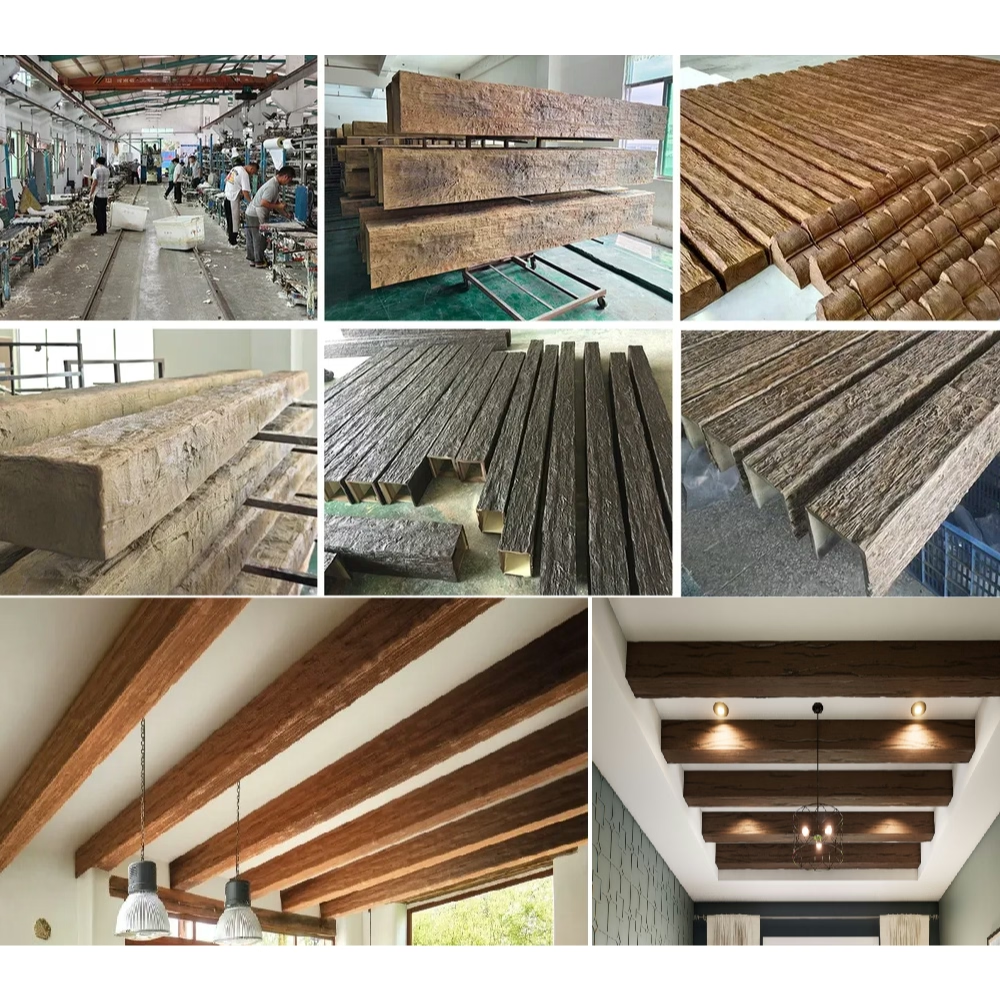
Budget Planning Across Project Phases
Whole-house renovation budgets benefit from systematic allocation that reserves appropriate funds for beam installations. The percentage of total budget devoted to beams varies based on project scope and finish levels, but beam installation typically represents a small fraction of comprehensive renovation costs while contributing disproportionate visual impact.
Phased renovation approaches sometimes include beam installation in later phases rather than initial work. This sequencing allows accumulated equity from earlier phases to support subsequent investments while ensuring beam installation benefits from lessons learned during earlier work.
Our project consultation services help establish realistic budgets for beam installations within comprehensive renovation scopes. Understanding your overall project budget, design goals, and timeline allows us to recommend approaches that achieve your objectives within available resources.
Begin your whole-house renovation planning by discussing beam installation possibilities with our specification team. Understanding the options available helps inform broader project decisions and ensures beam installations integrate effectively with your renovation vision.
Technical References
ASTM standards cited in every specification
Test Data
Lab results from internal testing program
Updated 2026
Reviewed against current product specs