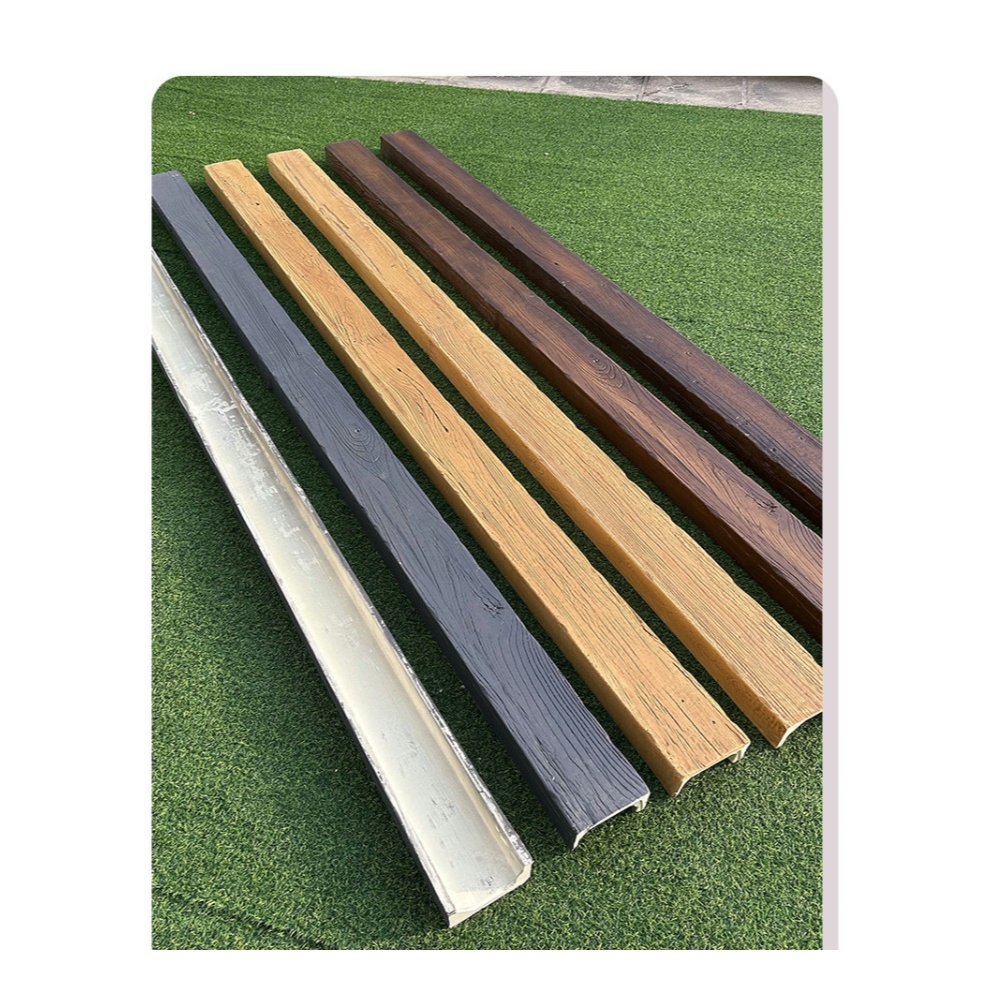
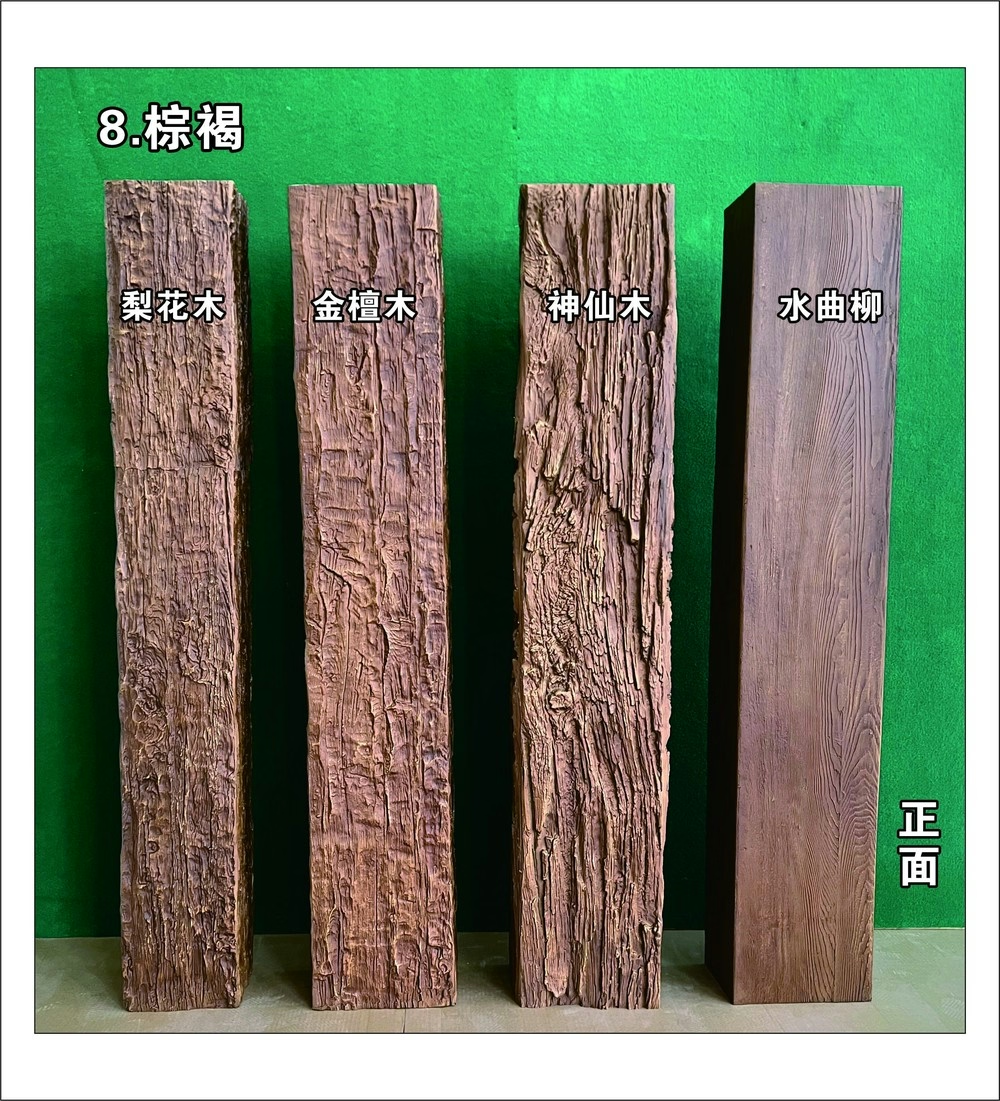
Interior renovation projects represent significant investments of money, time, and emotional energy. Homeowners undertaking these endeavors seek transformations that justify the disruption and expense—spaces that feel refreshed, updated, and aligned with evolving lifestyle needs. Polyurethane resin beam elements have emerged as powerful renovation tools, capable of dramatically transforming ceiling and wall treatments without the structural complications and maintenance burdens that genuine timber introduces. Understanding how to integrate these elements effectively helps renovation teams achieve professional results that exceed client expectations.
Planning Phase Integration
Successful beam integration begins long before physical installation, during the planning phases when renovation scope and direction get established. Comprehensive planning identifies opportunities for beam treatments, coordinates beam specifications with overall design direction, and establishes realistic budgets that accommodate quality installations. This early attention prevents costly changes later and ensures that beam elements contribute coherently to renovation outcomes.
Design development should incorporate beam treatment options before finalizing finishes, fixtures, and furnishings. Beams affect lighting requirements, furniture placement, and overall spatial perception—all factors that require consideration before decisions become fixed. Coordinating with electrical plans ensures appropriate outlet and fixture positioning relative to beam installations. Similarly, HVAC considerations may influence beam placement to avoid conflicts with diffuser locations or supply runs.
Contractor selection significantly influences renovation success, particularly when beam installations are involved. Look for contractors with specific experience in faux beam installations, as general carpentry expertise does not automatically translate to these specialized applications. Ask for examples of previous beam installations and references from clients with similar projects. The additional time spent verifying contractor capabilities prevents problems that could compromise the entire renovation.
Material specification requires careful attention to product quality and appropriateness for specific applications. Not all polyurethane resin beam products offer equivalent quality—material density, surface finish, and dimensional accuracy vary significantly between manufacturers. Request samples of proposed products and evaluate them critically against the finish quality and detail definition that projects require.

Coordination with Other Trades
Renovation projects involve multiple trades whose work must coordinate smoothly to achieve quality outcomes. Beam installations interact with electrical, plumbing, HVAC, and structural systems in ways that require thoughtful planning and communication. Establishing clear coordination protocols before work begins prevents conflicts that could delay projects or compromise quality.
Electrical rough-in must account for beam installations when lighting integration is planned. The positions of recessed fixtures, junction boxes, and wiring runs should be established relative to beam locations, ensuring that fixtures align properly with final beam positions. This coordination is especially critical when beams will incorporate light fixtures, as the electrical rough-in must accommodate specific mounting requirements.
HVAC considerations include both supply and return placement relative to beam elements. Beams positioned over supply diffusers may disrupt airflow patterns, while return grilles need appropriate clearances for proper air circulation. In some cases, beam installations may require ductwork modifications or diffuser repositioning to maintain system performance. Identifying these requirements during planning prevents installation conflicts.
Structural coordination ensures that beam mounting attachments connect to appropriate framing or structural elements. Decorative beams do not carry structural loads, but their mounting systems must attach to components capable of supporting their weight. Renovations that involve removing existing ceiling elements may reveal framing conditions that differ from expectations, requiring adaptive responses.
Construction Sequence and Timing
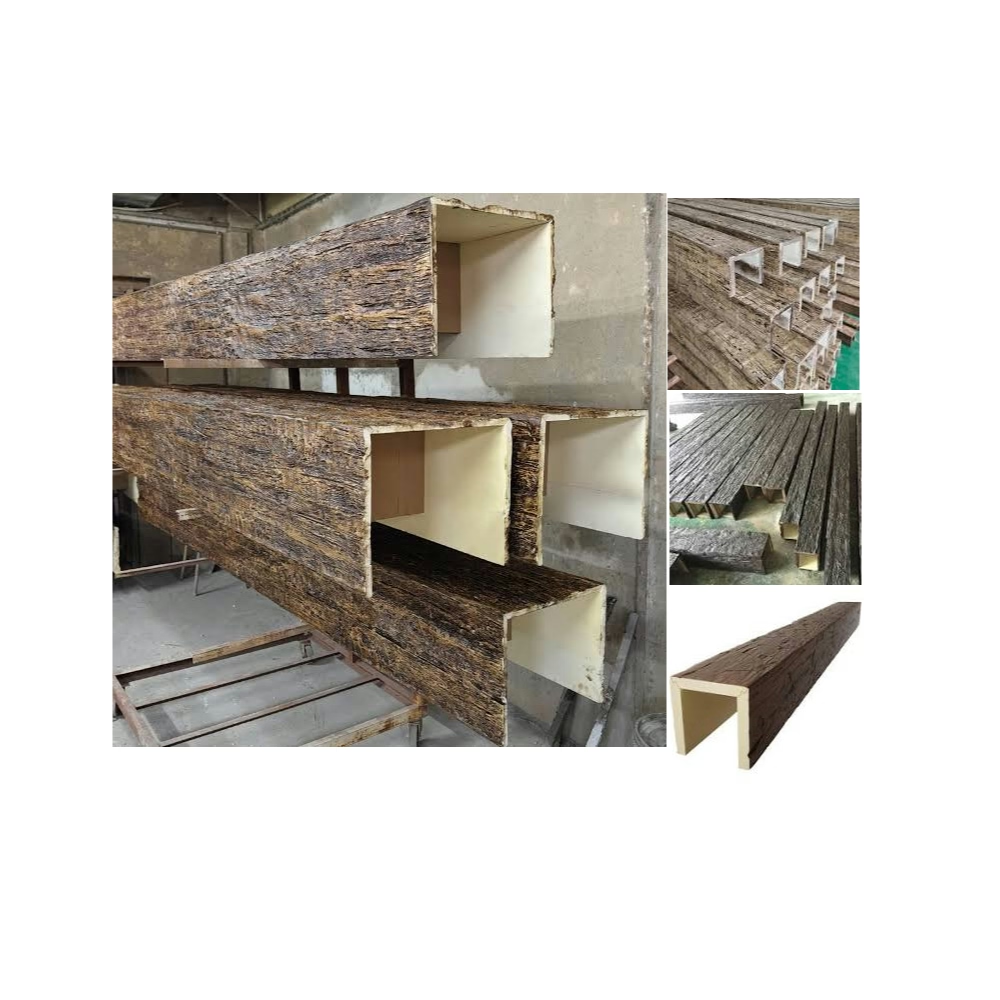
Optimal construction sequencing minimizes conflicts and ensures that each trade's work receives appropriate protection from subsequent activities. Beam installation typically occurs after major rough-in work but before finishing work that might be damaged by beam installation activities. This timing allows electrical and mechanical trades to complete their work while preserving clean surfaces for beam attachment.
Ceiling preparation often precedes beam installation, especially in renovation contexts where existing surfaces require repair or modification. Patching, texturing, and painting create appropriate mounting surfaces for beam elements. Some installations may benefit from having these finishes completed before beam installation, while others work better with beams installed first and trim work finished afterward. Project-specific conditions guide these sequencing decisions.
Drywall and plaster work following beam installation requires careful protection of beam surfaces. Dust, joint compound, and paint can damage beam finishes if not properly protected. Temporary covering of beams during subsequent finishing work preserves their appearance while adjacent trades complete their tasks. This protection represents minimal cost compared to repair or replacement of damaged beam elements.
Final trim and detail work integrates beams with surrounding architectural elements. The joints between beams and walls, beams and other beams, and beams and lighting fixtures all require attention that distinguishes professional installations from amateur work. Quality caulking, painting, and detail finishing create seamless appearances that make beam installations feel inherent to the architecture rather than afterthought additions.
Wall Beam Considerations in Full Renovations
Ceiling beams receive most attention, but wall beam installations offer equally powerful renovation impact with different spatial effects. Accent walls featuring vertically oriented beams create dramatic focal points that transform ordinary walls into design features. These installations work particularly well in spaces where architectural interest is limited, adding the texture and dimension that engaging interiors require.
Entryways and transitions benefit from beam treatments that announce arrivals and define movement paths. A beam spanning an entry ceiling creates psychological preparation for entering the home's primary living spaces. Beams in hallways can prevent these circulation spaces from feeling like mere connectors, adding residential warmth that makes movement through homes more pleasant.
Fireplace surrounds represent particularly rewarding applications for beam elements in renovation contexts. The substantial, textural appearance of wood beams creates perfect complement to fireplace flames, adding warmth that extends visual comfort beyond physical temperature. Beam mantels provide display space while contributing to the cozy atmosphere that makes fireplaces central gathering points.
Built-in unit integration extends beam aesthetics into shelving, entertainment centers, and storage installations. Coordinating beam treatments with built-in cabinetry creates visual connections between separate elements, unifying the composition while adding architectural interest. This integration proves especially valuable in contemporary renovations where built-in elements replace freestanding furniture.
Quality Assurance and Problem Prevention
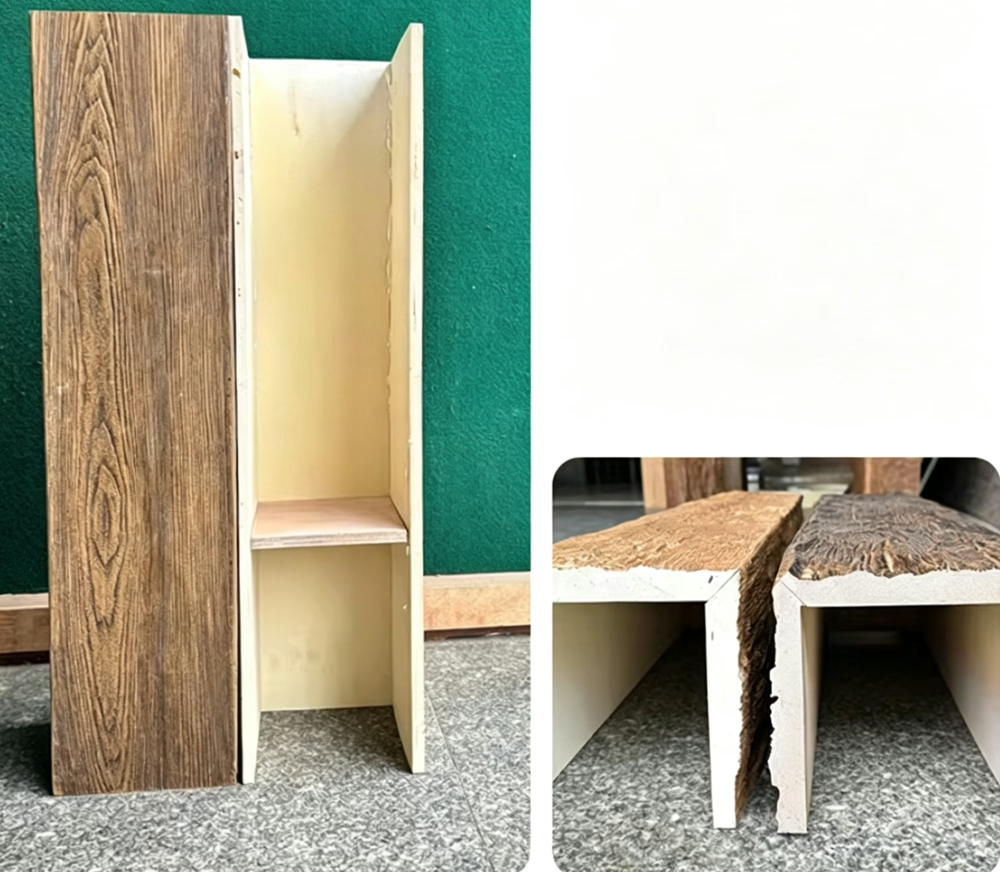
Inspection during installation catches problems while correction remains straightforward. Check that mounting surfaces are clean, dry, and appropriate for adhesive or mechanical attachment. Verify that fasteners engage structural elements adequately and that adhesive applications meet manufacturer specifications. Addressing issues during installation prevents problems that might require disruptive corrections later.
Level and alignment verification ensures that beam installations meet aesthetic and functional requirements. Use appropriate tools to confirm that beams are straight, level (where appropriate), and properly positioned relative to design intentions. Small alignment errors compound over longer runs, so checking throughout installation prevents cumulative deviations that become increasingly noticeable.
Joint quality determines much of the visual success of beam installations. Gaps, misalignment, and inconsistent joint treatment undermine otherwise quality work. Take time to achieve tight, consistent joints, using appropriate clamping, adhesive, and finishing techniques. The extra attention invested in joint quality distinguishes installations that appear professionally executed.
Final walkthrough and documentation helps renovation teams and clients understand what was installed and how to maintain it. Photographing completed installations—particularly areas hidden behind furnishings or fixtures—provides valuable records for future reference. Documenting mounting methods, adhesive products, and manufacturer information supports future maintenance and modification.
Budget Optimization Strategies
Value engineering helps renovation teams optimize beam investments against project budgets. Prioritizing beam installations in high-impact areas—visible spaces, primary gathering rooms, areas where guests spend time—maximizes perceptual impact while limiting costs to manageable levels. Secondary areas can receive simpler treatments or deferral to future budget cycles.
Alternative product selections can achieve intended aesthetics at various price points. Premium products offer superior detail and finish quality, but mid-range options may adequately serve project requirements. Understanding the specific quality differences helps specifiers make appropriate selections rather than defaulting to either extreme.
Phased implementation allows budgets to accommodate comprehensive beam renovations over extended periods. Initial phases address highest-priority areas, with subsequent phases completing the full vision as resources allow. This approach prevents budget exhaustion while still delivering meaningful improvement in early phases.
Professional installation represents investment rather than expense when considering true project costs. Amateur installations frequently require correction or replacement, adding costs that professional installation would have avoided. The apparent savings from self-installation often prove illusory when subsequent remediation gets accounted.
Technical References
ASTM standards cited in every specification
Test Data
Lab results from internal testing program
Updated 2026
Reviewed against current product specs