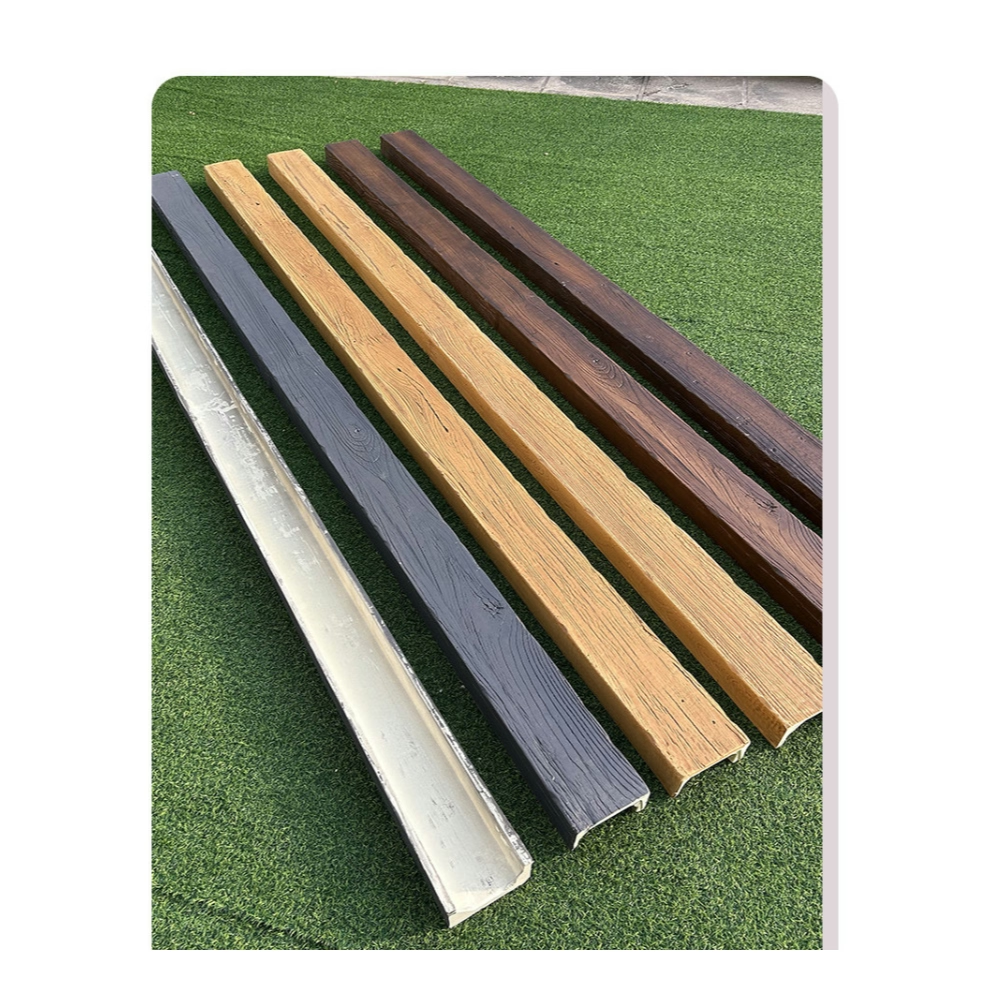
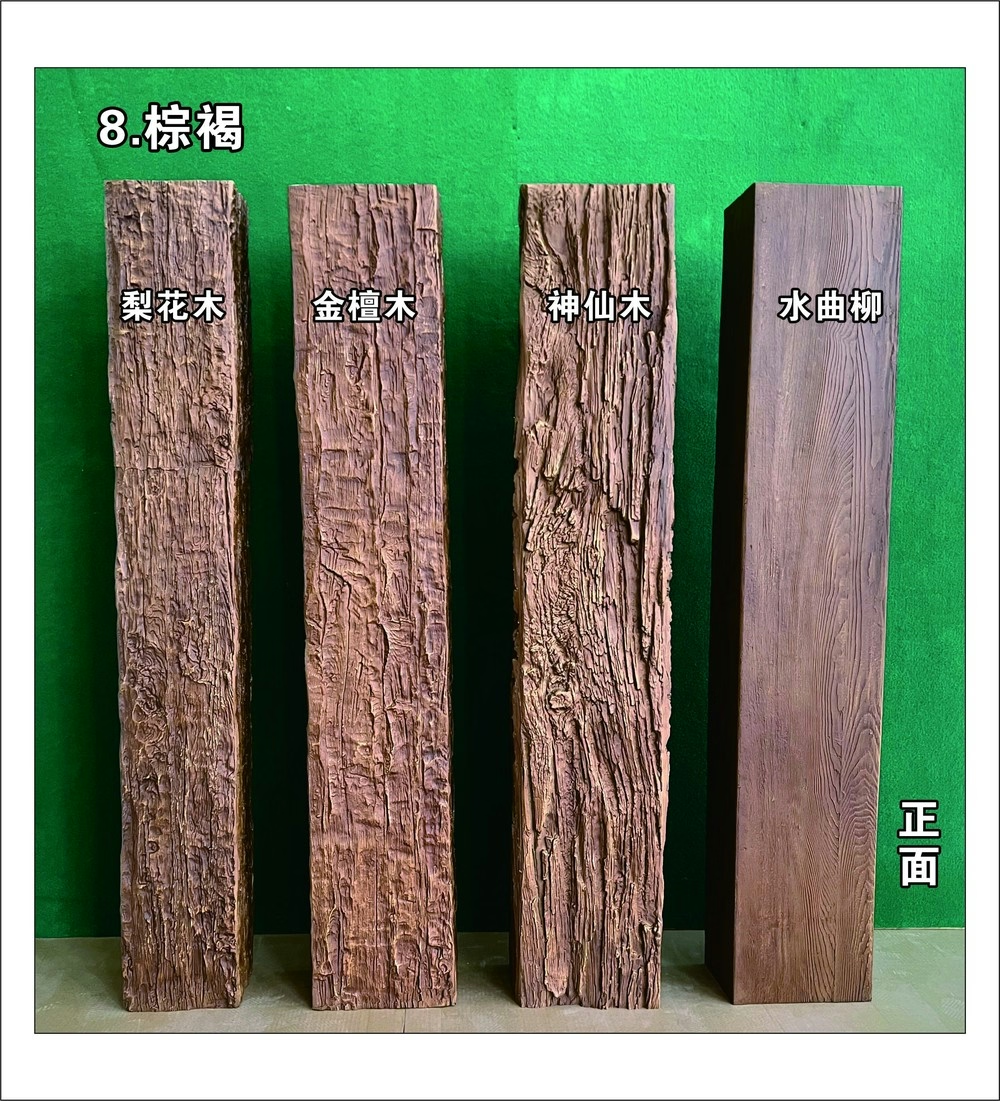
The challenge of integrating unsightly structural beams into coherent interior designs has challenged architects and homeowners since the development of visible structural systems. Steel beams, combination joists, and other necessary structural elements frequently disrupt design intentions, creating visual interruptions that prove difficult to address without significant compromise. U-channel faux wood ceiling beams offer streamlined solutions, providing the aesthetic benefits of wood-look beams through installation approaches that prioritize simplicity and effectiveness.
U-Channel Design Fundamentals
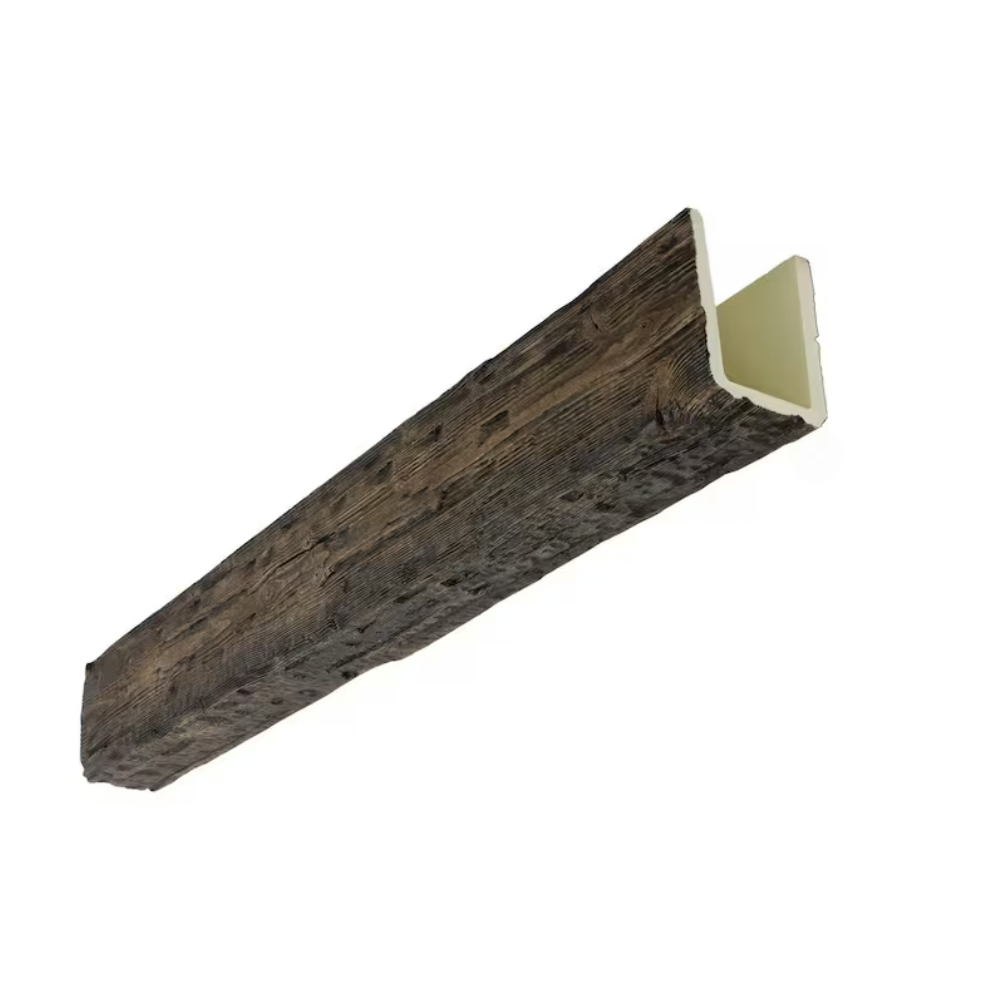
U-channel beams derive their name from their cross-sectional profile—the three-sided configuration creates a U-shape that wraps around existing structural elements. The open bottom characteristic distinguishes U-channel beams from four-sided options, allowing utilities, access, and other practical considerations to coexist with attractive beam appearances. This design has become increasingly popular as recognition grows that practical function and aesthetic appeal need not conflict.
The manufacturing process for U-channel beams involves precision forming techniques that create consistent profiles across extended lengths. Polyurethane injection molding or extrusion processes produce components with uniform dimensions, crisp details, and surfaces ready for finishing. The precision of manufacturing translates to installation efficiency, as components that fit consistently reduce the adjustment and modification time that variable products demand.
Structural accommodation represents a key design consideration for U-channel applications. Existing beams vary in width, depth, and configuration—variables that U-channel designs must accommodate through dimensional flexibility. Manufacturers address this variation through product lines offering multiple size options and through custom capabilities for unusual requirements. Successful specification requires accurate measurement of existing beams and understanding of available options.
The weight characteristics of U-channel polyurethane beams significantly influence handling and installation. The material's lightweight nature—typically 80-90% lighter than equivalent wood or stone products—simplifies logistics and reduces the structural support requirements that heavier alternatives would demand. This weight advantage translates to faster installation, lower labor costs, and reduced fatigue for installers working overhead.

Streamlined Installation Process
Installation of U-channel beams follows predictable phases that efficient installers have refined through experience. Initial preparation involves measuring existing beams, organizing components, and preparing mounting surfaces. This preparation work, though not glamorous, significantly influences installation efficiency and quality—rushing preparation invariably creates problems that consume more time than they save.
Component assembly often occurs at ground level before overhead positioning. Connecting U-channel halves, applying adhesive to mating surfaces, and verifying fit against actual beam dimensions ensures that lifted components will install cleanly. Some installers prefer to assemble complete units on the ground, while others connect halves after positioning around the structural beam. Project conditions and installer preference guide these approaches.
Mounting techniques depend on specific product designs and building conditions. Adhesive attachment to clean, dry beam surfaces provides secure bonds when properly applied. Mechanical fasteners add security, particularly in applications where vibration or other dynamic forces might stress adhesive bonds. Combined adhesive-and-fastener approaches offer maximum security for demanding applications.
Alignment verification throughout installation prevents cumulative errors that would become increasingly apparent. Checking that U-channel components sit level, maintain consistent positioning relative to ceiling plane, and align with adjacent elements ensures that completed installations meet expectations. Regular checking also catches problems early, when correction remains simple.
Design Applications and Opportunities
Great room transformations represent the most common U-channel beam application in contemporary homes. Open floor plans that combine living, dining, and kitchen functions frequently require structural beams that interrupt these spaces. U-channel wraps transform these necessary elements into design features, adding warmth and architectural interest without compromising the openness that defines great room appeal.
Home office and study spaces benefit from beam wrap installations that add residential character to work environments. The wood texture introduces organic warmth that counters the technological focus of many office configurations. U-channel wraps work particularly well in spaces where ceiling height or configuration limits alternative treatments, providing design impact without consuming significant space.
Media rooms and home theaters gain acoustic benefits from textured beam surfaces, which help manage sound reflections that would otherwise compromise audio quality. U-channel wraps add this acoustic benefit while creating the atmospheric warmth that makes home theater experiences enjoyable. The combination of functional and aesthetic benefits makes beam wraps particularly appropriate for entertainment spaces.
Commercial applications in retail, hospitality, and office contexts leverage U-channel beam wraps to soften industrial environments. Retail stores seeking boutique aesthetics can transform exposed structure into inviting spaces. Hotel lobbies and corridors benefit from the residential warmth that wood-look beams introduce. Office reception areas gain character that distinguishes them from generic corporate environments.
Finish Coordination and Detailing
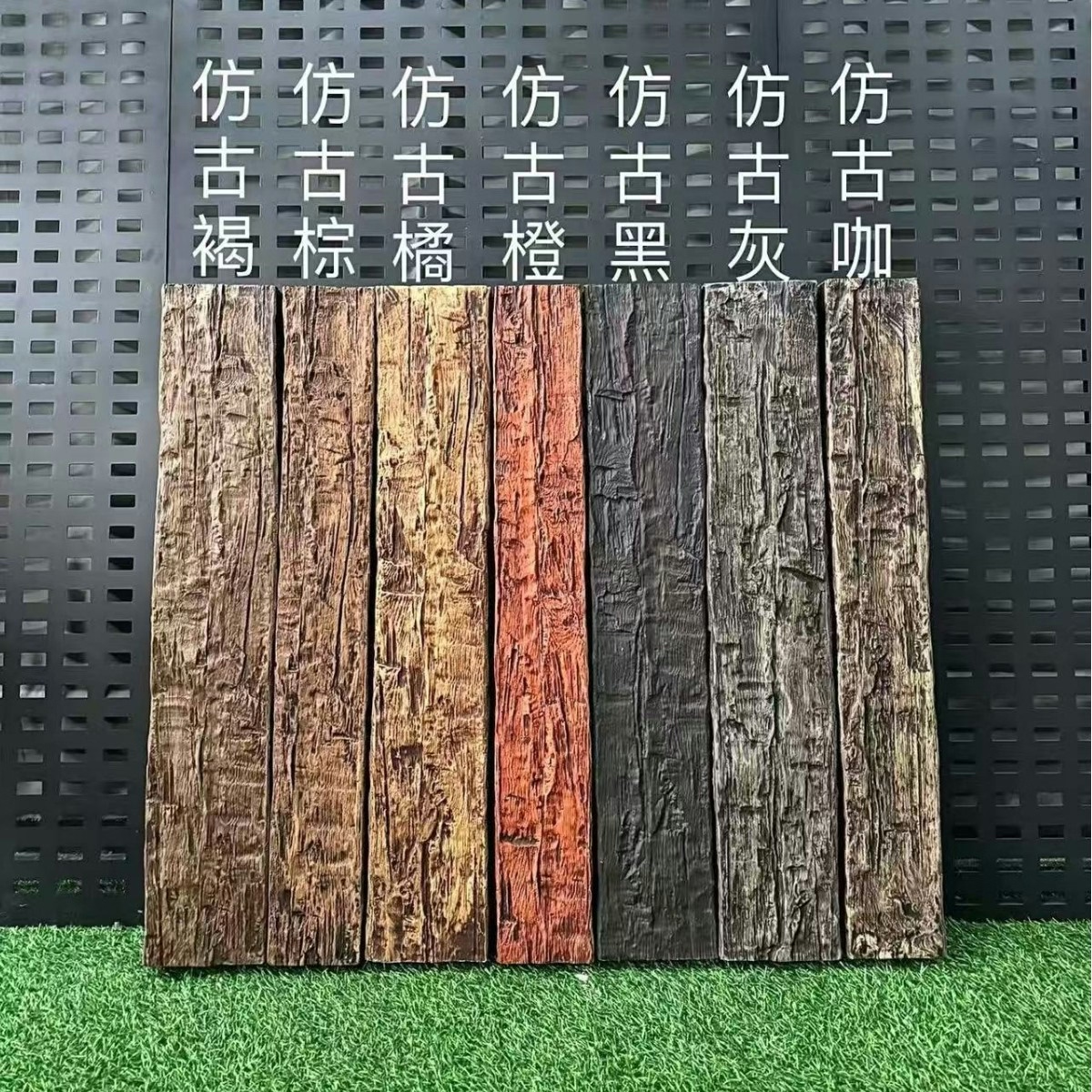
Finish selection for U-channel beams should coordinate with overall design schemes while considering practical maintenance requirements. Pre-finished options eliminate field finishing work, though they require accurate specification to avoid mismatches with adjacent finishes. Field finishing offers flexibility but adds labor and requires appropriate conditions for paint or stain application and drying.
Color matching between beam wraps and existing wood elements creates visual unity throughout spaces. Coordinating beam finishes with hardwood floors, wooden furniture, or existing millwork strengthens design coherence. Alternatively, intentional contrast—darker beams against lighter wood tones, for example—creates visual interest through deliberate tension.
Joint treatment between adjacent beam wraps and at wall intersections determines much of the visual success of installations. Clean miters at corners, consistent reveals at wall intersections, and seamless joints between beam sections elevate installation quality. These details require patience and precision, rewarding careful attention with professional results.
Lighting interaction with U-channel beams deserves consideration during design development. Light sources positioned relative to beams create shadow effects that enhance texture and depth. Alternatively, lighting integrated into beam designs—strips along bottom edges, for example—create ambient effects that extend beam contributions beyond simple aesthetics.
Long-Term Value Considerations
Durability characteristics of polyurethane U-channel beams contribute significantly to their value proposition. The material's resistance to moisture, insects, and decay eliminates the primary failure modes that affect natural wood alternatives. This durability translates to maintained appearance and avoided replacement costs over extended service periods.
Maintenance requirements remain minimal throughout the product lifetime, involving only periodic cleaning rather than the refinishing, sealing, or repair work that wood alternatives demand. This low-maintenance characteristic proves particularly valuable in overhead applications where access for maintenance work presents practical challenges.
Initial cost comparisons between U-channel polyurethane beams and alternatives must account for total lifecycle economics. While polyurethane products may carry higher purchase prices than basic materials, their extended service life and minimal maintenance requirements often result in lower total costs when calculated across realistic ownership periods.
Professional installation, while representing additional upfront cost, often proves economical when accounting for the quality outcomes and avoided remediation that amateur installations might require. The investment in professional installation typically generates returns through improved appearance, enhanced durability, and reduced likelihood of problems requiring correction.
Technical References
ASTM standards cited in every specification
Test Data
Lab results from internal testing program
Updated 2026
Reviewed against current product specs