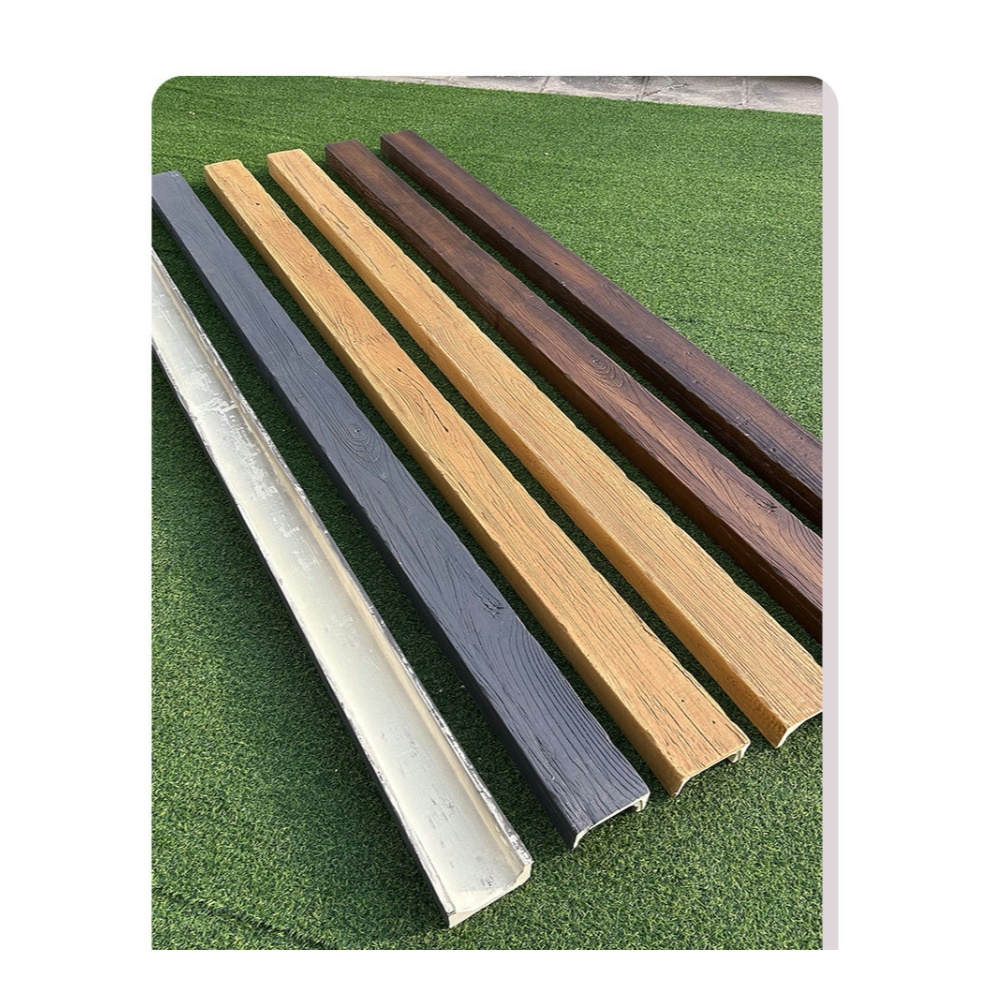
The quest to balance authentic aesthetics with practical construction considerations has driven innovation in decorative building materials for decades. Hollow polyurethane beams represent one of the most successful innovations in this space, offering substantial visual impact through lightweight, easy-to-install configurations. U-shaped hollow beams extend this approach to beam wrapping applications, where the hollow construction accommodates existing structural elements while the U-profile enables installation without disturbing utilities or access requirements.
Hollow Beam Construction and Design
Hollow beam construction utilizes the principles of structural engineering—where material positioned away from neutral axes provides disproportionate strength—to create lightweight components with substantial visual presence. The hollow interior reduces material usage and weight while the thicker walls at edges provide the dimensional stability and detail definition that realistic wood appearances require. This efficient construction approach benefits manufacturers, installers, and building owners alike.
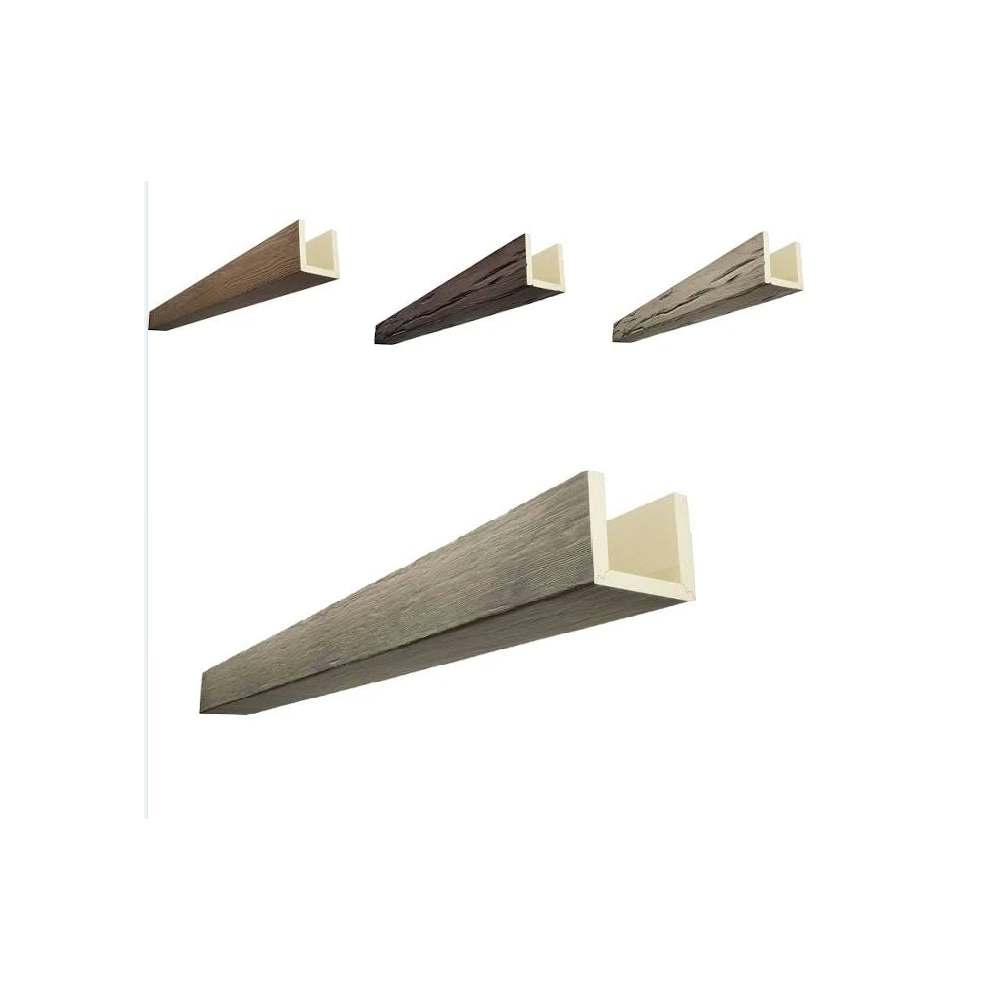
The U-shaped profile specifically serves beam wrapping applications where three-sided coverage suffices. Structural beams that span ceiling spaces often present the same three faces—two sides and a top—to interior spaces, with the bottom face either inaccessible or already finished. U-shaped hollow beams cover these three visible faces efficiently, avoiding the material waste that four-sided hollow beams would introduce in these applications.
Wall thickness in hollow beams typically ranges from one-half inch to one inch, providing adequate structural integrity for handling and installation while keeping overall weight manageable. Thicker walls improve impact resistance and detail definition but increase weight and material costs. Product specifications balance these considerations based on intended applications and performance requirements.
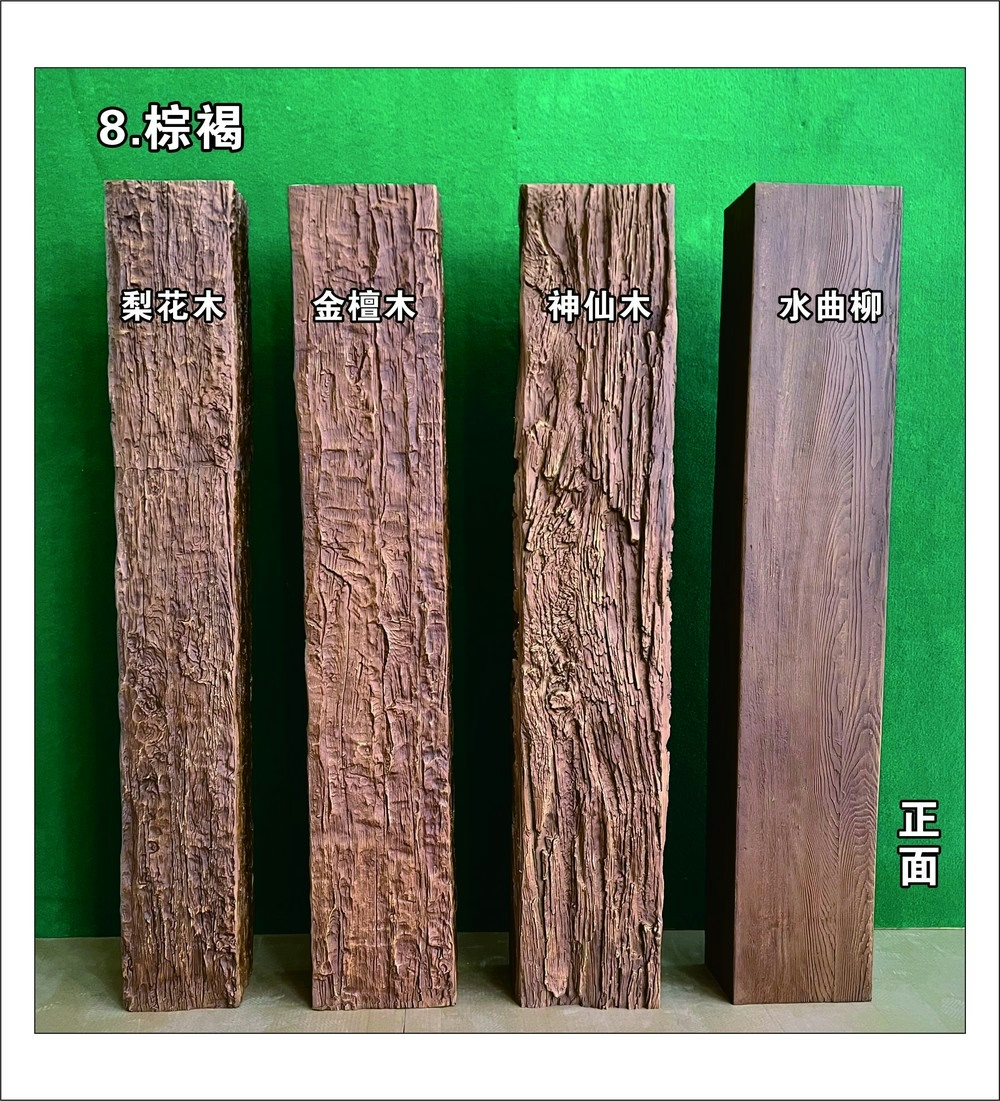
Surface quality of hollow beams must convince observers of authentic wood appearance despite the synthetic substrate. Modern manufacturing techniques achieve remarkable realism through texturing, coloring, and finishing processes that capture wood's natural variations. Grain patterns, color gradients, and tactile qualities all contribute to convincing appearance that satisfies critical observers.
Installation Advantages of Hollow Construction
The lightweight nature of hollow polyurethane beams dramatically simplifies installation compared to solid alternatives. Handling components that weigh a fraction of equivalent wood or stone products reduces the physical strain on installers, enables single-person handling in many situations, and eliminates the equipment that heavy materials would require. These practical advantages translate to faster installation and lower labor costs.
Reduced structural requirements accompany hollow beam installations, as the lightweight components impose minimal loads on building structure. Solid wood beams of equivalent visual size might require engineered support or structural reinforcement, expenses and complications that hollow polyurethane eliminates. This reduced structural dependency expands the range of applications where decorative beams can be installed.
Shipping and logistics benefits flow from lightweight hollow construction, as transportation costs depend significantly on weight. Hollow beams ship more economically than solid alternatives, advantages that become more pronounced for projects distant from manufacturing locations. These savings often reach end customers through more competitive pricing.
Storage and material handling on job sites becomes simpler with hollow components. Pieces can be transported through doorways, maneuvered in confined spaces, and positioned by individuals who might struggle with heavier materials. These practical advantages accelerate installation and reduce the logistics complexity that heavy materials would create.

Practical Applications and Use Cases
Covering steel I-beams represents the most common U-shaped hollow beam application in contemporary construction. Modern building codes frequently require steel structural elements in spans that wood cannot economically accommodate, creating ubiquitous beams that homeowners and designers seek to address. Hollow U-shaped wraps transform these industrial elements into architectural features, adding warmth and character that steel alone cannot provide.
Lam beam coverage—where engineered wood beams replace solid timber—also benefits from U-shaped hollow beam installations. These beams often lack the visual character that designers seek, presenting smooth, uniform surfaces that appear manufactured rather than crafted. Wrapping lam beams with hollow polyurethane components introduces the grain, texture, and warmth that authentic timber would provide.
TJI and other engineered joist products sometimes get exposed in basement finishing or first-floor ceiling applications where floor assemblies become visible. The dimensional consistency of these products actually facilitates hollow beam wrapping, as uniform cross-sections simplify template creation and component fitting. The resulting installations achieve clean appearances that complement contemporary construction.
Combination applications—where hollow beams serve both aesthetic and functional purposes—expand design possibilities. Integrated lighting channels, AV equipment mounting, and decorative bracketry can all incorporate into hollow beam designs, leveraging the internal space that hollow construction provides. These creative applications demonstrate the flexibility that hollow beam approaches enable.
Coordination with Building Systems
Electrical considerations in hollow beam applications depend on the specific configuration and intended use. Hollow interiors can accommodate low-voltage wiring for integrated lighting, speaker cables, or other electrical needs that benefit from concealment. However, hollow spaces typically cannot accommodate standard electrical code requirements for protected conductors, limiting applications to low-voltage systems or requiring conduit for higher-voltage applications.
HVAC integration requires careful coordination to ensure that ductwork, diffusers, and other mechanical elements remain accessible and functional. U-shaped hollow beams installed around existing beams may conflict with ductwork that occupies adjacent ceiling space. Careful coordination during planning prevents these conflicts, ensuring that mechanical systems continue functioning properly after beam installation.
Plumbing considerations rarely affect ceiling beam applications, though buildings with ceiling-mounted plumbing fixtures require verification that beam installation will not interfere with access or function. The access implications of U-shaped versus four-sided beams should inform selection in these marginal cases.
Structural assessment ensures that mounting systems accommodate real-world conditions. Hollow beam weight, ceiling conditions, and any additional loads from integrated elements all factor into appropriate mounting approach selection. Professional engineering input may be appropriate for complex applications or where structural questions arise.
Quality and Specification Considerations
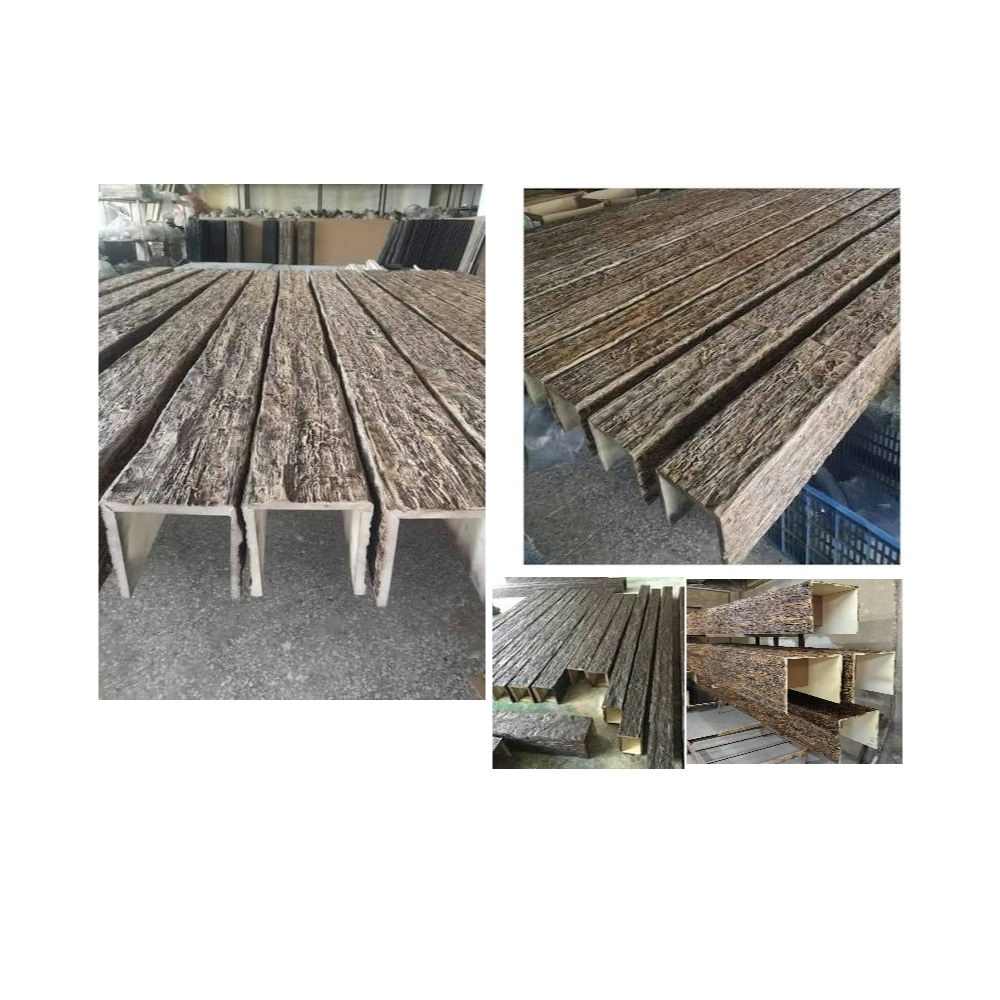
Product quality significantly influences installation experience and long-term performance. Higher-density polyurethane products offer superior impact resistance and detail definition, advantages that justify premium pricing for most applications. Lower-density alternatives may prove adequate for protected applications but can suffer damage in high-traffic areas or during construction activities before final protection is established.
Surface finish quality determines how convincing beam appearances will be upon completion. Examine samples critically, evaluating grain realism, color consistency, and tactile qualities. Products that appear obviously synthetic in samples will not improve upon installation. Quality products reward close inspection, with details that withstand scrutiny.
Dimensional accuracy enables efficient installation, as components that fit precisely reduce adjustment and modification time. Check samples for consistency across lengths and between multiple pieces. Variable dimensions indicate manufacturing processes that may not deliver the precision that efficient installation requires.
Warranty coverage and manufacturer support provide confidence that products will perform as expected. Reputable manufacturers stand behind their products with reasonable warranty terms and technical support for specification and installation questions. This support proves valuable when unexpected challenges arise or questions emerge during installation.
Technical References
ASTM standards cited in every specification
Test Data
Lab results from internal testing program
Updated 2026
Reviewed against current product specs