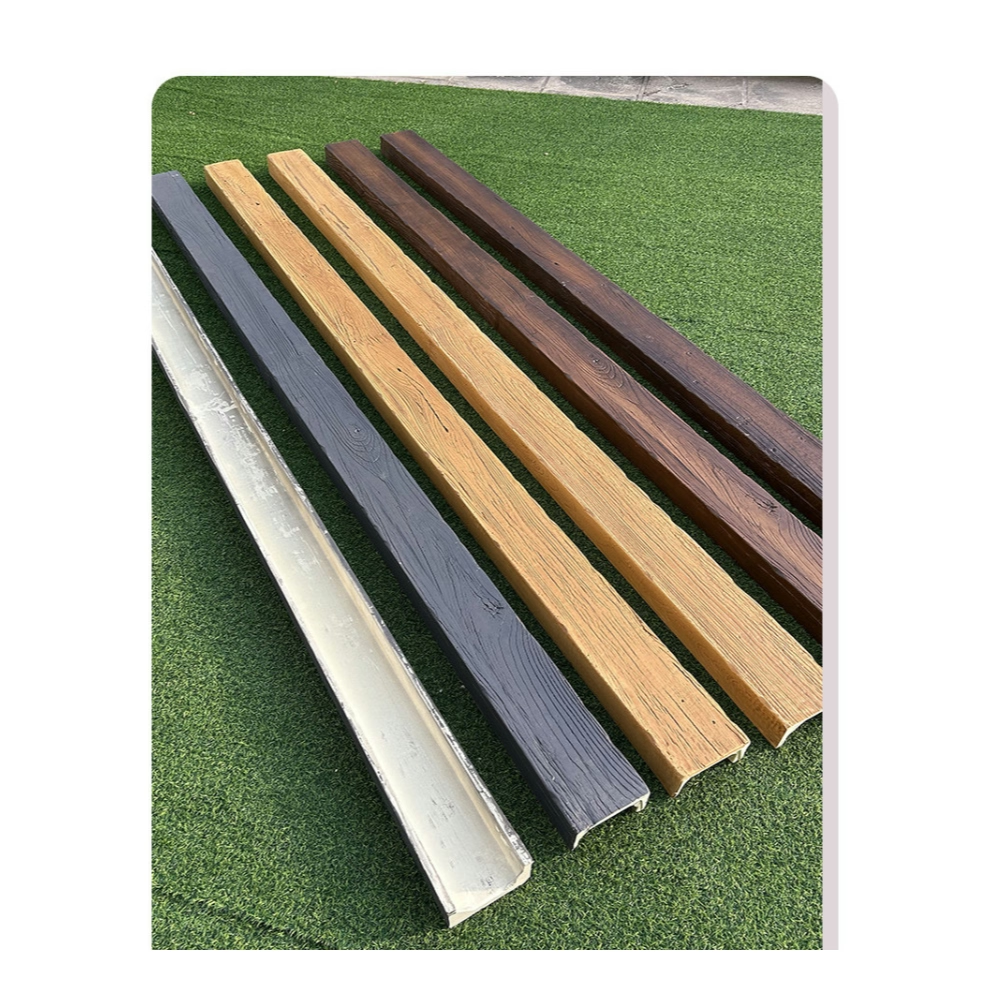
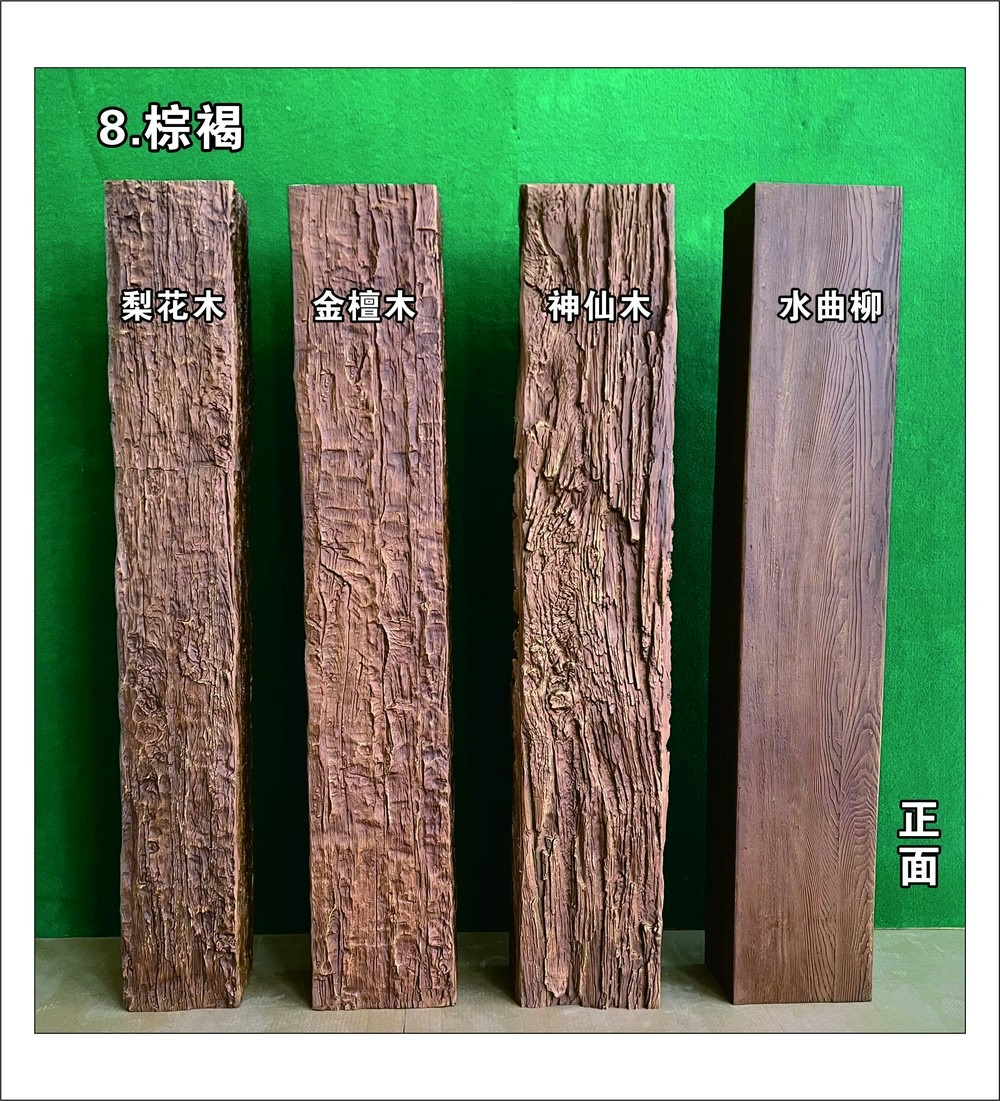
The search for design elements that perform reliably across diverse applications has led building professionals to increasingly sophisticated materials and systems. Versatility matters in commercial contexts where different projects present different requirements, and it matters in residential contexts where homeowners seek investments that will serve well through changing needs and evolving design directions. U-shaped polyurethane faux wood beams deliver this universal applicability, offering installation approaches and aesthetic qualities that adapt effectively to virtually any ceiling condition and design intention.
Universal Design Philosophy
Universal design in building products addresses the reality that spaces serve diverse populations with varying needs and preferences. Products designed for universal application avoid excessive specialization that limits their usefulness across different contexts. U-shaped polyurethane beams achieve this universality through thoughtful design that accommodates varied ceiling configurations, multiple installation approaches, and wide-ranging aesthetic objectives.
Ceiling construction varies dramatically across building types and eras, from balloon-frame residential construction to modern steel-frame commercial buildings. This variation presents challenges for products designed around specific construction types. U-shaped polyurethane beams address this variation through mounting systems adaptable to multiple conditions, avoiding the constraints that single-application products impose.
Design aesthetics similarly vary across projects and client preferences. Some installations require rustic authenticity that evokes traditional timber framing, while others need clean contemporary lines that support modern design intentions. U-shaped polyurethane beams span this range through manufacturing flexibility that produces diverse profiles, finishes, and visual characteristics from common material foundations.
Adaptation to Ceiling Conditions
Flat ceilings represent the most straightforward application for U-shaped beam installations, where beams mount parallel to or across level surfaces without complication. These installations can follow existing ceiling planes directly, creating clean appearances that complement contemporary interiors. Surface mounting techniques work well on flat ceilings, providing secure attachment without complex preparation.
Sloped ceilings introduce angle considerations that U-shaped beams accommodate through appropriate cutting and mounting techniques. Rafters and roof structures that create sloping ceiling planes can receive beam treatment that follows natural roof angles. The three-sided profile of U-shaped beams proves particularly valuable in these applications, as the open bottom avoids interference with structural elements that complete four-sided configurations might conflict with.
Vaulted and cathedral ceilings present the most demanding conditions for universal beam installation. The dramatic angles and substantial spatial volumes require careful planning and precise execution. U-shaped beams installed on vaulted ceilings must account for changing angles along spans, requiring template development and precise angle cutting that experienced installers master through practice.
Mixed ceiling configurations—spaces where flat areas transition to sloped sections, or where multiple roof planes intersect—demand adaptive installation approaches that U-shaped beams handle effectively. The versatility of the profile allows installers to address varied conditions without requiring completely different product categories for each situation.
Mounting System Options
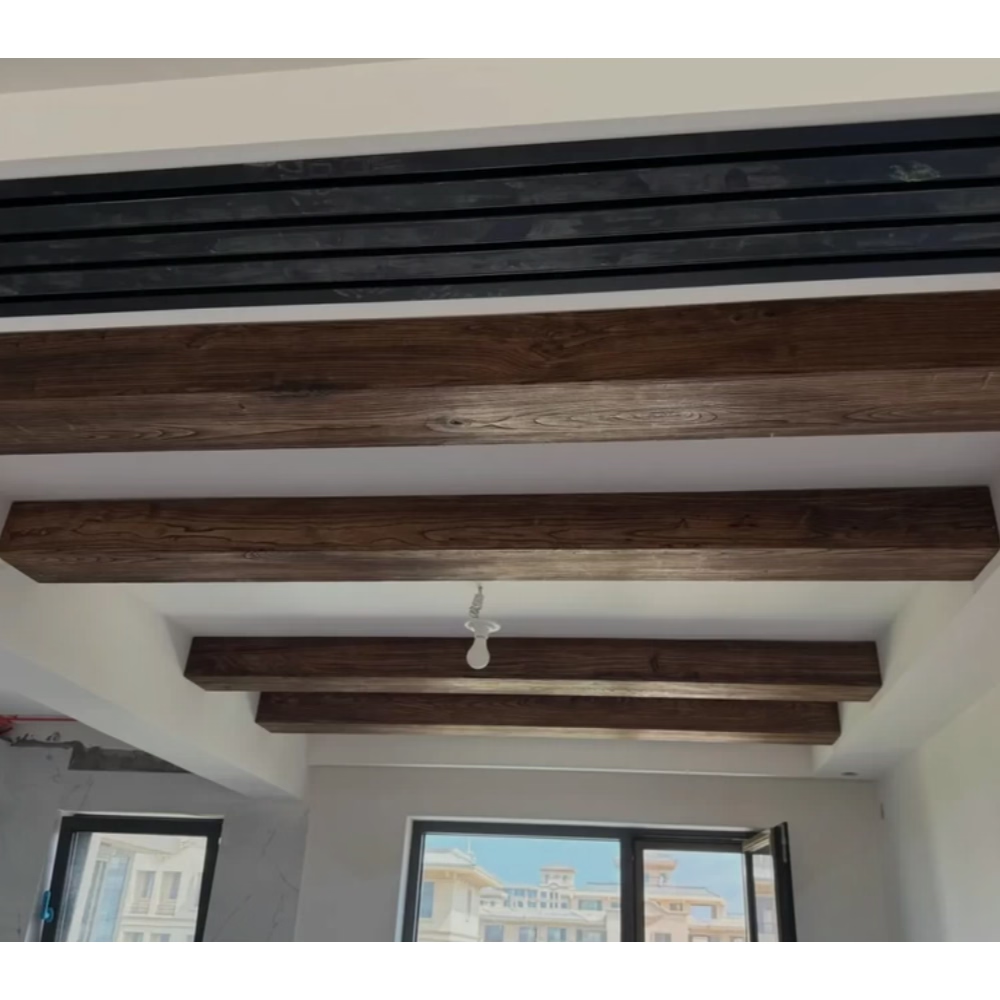
Surface mounting provides the simplest installation approach, with beams attached directly to existing ceiling surfaces using adhesive, mechanical fasteners, or combined systems. This approach works best when ceiling height permits the space consumption that surface mounting introduces and when ceiling conditions support secure attachment. The simplicity of surface mounting translates to faster installation and lower labor costs.
Furring systems create mounting surfaces on ceilings that lack adequate attachment points or present surface conditions unsuitable for direct mounting. Wood or metal furring strips fastened to ceiling framing create continuous mounting planes that accommodate U-shaped beam attachment regardless of underlying conditions. This approach adds minimal thickness while providing secure, level mounting surfaces.
Suspended mounting systems position beams below structural ceiling elements, creating visual separation between decorative beams and building structure. Cables, rods, or decorative brackets support beams in positions that achieve specific design objectives—perhaps creating the impression of structural elements that were never actually present. This approach works well in spaces with high ceilings where visual interest needs to descend to occupant level.
Recessed mounting incorporates beams partially within ceiling structures, creating integrated appearances where beams emerge naturally from ceiling planes. This technique requires construction coordination but produces the most architectural results, with beams appearing to originate from within ceiling structures rather than being applied to their surfaces.

Aesthetic Versatility in Application
Minimalist contemporary applications favor U-shaped beams with clean profiles, subtle wood grain, and restrained visual presence. These installations add warmth without visual complexity, supporting design intentions that emphasize space and light over material accumulation. The versatility of polyurethane manufacturing enables these restrained aesthetics through production techniques that achieve contemporary requirements.
Rustic traditional applications demonstrate U-shaped beam versatility differently, with profiles featuring more substantial visual weight, pronounced grain patterns, and weathered finishes. These installations create the warm, established character that traditional interiors require, adding authenticity through appearances that evoke centuries of accumulated craftsmanship. The same mounting approaches that serve contemporary applications accommodate these traditional expressions.
Transitional spaces that blend design elements from multiple periods benefit from beam versatility that bridges aesthetic territories. U-shaped beams in transitional applications might feature contemporary proportions with traditional finishes, or traditional profiles executed in modern colors. These hybrid approaches create spaces that feel neither strictly traditional nor aggressively contemporary, appealing to occupants who appreciate elements of both.
Eclectic interiors embrace the full range of beam possibilities, using decorative elements to create visual interest through intentional diversity. U-shaped beams in eclectic applications might vary in size, finish, or orientation within the same space, creating the collected, layered character that defines eclectic aesthetics. The accessibility of polyurethane beams enables this abundance without the expense that genuine timber variety would require.
Quality Considerations Across Applications
Material density affects performance characteristics regardless of installation approach or aesthetic objective. Higher-density polyurethane products offer superior impact resistance and detail definition, advantages that benefit applications in high-traffic areas or where close inspection reveals any deficiencies. Lower-density options may adequately serve protected applications but risk damage in demanding situations.
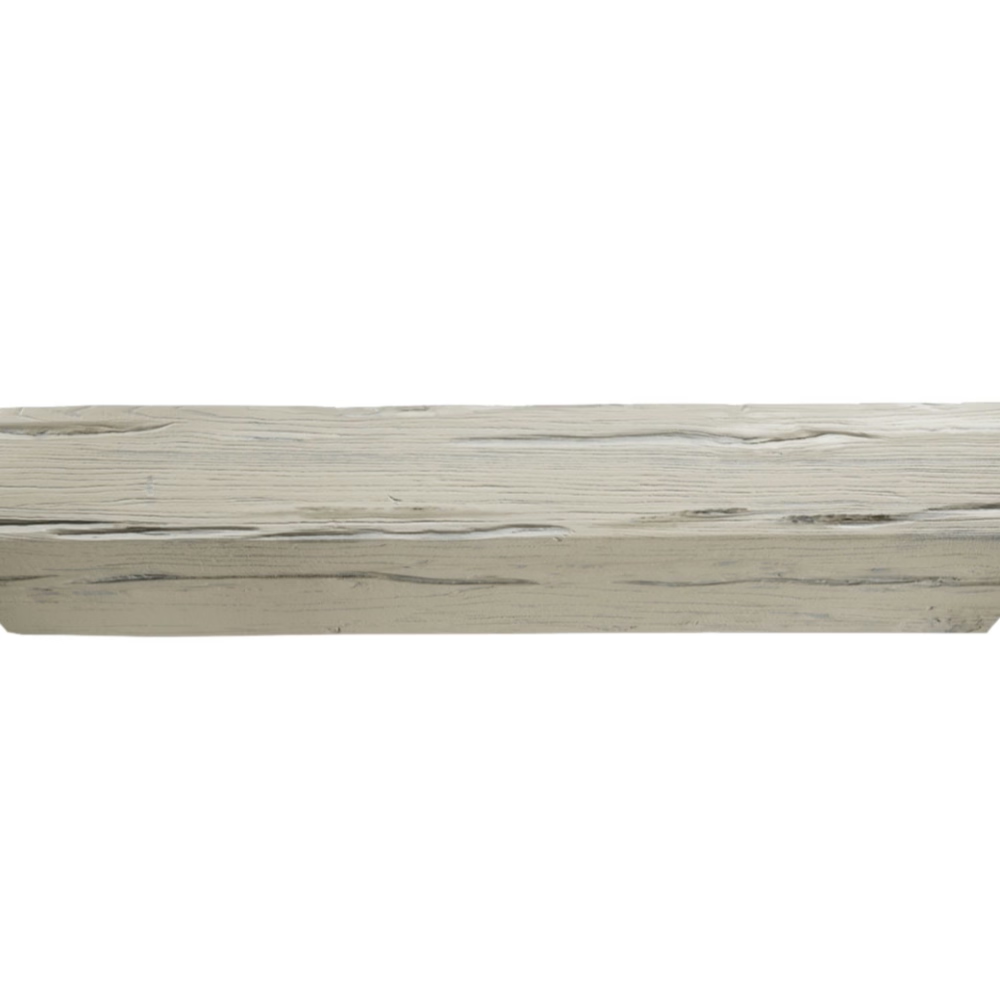
Surface finish quality determines how convincing wood appearances will be upon completion. Examine samples critically, looking for grain patterns that repeat obviously, colors that appear artificially applied, or textures that feel wrong to touch. Quality products achieve realism that withstands scrutiny, while inferior alternatives often disappoint upon close inspection.
Dimensional consistency ensures efficient installation, as variable dimensions require adjustment that increases labor time. Checking samples for consistency across lengths and between multiple pieces reveals manufacturing quality that affects installation efficiency. Variable products increase frustration and extend timelines unnecessarily.
Warranty coverage provides protection against premature failure that would require expensive remediation. Reputable manufacturers back their products with terms that reflect confidence in quality, while inadequate warranty coverage signals products that may not perform as expected. The warranty represents a minimum quality guarantee that thoughtful specification should not ignore.
Long-Term Performance Assurance
Proper installation provides the foundation for long-term performance, ensuring that mounting systems will handle loads and environmental conditions throughout the product lifetime. Quality installers understand how to adapt general techniques to specific conditions, making judgments that affect how well installations perform over time. The investment in professional installation typically generates returns through reliability that amateur work cannot match.
Environmental resistance protects installations from conditions that might compromise lesser materials. Polyurethane's resistance to moisture, temperature variation, and biological threats eliminates many failure modes that affect natural wood alternatives. This resistance proves particularly valuable in challenging applications—kitchens, bathrooms, basements, and exterior-adjacent spaces—where environmental conditions would stress natural materials.
Maintenance simplicity preserves appearance quality without extensive intervention. Periodic cleaning maintains polyurethane beam appearances without the refinishing, sealing, or repair work that natural wood requires. This low-maintenance characteristic proves valuable in overhead applications where access presents practical challenges regardless of what maintenance work might require.
Professional consultation helps ensure that universal applications receive appropriate attention to specific conditions. Every installation presents unique circumstances that general guidance cannot fully address—professional assessment identifies these conditions and recommends approaches that address them effectively.
Technical References
ASTM standards cited in every specification
Test Data
Lab results from internal testing program
Updated 2026
Reviewed against current product specs