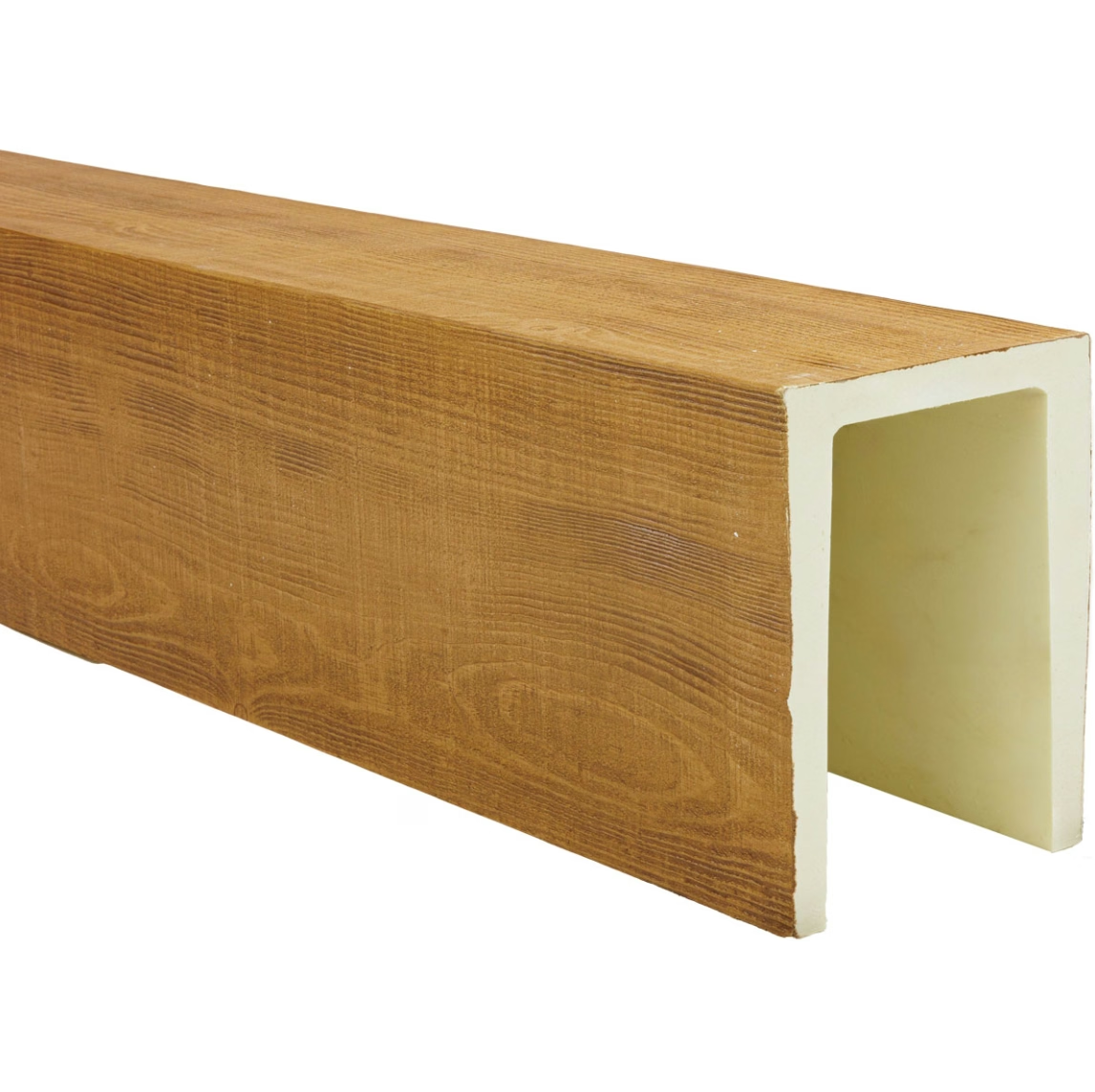
There's something profoundly satisfying about walking into a room where every design element tells a story. The play of light across carefully crafted architectural details, the warmth radiating from surfaces that speak of craftsmanship and attention to detail—these are the qualities that transform a house into a home worthy of admiration. When it comes to achieving that unmistakable aura of classic luxury, vintage antique oak grain PU faux beams stand as exceptional contenders that deserve serious consideration.
The pursuit of timeless interior design often leads homeowners and designers alike to explore options that balance authenticity with practicality. While genuine reclaimed oak beams carry undeniable charm, they also bring along significant challenges: weight concerns for ceiling installations, susceptibility to moisture damage, pest vulnerabilities, and costs that can quickly spiral beyond budget constraints. This is where modern manufacturing techniques have opened doors to remarkable alternatives that honor traditional aesthetics while delivering contemporary performance benefits.
Understanding Vintage Oak Grain Aesthetics
The visual language of aged oak speaks in whispers of history. Its grain patterns, formed over decades of slow growth, create organic flowing lines that no machine can truly replicate in their complete randomness. What skilled manufacturers have achieved, however, is a sophisticated approximation that captures the essential character—the subtle wave patterns, the occasional knot formations, the color variations that shift from golden honey tones to deeper amber undertones depending on lighting conditions.
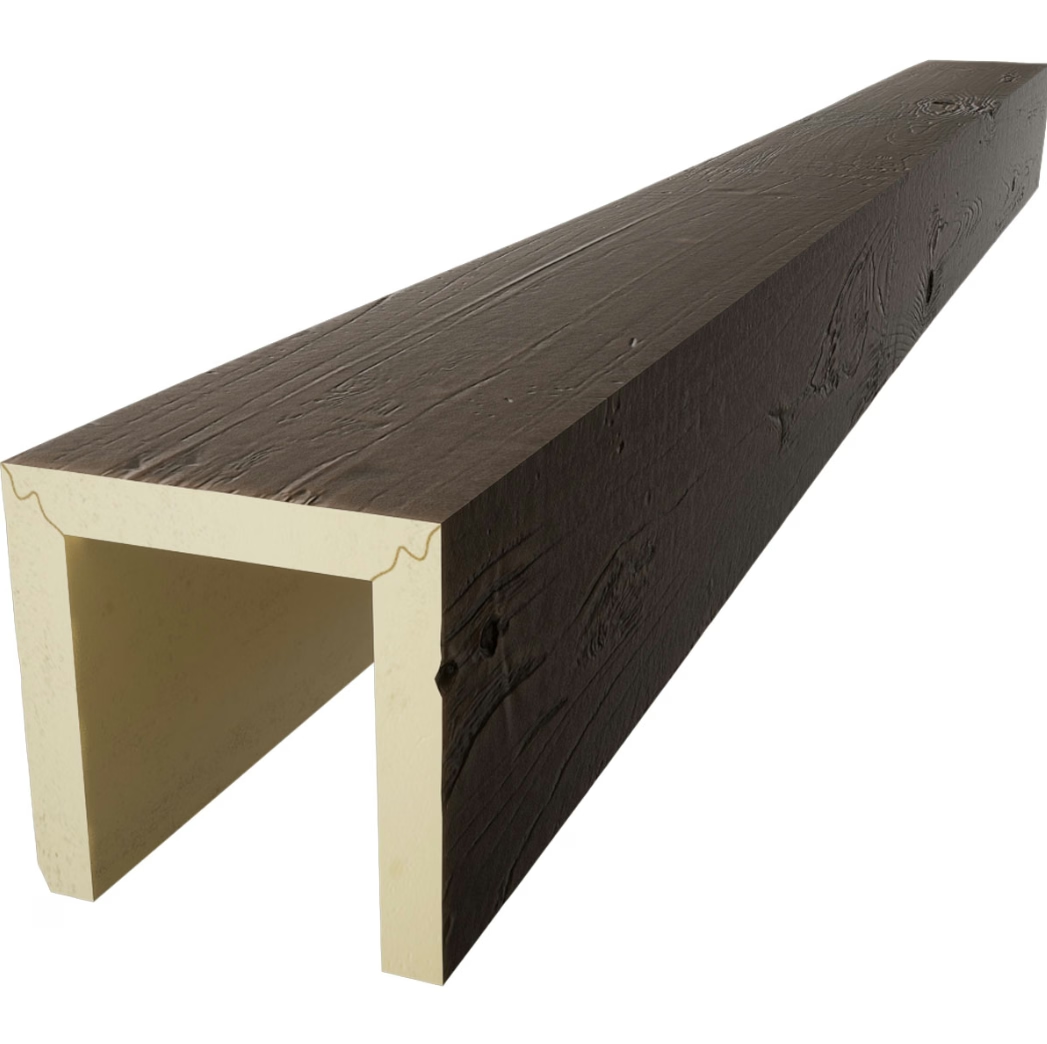
Vintage antique oak grain finishes typically undergo a multi-stage treatment process. The base polyurethane material receives careful texturing to create depth variations that mimic natural wood surfaces. Layered staining techniques build up the characteristic color complexity, with darker tones settling into grain depressions while lighter highlights follow the raised areas. The result produces that distinctive dimensional quality that makes authentic aged timber so visually compelling.

When examining these beams up close, you'll notice subtle imperfections that contribute to their believability. Tiny natural variations in the surface texture, minor color fluctuations that follow no predictable pattern, and a general sense of organic development rather than manufactured uniformity. These details matter enormously when the goal is creating interiors that feel genuinely inherited rather than newly constructed.
The warmth coefficient of oak-toned finishes deserves particular attention. Rooms featuring vintage oak grain elements naturally feel more inviting, a phenomenon rooted partly in color psychology and partly in the actual light-absorbing properties of textured wood-like surfaces. Morning light in a room with these beams tends to appear softer, more golden, while afternoon illumination creates rich shadow play across the dimensional surfaces.
Installation Advantages Over Natural Timber
Ceiling beam installation represents one of the most significant areas where PU faux beams demonstrate their value. Natural oak beams, particularly those reclaimed from old structures, can weigh anywhere from 8 to 15 pounds per linear foot depending on their dimensions. This weight creates real structural considerations—ceiling joists may require reinforcement, specialized mounting hardware becomes necessary, and the physical labor of positioning heavy beams often requires professional installation crews.
Modern polyurethane faux beams typically weigh just 1 to 2 pounds per linear foot for comparable dimensions. This dramatic reduction in weight opens up installation possibilities that would be impractical or impossible with natural timber. Vaulted ceilings, where access is challenging, become viable projects for experienced DIY installers. Features like soffit boxing and beam wraps around existing structural elements become straightforward rather than demanding engineering solutions.
The fastening systems designed for faux beams account for their lighter weight while ensuring secure long-term attachment. French cleat systems create invisible support structures where beams appear to float without visible hardware. Structural adhesive used in combination with mechanical fasteners provides redundant security. For applications where beams need to support hanging weight—wrought iron chandeliers, for instance—internal reinforcement channels allow secure attachment points without compromising the beam's appearance.
Designing With Classic Luxury Principles
Classic luxury interior design operates on principles that have remained remarkably consistent across centuries. Symmetry plays a foundational role, with balanced groupings of beams creating visual harmony that feels instinctively right. A fireplace mantel flanked by matching beam details, a corridor featuring regularly spaced beam coffers, or a great room where exposed beams create a dominant horizontal rhythm—these arrangements draw on architectural traditions that predate modern construction methods.
Scale relationships require careful attention when incorporating vintage oak grain beams into classic interiors. Beams that appear undersized for their context will look incongruous rather than charming. Conversely, beams with excessive proportions can overwhelm a room's other elements. Professional designers often work with sight-line studies, considering how beams will appear from typical viewing positions throughout the space. A beam that looks perfectly proportioned when standing in the center of a room may appear too thin when viewed from a doorway entrance.
Color coordination extends beyond the beams themselves to encompass the entire color story of the space. Vintage oak grain works exceptionally well with cream and ivory wall finishes, creating the neutral foundation that classic luxury interiors typically require. Accent colors drawn from the beam's warmer tones—burnt orange, rich burgundy, deep forest green—can appear throughout furnishings and textiles to create cohesive visual relationships. The key is maintaining enough color restraint that the architectural elements remain the focal point.

Application Across Different Room Types
Great rooms and living areas naturally accommodate exposed beam ceilings as design-defining features. The open plan nature of these spaces, typically featuring vaulted or cathedral ceilings, creates the vertical expanse where beams become essential visual anchors. A great room with vintage oak grain beams becomes a space that commands attention upon entry, establishing its character immediately rather than requiring close inspection to appreciate.
Bedroom applications often favor more restrained approaches. Rather than spanning entire ceilings with exposed beams, designers frequently introduce them as accent elements—perhaps a single decorative beam crossing the ceiling above the bed, or a pair of beams creating a visual framework around a canopy or four-poster bed arrangement. These interventions add architectural interest without overwhelming the intimate scale appropriate for sleeping spaces.
Kitchen and dining areas present unique considerations due to their functional demands. Grease and moisture resistance become relevant concerns, though polyurethane's non-porous surface handles cleaning remarkably well. Beam placements in these areas often work best as transitional features—perhaps beams that begin in the kitchen proper and extend into an adjacent dining area, creating visual continuity while acknowledging functional zone distinctions.
Maintenance and Longevity Considerations
One of the most compelling practical advantages of PU faux beams involves their maintenance requirements compared to natural timber. Genuine wood beams require periodic treatment to prevent moisture absorption, insect protection, and surface refinishing as finishes age and wear. Even properly maintained natural beams will eventually show signs of weathering and degradation that contribute to their charm but also indicate material changes.
Polyurethane faux beams offer remarkable stability that eliminates most traditional wood maintenance concerns. The material resists moisture absorption completely, meaning these beams perform equally well in humid environments where natural timber would warp, crack, or develop mold concerns. Temperature fluctuations that cause natural wood to expand and contract create no stress on properly manufactured faux beams. UV exposure, which gradually degrades natural wood finishes, has minimal effect on UV-stabilized polyurethane products.
Cleaning these beams requires nothing more than occasional dusting or wipe-down with a damp cloth. Stubborn stains can be addressed with mild cleaning solutions without risk of damaging the finish. For high-ceiling installations where access for cleaning presents challenges, the dust-resistant properties of smooth polyurethane surfaces mean that beams maintain their appearance far longer than textured natural wood would under similar conditions.
Making the Investment Decision
Evaluating whether vintage antique oak grain PU faux beams represent the right choice for a particular project requires honest assessment of priorities and constraints. For projects where authentic reclaimed timber is essential to the design concept—restoration of historically significant structures, for instance—genuine beams will always offer something that replicas cannot fully replicate. The unique history embodied in old timber, the absolute authenticity of material aging over generations, carries value that transcends purely visual considerations.
For the vast majority of classic luxury interior projects, however, high-quality faux beams deliver nearly indistinguishable aesthetic results with substantial practical advantages. The financial savings compared to genuine reclaimed oak can be dramatic, sometimes representing a 60-70% cost reduction. Installation savings compound this advantage, particularly for projects where ceiling access presents logistical challenges. The durability advantages mean that initial investments hold their appearance over decades rather than requiring ongoing maintenance expenditures.
The most successful implementations treat faux beams as integral design elements rather than budget compromises. When beams receive the same thoughtful specification, placement, and coordination with other finishes that natural timber would demand, the results speak for themselves. Interior design professionals who have specified both materials often note that clients cannot distinguish between them in finished installations—only the project budget tells the story.
Technical References
ASTM standards cited in every specification
Test Data
Lab results from internal testing program
Updated 2026
Reviewed against current product specs


