The conversation about authentic aged finishes often begins with patina—that luminous quality that time bestows upon surfaces, transforming ordinary materials into artifacts of beauty. When homeowners and designers seek to capture this quality in ceiling architecture, the options have historically involved either sourcing genuinely old materials or accepting the limitations of less convincing alternatives. Modern faux beam technology has changed this equation substantially, offering patina-finished products that honor the aesthetics of aged architecture while delivering practical benefits that genuine materials cannot match.
Understanding patina requires stepping back to appreciate what time actually does to surfaces. The greenish-brown coloration that develops on aged bronze, the soft luster that emerges on well-touched wood, the subtle color variations that appear across weathered exterior surfaces—these are not simply discolorations but rather complex chemical and physical transformations that occur over extended periods. Recreating this quality convincingly demands manufacturing approaches that understand these processes and can simulate their visual results without merely imitating their surface appearance.
The Chemistry of Beautiful Aging
Natural patina development involves multiple simultaneous processes that work together over decades to create complexity that no single finishing technique can fully replicate. Oxidation reactions change surface chemistry, creating color shifts and reflectivity variations. Physical wear patterns develop in areas of regular contact, producing the subtle highlight variations that indicate use history. Environmental exposure adds further layers of change, with UV radiation, moisture, and airborne particles each contributing distinctive effects.
The manufacturers who achieve convincing patina finishes on faux beams typically employ layered application processes that build this complexity deliberately. Initial base coats establish foundational color relationships, often using darker tones that will show through strategically in areas meant to represent accumulated grime or shadow. Intermediate layers introduce the characteristic color shifts that define aged appearance—typically moving from original material colors toward the warmer browns, grays, and subtle greens that indicate substantial aging.
Surface preparation before finishing plays an equally important role. The best faux beams feature texture patterns that catch and hold patina materials unevenly, just as natural surfaces do. Deeply carved grain lines accumulate darker materials while raised areas retain lighter tones. This dimensional variation transforms flat finishing into three-dimensional color relationships that read as genuinely aged rather than uniformly colored.
Historic Style Considerations for Modern Spaces
Incorporating patina-finished beams into contemporary interior schemes requires thoughtful balance between vintage authenticity and current spatial context. Historic style does not mean historic only—most successful implementations blend aged architectural elements with contemporary furnishings and lighting to create spaces that feel evolved rather than stuck in a particular era. The goal involves suggesting accumulated character rather than reproducing a specific historical moment.

Proportion relationships deserve careful attention when specifying patina-finished beams for ceiling applications. In historic buildings, beams typically related directly to structural needs, with their dimensions reflecting actual load requirements. Contemporary installations, lacking these structural imperatives, can explore more creative proportions—but successful designs usually maintain some reference to historic conventions. Beams that feel inappropriately scaled, whether too massive or too slender, disrupt the sense of authentic aged character rather than enhancing it.

Lighting design interacts critically with patina-finished surfaces. The warm highlights and deep shadows that define beautiful patina require appropriate illumination to read correctly. Directional lighting from below can dramatically reveal surface texture and color variation, while overhead general lighting tends to flatten these qualities. Designers often specify adjustable fixture positioning to allow lighting angles to be tuned after installation, optimizing the visual relationship between illumination and beam surfaces.
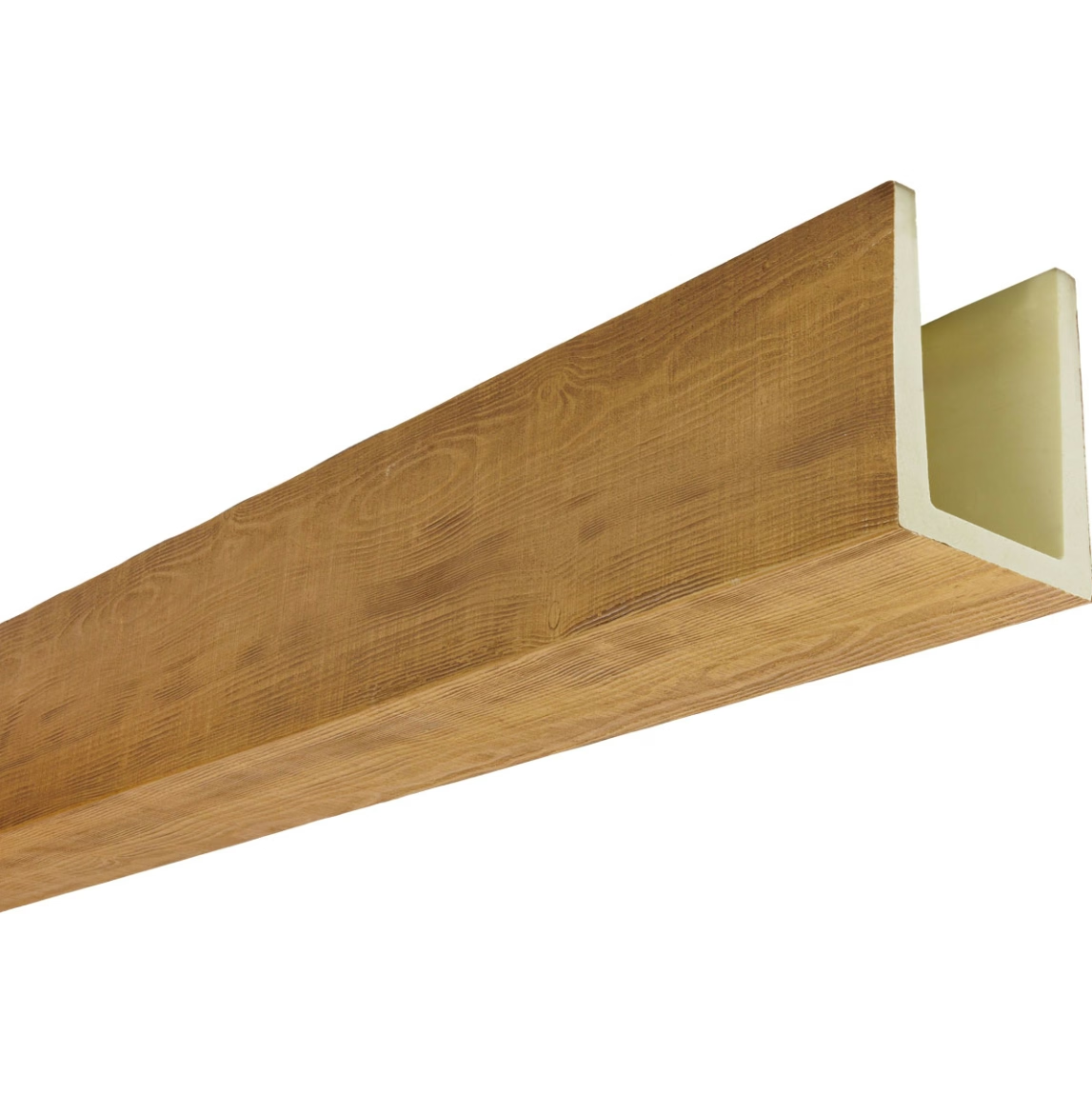
Installation Approaches for Authentic Results
The mounting approach chosen for faux ceiling beams significantly impacts how convincingly they integrate with surrounding architecture. Exposed mounting, where beams are suspended below ceiling joists with visible brackets or hangers, reads as a straightforward contemporary addition. Concealed mounting, where beams appear to sit on top of or between structural elements, creates the impression that they belong to the building's original construction.
For the most authentic historic appearance, many installers favor approaches that minimize visible hardware. Structural adhesive applied between beams and mounting surfaces creates strong bonds without mechanical fasteners. French cleat systems, where interlocking metal shapes secure beams from within, allow substantial weight capacity while keeping all hardware invisible. For beams that must span long distances, internal support frameworks provide necessary rigidity while remaining completely hidden within the beam's profile.
Integration with existing architectural elements requires particular care in historic-style installations. Corners where beams meet walls or other beams need detail attention—historically, these intersections would have featured carved wooden details or metal straps that added visual interest while serving structural purposes. Faux beam installations can incorporate similar decorative elements, either pre-manufactured or custom-fabricated, to complete the historic aesthetic.
Maintaining Patina Beauty
The remarkable stability of quality polyurethane patina finishes represents one of their most significant advantages over natural materials. While genuine aged timber requires ongoing protection and periodic refinishing to maintain its appearance, properly finished faux beams preserve their character indefinitely without maintenance intervention. This permanence proves especially valuable in locations where access for maintenance would be difficult or expensive.
Protection from physical damage remains relevant, however. While polyurethane resists impacts better than natural wood in many respects, sharp blows can dent or scratch surfaces. In residential applications with normal household activity, this concern is minimal. Commercial installations with higher exposure to potential damage may benefit from beam placements in protected locations or from specifying reinforced product variants designed for demanding applications.
Periodic cleaning maintains patina-finished beams effectively without risking surface damage. The non-porous nature of polyurethane means that dust, cobwebs, and atmospheric residues can be removed with simple dusting or light damp cleaning. Harsh chemical cleaners should be avoided not because they damage the finish quickly but because they may gradually affect surface luster over extended exposure. A soft cloth and mild soap solution handles virtually all cleaning requirements.
Selecting Quality Patina-Finished Beams
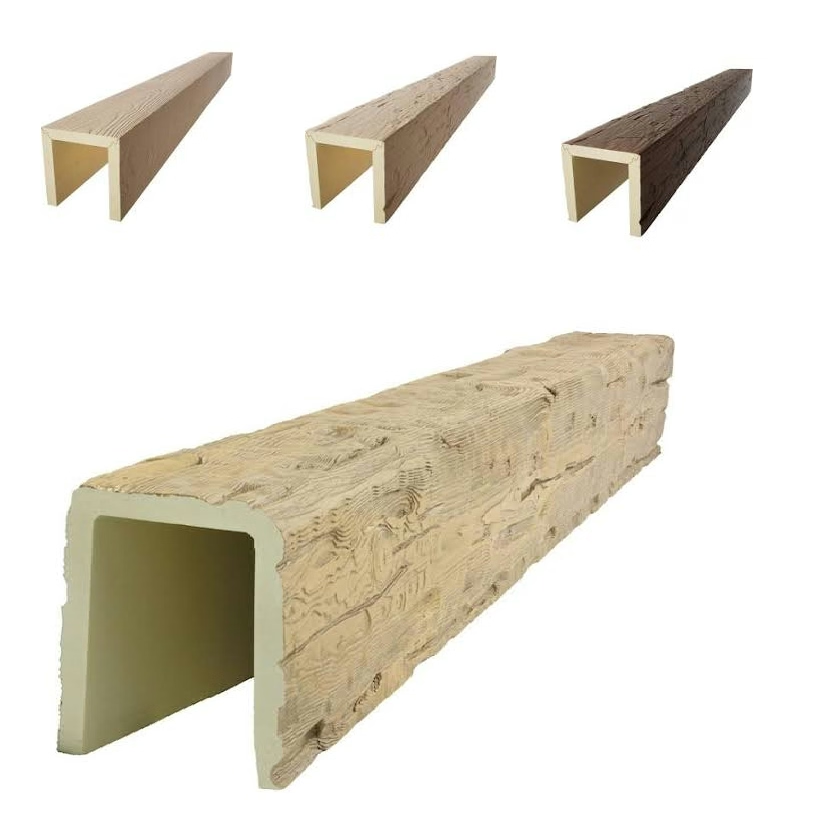
Not all patina-finished faux beams achieve equivalent quality, and understanding the differences helps ensure satisfying project results. Surface texture depth varies substantially between manufacturers—some products feature subtle textures that require close inspection to perceive, while others offer dramatic relief patterns that read convincingly at any distance. For most ceiling applications, medium-depth textures prove most effective, providing visual interest without appearing artificially exaggerated.
Color development in patina finishes should show organic variation rather than uniform application. The best indicators of quality include visible color shifts across curved surfaces, darker tones concentrated in recessed areas, and subtle highlight variations across prominent features. Uniform coloration, even when colors themselves are appropriate, suggests manufacturing shortcuts that will result in unconvincing appearance.
Warranty coverage provides another quality indicator. Manufacturers confident in their finishing processes typically offer substantial warranty protection against finish degradation, delamination, and color change. Products with minimal or условный warranty coverage may indicate manufacturing uncertainty about long-term performance. Quality faux beams should maintain their appearance for decades under normal interior conditions.
The investment in well-made patina-finished beams pays dividends through both immediate visual impact and long-term satisfaction. Spaces featuring these elements gain the distinctive character that distinguishes genuinely historic interiors, achieved through materials and methods that make such installations practical for virtually any project type or budget.
Technical References
ASTM standards cited in every specification
Test Data
Lab results from internal testing program
Updated 2026
Reviewed against current product specs


