When architects and interior designers specify materials for projects that require both visual authenticity and practical performance, the conversation increasingly turns to modern alternatives that honor traditional aesthetics. The realm of ceiling architecture offers particularly compelling opportunities for such materials, where exposed beams have served both functional and decorative purposes for centuries. Vintage antique polyurethane faux beams represent a sophisticated solution that addresses the limitations of natural timber while preserving the character that makes wood-look architectural elements so desirable.
The evolution from natural timber to faux alternatives reflects broader changes in how we approach interior design. Sustainability considerations encourage maximizing the service life of existing materials rather than harvesting new resources. Budget constraints require creative solutions that deliver premium results without premium costs. Installation logistics demand materials that can be handled and positioned without heavy equipment. Each of these pressures points toward alternatives that perform beyond what traditional materials can offer.
The Manufacturing Excellence Behind Realistic Results
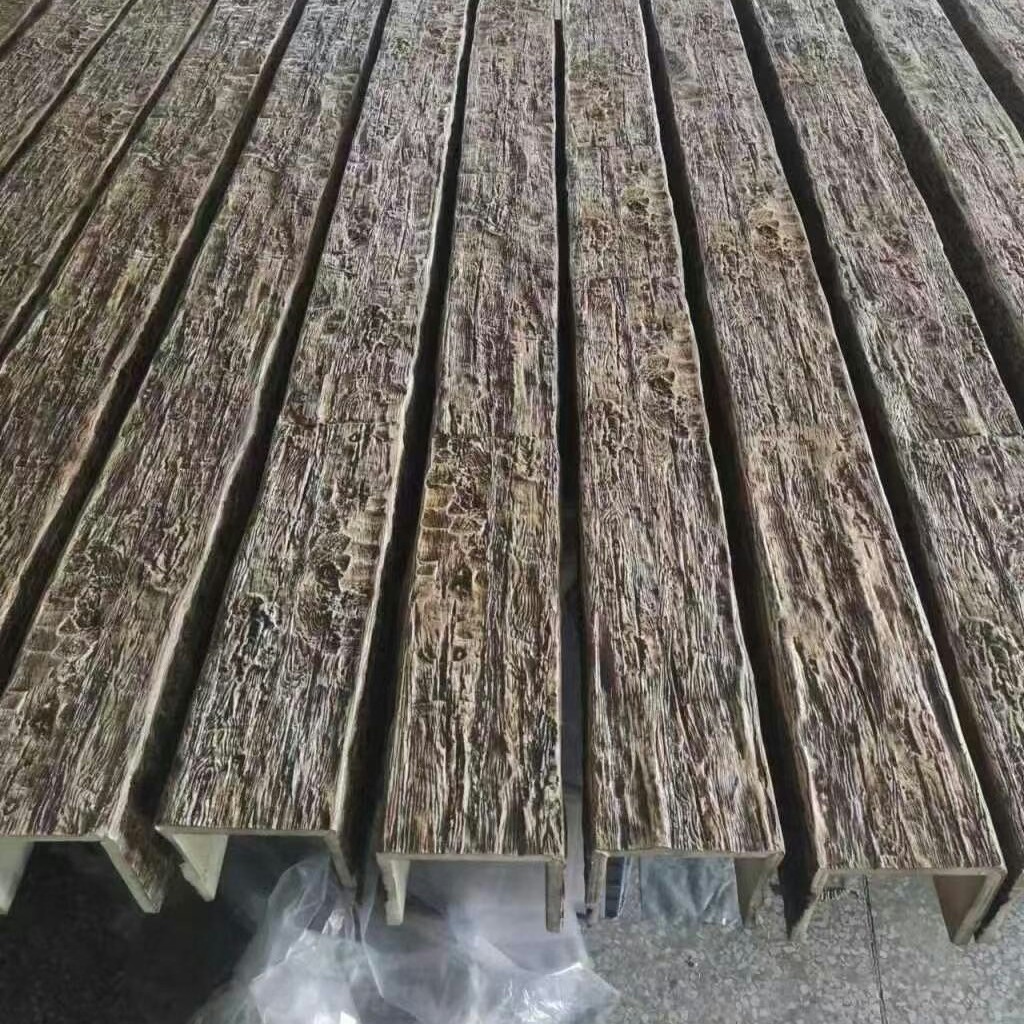
Modern polyurethane faux beam production has achieved levels of visual convincingness that would have seemed impossible a generation ago. Advances in mold-making technology allow manufacturers to capture the finest details of genuine aged timber—the subtle checkerboard patterns in rift-sawn grain, the pronounced cathedral patterns of flat-sawn surfaces, the irregular erosion patterns that develop on reclaimed beam edges. These detailed textures provide the foundational layer upon which finishing processes build.
The polyurethane formulation itself contributes to realistic appearance. Unlike plastics that show uniform surfaces under direct lighting, quality polyurethane accepts texturing that creates genuine dimensional variation. Light behaves differently across these varied surfaces, creating the same play of highlights and shadows that characterizes natural wood. This optical complexity cannot be achieved through surface painting alone—it requires material properties that respond to light in organic ways.

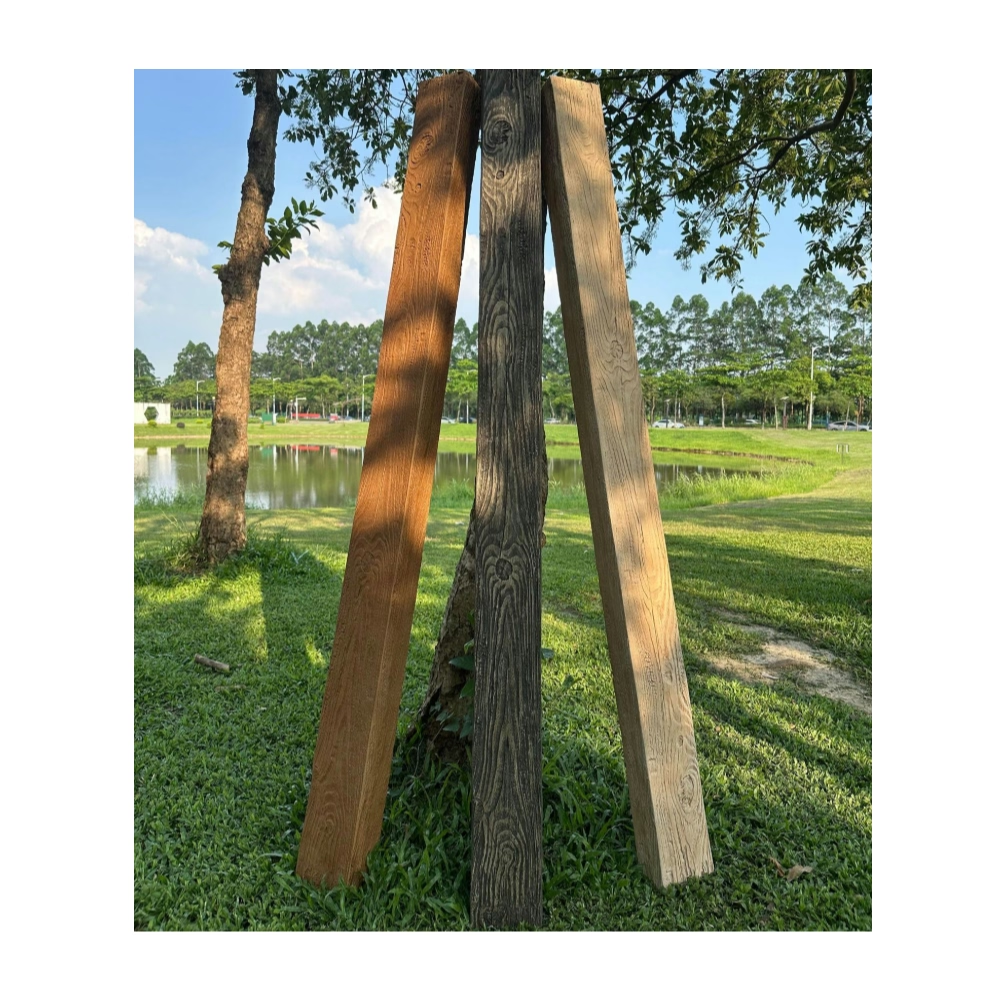
Color application processes have similarly advanced to produce convincing wood tones. Rather than simple paint application, multiple layering creates color depth that shifts with viewing angle and lighting conditions. Darker tones settle into carved depressions while highlights follow raised features. This dimensional color relationship mimics how natural wood ages, where surface wear exposes different wood layers and environmental exposure changes coloration over time.
Design Integration Strategies
Successfully incorporating antique polyurethane beams into classic architectural schemes requires understanding how traditional spaces were originally designed and constructed. Historic buildings featured exposed timber for structural reasons that no longer apply in modern construction—the beams visible in century-old interiors supported floors and roofs above. Contemporary installations must suggest this structural logic without actually requiring it, creating visual relationships that feel appropriate rather than arbitrary.
Spacing relationships between beams significantly impact how convincingly they read in finished installations. Traditional timber framing followed mathematical relationships based on available timber sizes and structural requirements. Contemporary beams, freed from these constraints, can explore broader spacing—but successful designs typically maintain proportions that reference historical conventions. Beams spaced too closely resemble decorative trim rather than structural elements, while widely spaced beams may suggest inadequate rather than intentional spacing.
Corner and termination details require particular attention in classic architectural applications. Traditional timber construction featured interlocking joinery that created complex three-dimensional intersections. Faux beam installations can either replicate these details through manufactured components or employ simplified approaches that suggest joinery without strictly mimicking historical methods. The choice depends on the specific design intent and budget parameters.
Performance Advantages for Demanding Applications
Commercial environments present challenges that make polyurethane faux beams especially attractive compared to natural alternatives. Hospitality venues, retail spaces, and public buildings experience higher traffic volumes and more frequent contact with architectural elements. Natural wood surfaces accumulate wear marks, show moisture damage from humidity fluctuations, and may develop insect concerns in certain climates. Polyurethane's resistance to these degradation mechanisms ensures consistent appearance over extended service periods.

The weight advantage proves transformative for commercial installation logistics. Natural timber beams require equipment for movement and positioning, creating logistical complexity in occupied buildings where elevator access and building protection add costs. Polyurethane beams of comparable visual impact can be carried by single installers, positioned without equipment, and adjusted easily during installation. This handling simplicity translates directly into installation cost savings.
Fire resistance represents another consideration for commercial applications. Quality polyurethane faux beam manufacturers offer products meeting commercial fire code requirements, with flame spread ratings suitable for most occupancy classifications. This compliance removes a significant obstacle that might otherwise prevent using exposed beam aesthetics in regulated commercial spaces.
Climate and Environmental Considerations
One of polyurethane's most significant advantages involves its stability across environmental conditions that challenge natural materials. Wood naturally responds to humidity changes, expanding when moisture levels rise and contracting as conditions dry. This movement creates gaps in joints, warping in flat surfaces, and potential damage to finishes. Polyurethane's dimensional stability eliminates these concerns entirely.
Humid environments particularly benefit from polyurethane beam specifications. Bathrooms, swimming pool areas, and tropical climate homes all present moisture challenges that natural timber handles poorly even with treatment. Polyurethane beams maintain their appearance indefinitely in these conditions, resisting both the moisture damage and the biological growth that affect organic materials. This performance characteristic expands the range of applications where wood-look ceiling architecture remains practical.
Temperature cycling, another natural wood challenge, creates no issues for polyurethane. Spaces that experience significant temperature variation—sun-exposed roof structures, poorly insulated attics, three-season porches—see natural timber gradually degrade through repeated expansion and contraction cycles. Faux beams perform consistently regardless of temperature conditions, making them suitable for applications where natural timber would eventually fail.
Budget Optimization Without Aesthetic Compromise
The cost structure of polyurethane faux beams allows design budgets to achieve far more than equivalent spending on natural materials would permit. A project budget that might purchase three or four genuine reclaimed beams can instead acquire enough faux product to beam an entire ceiling. This expanded scope often transforms projects from partial treatments to comprehensive ceiling designs.
The installed cost advantage compounds this benefit. Natural timber requires specialized labor for handling and installation, often involving structural engineers, millwork specialists, and rigging crews. Faux beam installation can proceed with finish carpentry skills, dramatically reducing labor costs. For projects where budget is a primary constraint, this installed cost differential may determine whether beam ceiling installation remains feasible.
Quality assessment remains important when budget optimization is a priority. The lowest-priced faux beams typically sacrifice the details that create convincing appearance—simpler textures, thinner wall sections, less sophisticated finishing. These savings come at the cost of visual performance. The most cost-effective approach often involves specifying mid-range products that deliver excellent appearance at reasonable cost rather than either budget minimums or premium alternatives.
Technical References
ASTM standards cited in every specification
Test Data
Lab results from internal testing program
Updated 2026
Reviewed against current product specs


