The mid-century modern movement left an indelible mark on design sensibilities that continues to influence contemporary interiors. Spaces inspired by this era balance clean geometry with organic warmth, favoring honest materials and thoughtful proportion relationships. When vintage walnut finish beams enter such environments, they bring the authentic material presence that purely decorative elements cannot achieve. The combination of retro design principles with luxury material choices creates interiors that feel both historically grounded and freshly sophisticated.
Retro luxury differs from period reproduction in important ways. Reproduction seeks to recreate specific historical moments with scholarly accuracy, sometimes at the expense of liveability. Retro luxury instead extracts the design principles that made mid-century spaces successful—their openness, their material honesty, their integration of indoor and outdoor sensibilities—and applies these principles through contemporary lenses. Walnut-toned beams serve these objectives perfectly, providing the warmth that grounds geometric abstraction.
Mid-Century Design Principles Applied
The connection between mid-century architecture and exposed beam ceilings runs deeper than superficial style matching. Post-war housing developments embraced open floor plans that created continuous sight lines across living spaces. Ceiling beams in these designs served dual purposes: providing necessary structural expression and creating visual rhythm that organized otherwise unbroken ceiling planes. Understanding this functional relationship helps designers specify beams that feel appropriate rather than arbitrary.
Proportion relationships in mid-century design follow specific principles that distinguish authentic retro style from superficial imitation. Beams tend toward simpler profiles than baroque or Victorian alternatives—rectangular sections, eased corners, minimal ornamentation. The beauty lies in proportion refinement and material quality rather than decorative complexity. This restraint extends to beam spacing, where mid-century designs typically favor regular intervals that create calm rhythm rather than dramatic punctuation.
The relationship between beams and other architectural elements requires coordination in retro luxury schemes. Window placement, furniture positioning, and lighting fixtures all interact with ceiling beams to create spatial experience. Beams that cross window locations create shadow patterns that change through the day. Beams aligned with furniture groupings establish visual anchoring that organizes functional zones. These interactions should be considered during design development rather than addressed after beam installation.
Walnut Finish Characteristics for Retro Applications
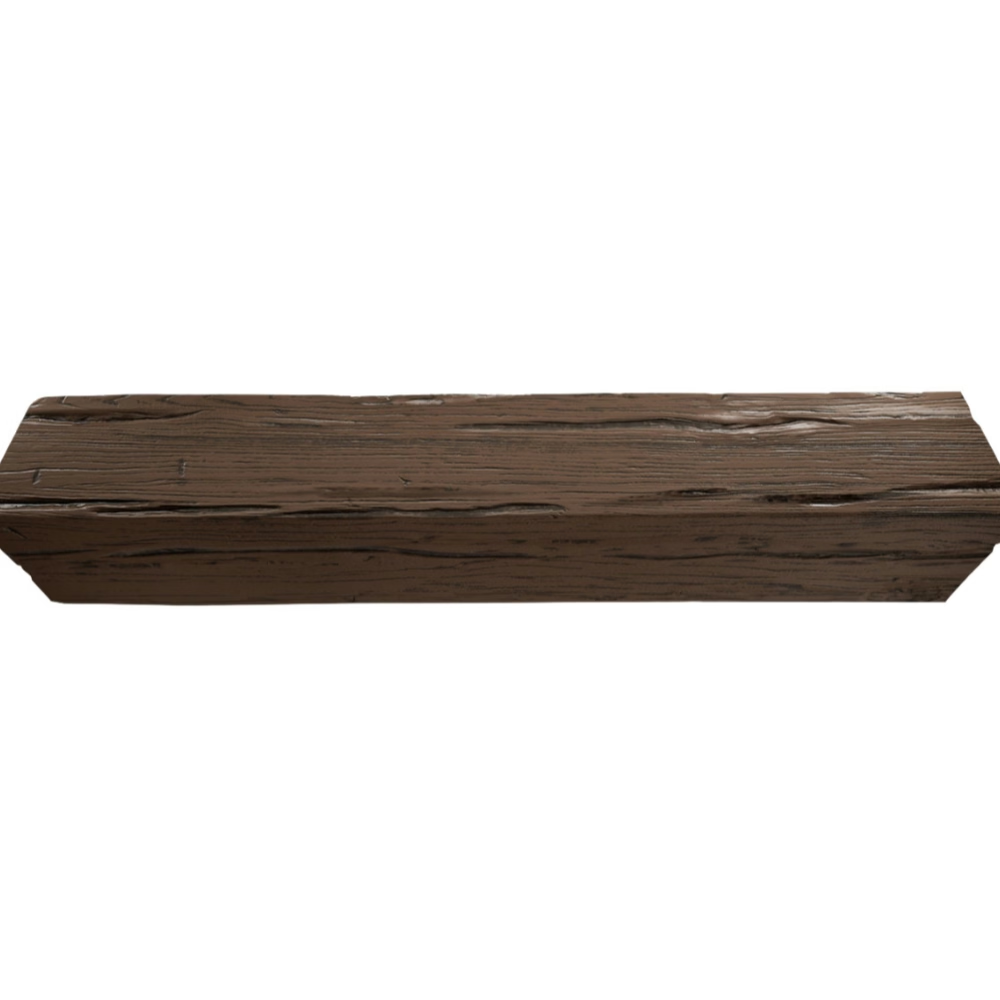
The specific walnut finish appropriate for retro applications differs somewhat from finishes designed for more formal traditional interiors. Mid-century walnut favored warmer, redder tones than contemporary walnut's darker chocolate palette. Designers specifying beams for retro applications should seek finishes that reference this mid-century preference—the honey-gold walnuts that characterized 1950s and 1960s furniture rather than the dramatic dark specimens that luxury markets prefer today.
Surface treatment for retro applications should lean toward more refined presentation than rustic finishes would provide. While authentic reclaimed timber inevitably shows wear and weathering, faux beam finishes for retro applications benefit from more deliberate refinement. Smooth surfaces that catch light evenly, consistent color development without dramatic aging effects, and restrained texturing that suggests wood character without emphasizing age all contribute to successful retro presentations.
The grain patterns appropriate for retro beams should echo the figured walnut that mid-century craftsmen favored. Crotch figure near branch intersections, subtle ribbon figure in quartersawn surfaces, and gentle cathedral patterns in flat-sawn sections all appear in period walnut pieces. Including these details in beam finishes creates the material authenticity that distinguishes convincing retro interiors from generic modern imitations.


Coordinating With Period Furnishings
Retro luxury interiors typically feature a mix of authentic vintage pieces and quality reproductions. Beams should complement both categories without demanding exclusive commitment to either. Walnut-toned ceiling elements work naturally with most mid-century furniture—teak pieces, which share similar warmth, create particularly harmonious combinations. Lighter Scandinavian woods can provide refreshing contrast, while leather upholstery picks up walnut's deeper tones beautifully.

Lighting selection becomes critical when beams establish retro design parameters. Mid-century lighting design favored clean geometric forms—spherical pendants, cone-shaped spotlights, sculptural floor lamps. These fixture styles interact with beam ceilings in specific ways: hanging fixtures can create visual connections between ceiling planes and furniture zones, while directional spotlights can dramatically reveal beam texture and color variation.
Window treatments in retro luxury schemes typically favor simplicity that maintains visual connection to the clean geometry established by beams. Sheer drapery that filters light without blocking views, woven wood shades that add texture while remaining rectilinear, and simple valances that frame windows without interrupting ceiling lines all work well with beam ceilings.
Material Performance in Retrofit Applications
Many retro beam installations involve retrofitting existing spaces rather than new construction. This context creates specific requirements that affect both beam specification and installation approach. The ability to handle lightweight faux beams without equipment enables retrofit installations that would be impractical with natural timber alternatives. Beams can be passed through doorways, carried up stairs, and positioned by individual workers without the logistical complications heavy timber would create.
Wall and ceiling conditions in retrofit projects may require preparation before beam installation. Older construction often features plaster surfaces that cannot support point loads without reinforcement. Faux beam mounting must account for these substrate limitations, either by distributing loads across larger surface areas or by locating mounting points at structural framing members. Professional installers assess substrate conditions before beginning work and address any deficiencies during preparation.
The installation timeline for retrofit beam projects typically involves less disruption than alternative approaches. Natural timber installations might require weeks of work including delivery logistics, material preparation, and careful positioning. Faux beam installations can proceed more quickly, with most residential projects completing within days rather than weeks. This speed advantage matters significantly when projects involve occupied homes where disruption should be minimized.
Maintaining Retro Luxury Aesthetics
The long-term appearance of walnut finish beams in retro interiors depends partly on material selection and partly on ongoing care. Quality faux beams maintain their finishes indefinitely under normal interior conditions, requiring no more than periodic dusting to preserve their appearance. This maintenance simplicity represents significant advantage over natural wood alternatives that demand regular refinishing to retain their character.
Protection from direct sunlight preserves finish integrity for both faux and natural materials. UV exposure gradually affects surface colors, with effects most noticeable where beams receive direct solar radiation through windows or skylights. For installations in sun-exposed locations, specifying UV-stabilized products provides protection against long-term color shift.
The integration of beams into overall interior care routines should be considered during specification. Beams positioned in difficult-to-access locations may accumulate dust and cobwebs that become apparent during periodic cleaning. Selecting beam placements that facilitate access—or specifying lower-maintenance beam styles for high locations—prevents appearance deterioration that diminishes retro luxury aesthetics over time.
Technical References
ASTM standards cited in every specification
Test Data
Lab results from internal testing program
Updated 2026
Reviewed against current product specs

