The weathered timber of historic barns represents one of America's most iconic architectural elements. These structures, built to shelter livestock and store crops through harsh winters and hot summers, developed a patina that speaks to their resilience and the passage of countless seasons. The silver-grey boards, deep brown beams, and weathered posts of vintage agricultural buildings have become touchstones for a design aesthetic that celebrates authenticity, craftsmanship, and connection to the land.
Bringing this barn-born aesthetic into residential and commercial interiors requires careful consideration of both visual authenticity and practical performance. Historic barn timber carries genuine character that cannot be replicated through superficial treatment or rushed manufacturing processes. However, authentic barn wood presents genuine challenges: limited availability, inconsistent dimensions, potential for hidden deterioration, and structural limitations that may not suit modern applications. PU faux beams engineered specifically for barn timber aesthetics offer a compelling alternative that honors the original sources while accommodating contemporary requirements.
The Patina of Age: What Makes Barn Timber Distinctive
Barn timber develops its characteristic appearance through decades of exposure to sun, rain, wind, and temperature extremes. The outermost layers of wood fibers break down under ultraviolet radiation, creating the soft, silver-grey appearance that distinguishes genuinely weathered barn wood. Beneath this surface layer, the wood retains more of its original character: warm brown tones, distinct grain patterns, and the subtle variations that indicate natural growth rather than mechanical production.
The specific appearance of historic barn timber varies significantly based on species, age, exposure, and original treatment. Eastern barns often feature Eastern white pine or Eastern hemlock, species that weather to distinctive silver and grey tones with pronounced grain patterns. Midwestern barns more commonly used oak or hickory, creating denser, more dramatically figured surfaces. Western structures might feature Douglas fir or redwood, introducing yet another palette of colors and textures.
Understanding these regional variations helps ensure that your faux beam selection matches the specific barn aesthetic you want to evoke. A California mission-style renovation calls for different timber characteristics than a New England farmhouse restoration, even though both might reference barn-influenced rustic styling.
Engineering Authentic Barn Character
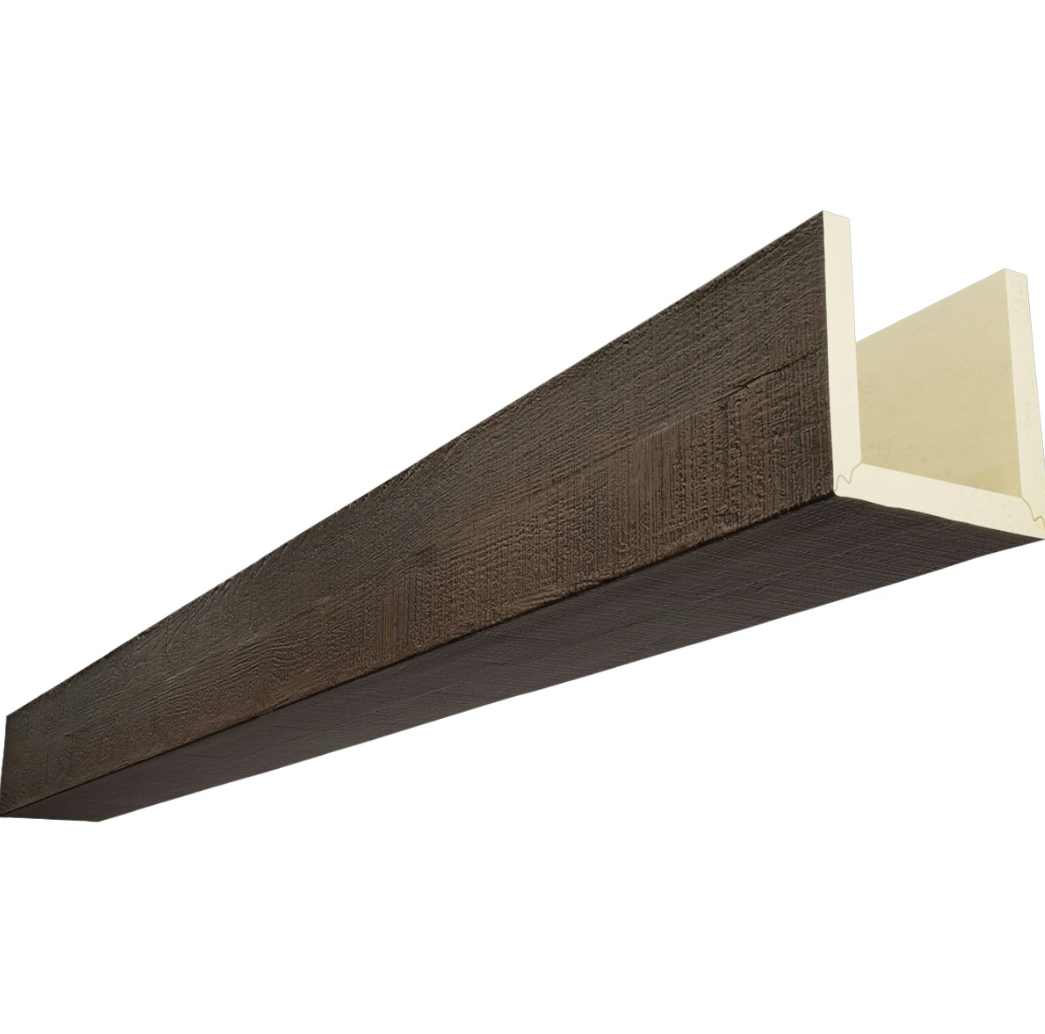
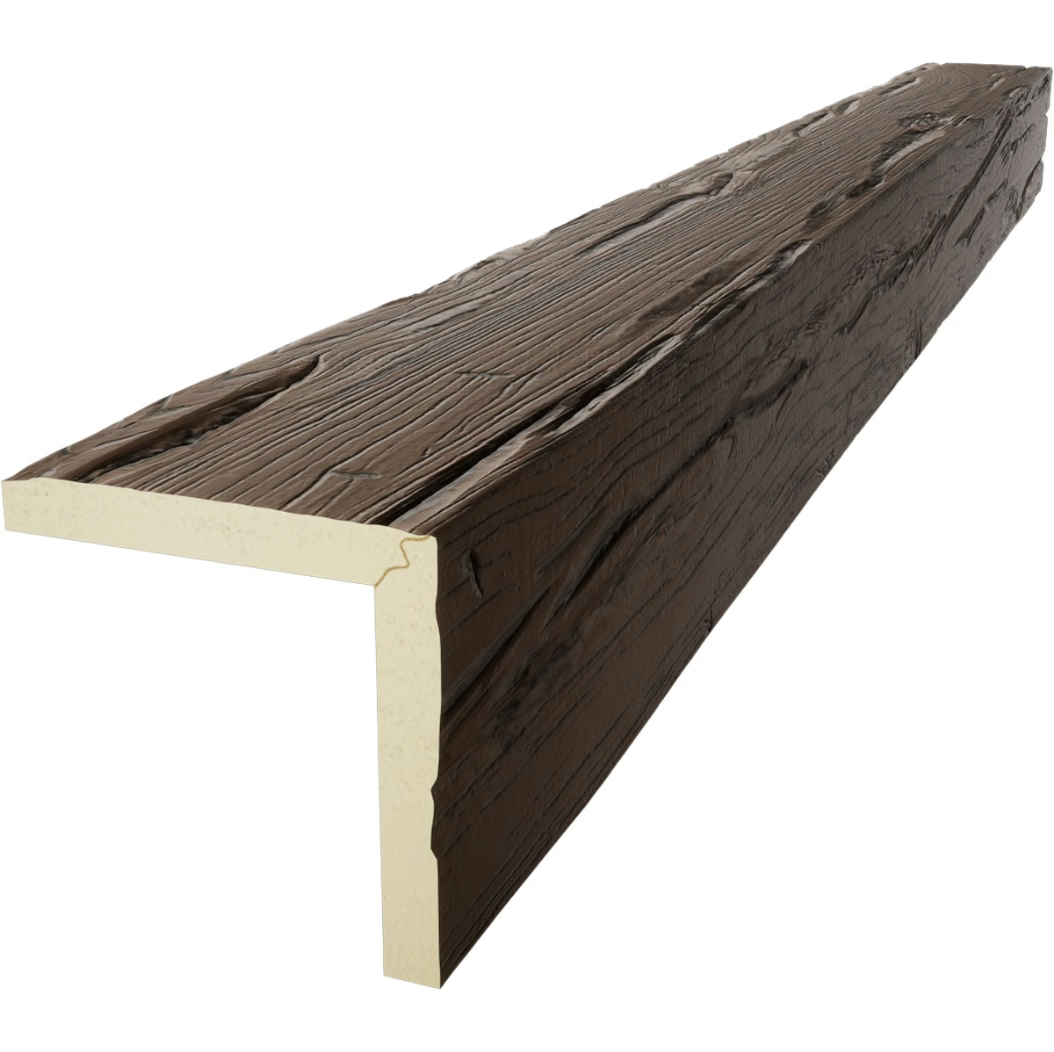
Creating faux beams that convincingly replicate historic barn timber requires more than simple surface texturing. The most convincing reproductions capture the full dimensionality of aged wood, including subtle irregularities in the surface plane, variations in color density, and the characteristic checking and cracking that develops as wood cures and weathers.
Quality manufacturers begin by documenting authentic barn timber specimens, photographing and measuring dozens or hundreds of examples to understand the range of characteristics present in genuine aged wood. These reference collections inform mold-making processes that preserve even subtle surface details. The resulting molds produce beam surfaces with the authentic texture and dimensional variation that distinguishes genuine barn wood from flat, mechanical reproductions.
Color application represents another critical step in achieving barn timber authenticity. Rather than uniform staining, quality finishes involve multiple layering steps that build complexity and depth. Base coats establish fundamental color, mid-layers add variation and highlight raised grain, and final toning creates the subtle shifts that make the surface read as naturally aged rather than artificially treated.
The edge treatment of faux beams deserves particular attention for barn timber applications. Historic barn timber typically shows evidence of hewing or sawing, with tool marks that vary based on the construction era and local practices. Some beams feature hewn flat sides with rough back faces, while others show consistent milling on all visible surfaces. The most convincing faux reproductions replicate these period-specific characteristics rather than applying generic rustic styling.

Applications Across Property Types
The versatility of barn timber aesthetic beams allows their application across diverse property types and design contexts. In residential settings, these beams work equally well in full rustic installations covering entire ceilings and in more restrained applications as single decorative elements or accent pieces.
Open-plan living spaces benefit from comprehensive beam installations that establish strong architectural character and help define functional zones within larger rooms. A kitchen, dining, and living area flowing together might use consistent beam spacing to create visual coherence while allowing furniture placement and area rugs to delineate specific activities within the larger composition.
Bedrooms and bathrooms can incorporate barn timber aesthetics through smaller-scale applications. A single beam crossing the ceiling's centerline adds rustic warmth to otherwise contemporary spaces. Faux beams around bathroom soffits or above soaking tubs create focal points that enhance the spa-like atmosphere while maintaining the relaxed character of the overall aesthetic.
Commercial applications offer significant opportunities for barn timber faux beams. Restaurants and bars seeking rustic character find these products ideal for creating authentic atmosphere without the fire safety concerns and maintenance requirements of genuine aged wood. Theatrical sets and retail environments benefit similarly from the convincing appearance and installation flexibility that polyurethane faux beams provide.
Integration with Existing Finishes
Successful barn timber installations complement rather than clash with surrounding finishes. The warm, earthy colors typical of weathered barn wood coordinate naturally with stone, brick, and other masonry materials commonly found in rustic architecture. These combinations create layered compositions where different materials enhance rather than compete with each other.
When introducing barn timber beams into spaces with existing finishes, consider the dominant color temperature and saturation of those materials. Cool grey brick or stone pairs well with silver-toned barn wood finishes featuring subtle blue undertones. Warmer masonry tones harmonize with honey or amber barn wood colorations that reinforce the existing warmth.
Plaster and drywall surfaces surrounding beam installations should receive appropriate treatment to create visual continuity. In authentic barn interiors, the transition between timber and wall surfaces often featured simple detailing: thin trim strips, bead molding, or in some cases, direct contact without visible separation. Contemporary installations can reference these period details while accommodating the practical requirements of modern construction.
Practical Advantages for Demanding Applications
Beyond aesthetic considerations, barn timber faux beams offer meaningful practical advantages that make them suitable for applications where genuine barn wood would be problematic or impractical. Weight represents the most immediate benefit: polyurethane beams weigh a fraction of solid timber equivalents, reducing structural requirements and simplifying installation significantly.
Fire resistance properties make polyurethane faux beams suitable for applications where genuine wood might present unacceptable risk. While no finish material is completely fireproof, quality polyurethane products can be formulated with fire-retardant additives that reduce flame spread and smoke development. This characteristic proves particularly valuable in commercial applications subject to strict building codes.
Moisture resistance eliminates the dimensional instability that affects real wood in humid environments. Barn timber faux beams maintain their appearance and dimensions regardless of ambient humidity, making them suitable for kitchens, bathrooms, pool houses, and other spaces where moisture exposure would damage genuine wood. This durability translates to lower long-term maintenance costs and more predictable performance over the product lifespan.
Selection and Specification Guidelines
Choosing barn timber faux beams requires attention to several key specifications that affect both appearance and performance. Beam profile determines the visual weight and period appropriateness of the installation. Simple rectangular beams with modest dimensions suit more contemporary rustic applications, while larger profiles with hewn surfaces and pegged details better match historic barn aesthetics.
Finish selection should consider both the specific barn timber aesthetic you want to achieve and the practical requirements of your installation location. Some finishes prioritize the silver-grey weathering of long-exposed barn boards, while others emphasize the deeper brown tones of timber protected by overhangs or roofing. Request samples to evaluate finishes under your actual lighting conditions before committing to a specific product.
Structural considerations for load-bearing applications require careful attention. While faux beams are not typically structural, they may need to support fixtures like light fixtures, fans, or signage. Verify the manufacturer's load-bearing recommendations and select appropriate mounting methods for any attachments.
Installation Best Practices
Professional-quality faux beam installation requires attention to preparation, alignment, and finishing details. Begin by mapping your ceiling structure to identify joist locations and plan attachment points. In most applications, beams should align with structural members to ensure secure mounting, though decorative installations may allow more flexibility in placement.
Test-fit all beams before committing to permanent attachment. Dry installation reveals clearance issues, alignment problems, and coordination challenges with other ceiling elements like light fixtures or HVAC registers. Addressing these issues during test-fitting prevents frustration and damage during final installation.
Secure attachment methods depend on your specific ceiling construction and beam weight. Adhesive provides strong bonds for most applications when the ceiling surface is properly prepared. Mechanical fasteners through the ceiling plane to structural members add security for heavier beams or where code requires. Some installations benefit from both adhesive and mechanical attachment for redundancy.
Seal all joints and gaps between beams and adjacent surfaces using paintable caulk that matches your trim color. This detail prevents dust accumulation and creates the impression of solid, continuous construction. Pay particular attention to corners, beam ends, and any locations where beams meet other building elements.
Long-Term Performance and Care
Quality barn timber faux beams provide decades of maintenance-free beauty when properly installed. Unlike genuine barn wood, polyurethane does not require periodic sealing, staining, or other protective treatment. Regular cleaning with a soft cloth or duster removes accumulated dust and maintains the beam's appearance.
Inspect installations periodically for any signs of attachment failure, particularly in the first years after installation when seasonal movement might stress joints. Address any gaps or movement promptly to prevent water intrusion or pest access through ceiling penetrations.
The durability of polyurethane faux beams makes them particularly suitable for rental properties, commercial spaces, and other applications where ongoing maintenance might be neglected. A single installation provides permanent character without the ongoing attention that genuine wood requires.
Barn timber faux beams offer an accessible path to authentic retro aesthetics. By capturing the weathered character of historic agricultural structures in a durable, lightweight format, these products allow designers and homeowners to bring genuine barn-born warmth into any space.
Technical References
ASTM standards cited in every specification
Test Data
Lab results from internal testing program
Updated 2026
Reviewed against current product specs


