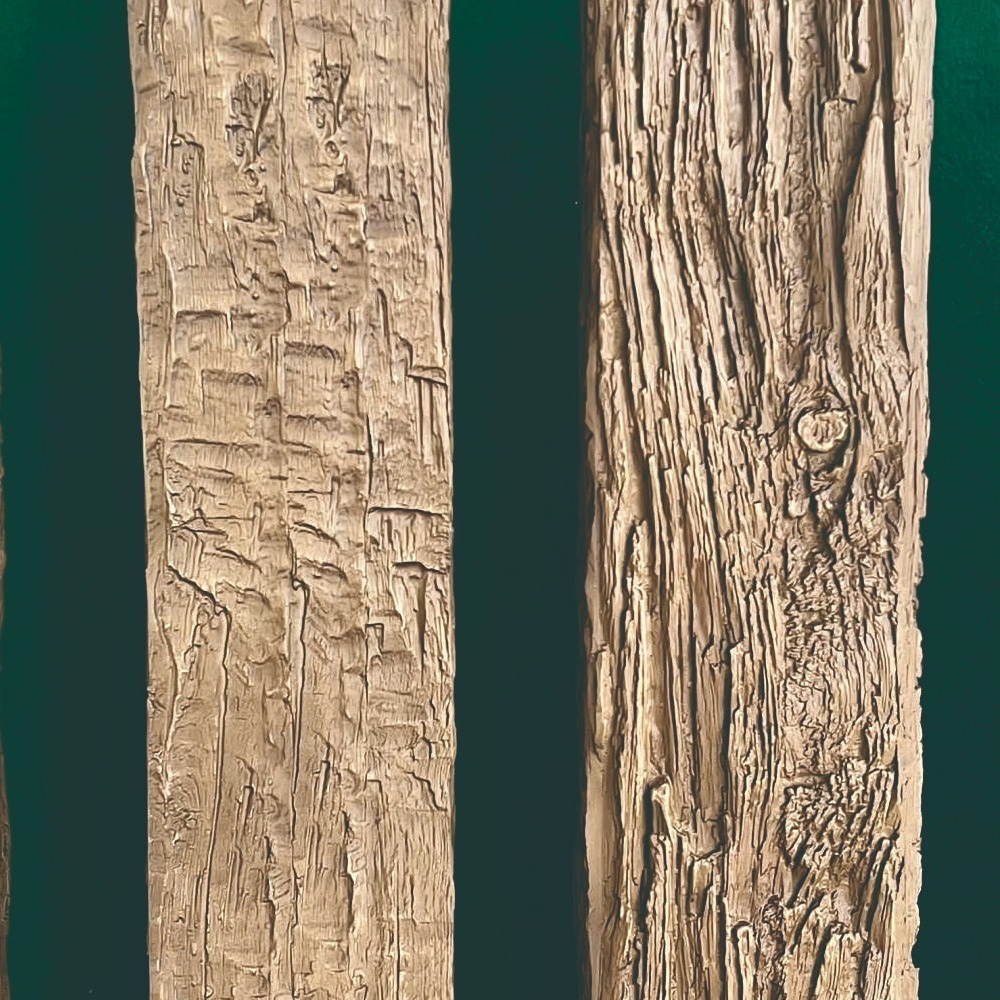
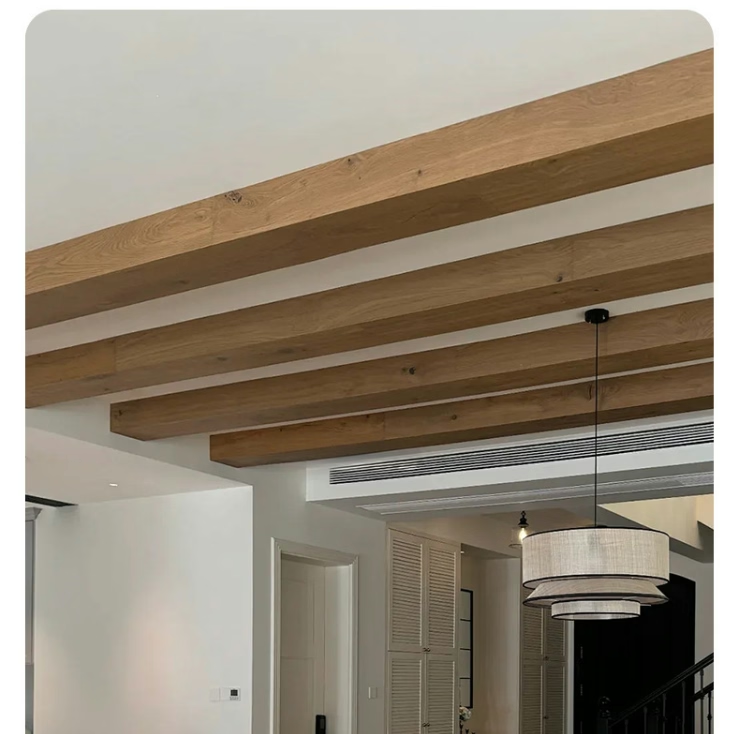
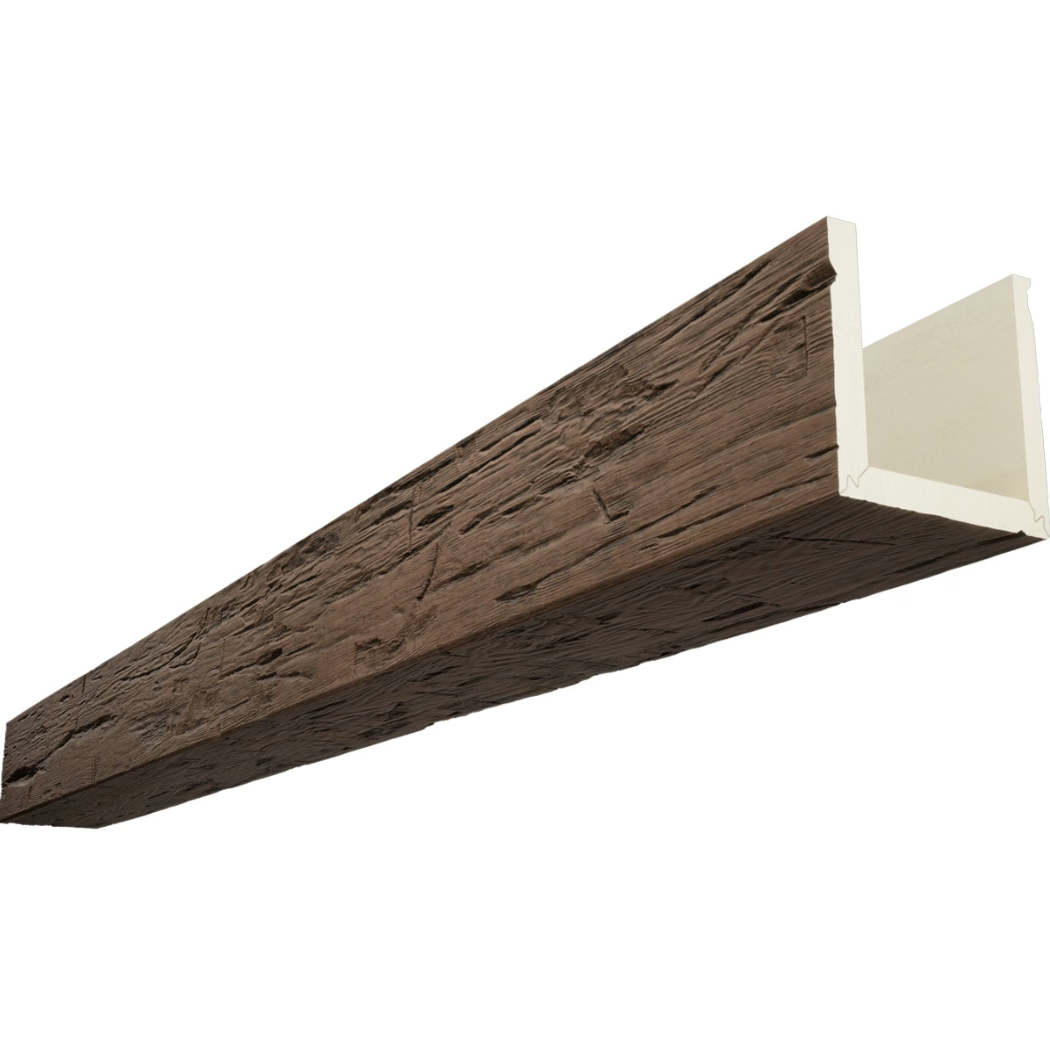
The industrial aesthetic has proven remarkably durable in commercial interior design, transcending the trend cycles that often govern hospitality and retail design choices. This enduring appeal stems from genuine authenticity: industrial spaces were built for function rather than fashion, and their honest materials and exposed structure communicate an integrity that resonates with contemporary sensibilities. The weathered timber beams found in historic factories, mills, and warehouses embody this authenticity, offering a visual anchor for commercial spaces that want to project substance and permanence.
Implementing authentic industrial design in commercial applications requires balancing aesthetic goals against practical realities. Genuine industrial timber carries the weight of history but also the limitations of aging materials: moisture sensitivity, insect vulnerability, and in some cases, structural compromises that make the wood unsuitable for visible installation. Surface contamination from industrial processes may raise health and safety concerns. Most significantly, the limited supply of genuine industrial salvaged timber makes large-scale commercial installations prohibitively expensive or simply impossible to source.
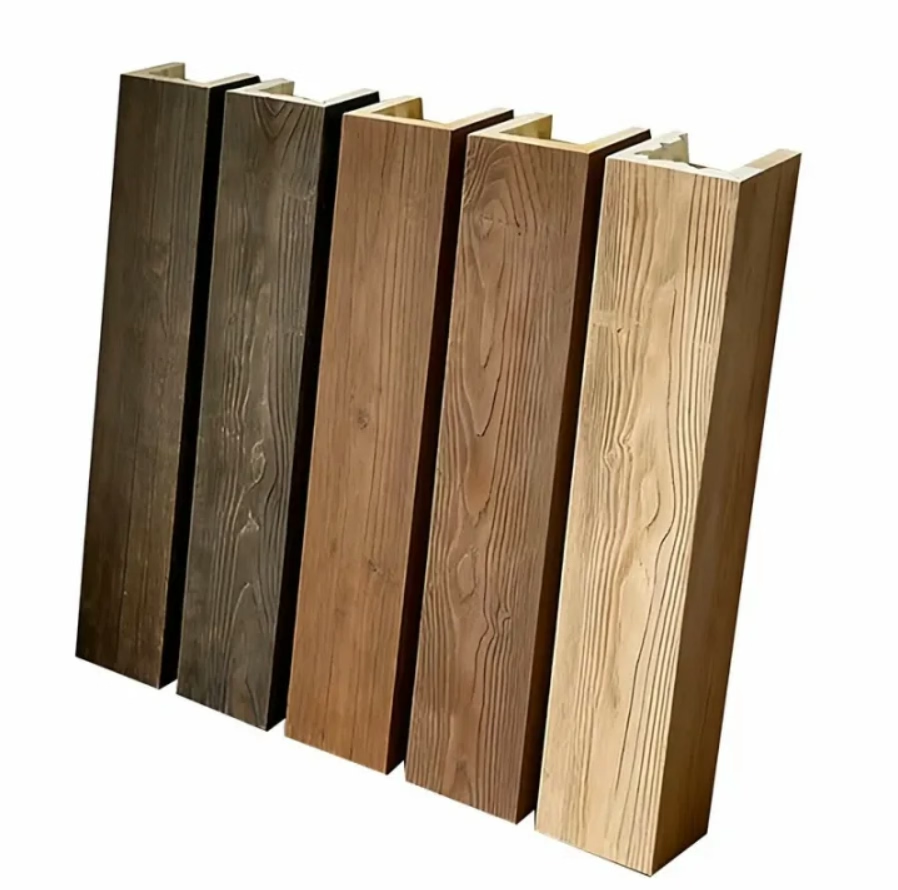
Vintage industrial aged faux timber beams resolve these challenges by combining convincing industrial aesthetics with performance characteristics specifically engineered for commercial applications. These products capture the character of historic warehouse and factory timber while offering consistent quality, reliable availability, and maintenance-free durability that genuine materials cannot match.
Defining Industrial Timber Character
Authentic industrial timber developed its appearance through decades of industrial use rather than natural weathering alone. The characteristics that distinguish these materials reflect their specific functions: structural members that bore heavy loads, beams that supported machinery vibration, posts that received repeated impact from material handling equipment. Understanding these origins helps ensure that faux reproductions capture genuine industrial authenticity rather than superficial rustic styling.
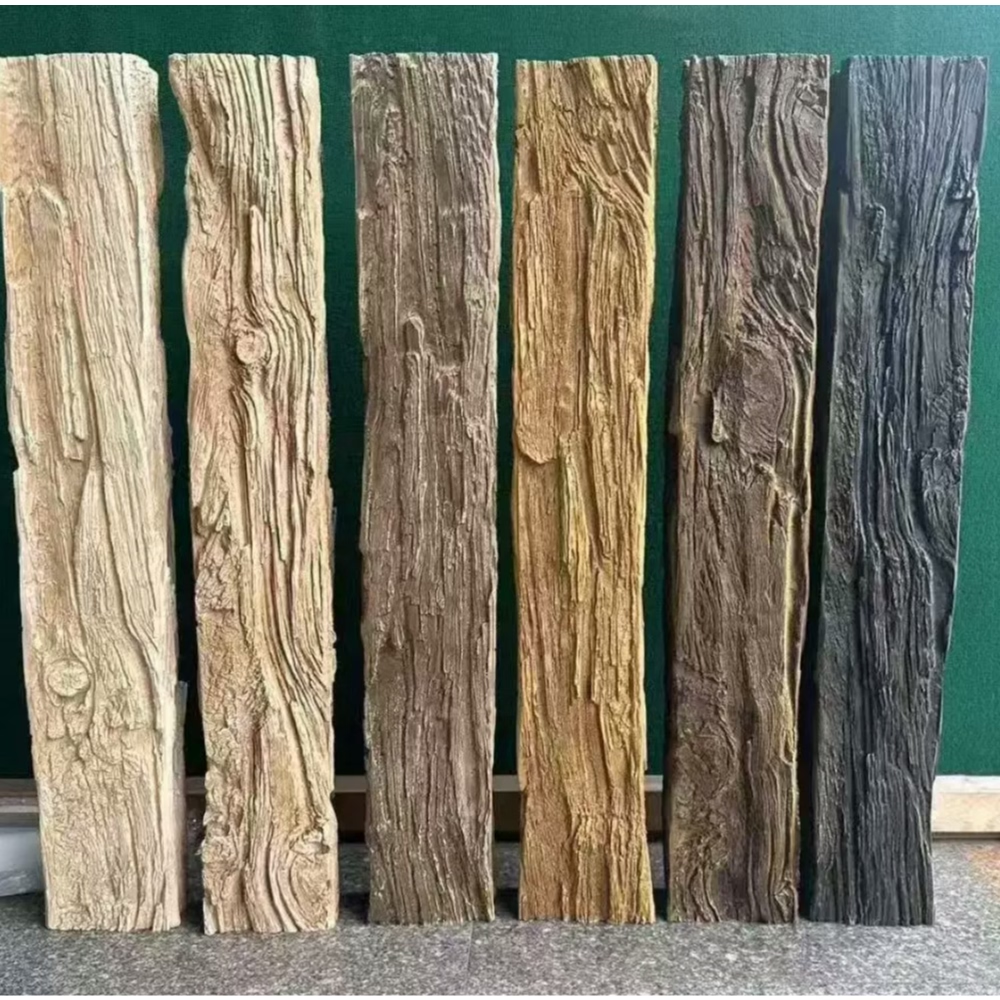
The color palette of industrial timber typically runs toward darker, more saturated tones than agricultural barn wood. Decades of accumulated dust, coal residue, and industrial byproducts created surfaces ranging from deep brown to near-black, with occasional orange or red tones where oxidation products accumulated. Some industrial timber shows distinctive grey banding where water traveled down beam surfaces, creating the weathered striping that distinguishes heavily exposed specimens.
Surface condition varies significantly based on the specific industrial context. Timber from textile mills might show relatively clean surfaces with subtle grain patterns visible beneath accumulated grime. Wood from heavy industrial applications like steel mills or foundries often features more dramatic damage: char marks from nearby hot processes, impact damage from dropped materials, and staining from chemical exposure. The most convincing industrial faux beams replicate this variety rather than presenting uniform surface conditions.
Applications in Hospitality Environments
Restaurants and bars represent the most common commercial application for industrial aged faux timber beams. The hospitality industry's competitive environment demands distinctive spaces that create memorable guest experiences while withstanding the rigors of daily commercial use. Industrial aesthetics satisfy both requirements: they provide powerful visual identity while the durability of polyurethane faux beams ensures long-term performance.
Full ceiling beam installations in large restaurants establish immediate visual character and help organize expansive floor plans into more intimate seating areas. Beams create natural boundaries between bar, dining, and lounge zones without requiring walls or other physical barriers that would reduce flexibility. The overhead structure also provides mounting points for pendant lighting, creating layered illumination that enhances atmosphere while providing functional task lighting.
Smaller establishments can incorporate industrial beams through accent installations rather than comprehensive ceiling treatment. A single beam crossing above the bar area draws attention to the focal point of the establishment while establishing industrial character without overwhelming modest-sized spaces. Entry vestibules and corridor ceilings offer similar opportunities for introducing industrial elements without committing to comprehensive installation.
Hotel lobbies and public areas benefit from industrial aged beams as part of broader design schemes that mix materials and eras. The warmth of timber contrasts effectively with cooler industrial materials like steel, concrete, and glass, creating layered compositions that feel curated rather than arbitrarily assembled. This material mixing has become characteristic of contemporary hospitality design, allowing properties to project sophistication while avoiding the cold impersonality that all-industrial schemes sometimes produce.

Retail and Office Applications
Commercial retail environments increasingly adopt industrial design elements to create distinctive shopping experiences that stand apart from generic chain store aesthetics. Vintage industrial aged beams contribute to this differentiation strategy, establishing immediate character that signals the type of shopping experience customers can expect.
Large-format retail spaces often feature exposed ceiling structures as a design feature, either because the original building construction provides them or because contemporary design intentionally exposes the building skeleton. Industrial faux beams integrate naturally with these architectures, adding warmth and visual interest without obscuring the honest expression of structure that industrial design celebrates.
Pop-up retail installations and temporary retail environments present different challenges. These short-term spaces need strong visual identity but cannot justify the expense or permanent installation of authentic industrial materials. Lightweight faux beams provide impact without commitment, allowing retailers to create industrial atmosphere in temporary venues or to test design concepts before committing to permanent installation.
Office environments incorporating industrial aesthetics typically do so in amenity spaces rather than primary work areas. Break rooms, collaboration zones, and reception areas benefit from the warmer, more relaxed character that industrial beams provide. The overhead structure also helps define different functional zones within open-plan offices, creating psychological separation that improves wayfinding and comfort without requiring partition walls.
Technical Specifications for Commercial Use
Commercial installations impose requirements that differ from residential applications. Building codes may mandate specific fire performance characteristics, particularly in spaces with high occupancy or where flames and heat sources are present. Quality faux beam manufacturers offer products with documented fire performance ratings that satisfy most commercial code requirements, though local authorities should always verify compliance.
Structural requirements for commercial applications vary based on how beams will be used. In purely decorative installations, standard mounting methods provide adequate support. Where beams will support fixtures like heavy light fixtures, signage, or mechanical equipment, verify that the mounting method and beam construction can accommodate the anticipated load. Some manufacturers offer reinforced beam options designed specifically for load-bearing applications.
Cleaning and maintenance requirements in commercial environments differ from residential contexts. Spaces with food service require materials that can withstand frequent cleaning with commercial-grade products. Beams installed above cooking equipment must tolerate grease accumulation and thermal exposure. Understanding these environmental factors helps select appropriate finishes and verify compatibility with your maintenance protocols.
Installation Considerations for Commercial Spaces
Commercial installations typically involve larger scale, more complex coordination, and tighter schedules than residential projects. These factors favor faux beams over authentic timber options, as the consistent quality and predictable handling characteristics of polyurethane simplify installation planning and execution.
Coordinating beam installation with other trades represents one of the most significant challenges in commercial projects. Electrical, mechanical, and plumbing systems often run through ceiling spaces, requiring careful planning to ensure beams clear these obstructions while maintaining visual consistency. Pre-installation coordination meetings allow these issues to be identified and resolved before construction begins rather than during installation when changes are expensive and disruptive.
Access equipment and logistics require advance planning in commercial spaces. High ceilings common in converted warehouse and industrial buildings require scaffolding or lifts for beam installation. The lightweight nature of polyurethane faux beams simplifies handling but still requires appropriate equipment for overhead work. Schedule installation during periods when other trades are not working in the same area to avoid conflicts and safety concerns.
Design Integration with Other Industrial Elements
Successful industrial interiors typically feature multiple material types that combine to create cohesive environments. Vintage industrial aged beams work most effectively when coordinated with complementary materials rather than standing alone as isolated decorative elements.
Exposed brick represents the most common companion to industrial timber. The warm earth tones of brick provide natural contrast to the typically darker timber palette, creating visual balance that neither material achieves alone. When selecting beam finishes, consider whether the existing brick reads as warm red-orange or cool grey-brown, then choose timber finishes that harmonize rather than clash.
Metal elements including steel columns, pipe hardware, and decorative metalwork contribute to industrial authenticity. These materials introduce different textures and reflectivity that interact with timber surfaces and lighting conditions. Consider how beams will relate to metal elements at corners, where beams meet columns, or where metal fixtures attach to beam surfaces.
Concrete floors and walls add the final layer to industrial compositions. The cool neutrality of concrete provides a backdrop against which timber and brick warmth can read clearly. Polished concrete floors reflect overhead lighting and beam shadows, creating dynamic visual effects that enhance the industrial atmosphere.
Budget Considerations and Value Analysis
Commercial projects require careful budget analysis that considers both upfront costs and long-term value. While quality faux beams may cost more than some alternative materials, their durability and maintenance characteristics often provide better lifecycle value than less expensive options that require frequent replacement or extensive upkeep.
Compare total installed costs rather than material prices alone. Authentic reclaimed timber requires specialized handling, potentially hazardous material assessment, and complex installation procedures. Faux beams ship in consistent, manageable lengths with predictable weights that simplify logistics and reduce installation labor.
Maintenance costs over the projected lifespan of the installation should factor into budget decisions. Genuine wood requires periodic refinishing, particularly in commercial environments where cleaning frequency and product variety might accelerate surface degradation. Polyurethane faux beams maintain their appearance indefinitely with basic cleaning, eliminating ongoing maintenance expenditures.
Long-Term Performance Expectations
Quality faux beams provide decades of service in commercial environments when properly installed and maintained. The specific lifespan depends on installation quality, environmental conditions, and maintenance practices, but most commercial installations can expect fifteen to twenty years of maintenance-free performance before replacement becomes desirable.
Physical performance characteristics that benefit commercial applications include impact resistance, dimensional stability, and color retention. Quality polyurethane tolerates the accidental impacts that occur in busy commercial spaces better than many alternative materials. Dimensional stability means beams maintain tight joints and consistent appearance regardless of humidity fluctuations common in HVAC-controlled commercial buildings.
Color retention ensures that the investment in professional design continues to provide value throughout the installation lifespan. UV exposure from sunlight and artificial lighting can affect some materials, but quality faux beam finishes resist fading and maintain their intended appearance despite prolonged exposure.
Industrial aged faux timber beams offer commercial designers a powerful tool for creating authentic industrial atmosphere. By combining the genuine character of historic warehouse timber with performance characteristics engineered for demanding commercial applications, these products enable spaces that project substance, warmth, and lasting quality.
Technical References
ASTM standards cited in every specification
Test Data
Lab results from internal testing program
Updated 2026
Reviewed against current product specs