The muted elegance of old grey barn wood has captivated designers and homeowners for generations. Unlike the warm honey tones of freshly milled timber or the rich browns of freshly exposed structural wood, grey barn wood speaks in quieter notes: silver whispers, soft shadows, and the accumulated wisdom of decades spent weathering the elements. This sophisticated palette brings a different kind of warmth to interior spaces, one that complements contemporary design as readily as it honors traditional settings.
Retro styling has embraced grey barn wood aesthetics with particular enthusiasm, drawing on the aesthetic vocabulary of mid-century modern design while incorporating influences from Scandinavian minimalism and Japanese wabi-sabi philosophy. These intersecting design traditions share an appreciation for materials that show their age gracefully, revealing beauty through use rather than concealing it beneath perfect surfaces.
The Science of Grey Wood Aging
Understanding why wood develops grey coloration helps inform choices about grey barn wood effect faux beams. The grey appearance results from two distinct processes: photodegradation and surface erosion. Ultraviolet radiation breaks down lignin, the polymer that binds wood fibers together, causing the surface to lighten and eventually turn grey. Simultaneously, rain and wind erode the degraded surface layer, exposing fresh wood fibers that subsequently degrade in their turn.
This combination of processes produces the distinctive silver-grey appearance that distinguishes long-exposed timber. The color develops gradually, with the most dramatic effects occurring in the first years of exposure before gradually stabilizing as the wood reaches an equilibrium between degradation and erosion rates. The specific shade of grey depends on wood species, exposure orientation, local climate, and the presence of any protective overhangs or coatings.
Artificial replication of this process requires sophisticated manufacturing techniques. Simple grey staining produces flat, uniform coloration that reads as painted rather than weathered. Quality faux beam producers instead use layered finishing systems that build complexity through multiple color applications, creating dimensional effects where deeper grey tones occupy recessed areas while raised grain catches light in ways that suggest genuine sun and rain exposure.
Design Contexts for Grey Barn Wood Beams
The versatility of grey barn wood aesthetics allows application across diverse design contexts. Contemporary minimalist spaces benefit from the subtle visual texture that grey beams provide without introducing strong color that might compete with carefully curated furnishings. The neutral character of grey allows it to function as a bridge between warm and cool elements, creating visual continuity in spaces that might otherwise feel fragmented.
Scandinavian-inspired interiors naturally embrace grey barn wood aesthetics. The Nordic preference for natural materials, muted colors, and honest expression of construction aligns perfectly with the character of weathered grey timber. Grey beams in these settings complement pale wood floors, white walls, and textiles in natural fibers, creating cohesive compositions that feel effortlessly sophisticated.
Retro and mid-century modern spaces benefit from grey barn wood beams as period-appropriate finishing elements. The grey palette aligns with the era's preference for sophisticated neutrals over the warmer tones that characterized earlier rustic styles. Grey beams can anchor mid-century interiors without the heavy-handedness that warmer wood tones sometimes produce in these settings.
Shabby chic and cottage-style interiors find grey barn wood beams equally appropriate. The relaxed, collected-over-time aesthetic these styles celebrate pairs naturally with the authentic aging that grey barn wood represents. Beams can serve as starting points around which vintage finds, family heirlooms, and handmade objects accumulate to create deeply personal spaces.
Color Coordination Strategies
Integrating grey barn wood beams with surrounding finishes requires understanding the specific undertones present in your grey selection. Grey is never truly neutral; every grey tone carries subtle warm or cool biases that affect how it relates to adjacent colors. Warm greys contain traces of brown or beige, while cool greys lean toward blue or green.
In spaces with existing grey elements like painted walls or flooring, select beam finishes that either match the dominant grey tone or provide deliberate contrast. Matching creates a monochromatic palette where beams recede into the overall composition. Contrasting introduces visual interest through tonal variation, drawing attention to the beams as design features rather than background elements.
White walls present the most common context for grey beam installation. The combination of grey beams and white surfaces creates the clean, bright aesthetic that characterizes many contemporary and Scandinavian-inspired interiors. The key to success lies in selecting a grey that provides sufficient contrast with the wall color without appearing dirty or stained. Samples viewed under actual lighting conditions help verify that the relationship feels right.
Colorful accessories and furnishings can reference the grey palette or provide deliberate contrast. Blue and green tones create calm, nature-inspired combinations when paired with grey wood. Orange and coral introduce warmth that prevents the overall composition from feeling cold. Yellow adds energy and cheerfulness that works particularly well in children's spaces or creative studios.

Texture Considerations for Authenticity
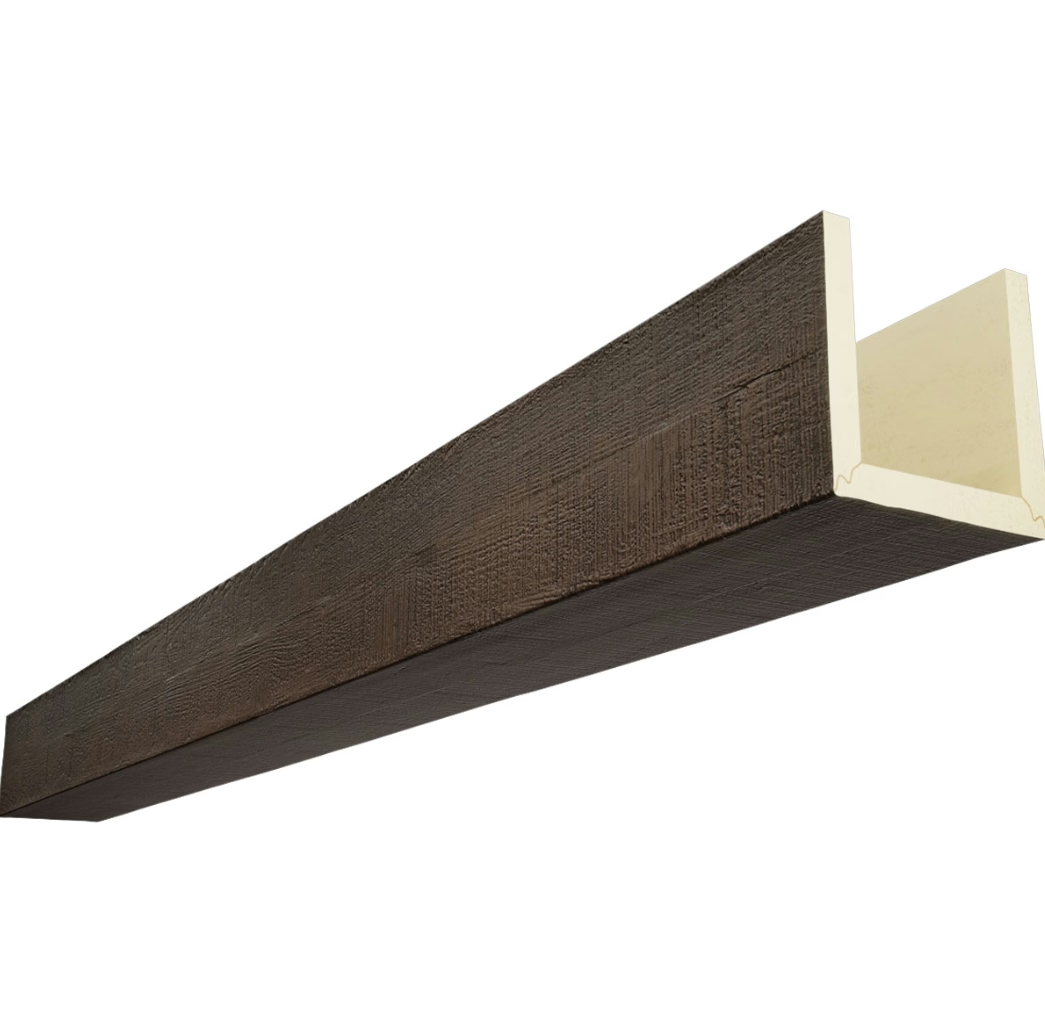
The texture of grey barn wood carries significant aesthetic information that should be carefully replicated in faux beam selection. Genuine grey weathering creates distinctive surface characteristics that vary based on exposure conditions and wood species. Understanding these variations helps identify which products most convincingly capture authentic grey barn wood character.
The most pronounced texture typically appears on horizontal surfaces where rain and sun exposure are most consistent. Vertical beam faces often show less dramatic weathering, with grey developing unevenly based on moisture runoff patterns. Some of the most interesting grey barn wood specimens show gradations from heavily weathered faces to more protected surfaces where original wood character remains partially visible.
Quality faux beams replicate these variations through careful mold selection and finishing techniques. The surface should feel tactile when touched, with raised grain patterns and subtle depressions that create visual interest. A perfectly smooth grey surface reads as plastic or painted rather than weathered, defeating the purpose of selecting grey barn wood aesthetics in the first place.
Edge treatment deserves particular attention for grey applications. The ends of beams where grain is exposed often weather differently than longitudinal surfaces, sometimes developing checking or erosion that creates distinctive profiles. These details distinguish authentic timber from machine-produced alternatives and should be present in quality faux reproductions.

Scale and Proportion Planning
Successful grey barn wood beam installations require attention to scale and proportion. The visual weight of beams should relate appropriately to the ceiling height, room dimensions, and other architectural elements present in the space. Beams that are too small for their context disappear into the background; those that are too large overwhelm the composition.
For ceilings of typical residential height (eight to nine feet), standard-sized beams with moderate profiles typically work well. Wider beams with more substantial cross-sections can add presence without becoming oppressive. Very large beams work best in spaces with higher ceilings or in rooms where the beams will be a dominant design element rather than one of several competing features.
Beam spacing affects both visual appearance and perceived ceiling height. Closely spaced beams create a more intimate atmosphere and can make ceilings feel lower than they actually are. Wider spacing allows the ceiling plane to read more continuously, maintaining openness while still providing architectural interest through the beams themselves.
The direction beams run relative to the room's primary axis also influences spatial perception. Beams running perpendicular to the longest wall tend to shorten visual distance, making rooms feel more square. Beams parallel to the longest wall extend the visual line, emphasizing length. These effects should inform beam orientation decisions alongside practical considerations like joist direction and fixture placement.
Maintenance Advantages of Polyurethane
The practical benefits of polyurethane construction prove particularly valuable for grey barn wood applications. The light color of grey finishes shows dust and dirt more readily than darker tones, requiring more frequent cleaning to maintain their intended appearance. Polyurethane surfaces clean easily with basic dusting or occasional damp wiping, avoiding the more complex maintenance that genuine grey barn wood would require.
Moisture sensitivity represents another meaningful advantage. Genuine grey barn wood, despite its weathered appearance, remains vulnerable to moisture damage if exposed to conditions different from those that created its grey patina. Polyurethane faux beams resist moisture entirely, maintaining dimensional stability and surface appearance regardless of humidity levels or occasional water exposure.
The grey finish itself benefits from polyurethane's color stability. Unlike stains applied to porous wood, the color in quality polyurethane beams penetrates consistently throughout the material rather than sitting on the surface where it might wear or scratch away. This depth of coloration ensures that any minor damage reveals consistent color rather than a different underlying tone.
Installation Simplicity and Flexibility
The lightweight construction of polyurethane faux beams simplifies installation in ways that expand design possibilities. Unlike heavy timber that requires structural calculation and substantial mounting hardware, lightweight faux beams can be installed using methods accessible to anyone comfortable with basic tools.
The flexibility of polyurethane also allows curved and custom configurations that would be difficult or impossible with real wood..radius beam ends, curved beams for barrel ceilings, and other non-standard configurations expand the design possibilities available for grey barn wood aesthetics. These custom options enable designers to address challenging architectural situations that would otherwise preclude beam installation.
Hollow beam designs provide cavities for running electrical wiring, speaker cables, or other services that might otherwise require visible conduit or ceiling penetration. This feature proves particularly valuable in renovation projects where existing construction limits the ability to run services through traditional pathways.
Creating Cohesive Grey Environments
Grey barn wood beams work most effectively as part of comprehensive design schemes rather than isolated additions. Consider how beams will relate to other grey elements in the space: furniture, textiles, architectural details, and decorative objects. The goal is creating a layered composition where grey appears in varying intensities and textures, adding richness through variation rather than monotony through uniformity.
Natural materials in complementary tones enhance grey barn wood aesthetics without introducing competing color. Stone surfaces in grey and charcoal tones, linen textiles in undyed natural colors, and leather in grey or cognac tones all extend the palette while adding textural variety.
Metallic accents in appropriate finishes provide subtle gleam that prevents grey environments from feeling flat. Brushed nickel, matte black, and unlacquered brass hardware and fixtures introduce reflectivity without strong color influence. The key is selecting metal finishes that feel appropriate to the overall design context rather than introducing contrasting style elements.
The sophisticated elegance of vintage old grey barn wood effect beams offers a refined path to retro styling. By combining the authentic character of weathered timber with the practical performance of modern materials, these beams enable sophisticated grey environments that honor tradition while embracing contemporary sensibilities.
Technical References
ASTM standards cited in every specification
Test Data
Lab results from internal testing program
Updated 2026
Reviewed against current product specs


