The ability to paint wood has made painted timber a canvas for interior expression across centuries of design tradition. From the whitewashed beams of English cottages to the bold colors of Scandinavian folk traditions, painted timber has reflected cultural preferences, practical needs, and individual creativity. Today, painted beams continue to offer opportunities for personalization that stained or natural-finish options cannot match.
Modern faux beam technology extends these possibilities by creating polyurethane surfaces specifically engineered to accept paint beautifully. Unlike real wood, which requires careful preparation to avoid uneven absorption and blotchy results, properly formulated faux beams provide consistent surfaces that take paint uniformly while maintaining the subtle texture that authentic wood character requires.
The History and Appeal of Painted Timber
Painted timber has appeared in interiors across cultures and centuries, serving purposes both aesthetic and practical. In damp climates, paint protected timber from moisture damage. In formal interiors, painted beams contributed to overall color schemes that unified architectural and decorative elements. In vernacular traditions, painted decoration expressed community identity and individual creativity.
English cottage traditions developed distinctive painted beam aesthetics characterized by white or cream paint applied over timber that was often already centuries old. The effect was one of gentle contrast: dark timber showing through pale paint to suggest age and character while maintaining the bright, airy atmosphere that white walls create. This aesthetic remains influential today, appearing in both traditional cottage renovations and contemporary interpretations.
Nordic and Scandinavian traditions introduced bolder painted timber applications. Red-painted barns with contrasting white trim represent one of the most recognizable folk aesthetics, while interior applications featured painted beams in colors ranging from traditional red and yellow to more surprising choices like green and blue. These traditions valued painted timber as decorative element rather than mere structural fact.
Advantages of Paintable Polyurethane Beams
Polyurethane faux beams engineered for painting offer meaningful advantages over real wood preparation requirements. These benefits make painted beam installations more accessible while enabling finish qualities that might be difficult or impossible to achieve with genuine timber.
Surface consistency represents the primary advantage. Real wood presents varying densities across growth rings, with earlywood and latewood accepting stain and paint differently. This variation can create blotchy, uneven results that require extensive preparation to address. Properly formulated faux beams provide uniform surface density that accepts paint consistently across the entire beam surface.
Porosity control offers another significant benefit. Real wood absorbs paint variably based on grain orientation, knots, and other characteristics. This absorption creates color variations that might be desirable in rustic applications but problematic when consistent painted finishes are required. Polyurethane surfaces accept paint without significant absorption, creating uniform color that can be built up in controlled layers.
The ability to achieve crisp painted edges simplifies installation significantly. Real wood paint applications typically require masking and careful technique to avoid paint migration onto adjacent surfaces. Faux beams can be painted before installation, allowing all surfaces to be finished in controlled conditions without concern for protecting surrounding elements.
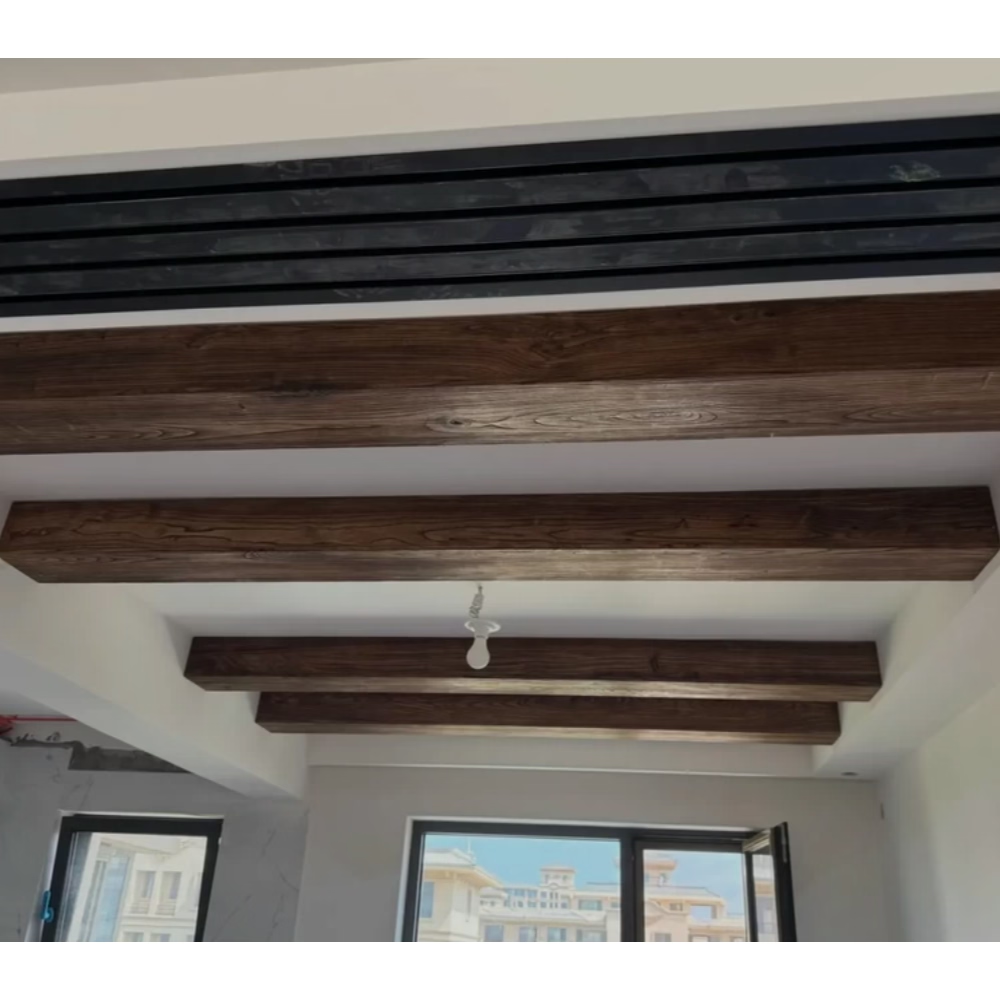
Paint Selection and Application
Successful painted faux beam installations require appropriate paint selection and proper application technique. The wrong paint or incorrect application can undermine even well-designed installations, while proper technique ensures lasting beauty.
Latex and acrylic paints work well on polyurethane surfaces, providing good adhesion and color stability. These water-based options offer easy cleanup and low odor compared to solvent-based alternatives. High-quality interior paints in the appropriate sheen level—typically satin or semi-gloss for durability—provide the best results.
Surface preparation for painted faux beams is simpler than for real wood but still important. Light sanding with fine-grit paper removes any surface contamination and provides mechanical key for paint adhesion. Wiping with a tack cloth or damp cloth removes sanding dust before painting begins.
Priming is generally recommended for painted faux beam applications. A quality primer designed for synthetic surfaces ensures optimal paint adhesion and promotes even color development. Some faux beam manufacturers specify particular primers that work optimally with their products; following these recommendations ensures best results.

Custom Color Schemes for Every Style
The painted beam palette encompasses virtually unlimited color possibilities, allowing integration with any interior color scheme. This flexibility makes painted beams appropriate for spaces where existing colors must be maintained or where bold color statements are desired.
White and cream painted beams work in virtually any interior, providing subtle texture and visual interest without introducing strong color. These neutral treatments maintain maximum flexibility for furnishing and decorating while adding the architectural interest that plain ceilings lack. White beams in white or near-white rooms create continuity that makes spaces feel larger and brighter.
Bold colors create dramatic focal points that draw attention to ceiling treatments. Deep blue, forest green, and rich burgundy painted beams introduce strong color that can anchor room color schemes. These bold choices work best in rooms with neutral walls and furnishings that allow the ceiling treatment to dominate without overwhelming.
Pastel painted beams offer softer color presence for spaces that need subtle warmth without strong chromatic impact. Soft yellow, pale pink, and gentle sage green painted beams add personality to children's rooms, casual living spaces, and anywhere else where cheerful rather than dramatic treatment is desired.
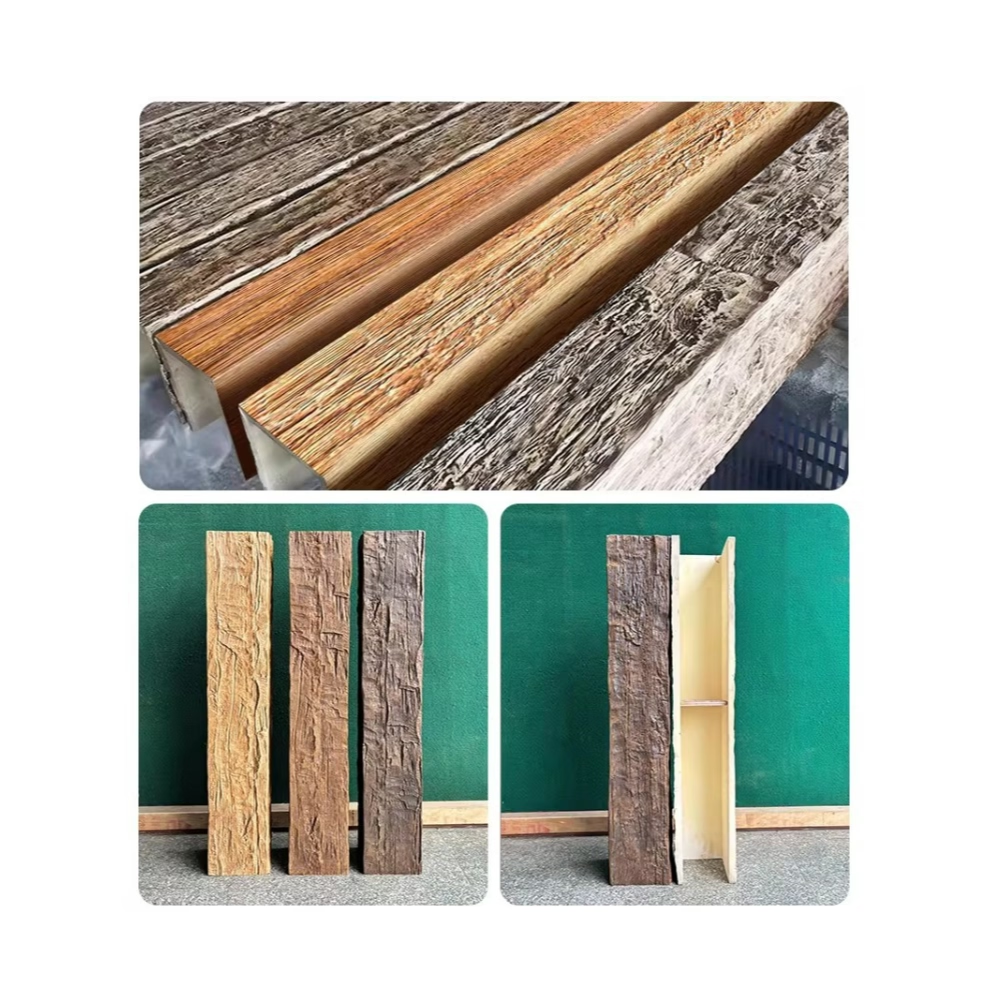
Integration with Existing Interiors
Successful painted beam installations integrate with existing color schemes and design elements rather than introducing jarring contrast. Careful color selection ensures that beams enhance rather than disrupt established interior compositions.
When matching existing trim or architectural elements, bring actual samples to compare rather than relying on color names or numbers. Lighting conditions, surrounding colors, and other contextual factors affect how colors appear, and samples verified in situ prevent disappointing mismatches.
For rooms with strong existing colors, consider painted beams that reference those colors at reduced intensity. A bright blue room might incorporate lighter blue painted beams, creating cohesion without matching saturation. This approach allows beams to feel related to the overall scheme while maintaining visual distinction.
The transition between painted beams and adjacent surfaces requires consideration. The level of contrast between beam color and wall or ceiling color affects how the beams read spatially. High contrast creates strong definition that emphasizes beam presence; low contrast allows beams to recede into the ceiling plane.
Achieving Professional Results
Professional-quality painted beam results require attention to technique and detail. While the process is simpler than painting real wood, proper execution ensures lasting satisfaction.
Spray application provides the smoothest finish for painted beams, eliminating brush marks and ensuring uniform coverage across textured surfaces. This approach requires appropriate equipment and ventilation but produces superior results for visible beam installations. Alternatively, high-quality brushes and careful technique can achieve good results without spray equipment.
Multiple thin coats provide better results than single heavy applications. Each coat should dry fully before the next is applied, building color gradually and preventing runs or drips that might telegraph through to the final surface. Patience during the painting process pays dividends in the finished appearance.
Edges and details require attention during painting. Beams with carved details, textured surfaces, or complex profiles may require brush work to ensure paint reaches all surfaces. This detail work should be done carefully, building color through multiple thin applications rather than attempting to force paint into crevices with heavy brush loading.
Maintaining Painted Beam Finishes
Painted polyurethane beams require minimal maintenance to preserve their appearance. The durable surface resists scuffing and marking while maintaining color stability over time.
Regular dusting keeps painted surfaces clean without risk of damage. Unlike real wood where harsh cleaning might affect the finish, polyurethane surfaces tolerate gentle cleaning with appropriate products.
Touch-up painting is simpler for faux beams than for real wood. Minor scratches or chips can be addressed with small amounts of the original paint, applied carefully to the affected area. The consistent surface of polyurethane accepts touch-up paint more readily than the variable surfaces of real wood.
For beams that eventually require repainting, the process is straightforward. Light sanding to provide key, followed by primer and paint as for the original application, restores the installation to like-new condition without the extensive preparation that repainting real wood would require.
Creative Applications and Custom Treatments
Painted faux beams offer opportunities for creative expression beyond simple solid colors. Techniques like distressing, antiquing, and layered finishes create additional visual interest while maintaining the practical benefits of the underlying polyurethane construction.
Two-tone painted effects, where beams are painted one color with a second color appearing in carved details or grain depressions, add dimensional interest. This treatment creates the impression of aged paint where base wood shows through to top layers, adding character that solid-color finishes cannot achieve.
Distressing techniques applied to painted beams can simulate the worn paint effects seen in historic interiors. Careful application of sandpaper or other distressing tools after painting creates authentic-feeling age marks without the difficulty of distressing real wood before painting.
Decorative painting treatments like stenciling, freehand patterns, or faux finish techniques can transform painted beams into decorative elements that contribute to overall interior design. These treatments work best when they reference or complement other decorative elements in the space.
Painted-look faux beams offer unmatched versatility for interior design. By combining authentic wood character with paint-friendly surfaces, these beams enable truly personalized ceiling treatments that reflect individual style and integrate seamlessly with any interior color scheme.
Technical References
ASTM standards cited in every specification
Test Data
Lab results from internal testing program
Updated 2026
Reviewed against current product specs


