
Architecture has always played with curves—the sweeping arches of Roman aqueducts, the vaulted ceilings of Gothic cathedrals, the graceful bends of Art Nouveau interiors. These flowing forms create a sense of movement and dynamism that straight lines cannot match, adding life to spaces that might otherwise feel static or rigid. Our vintage white-washed curved decorative beams bring this architectural tradition into contemporary interiors with a material that makes curved forms practical for any project.
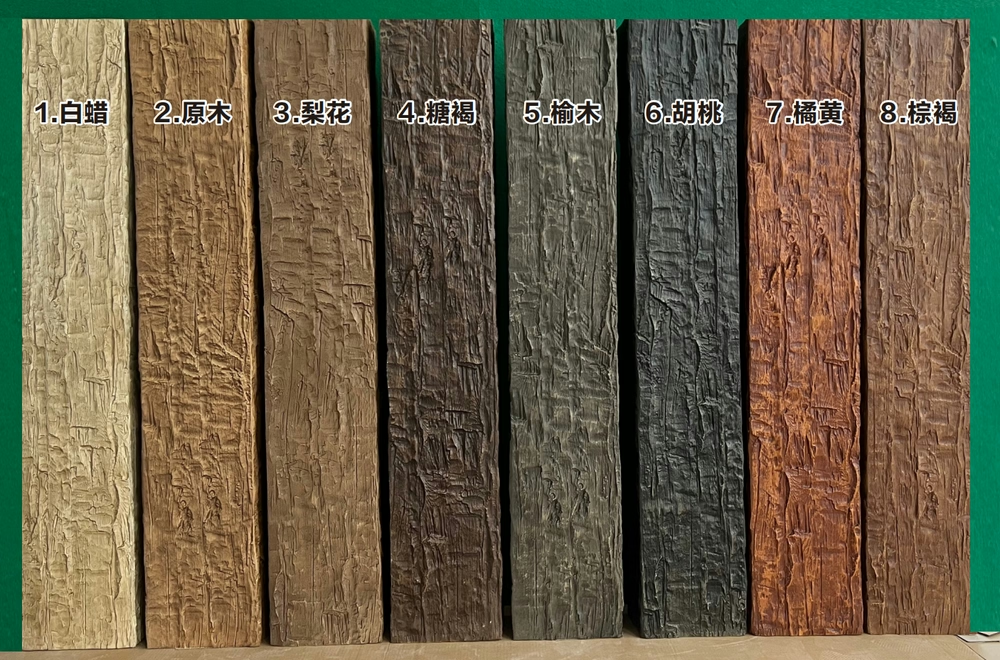
The vintage white-wash finish adds another dimension to these curved pieces. Unlike solid paint applications that present a flat, uniform surface, white-washing reveals underlying texture while lightening it. The technique originated as an economical way to brighten interiors while allowing the natural character of the underlying material to show through. In our application, the same principle applies: the polyurethane texture remains visible beneath the white-wash, creating depth that enhances the vintage character.
Curved Forms in Interior Design
Curved beams serve architectural purposes that extend beyond mere decoration. In spaces with curved ceilings—domes, barrel vaults, or custom radiused architecture—straight beams create visual discord rather than harmony. Curved pieces follow the natural flow of the architecture, reinforcing rather than contradicting the design intent. The result feels intentional, as though the beams and ceiling developed together rather than meeting awkwardly during installation.
Beyond ceiling applications, curved beams function effectively as sculptural wall elements. A curved beam mounted horizontally can soften the transition between wall and ceiling, creating the impression of a cove or coved detail that might otherwise require extensive construction. Vertically oriented curves can frame doorways, windows, or architectural features with flowing lines that draw the eye along their length.
The psychological impact of curves deserves mention. Research in environmental psychology consistently demonstrates that curved forms evoke different responses than straight lines—generally softer, more welcoming, less aggressive. In spaces designed for relaxation or social interaction, curved beams contribute to the atmosphere without requiring occupants to consciously analyze why the space feels comfortable.
Creating the White-Wash Effect
The vintage white-wash finish involves more than simply applying dilute paint. Achieving an authentic result requires understanding how white-washing behaves on different surfaces and how to manipulate the application to create the desired effect. Our process begins with a carefully formulated white base that bonds well with polyurethane while providing proper coverage and adhesion for subsequent layers.
The characteristic translucency of white-washing comes from partial coverage rather than thin application. We apply multiple light coats, allowing each to dry before evaluation, building up coverage gradually until reaching the sweet spot between too transparent (showing too much texture) and too opaque (losing the vintage quality). The result is a finish that appears to have developed over time rather than been applied in a single sitting.
Subtle color variations within the white-wash contribute significantly to the vintage character. Pure white reads as modern and clinical; vintage white includes hints of cream, grey, or even very faint warm tones that suggest age and natural yellowing. These undertones create visual interest that prevents the beams from disappearing into white backgrounds while maintaining the lightening effect that white-washing provides.
Flexibility in Curved Beam Design
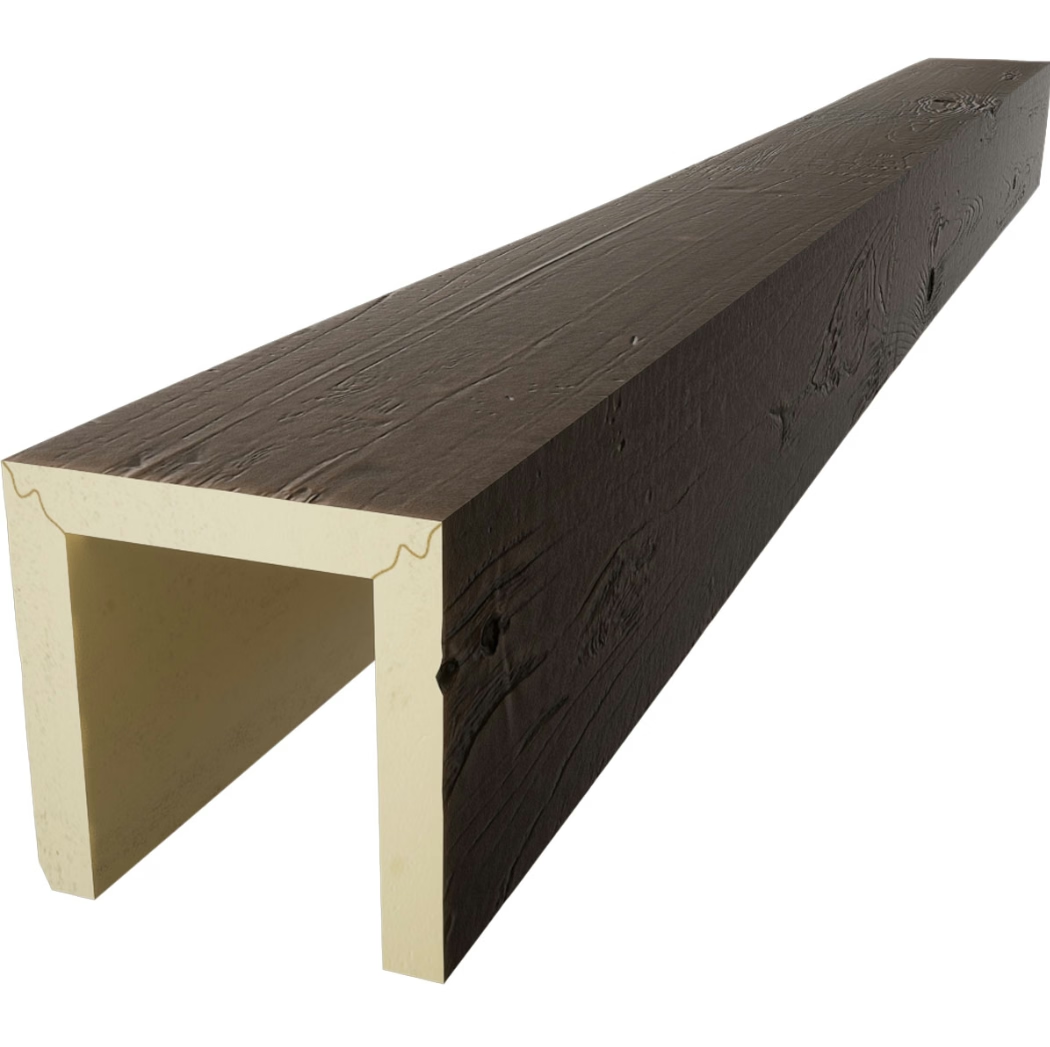
Our curved decorative beams are available in multiple radius configurations to accommodate various architectural scenarios. Standard curves include gentle bends suitable for subtle architectural enhancement and tighter radii for dramatic effects in spaces with more pronounced curvature. Custom radii are available for projects with unique requirements, ensuring that the beams complement rather than fight the existing architecture.
Sweep angles determine how much of a curve the beam covers. Quarter-circle bends work well for corners and transitions, while longer sweeps spanning significant portions of a room create continuous flowing lines. Segment configurations can incorporate straight sections combined with curves, providing flexibility for spaces that combine rectangular and curved elements.
Compound curves—bends in two directions simultaneously—present additional possibilities for truly sculptural applications. These complex forms can create ribbon-like effects, swooping wall-mounted installations, or dramatic ceiling features that serve as the centerpiece of room design. Manufacturing these pieces requires additional expertise, but the visual impact justifies the extra effort in appropriate applications.
Installation Approaches for Curved Elements
Installing curved beams requires attention to the principles that govern any curved millwork installation, with adaptations for the specific challenges that radius work presents. The fundamental requirement is accurate template creation before ordering or manufacturing. Inconsistent radii, even slight ones, create gaps or binding that compromise both appearance and structural integrity.
We recommend creating full-scale templates from cardboard or paper for any curved installation, particularly those involving custom radii. These templates allow verification of fit before commitment to the final product, identifying potential issues while correction remains simple. In new construction or renovation projects where the architecture is still being finalized, templates can be adjusted without waste; finished beams cannot.
Mounting systems for curved beams must accommodate the changing geometry along the beam's length. Standard straight-beam mounting approaches assume consistent cross-section and alignment; curves require more sophisticated solutions. We offer hardware specifically designed for curved installations, including flexible mounting channels and adjustable connection points that work with various radius configurations.
Design Scenarios for White-Washed Curves
Coastal and beach-inspired interiors naturally accommodate white-washed curved beams. The combination of light finishes, flowing forms, and relaxed atmosphere creates cohesive spaces that feel like seaside retreats regardless of actual proximity to water. White-washed curves over dining areas, in entryways, or framing living room features establish the design vocabulary immediately upon entering.
Mediterranean and Spanish Colonial revivals also work well with this aesthetic. The white-washed walls traditional to these styles complement white-washed beams, while the curves reference the archways and barrel vaults common to the architectural vocabulary. Modern interpretations can honor these traditions while adjusting proportions and details for contemporary sensibilities.
Scandinavian-influenced design presents another natural pairing. The white and light palette aligns with Nordic minimalism, while curved elements add the warmth and softness that prevent minimalist interiors from feeling cold. White-washed curved beams in a predominantly white space create focal points that draw interest without introducing color that might disrupt the carefully balanced palette.

Quality Assurance and Durability
The polyurethane substrate provides durability that matches the aesthetic quality of the white-wash finish. Unlike real wood white-washing, which might chip, peel, or weather further over time, our finish maintains its appearance through years of use. The factory application process ensures consistent coverage and adhesion, while the substrate's dimensional stability prevents the cracking and separation that plague painted wood in environments with humidity fluctuation.
Impact resistance exceeds that of real wood in many respects. The material absorbs energy without cracking or denting as easily as timber, though sharp impacts can damage any surface. For installations in high-traffic areas or commercial spaces where the beams might encounter occasional contact, this resilience provides practical benefits alongside aesthetic advantages.
Our warranty covers both material and finish defects, providing confidence for installers and end users alike. We stand behind products that we believe will provide years of satisfaction, and our customer service team addresses any concerns that arise during installation or use. Sample requests allow evaluation of finish quality and texture before commitment to larger orders.
Technical References
ASTM standards cited in every specification
Test Data
Lab results from internal testing program
Updated 2026
Reviewed against current product specs


