Wabi-sabi represents one of the most nuanced aesthetic philosophies to emerge from any culture, yet Western design interest often reduces this rich concept to surface-level imperfection appreciation. The genuine philosophy encompasses much deeper territory—recognition of impermanence, acceptance of incompleteness, finding beauty in humble and imperfect things, and cultivating awareness of natural cycles. Raw wood look faux beams designed with wabi-sabi awareness go beyond mimicking aged timber to embodying these philosophical principles in material form.
Understanding wabi-sabi requires unlearning design habits that prioritize perfection, symmetry, and visual polish. Western design traditions often treat visible joints, irregular surfaces, and material imperfection as flaws requiring concealment or correction. Wabi-sabi inverts these priorities—revelation of process, celebration of material character, and embrace of natural variation as sources of beauty rather than obstacles to it.
The historical context of wabi-sabi emerges from Zen Buddhist traditions that developed in medieval Japan. Aesthetic preferences developed in tearooms, gardens, and small private spaces where wealthy merchant class patrons sought refuge from the formal obligations of public life. These intimate spaces celebrated authentic human experience over aristocratic display, finding beauty in honest simplicity rather than expensive elaboration.
Philosophical Foundations for Design Application
Wabi describes the quality of quiet simplicity, rustic irregularity, and intimate enclosure. Spaces embodying wabi feel sheltered without being cramped, simple without being sparse, and imperfect without being uncomfortable. The quality emerges from appropriate proportion, natural materials, and honest construction rather than decorative application. Wabi spaces invite contemplation and provide respite from overwhelming stimulation.
Sabi encompasses the beauty of aged things, the patina of time, and the dignity of natural progression through life stages. Rather than concealing evidence of age, sabi celebrates wear patterns, weathering, and accumulated character as meaningful qualities. Things that have served long and faithfully develop beauty that new objects cannot possess regardless of their initial qualities. The appreciation requires temporal awareness—recognition that beauty unfolds over time.
The combination of wabi and sabi creates aesthetic experiences impossible to achieve through either alone. Wabi without sabi risks preciousness—the preciousness of things too perfect, too new, too cared-for. Sabi without wabi risks neglect—the neglect of things merely old without the sheltering quality that human habitation provides. The integration suggests spaces that have been inhabited long enough to develop character while remaining warm enough to welcome continued occupation.
Ma, the Japanese concept of negative space or pause, deserves consideration alongside wabi-sabi principles. Ma provides the emptiness that allows positive elements to be perceived clearly. Wabi-sabi design with beams should consider what is not there as carefully as what is included. Generous spacing between beams, exposed ceiling areas that let surfaces breathe, and restraint in beam quantity all honor the ma principle.
Designing Faux Beams for Wabi-Sabi Aesthetics
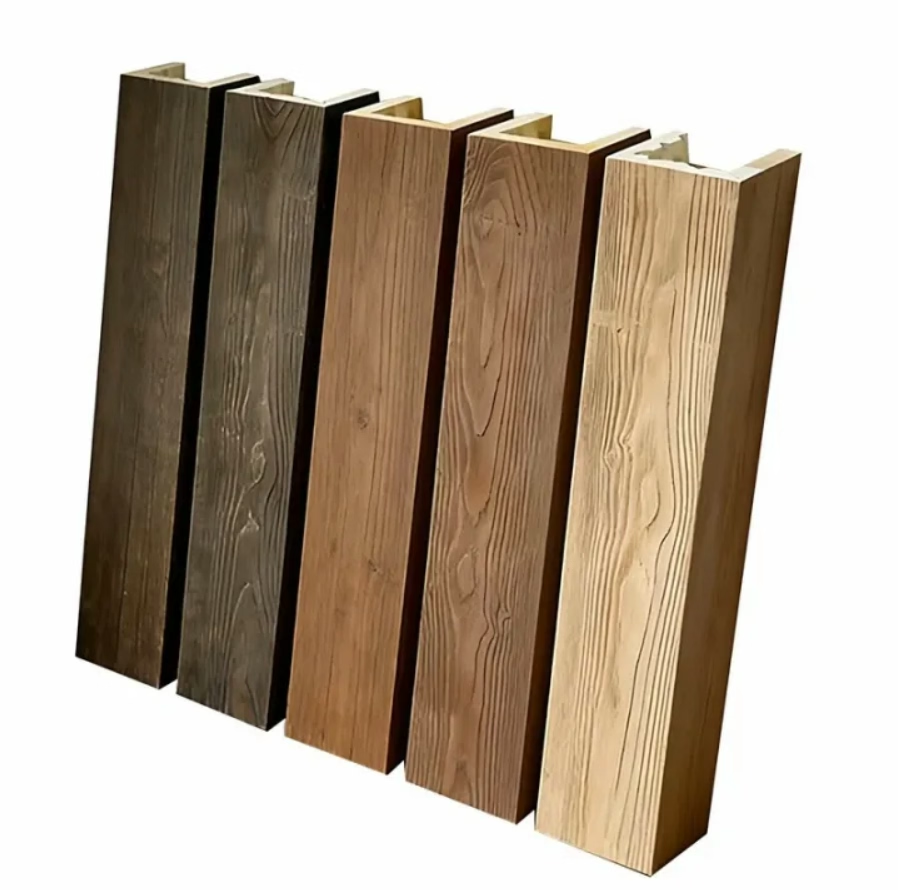
Finish selection forms the foundation of wabi-sabi beam aesthetics. Rather than uniform coloration, appropriate finishes display subtle variation across surfaces—darker in some areas, lighter in others, with gradual transitions rather than sharp boundaries. Hand-applied finishing techniques introduce controlled irregularity that prevents manufactured uniformity. The goal involves finishes that appear to have developed naturally rather than been applied uniformly in a factory.
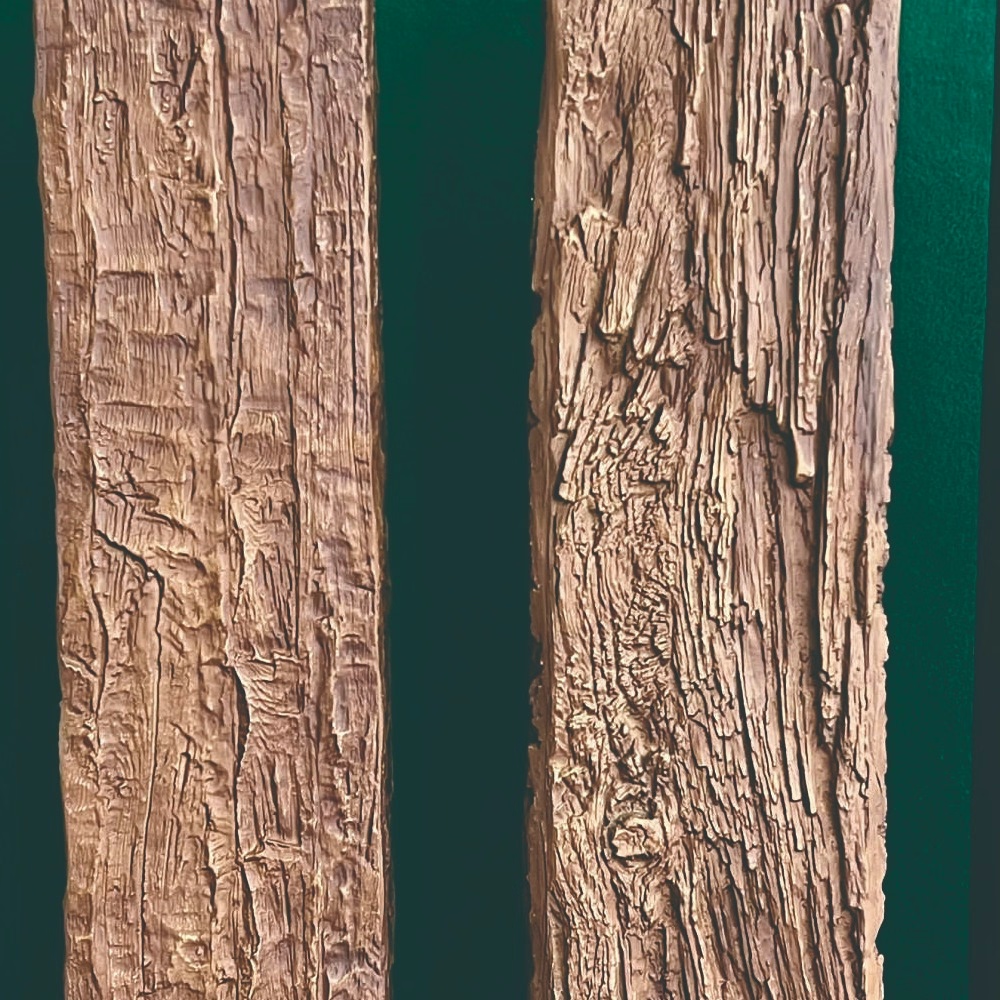
Surface texture should suggest age and use without appearing artificially distressed. Genuine wabi-sabi does not require imitation of damage—rather, it embraces the subtle variations that natural materials inherently possess. Faux beams with appropriately varied surface texture capture this quality through manufacturing precision that reproduces natural characteristics rather than manufactured effects. The distinction matters—imposed artificiality reads differently than captured naturalness.

Beam profiles for wabi-sabi applications often favor slightly irregular cross-sections rather than perfectly uniform geometry. The variation should be subtle enough to avoid appearing accidentally damaged but pronounced enough to communicate authentic timber character. Chamfered edges that vary slightly in angle, slight differences between adjacent sides, and imperceptible variations in overall dimension contribute to wabi-sabi beam character.
Joinery between beam sections deserves particular attention. Mitered joints that align perfectly read as manufactured rather than authentic. Slightly mismatched joints—still structurally sound but visually imperfect—communicate honest construction appropriate to wabi-sabi principles. Some installers deliberately introduce controlled misalignment that appears as authentic timber joinery rather than precision manufacturing.
Wabi-Sabi Space Integration Principles
Wabi-sabi interiors typically employ restrained color palettes centered on earth tones and natural neutrals. Warm grays, soft browns, muted greens, and weathered whites establish backgrounds against which beams contribute their material warmth. The palette should feel found rather than designed—colors that might emerge naturally in spaces with long habitation. Stark whites and pure blacks typically conflict with wabi-sabi sensibility.
Lighting design in wabi-sabi spaces should soften rather than accent. Diffused natural light from filtered windows, paper lanterns providing warm glow, and strategically placed task lighting that avoids harsh shadows all support the contemplative atmosphere. Beam surfaces should receive illumination that reveals their subtle texture without dramatic shadowing that emphasizes manufactured precision. The lighting approach should feel like morning light in an old farmhouse rather than gallery lighting in a museum.
Furniture and accessories in wabi-sabi spaces should display evidence of use and honest construction. Solid wood pieces with visible grain character, ceramics with irregular glazing, and textiles in natural fibers contribute complementary qualities. Avoid anything that appears too perfect, too new, or too mass-produced. The guiding principle involves collecting rather than decorating—assembling meaningful objects over time rather than purchasing coordinated sets.
Spatial arrangement in wabi-sabi design embraces asymmetry as a fundamental quality rather than a problem to be corrected. Beam placement need not be symmetrical across room axes—in fact, asymmetrical placement often feels more authentic. The principle extends to overall room composition where furniture arrangement, artwork placement, and architectural features should create dynamic balance rather than mirror-image symmetry.
Maintaining Wabi-Sabi Integrity Over Time
Wabi-sabi aesthetics actually improve with thoughtful aging rather than requiring maintenance to preserve original appearance. The philosophy celebrates the changes that time brings rather than fighting against them. Faux beams contribute to this temporal dimension by maintaining their intended character without requiring maintenance interventions that might alter their carefully designed imperfection.
Cleaning approaches should preserve natural variation rather than creating uniformity. Gentle cleaning that removes surface dust without aggressive scrubbing maintains surface character. Avoid cleaning products that might strip patina or create uniform appearance across surfaces that should naturally vary. The maintenance philosophy mirrors the design philosophy—working with material character rather than against it.
Surrounding elements may require attention that beams do not. Wall surfaces might develop their own patina through use and cleaning cycles. Textile items may fade gracefully with sun exposure. Furniture may develop wear patterns that add rather than detract from overall aesthetic. These changes contribute to overall wabi-sabi character when they develop naturally through honest use.
Wabi-sabi represents a fundamentally different approach to design—one that requires unlearning Western conditioning about perfection and embracing imperfection as a positive quality. Raw wood look faux beams designed with wabi-sabi awareness offer powerful tools for creating spaces that embody these philosophical principles. The resulting environments provide contemplative refuge from a culture obsessed with newness and perfection, celebrating instead the beauty of authentic human habitation over time.
Technical References
ASTM standards cited in every specification
Test Data
Lab results from internal testing program
Updated 2026
Reviewed against current product specs


