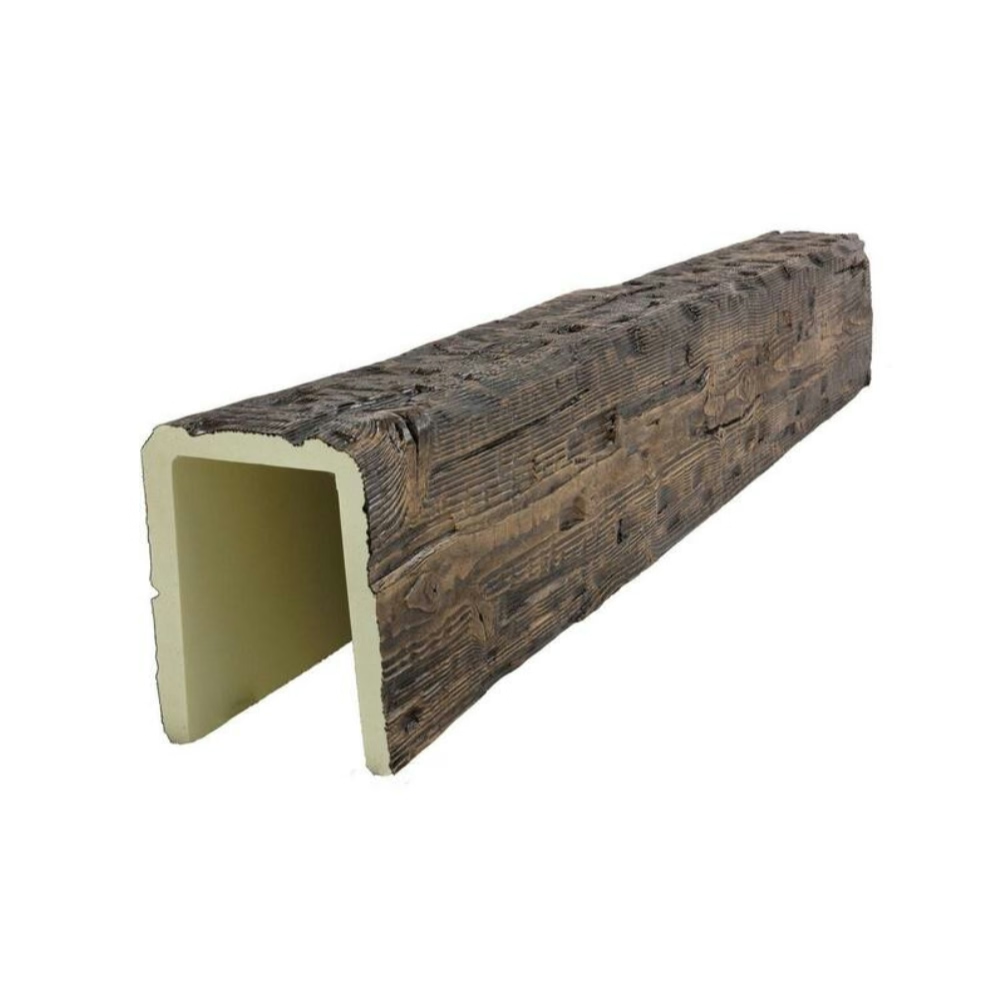
Most US homes built in the last forty years run on a ceiling grid that was never designed to be beautiful—eight or nine feet of flat drywall, a couple of can lights, and that's about it. A 10-foot faux wood beam does something almost rude to that blank plane: it interrupts the eye, breaks the line, and gives the room a center of gravity it didn't have before. Polyurethane makes the trick possible at any budget.
Why 10 feet specifically
The 10-foot run is the workhorse length for residential work. Standard bedroom ceilings measure 9 to 10 feet across the short axis, so a single 10-foot beam covers the span without a splice. Living rooms in ranch homes and townhouses routinely run 14 to 18 feet across, meaning two 10-foot beams butt-jointed cover the room cleanly. The length also matches the standard joist bay in many tract homes, so you can land one end against a joist without fussy blocking.
Working with 10-foot sections reduces three headaches you always see on shorter stock:
- Two-person handling becomes manageable. Polyurethane runs roughly 1.4 to 1.8 pounds per linear foot at the 6x8 nominal size, so a 10-foot beam lands between 14 and 18 pounds. Lighter than a real cedar 6x8 by an order of magnitude.
- Transport is easier. A 10-foot bundle fits inside most cargo vans and on a standard 8-foot ladder rack with a small overhang.
- Waste drops. Most residential runs land between 8 and 12 feet, and 10-foot stock means you trim, you don't splice.
Anatomy of a standard residential layout
In a typical layout, beams run perpendicular to the floor joists and break the ceiling into rectangular bays. The pattern works in three configurations:
Single-axis treatment — beams run one way, every 4 to 6 feet, creating a striped rhythm. Common in modern farmhouse and craftsman-style remodels.
Coffered treatment — beams cross at right angles to form a grid. More material, more impact, more time on layout.
Perimeter-only — beams trace the room edge and frame a central tray ceiling. The minimum-cost way to get a defined architectural feel.
Sizing the beam for the room
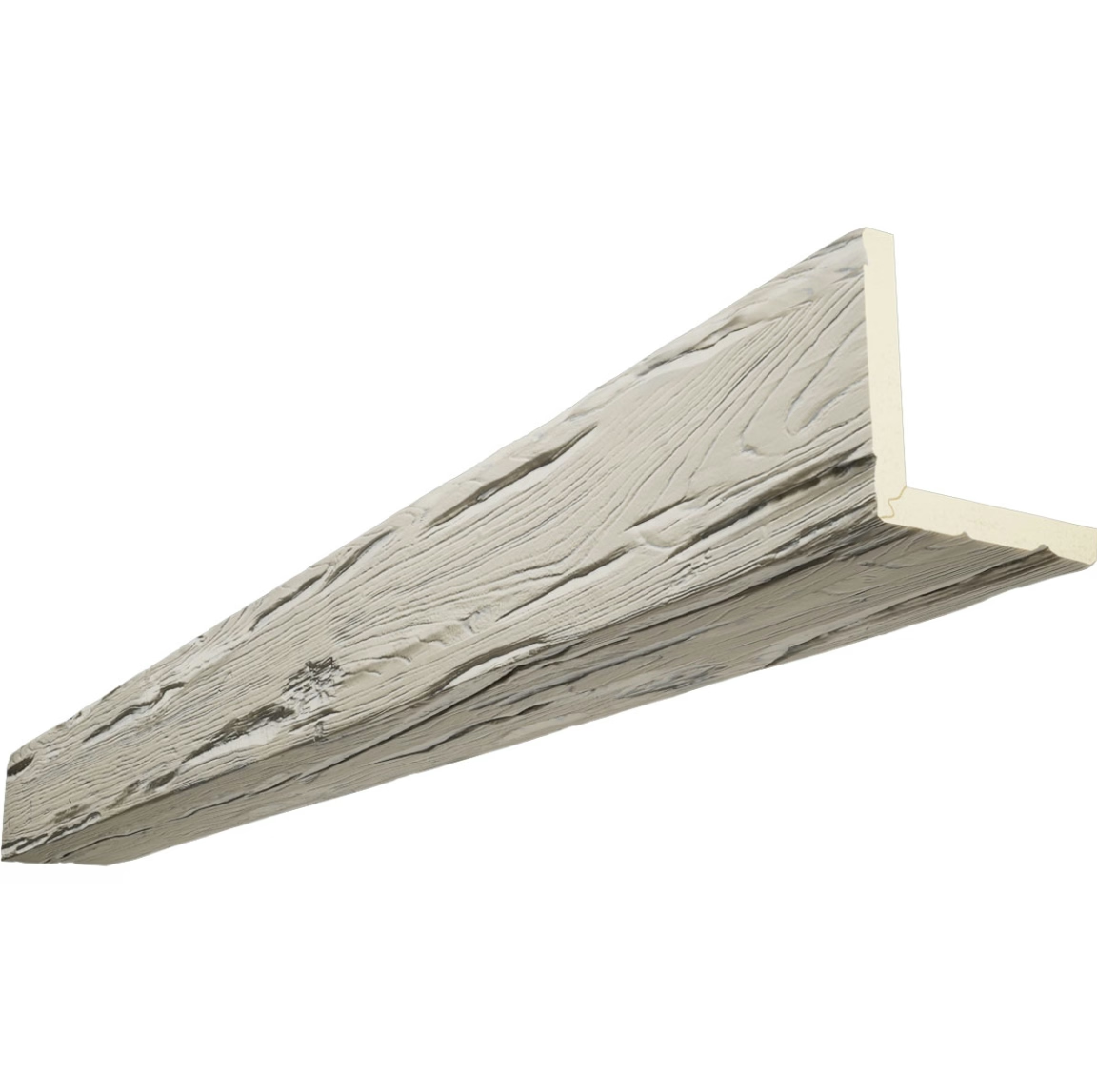
The trick to making faux beams look like they belong is matching width to ceiling height. A 6-inch-wide beam on a 9-foot ceiling reads as trim. A 10-inch-wide beam on the same ceiling reads as structure. The rule of thumb used by most interior designers:
| Ceiling Height | Recommended Beam Width |
|---|---|
| 8 ft | 4–6 in |
| 9 ft | 6–8 in |
| 10 ft | 8–10 in |
| 12 ft+ | 10–12 in or larger |
For a 10-foot beam on a 9-foot ceiling, an 8x10 or 8x8 nominal profile works in almost every case. Deeper profiles (10x10, 10x12) suit great rooms with double-height volumes.
Blocking and structural support
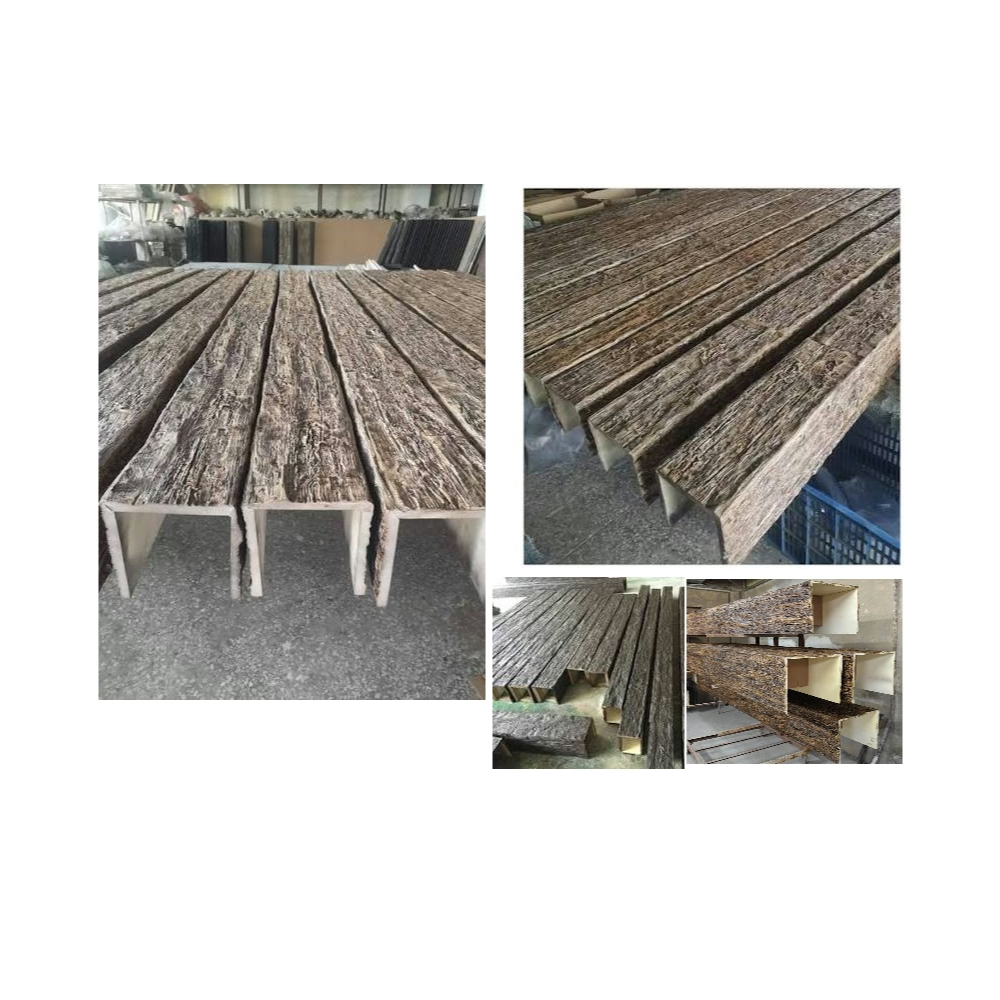
Polyurethane beams are decorative, not structural—but they still need something solid behind them at the mounting points. Three approaches cover nearly every residential install:
- Joist-driven mounting. Screw directly into ceiling joists through the beam's mounting block. Most reliable; requires joists to fall where you want beams.
- Backing board. A continuous 1x4 or 1x6 screwed into joists across the run gives you a nailing surface anywhere along the line. Used when joists don't align with the beam layout.
- Toggle anchors or snap-toggle bolts. For plaster ceilings where opening the ceiling isn't practical. Holds 30+ pounds per anchor when installed in 1/2-inch drywall over joist bays.
Fasteners and adhesive
The residential standard combines construction adhesive with mechanical fasteners:
- Adhesive: Polyurethane-compatible construction adhesive (PL Premium 3X or equivalent) in a continuous bead on the back mounting surface.
- Fasteners: 3-inch deck screws through the pre-drilled mounting block into backing. One fastener every 16 to 24 inches.
- Finishing: Color-matched filler over screw heads, light sanding, then touch-up stain or paint.
Trade buyer considerations
For distributors and contractors sourcing 10-foot beams in bulk, two specs drive the conversation:
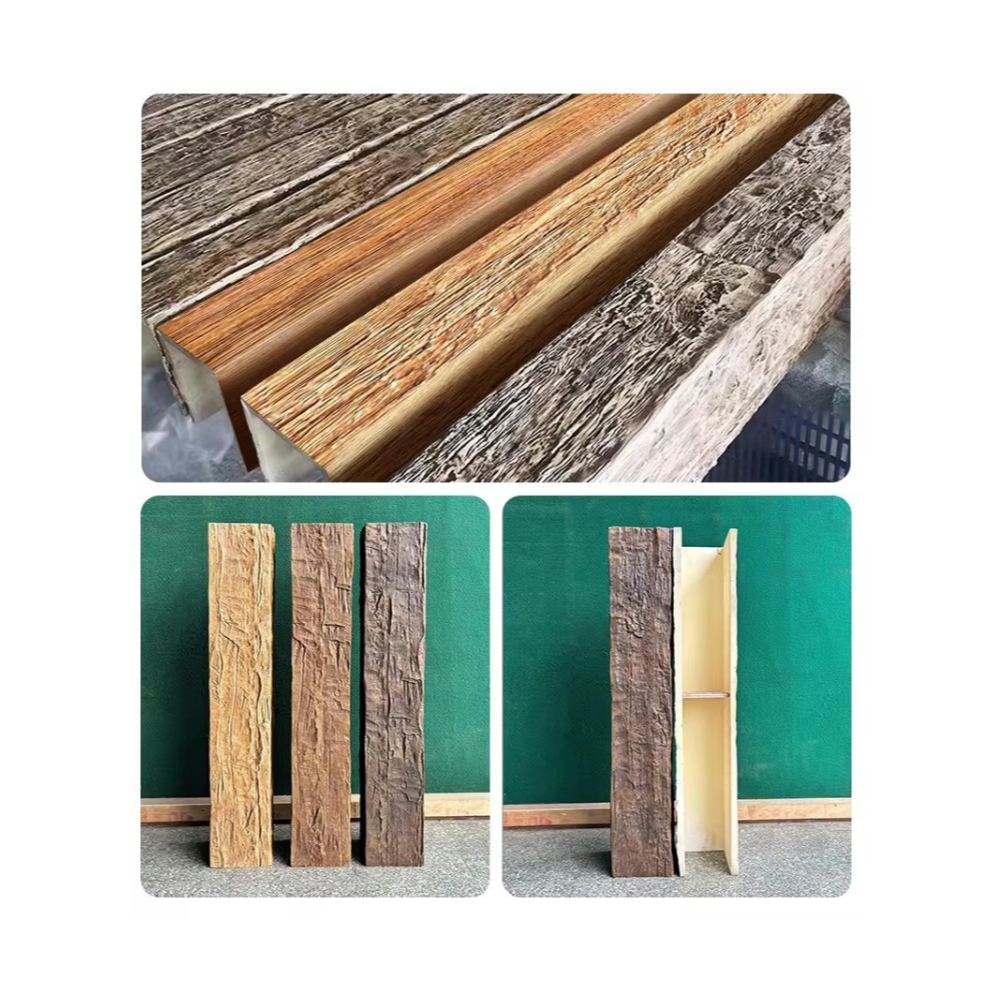
- Carton configuration. Most factories pack four 10-foot beams per master carton with molded foam end protectors. A 20-foot container loads roughly 850 to 1,100 beams depending on profile.
- Lead time. Standard 10-foot sizes in stock colors usually ship within 7 to 10 days from Chinese factories. Custom finishes add 15 to 25 days.
If you're selling through to builders or homeowners, the 10-foot length is the easiest size to keep on a warehouse shelf—it's the size that almost always finds a home.
Common pitfalls
A few mistakes show up over and over:
- Beam runs parallel to joists with no blocking. The beam sags at the joint over time even though polyurethane doesn't structurally fail.
- Insufficient adhesive cure time before loading. PL Premium needs 24 to 48 hours for full bond. Don't hang fixtures from the beam in the first day.
- Mismatched reveal. Beam ends should sit flush against the wall or terminate with a return that lands cleanly on the wall plane. Floating ends look like the project ran out of money.
When to step up to longer stock
If the run exceeds 12 feet, consider 14-foot or 16-foot beams instead of butting two 10-foot sections. A continuous beam eliminates the joint, which eliminates the only place a residential install typically telegraphs itself as "fake." If the budget forces a butt joint, hide it behind a decorative corbel or a perpendicular cross-beam.
A 10-foot beam in a standard residential ceiling is the simplest, most forgiving beam install available today. Get the sizing right, get the blocking right, give the adhesive time to cure—and the result looks like the house was built that way fifty years ago.
Technical References
ASTM standards cited in every specification
Test Data
Lab results from internal testing program
Updated 2026
Reviewed against current product specs