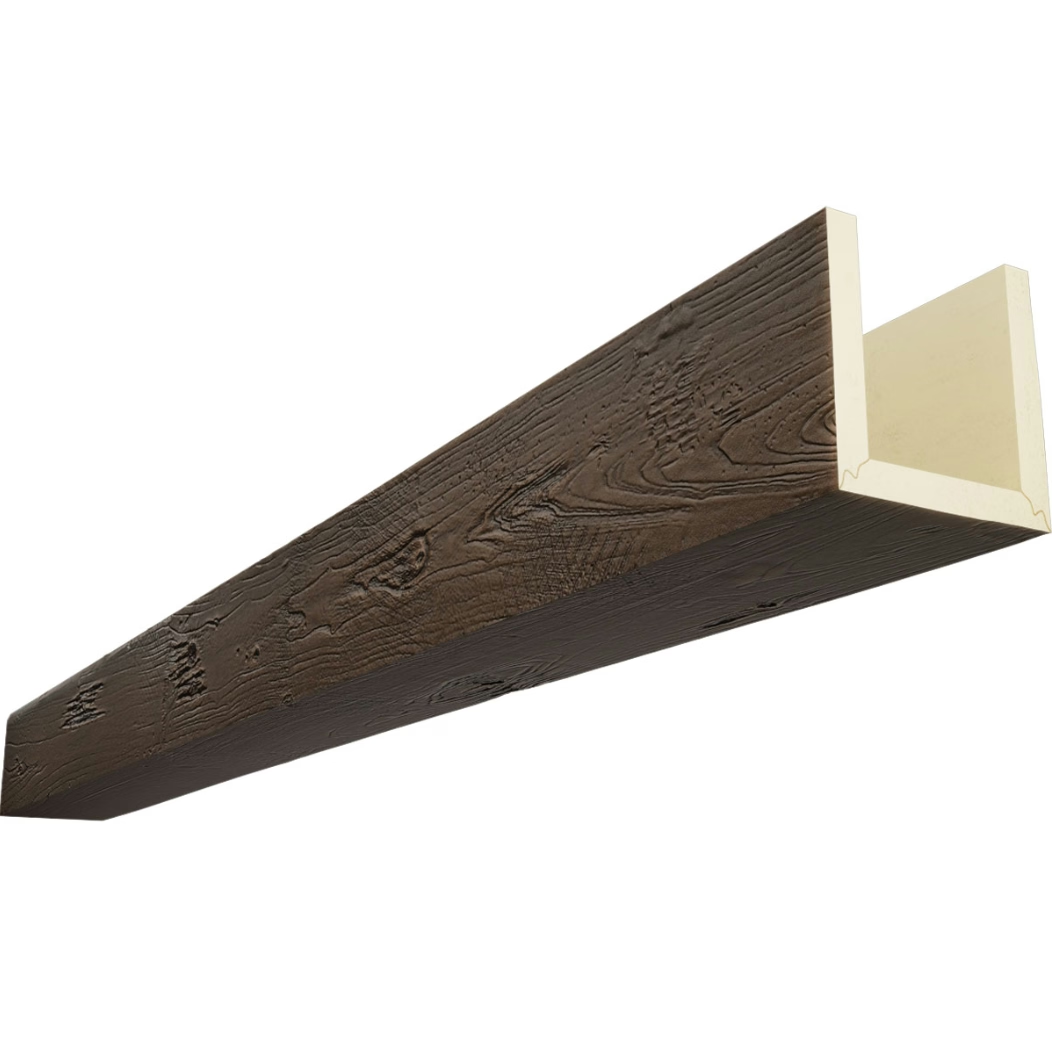
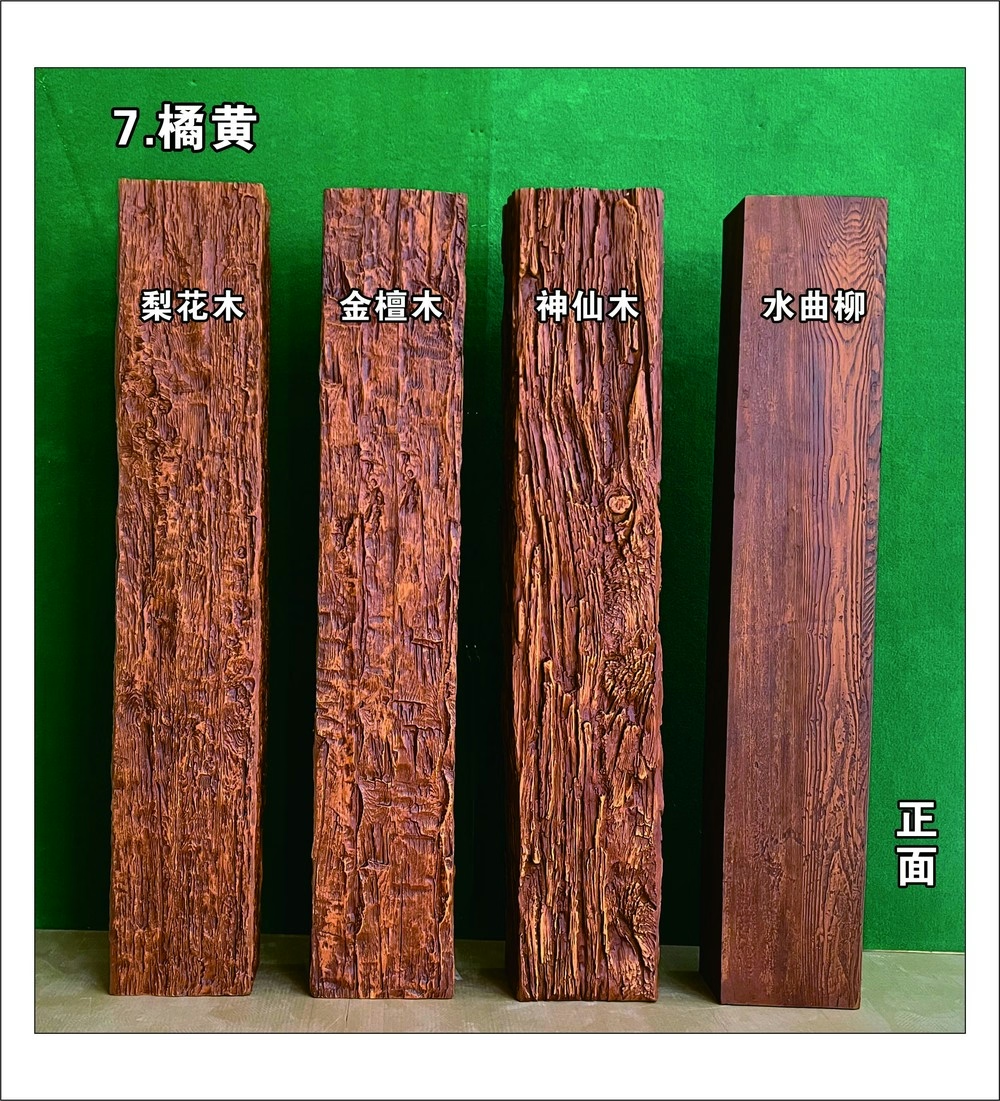
2025 was the year interior design collectively decided that beams aren't just for lodge houses. The faux wood ceiling beam showed up in projects that wouldn't have touched one five years earlier—minimalist apartments, coastal retreats, even some genuinely modern new builds. Here's what was trending, what worked, and what's likely to continue into 2026.
The dominant 2025 styles
Five design directions drove most faux beam specifications in 2025. They weren't equally distributed across regions or project types, but together they represented maybe 80 percent of the year's residential beam work.
Modern farmhouse (still leading)
Modern farmhouse didn't lose its crown in 2025. If anything, it deepened. The beam specification for modern farmhouse evolved toward:
- Cleaner profiles (6x8, 8x8) instead of the heavier 8x10s of 2020-2022
- Lighter finishes — natural oak, white oak, driftwood replacing the medium walnut of earlier years
- More beams per room — three or four parallel beams instead of one or two
- Visible mounting hardware — black or brushed nickel brackets, plates, and straps as deliberate design elements
The beam look in modern farmhouse moved away from "structural timber" toward "architectural rhythm." The beams are doing a different job than they did in 2018, when they were supposed to look like real timber-frame construction.
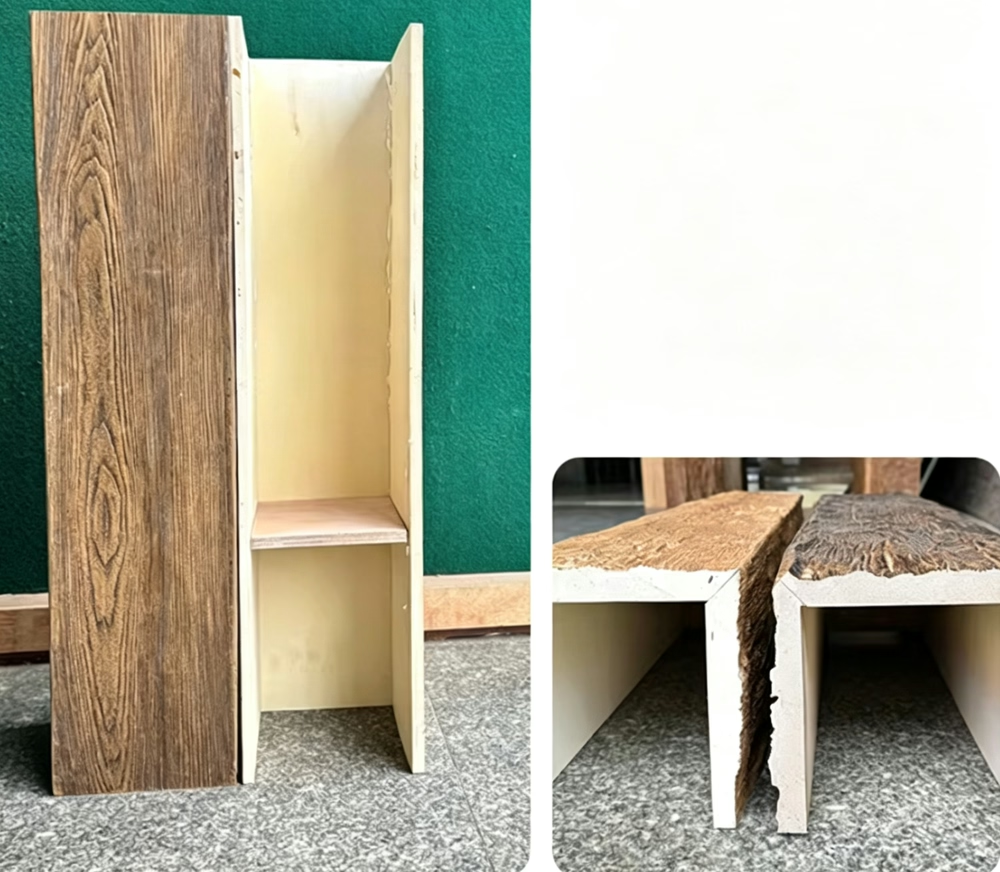
Japandi and organic modern
The Japandi influence (Japanese-Scandinavian fusion) and broader organic modern movement showed up in beam specifications as:
- Very light finishes — white oak, ash, pale driftwood
- Smooth or light-grain texture rather than heavy hand-hewn
- Smaller profiles (4x6, 6x8) at 8 to 10-foot lengths
- Sparingly used — one or two beams maximum per room, sometimes just a single statement beam
Japandi projects used beams as accent elements, not as the dominant ceiling treatment. The beam had to support the room's serenity rather than compete with it.
Quiet luxury
The "quiet luxury" trend (sometimes called "old money" aesthetic) drove beam specifications toward:
- High-quality finishes with subtle texture
- Medium-toned wood — light walnut, golden oak, medium walnut
- Wider profiles (8x10, 10x10) but at lower density — usually two or three beams per room
- Integration with millwork — beams coordinating with custom cabinetry, built-ins, and trim
Quiet luxury projects used beams as part of a coordinated material palette rather than as standalone features. The beam finish often matched or complemented the cabinetry.
Biophilic and nature-inspired
Biophilic design (incorporating natural elements into interior spaces) drove beam specifications toward:
- Reclaimed or weathered finishes — barn wood, driftwood, weathered gray
- Visible wood character — knots, grain variation, weathering effects
- Organic placement — beams that follow the natural lines of the architecture rather than imposing a rigid grid
- Pairing with plants — beams that integrate with hanging plants, vine features, or living walls
Biophilic projects often used textured or reclaimed-finish beams at moderate density. The beam was part of the connection to nature, not just decoration.
Coastal and Hamptons
Coastal and Hamptons-style projects used beam specifications that evolved away from the heavy nautical looks of earlier years:
- Whitewashed or weathered gray finishes
- Clean profiles with light texture
- Coffered patterns in formal living and dining rooms
- Integration with shiplap or board-and-batten wall treatments
Coastal beams in 2025 looked less "beach house" and more "elegant retreat." The Hamptons influence pushed the style toward more refined finishes and cleaner profiles.
What didn't work in 2025
A few beam trends lost momentum:
Heavy Tuscan and Mediterranean — the dark, heavy timber look of Tuscan-style homes felt dated in 2025. Most designers moved away from these finishes toward lighter, more refined alternatives.
Ultra-rustic reclaimed — the very distressed, weathered barn wood look peaked around 2022-2023 and softened significantly in 2025. Extreme weathering effects gave way to moderate texture.
Industrial black steel — black powder-coated steel beams (actual metal, not faux) remained a niche choice. Most projects that wanted industrial aesthetics moved to darker wood tones rather than actual metal.
Over-coffered formal ceilings — the deeply coffered, multi-tiered ceilings of traditional formal homes fell out of favor. Most designers moved toward simpler beam patterns.
Regional differences
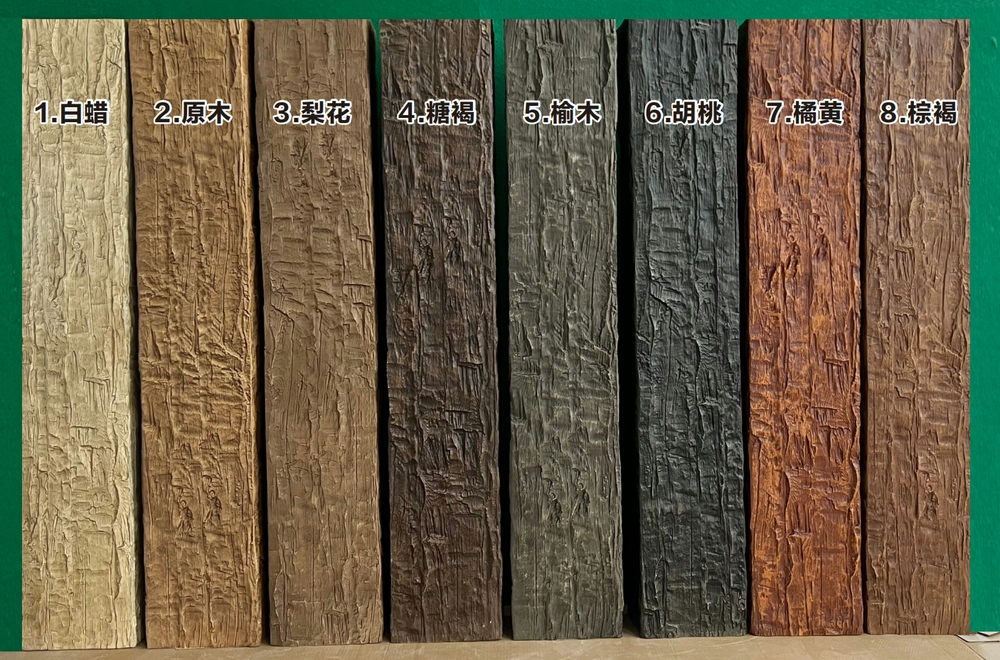
The 2025 trends played out differently across regions:
US South and Mountain West — modern farmhouse remained dominant. Reclaimed barn wood finishes were popular. Beams ran heavy and often.
US West Coast — Japandi and organic modern dominated. Lighter finishes, smaller profiles, more accent use.
US Northeast — quiet luxury and Hamptons styles led. Refined finishes, coordinated millwork, fewer beams but higher quality.
UK — country house and cottage styles with dark stained oak remained popular. Beam density was moderate. Conservation area restrictions sometimes limited exterior-visible beam installations.
France — Provençal and country styles with light to medium oak finishes. Hand-hewn texture remained popular.
Germany and Scandinavia — modern, Japandi, and minimalist styles dominated. Lighter finishes, smoother textures, minimal density.
Australia — coastal and modern farmhouse blended together. Light finishes, moderate density.
Beam specification patterns by project type
New construction (production homes)
Production builders in 2025 typically offered beam packages as upgrades. The most popular packages:
- Single statement beam over the great room (8x10 or 10x10 at 12-foot length)
- Coffered pattern over the primary bedroom tray ceiling
- Parallel beams over the kitchen island
Custom homes
Custom home projects in 2025 typically specified beams as part of the architectural design from the start. Common specs:
- Multiple beam patterns coordinated with lighting design
- Custom profiles and finishes to match the architectural vision
- Higher density in formal rooms, lower density in casual spaces
Renovations
Renovation projects in 2025 often added beams to update existing ceilings. Most popular:
- Removing popcorn ceilings and adding beam treatments as part of the renovation
- Converting flat ceilings to tray ceilings with perimeter beams
- Adding accent beams to single rooms (kitchens, primary bedrooms)
Commercial
Commercial beam work in 2025 emphasized hospitality and retail:
- Hotel lobbies with coffered beam patterns
- Restaurant dining rooms with parallel beams and pendant lighting
- Retail showrooms with beam-anchored lighting design
Looking ahead to 2026
Based on 2025's evolution and the early signs from design shows and manufacturer specifications, expect these trends in 2026:
Continued refinement of beam finishes — texture quality continues to improve; high-simulation finishes become standard at higher price points.
More integration with lighting — beam-mounted lighting (LED strips, recessed spots within beam reveals, pendant coordination) becomes standard rather than special.
Increased density in some styles — modern farmhouse and Japandi both trend toward more beams per room, with smaller profiles and lighter finishes.
Wider adoption of textured finishes — heavy hand-hewn and rough-sawn textures spread beyond lodge and chalet styles into transitional and modern farmhouse projects.
Larger profiles in spacious rooms — open-plan layouts drive demand for 10x10 and 12x12 profiles at longer lengths.
Continued European metric standardization — 2.4m, 3m, and 4m lengths become more common globally as metric-sized renovation projects expand.
A practical rule
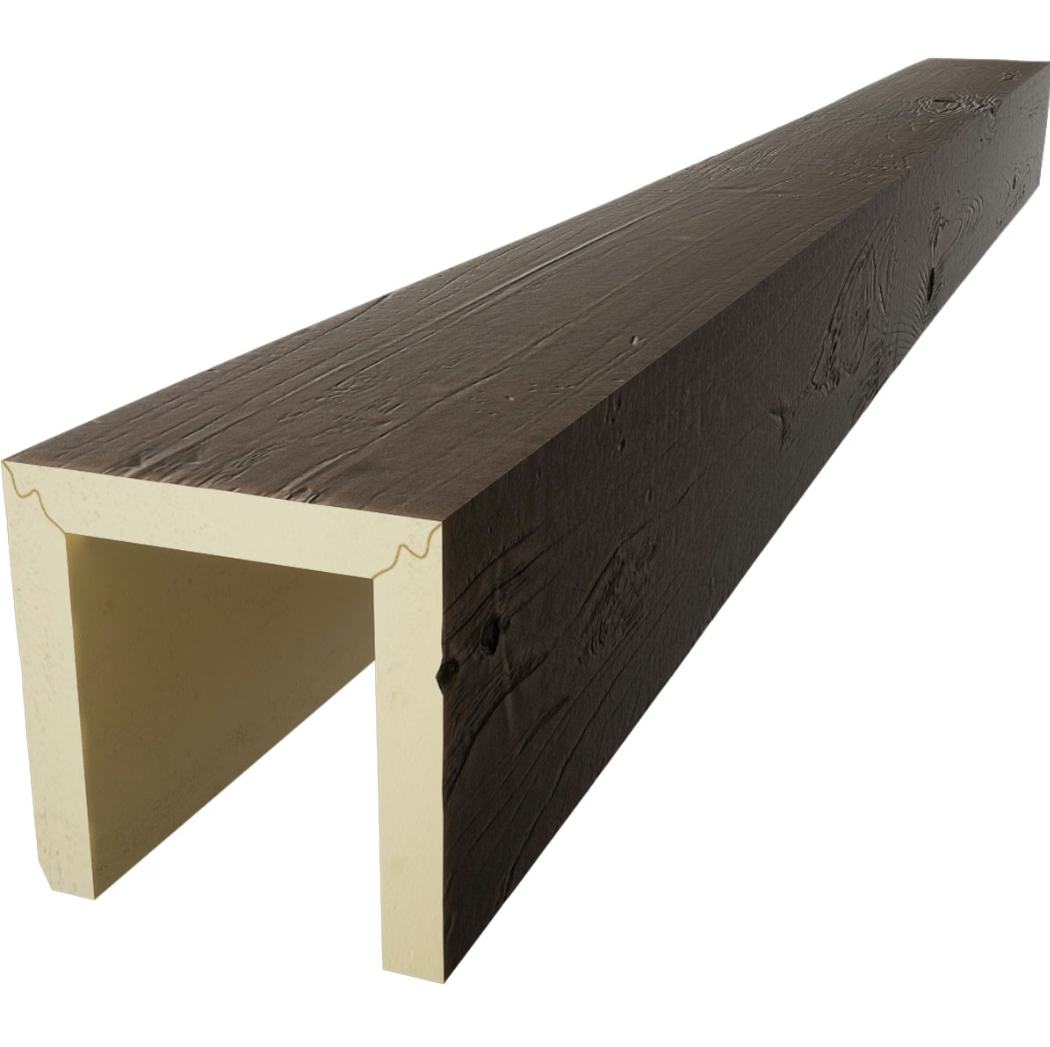
For projects in 2026, the safest spec is what worked in 2025: clean profiles (8x8, 8x10) at standard lengths (8 to 14 feet) in light to medium finishes with moderate texture. The riskier spec is going heavier or darker than the trend curve. The most forward-looking spec is smaller profiles with lighter finishes and more beams per room—the direction Japandi and organic modern are pointing.
Technical References
ASTM standards cited in every specification
Test Data
Lab results from internal testing program
Updated 2026
Reviewed against current product specs