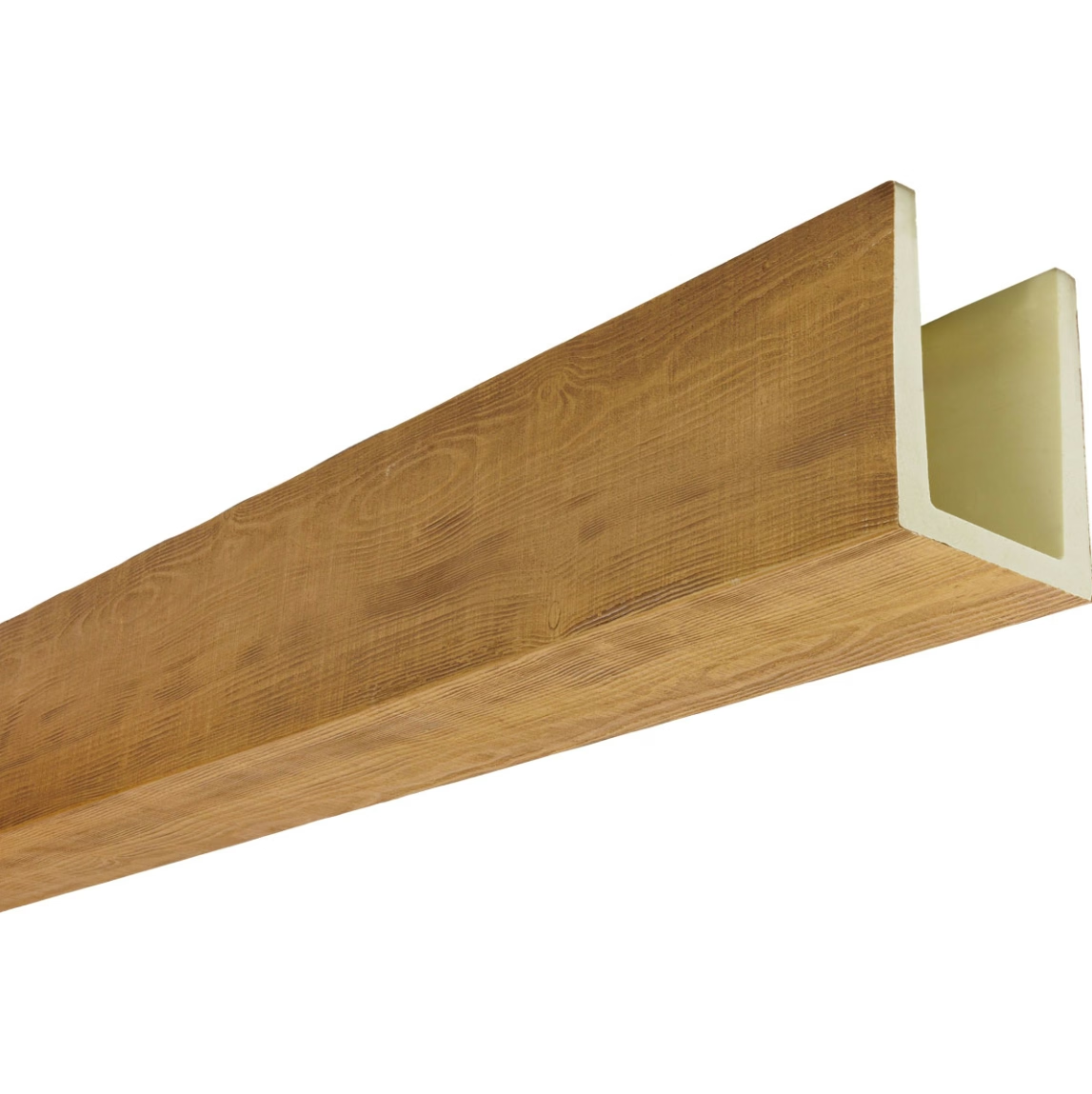
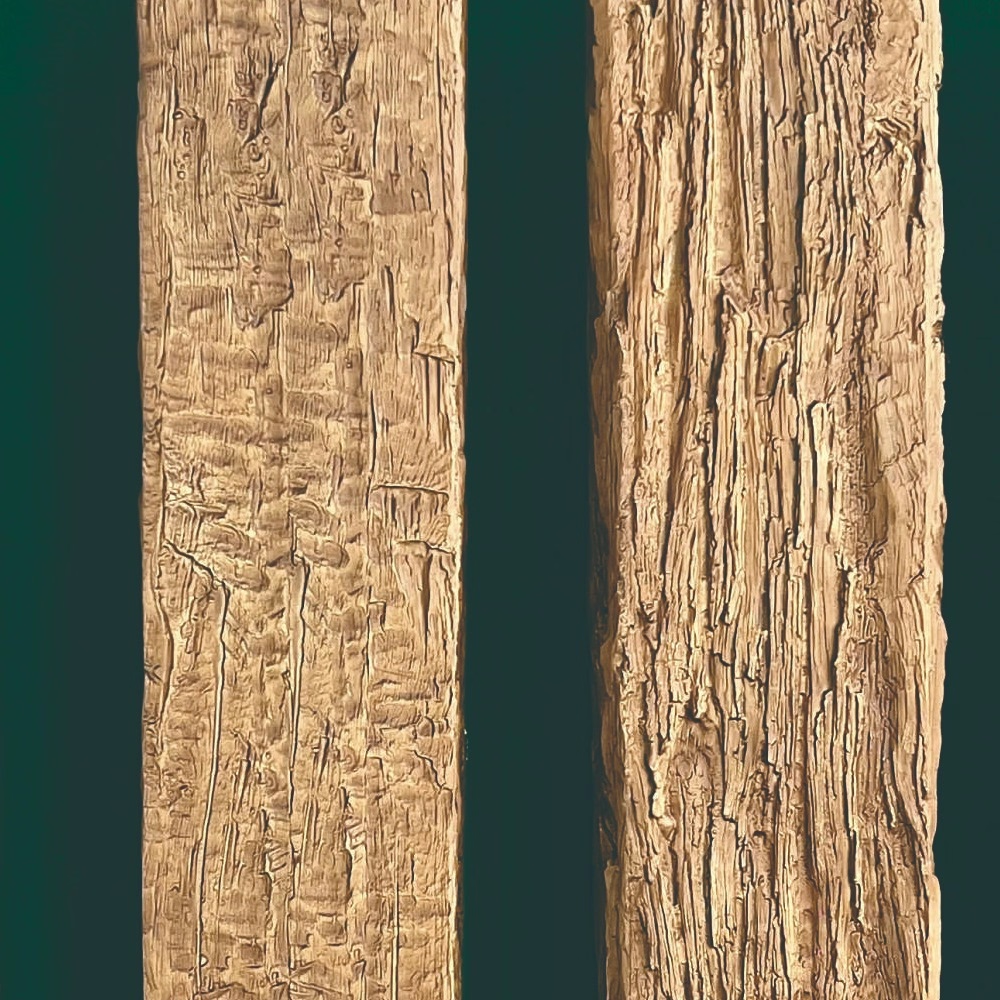
Understanding faux beam pricing helps in accurate project budgeting and informed specification decisions. The 2026 pricing guide provides comprehensive cost information covering materials, installation, and total project investments. This transparency enables realistic planning and appropriate specification matching to budget parameters.
Pricing varies significantly based on multiple factors — specifications, finishes, profile sizes, length requirements, and quality tiers. This guide provides typical pricing ranges for each specification category, with the understanding that specific quotes from suppliers provide the most accurate pricing for individual projects.
Material pricing fundamentals
Material pricing structure for faux beams:
Base material cost — varies by profile size, length, and construction type
Finish upgrade costs — premium finishes add to base pricing
Texture upgrade costs — higher fidelity textures command premium pricing
Custom specification costs — custom features add to standard pricing
Volume considerations — larger orders may achieve better per-unit pricing
These factors combine to determine total material costs.
Pricing by specification tier
Different quality tiers command different pricing:
Standard tier pricing
Basic quality specifications:
- Profile range: $30-60 per linear foot
- Standard finishes included
- Basic texture reproduction
- Standard warranty coverage
- Most accessible pricing
Standard tier suits budget-conscious projects with basic requirements.
Premium tier pricing
Enhanced quality specifications:
- Profile range: $60-100 per linear foot
- Premium finishes included
- Enhanced texture reproduction
- Extended warranty coverage
- Improved quality standards
Premium tier suits quality-conscious projects seeking better appearance.
High-fidelity tier pricing
Maximum quality specifications:
- Profile range: $100-160 per linear foot
- High-fidelity finishes included
- Maximum texture reproduction
- Comprehensive warranty coverage
- Gallery-quality appearance
High-fidelity tier suits premium projects requiring best appearance.
Specialty tier pricing
Project-specific specifications:
- Pricing varies by complexity
- Custom development costs
- Project-specific requirements
- Unique character creation
- Premium positioning
Specialty tier suits unique project requirements beyond standard offerings.
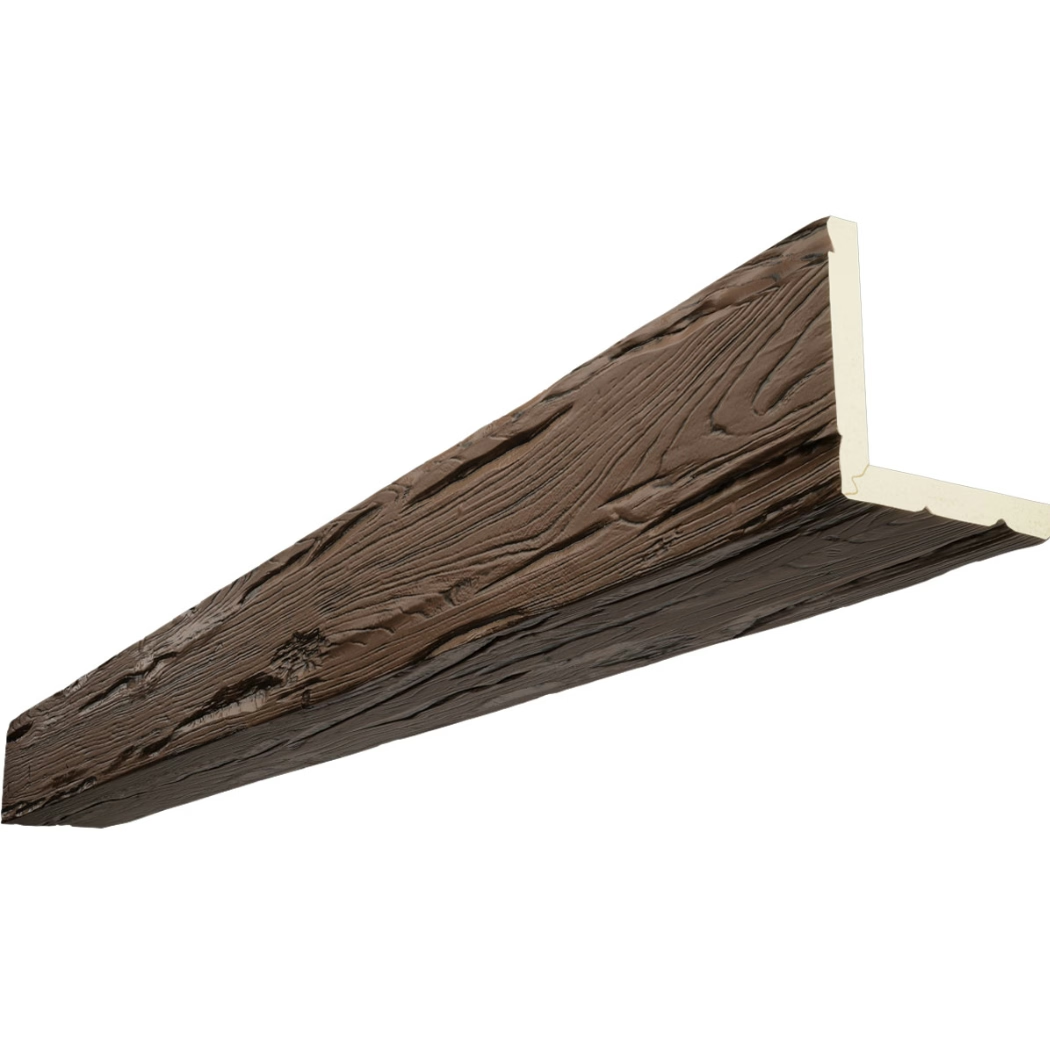
Profile-based pricing
Different profiles have different pricing:
Compact profiles — 4x4, 4x6: lowest pricing within each tier
Standard profiles — 6x6, 6x8: typical pricing within each tier
Substantial profiles — 8x8, 8x10: higher pricing within each tier
Oversized profiles — 10x10 and larger: highest pricing within each tier
Larger profiles command premium pricing due to increased material and manufacturing complexity.
Length-based pricing variations
Length affects pricing through manufacturing:
Short lengths — 4-6 feet: most economical
Standard lengths — 8-12 feet: typical pricing
Extended lengths — 14-16 feet: premium pricing
Extra-long lengths — 20+ feet: maximum pricing
Longer lengths require specialized manufacturing and handling that affects pricing.
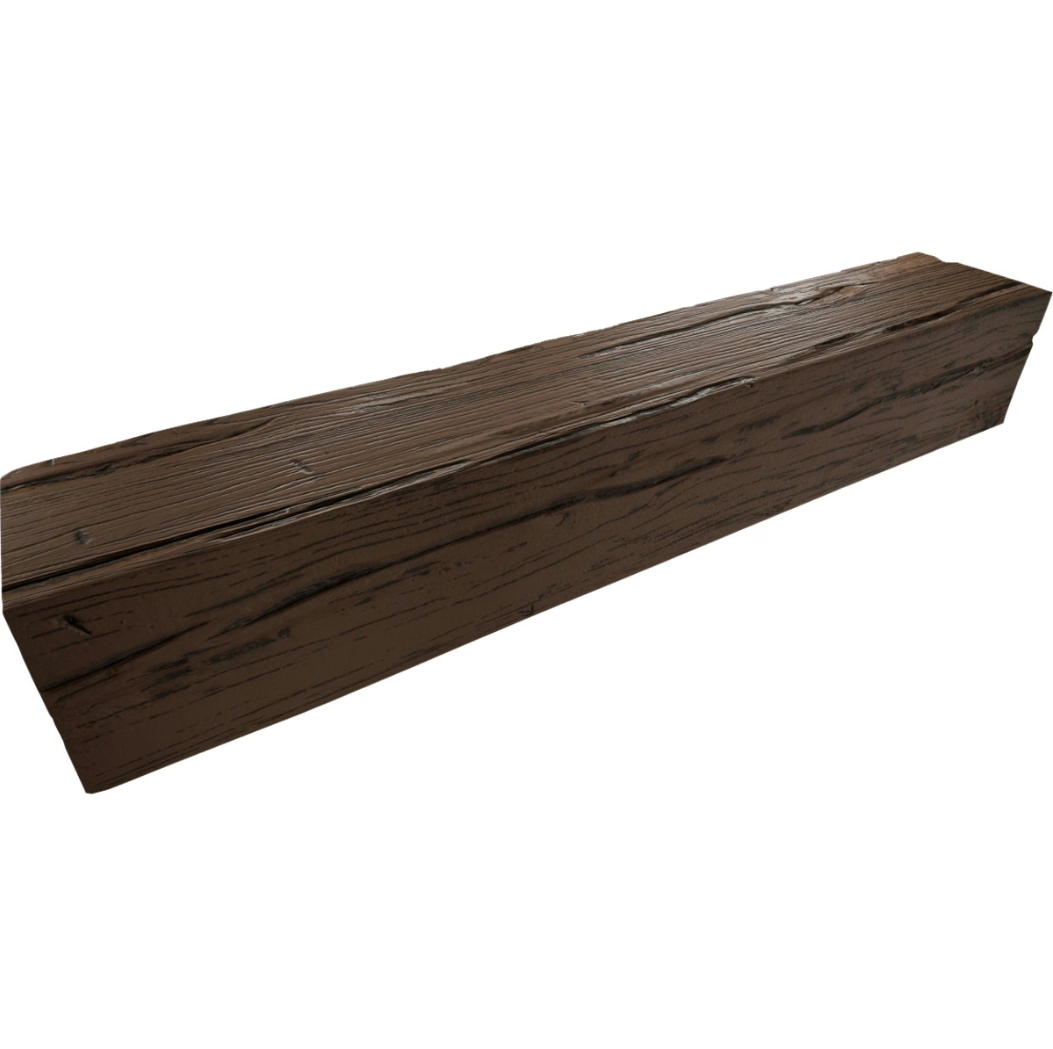
Installation cost breakdown
Installation costs include multiple components:
Labor rates — varies by region, typically $50-150 per hour for professional installation
Project duration — installation time affects total labor cost
Complexity factors — high ceilings, obstacles, and custom work increase installation time
Material handling — larger or longer beams require more handling time
Finishing work — touch-up and detail finishing adds to installation scope
Equipment requirements — specialized equipment may add to installation costs
These components combine to determine total installation investment.
Project type pricing patterns
Different projects show different pricing patterns:
Single room projects
Typical single room installations:
- Material: $500-3,000 depending on specifications
- Installation: $300-1,500 depending on complexity
- Total: $800-4,500 for typical single room
Single room projects typically represent accessible investment.
Whole-room treatments
Comprehensive room coverage:
- Material: $2,000-8,000 depending on specifications
- Installation: $1,000-3,500 depending on complexity
- Total: $3,000-11,500 for whole-room coverage
Whole-room treatments represent moderate investment.
Whole-home installations
Comprehensive home coverage:
- Material: $8,000-30,000 depending on specifications
- Installation: $4,000-15,000 depending on complexity
- Total: $12,000-45,000 for whole-home installations
Whole-home installations represent significant investment.
Commercial projects
Commercial beam installations:
- Material: $5,000-50,000+ depending on scope
- Installation: $3,000-25,000 depending on complexity
- Total: $8,000-75,000+ for commercial applications
Commercial projects vary widely based on scope and specifications.
Regional pricing considerations
Geographic factors affect pricing:
High-cost urban markets — premium pricing for materials and labor
Suburban markets — moderate pricing with competitive options
Rural markets — potentially lower pricing with fewer supplier options
Coastal markets — variable based on local economic conditions
International markets — pricing affected by shipping, duties, and local market dynamics
Regional awareness helps in pricing expectations.
Volume pricing opportunities
Larger orders may achieve pricing advantages:
Bulk material discounts — larger orders often negotiate better per-unit pricing
Shipping efficiency — full container loads achieve better shipping rates
Production scheduling — larger orders may receive production priority
Relationship pricing — ongoing customer relationships may earn preferential pricing
Project package pricing — combining multiple specifications may achieve package discounts
Volume opportunities reward larger project commitments.
Cost-saving strategies
Approaches for managing costs:
Right-sizing specifications — match specifications to actual project needs
Strategic premium placement — premium for visible elements, standard for background
Timing optimization — flexible timing may achieve better pricing
Supplier comparison — multiple quotes ensure competitive pricing
Specification simplification — reducing custom features reduces costs
These strategies help achieve project goals within budget constraints.
Value versus cost considerations
Evaluating pricing against value:
Longevity value — longer-lasting products provide better long-term value
Aesthetic value — better appearance enhances property and living experience
Maintenance value — lower maintenance requirements reduce ongoing costs
Property value — quality installations support property valuations
Installation reliability — quality materials install more reliably
These value considerations inform pricing decisions beyond initial cost.
Hidden cost awareness
Costs sometimes overlooked in budgeting:
Shipping costs — material delivery to project site
Custom fees — special specifications may incur additional charges
Rush charges — expedited production may carry premium pricing
Installation supplies — adhesives, fasteners, and finishing materials
Disposal costs — packaging material and construction waste
Touch-up materials — finishing supplies for installation completion
Including these in budgets prevents project cost surprises.
Pricing negotiation considerations
Approaches for pricing discussions:
Multiple quote comparison — gather competitive pricing for evaluation
Volume leverage — larger orders may achieve negotiation advantages
Relationship building — ongoing supplier relationships may earn better pricing
Specification flexibility — willingness to adjust specifications may improve pricing
Timing flexibility — flexible scheduling may achieve better pricing
Effective negotiation balances cost optimization with quality maintenance.
2026 market conditions
Current market factors affecting pricing:
Material costs — generally stable with modest increases
Labor costs — continuing moderate increases in most markets
Shipping costs — variable based on global logistics conditions
Demand patterns — steady demand supporting stable pricing
Competitive landscape — healthy competition maintaining reasonable pricing
Supply chain status — normalized following recent disruptions
These conditions suggest continued moderate pricing stability through 2026.
Budget planning framework
Effective budget planning approach:
- Define project scope clearly
- Research appropriate specifications
- Estimate material quantities accurately
- Obtain multiple supplier quotes
- Estimate installation costs realistically
- Add 10-15% contingency
- Plan for potential adjustments
Following this framework supports realistic budget development.
Cost-quality relationship
Understanding the relationship helps specification:
Lowest cost options — meet basic needs but may compromise long-term satisfaction
Mid-range specifications — balance cost and quality for most applications
Premium specifications — higher cost with corresponding quality and longevity benefits
Investment-grade specifications — highest cost with maximum quality and value retention
Matching cost-quality positioning to project priorities optimizes value.
Pricing transparency value
Understanding pricing benefits both buyers and suppliers:
Buyers benefit — through informed decision-making and realistic budgeting
Suppliers benefit — through clearer customer expectations and reduced negotiation friction
Market benefits — through competitive pricing pressure and quality improvement incentives
Industry benefits — through professional standards and consumer confidence
Pricing transparency supports healthy market development.
Pricing summary
The 2026 pricing guide provides comprehensive context for faux beam investment decisions. Material pricing ranges from $30-160+ per linear foot depending on specifications, with installation typically adding 50-100% to material costs. Total project investments range from under $1,000 for simple installations to $50,000+ for comprehensive commercial applications.
Use this guide for initial budgeting, then obtain specific quotes for accurate project pricing.
Technical References
ASTM standards cited in every specification
Test Data
Lab results from internal testing program
Updated 2026
Reviewed against current product specs