European home renovation in 2026 looks different from the US renovation market. Older housing stock, different style traditions, varied climate considerations, and metric sizing all shape how ceiling beams get specified. The 2026 trends reflect this regional context while incorporating influences from broader design movements.
What defines 2026 European beam design
Five design directions are driving European renovation beam work in 2026:
Refined heritage
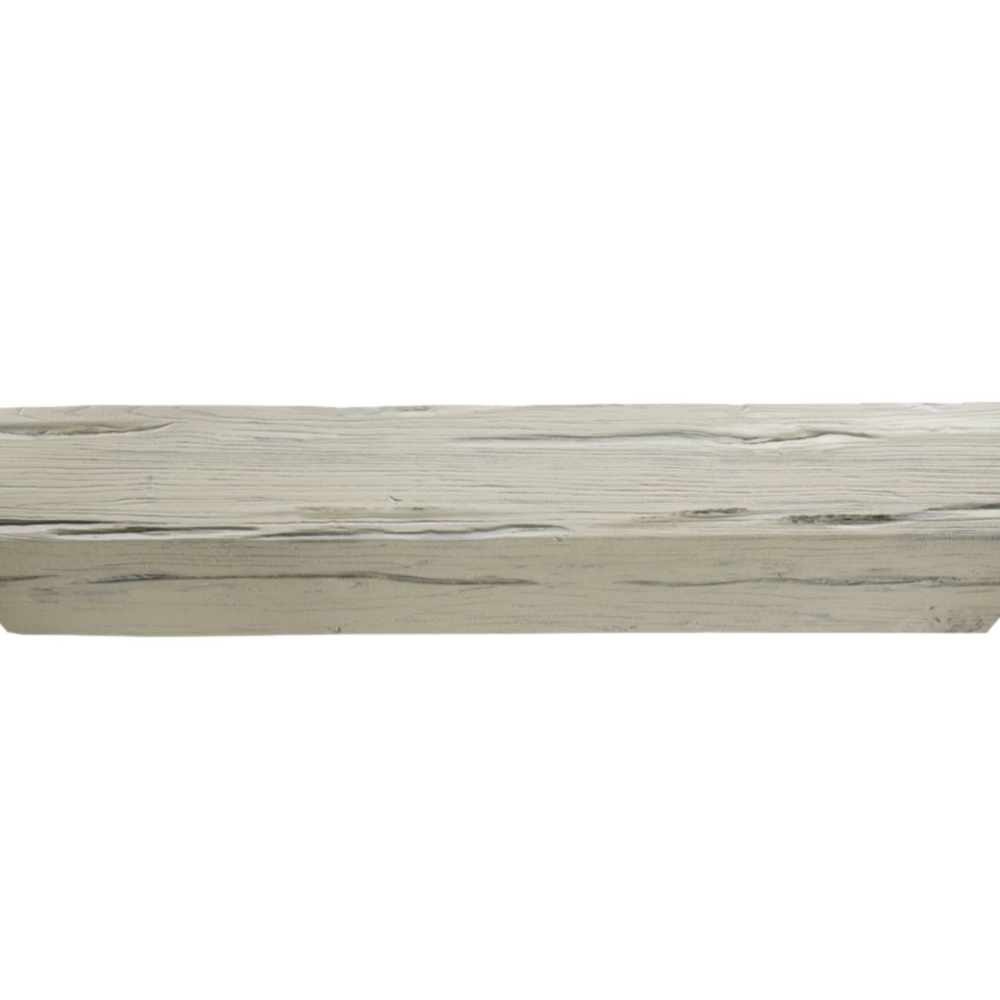
The "refined heritage" trend updates traditional European beam aesthetics (Tudor, country house, French country, Tuscan, Bavarian alpine) with cleaner execution and less heavy weathering. The 2026 version of a Tudor-style beam is more "carpenter-finished" than "distressed-reclaimed."
Key features:
- Cleaner profile edges than 2018-2020 versions
- Less extreme weathering effects
- More uniform finish across beams
- Integration with modern furnishings and lighting
Modern European country
The "modern European country" trend blends Scandinavian minimalism with French or English country warmth. Beams are specified with:
- Light to medium oak finishes
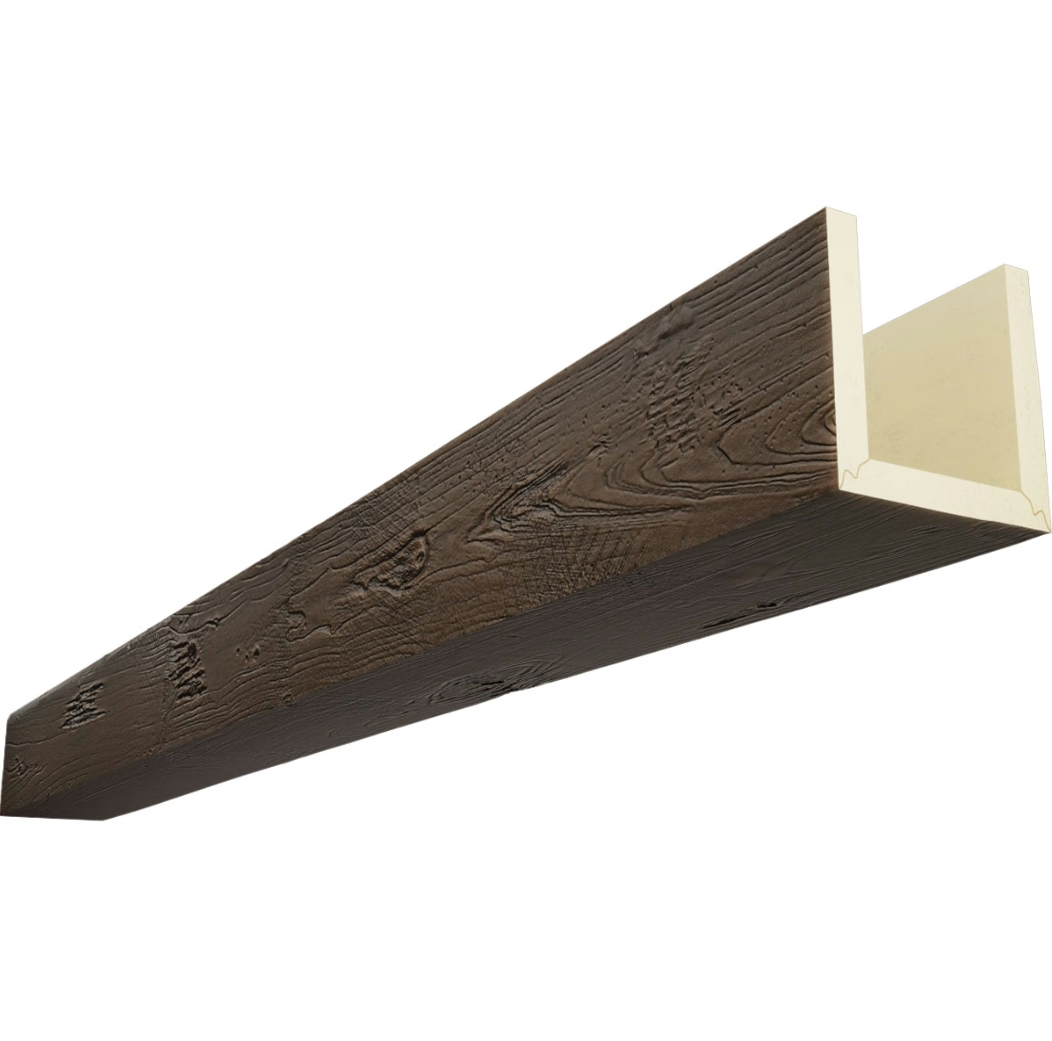
- Moderate hand-hewn texture
- Cleaner profiles (6x8 or 8x8) at standard lengths
- Integration with linen textiles, ceramic accessories, and natural stone
Scandinavian simplicity
Scandinavian beam design in 2026 emphasizes:
- Light finishes (white oak, ash, whitewashed)
- Smooth or light-grain texture
- Minimal beam density (one or two per room)
- Slim profiles (4x6, 6x8) at 3m or 4m lengths
Mediterranean warmth
Mediterranean (Italian, Spanish, Greek) beam trends:
- Natural wood tones with warm amber undertones
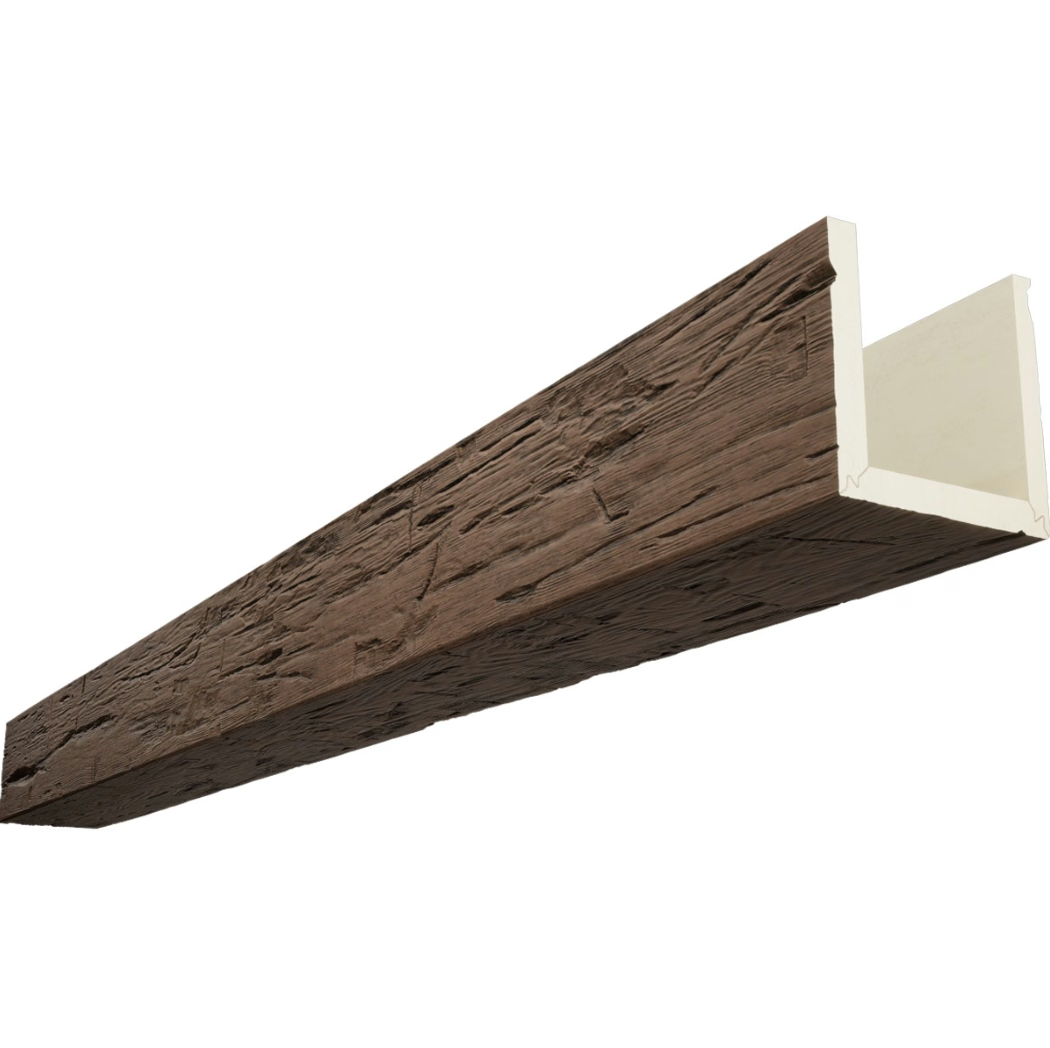
- Moderate to heavy hand-hewn texture
- Larger profiles (8x10, 10x10) at 4m or longer lengths
- Coordination with terracotta, stone, and plaster finishes
Eastern European revival
Eastern European renovation markets (Poland, Czech Republic, Hungary, Romania) are seeing increased beam specification:
- Mix of dark stained oak and lighter natural tones
- Traditional profile dimensions (often larger than Western European standard)
- Coordination with restored historical features in older properties
- Growing influence from Scandinavian simplicity on younger homeowners
Metric sizing for European projects
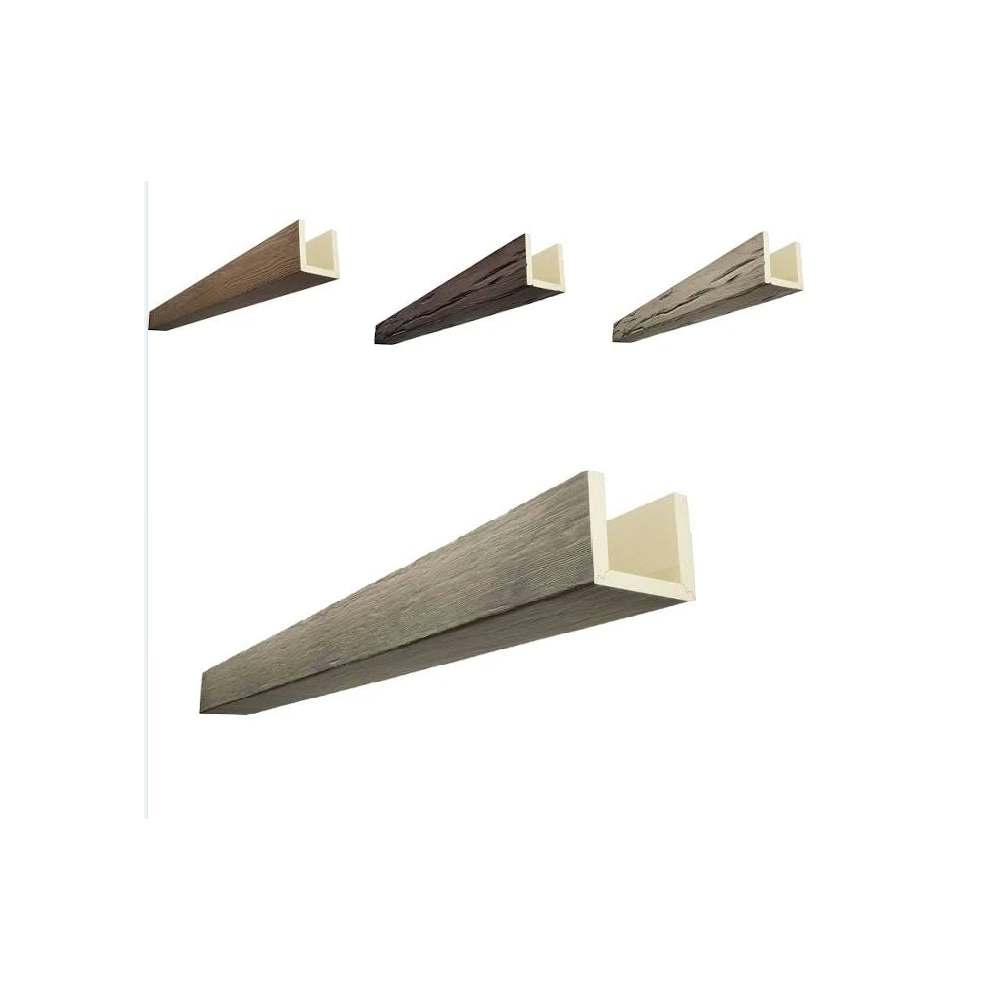
European beam specifications use metric measurements, but most faux beam manufacturing happens in factories calibrated to imperial sizing. The 2026 standard metric sizes for European renovation:
| Metric Size | Imperial Equivalent | Common Application |
|---|---|---|
| 2.4 m | 7 ft 10 in | Small rooms, hallways, compact kitchens |
| 3.0 m | 9 ft 10 in | Standard residential rooms |
| 4.0 m | 13 ft 1 in | Living rooms, open-plan spaces |
| 5.0 m | 16 ft 5 in | Larger rooms, longer spans |
For most European renovation projects, 3m and 4m lengths cover the dominant demand. The 2.4m length handles compact spaces. The 5m length is special order for larger renovations.
Regional design differences
UK
UK renovation beam trends in 2026:
- Style direction — country house, modern heritage, occasional industrial
- Popular finishes — dark stained oak (38%), natural oak (24%), painted white (18%), reclaimed effect (12%), other (8%)
- Popular profiles — 8x8 (32%), 6x8 (24%), 8x10 (20%), 10x10 (14%), other (10%)
- Popular lengths — 3m (35%), 4m (28%), 2.4m (22%), 5m (10%), other (5%)
UK projects often coordinate beams with existing timber features (floorboards, doors, staircases) in period properties. Conservation area restrictions sometimes limit exterior-visible beam work.
France
French renovation beam trends in 2026:
- Style direction — country house, Provençal, modern country, occasional contemporary
- Popular finishes — natural oak (32%), light walnut (22%), reclaimed effect (18%), whitewashed (15%), other (13%)
- Popular profiles — 8x10 (28%), 10x10 (22%), 8x8 (20%), 6x8 (16%), other (14%)
- Popular lengths — 3m (32%), 4m (35%), 2.4m (18%), 5m (10%), other (5%)
French projects often feature heavier texture than other European markets. The country house aesthetic remains strong.
Germany and Austria
German-speaking market renovation beam trends in 2026:
- Style direction — modern, Scandinavian influence, Bavarian alpine (regional)
- Popular finishes — natural oak (28%), white oak (22%), painted white (18%), light walnut (15%), other (17%)
- Popular profiles — 6x8 (32%), 8x8 (28%), 8x10 (18%), 10x10 (12%), other (10%)
- Popular lengths — 3m (40%), 4m (28%), 2.4m (20%), 5m (8%), other (4%)
German projects emphasize clean profiles and lighter finishes. The Bavarian alpine regional style uses heavier texture but remains a minority of overall demand.
Italy and Spain
Mediterranean renovation beam trends in 2026:
- Style direction — Tuscan, Mediterranean, modern country
- Popular finishes — natural walnut (28%), warm oak (24%), reclaimed effect (20%), light walnut (15%), other (13%)
- Popular profiles — 10x10 (28%), 8x10 (24%), 10x12 (18%), 8x8 (15%), other (15%)
- Popular lengths — 4m (38%), 3m (28%), 5m (18%), 2.4m (10%), other (6%)
Mediterranean projects tend toward larger profiles and longer lengths. The Tuscan aesthetic continues to influence Italian projects; Spanish projects blend Mediterranean with modern country.
Scandinavia
Scandinavian renovation beam trends in 2026:
- Style direction — Scandinavian minimalism, modern organic, occasional coastal
- Popular finishes — white oak (32%), natural ash (24%), whitewashed (22%), light oak (14%), other (8%)
- Popular profiles — 6x8 (35%), 4x6 (24%), 8x8 (22%), 8x10 (10%), other (9%)
- Popular lengths — 3m (42%), 4m (28%), 2.4m (22%), 5m (5%), other (3%)
Scandinavian projects use the smallest profiles and lightest finishes. Beam density is low—usually one or two beams per room.
Beam specification patterns for 2026 European renovations
Ceiling treatments by room type
Living rooms — typically 2 to 4 beams in parallel or perimeter configuration. Profiles 6x8 to 10x10 depending on ceiling height. Most popular in French and UK projects.
Kitchens — single statement beam over island or breakfast bar. Smaller profiles (6x8) for compact kitchens; larger (8x10) for open-plan. Very popular across all European markets.
Primary bedrooms — single beam over the bed. Light finishes, minimal texture. Strong in Scandinavian and German markets.
Dining rooms — coffered or tray patterns with multiple beams. More common in French, Italian, and UK projects. Scandinavian and German projects typically use simpler patterns.
Bathrooms — minimal beam usage. Often just a single small beam (4x6) over the vanity. Light finishes to maintain brightness.
Hallways — occasional beam treatment in long hallways. Continuous beam runs at 2.4m or 3m lengths.
Layout density
European renovation projects typically use:
- Lower density than US projects (1 to 3 beams per room average)
- More attention to coordination with existing features (cornices, ceiling roses, original timber)
- Greater variety in profile mix within single projects (different room sizes get different profile sizes)
Finish selection
European renovation finishes trend lighter than US finishes:
- More whitewashed and painted options
- More natural oak and light walnut
- Less dark walnut and ebony (still used but in smaller proportion)
- More reclaimed and aged effects in traditional style projects
Code and compliance for European beam installations
European renovation projects face different code requirements than US projects:
Fire ratings — EN 13501-1 is the European fire classification standard. Most residential applications require D-s2, d0 or better. Commercial applications may require B-s2, d0 or better.
Building regulations — vary by country:
- UK — Building Regulations Part B (fire safety) and Part E (acoustic performance)
- France — DTU building standards and ERP regulations for commercial
- Germany — Landesbauordnungen (state building codes) and DIN standards
- Italy — NTC (technical construction standards) and local regulations
- Spain — CTE (technical building code)
Material certifications — CE marking is required for construction products in the EU. UK post-Brexit uses UKCA marking. Other certifications vary by country.
Energy efficiency — increasingly important in European renovation. Beam installations shouldn't compromise insulation or thermal envelope performance.
For trade buyers, sourcing CE-marked or UKCA-marked beams is essential for European market compliance.
Sourcing and lead times for European projects
For European trade buyers in 2026:
- Most Asian factories produce 2.4m, 3m, and 4m lengths as standard SKUs for European export
- Lead times: 14 to 28 days from Asia to European ports; 5 to 10 days from European warehouses
- CE-marked stock is widely available; UKCA-marked stock requires specific UK-focused suppliers
- Container loads: 40-foot container holds 1,200 to 1,500 beams at 3m length
For faster delivery, European warehouse programs offer 5 to 10 day lead times for stock SKUs at slightly higher prices.
Trade notes for European 2026 projects
For distributors and contractors serving European markets:
- 2026 European renovation demand is 15 to 20 percent above 2024 baseline
- Most popular European finishes: natural oak (26%), light walnut (18%), dark stained oak (15%), reclaimed effect (12%), painted white (10%), other (19%)
- Most popular European profiles: 8x8 (24%), 6x8 (22%), 8x10 (18%), 10x10 (14%), 4x6 (8%), other (14%)
- 3m length is the workhorse SKU (35 to 45 percent of European orders)
For project planning, the 2026 European trend toward lighter finishes and cleaner profiles is the most important shift to track. Projects that specified dark heavy beams in 2020-2022 are increasingly being redone with lighter approaches.
A practical rule
For 2026 European renovation projects, the spec that works most reliably is a 3m or 4m length at 6x8 to 8x10 profile in a natural or light finish with moderate texture. Match the finish to regional preferences—darker oak for UK, lighter oak for German/Scandinavian, warm walnut for Mediterranean. Profile size scales with ceiling height. Density stays moderate to preserve room proportions.
Technical References
ASTM standards cited in every specification
Test Data
Lab results from internal testing program
Updated 2026
Reviewed against current product specs