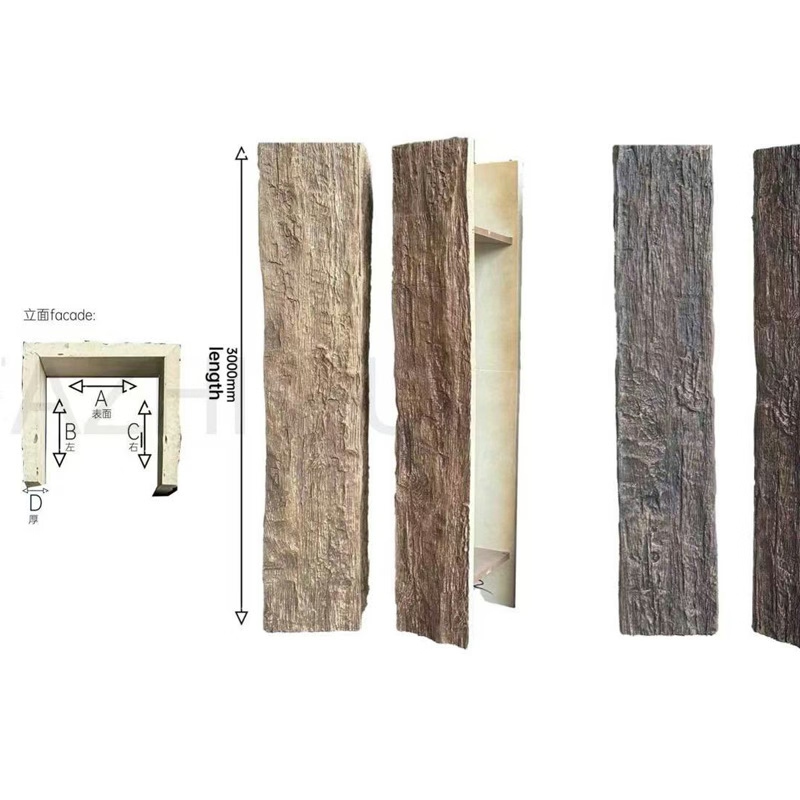
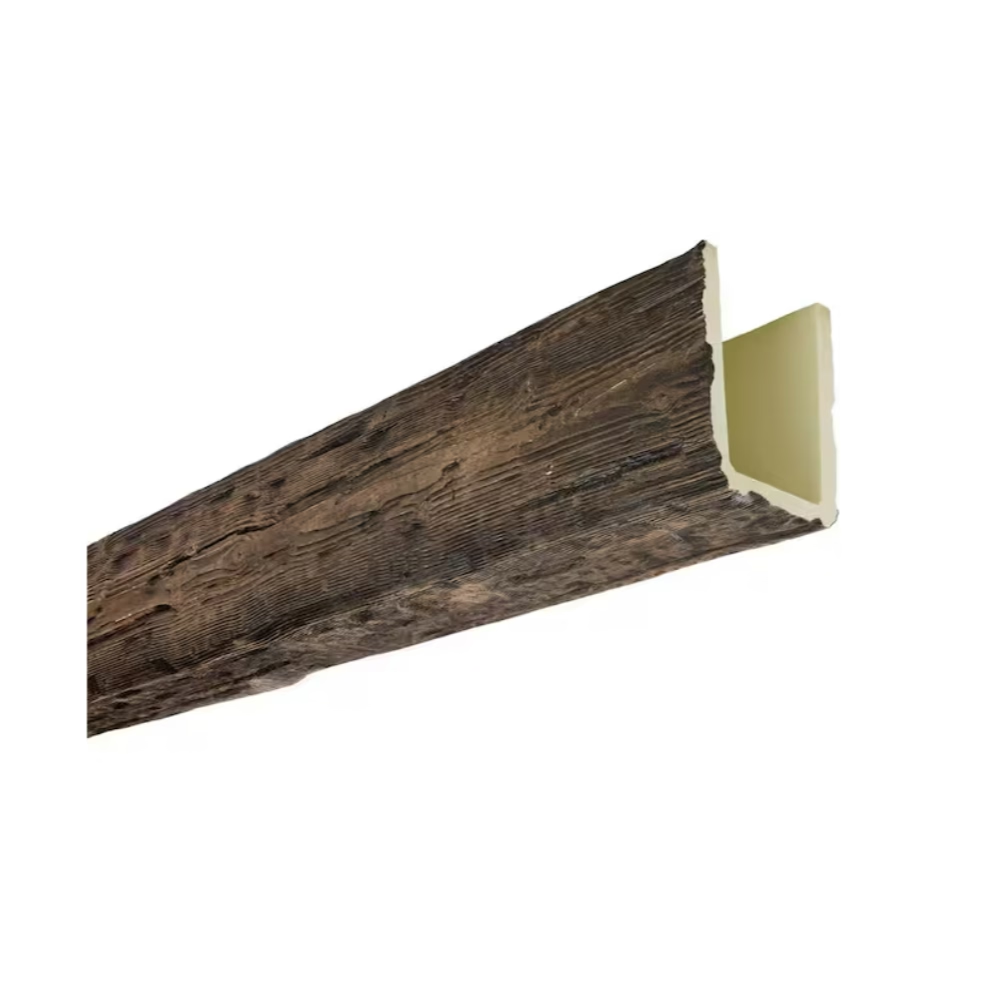
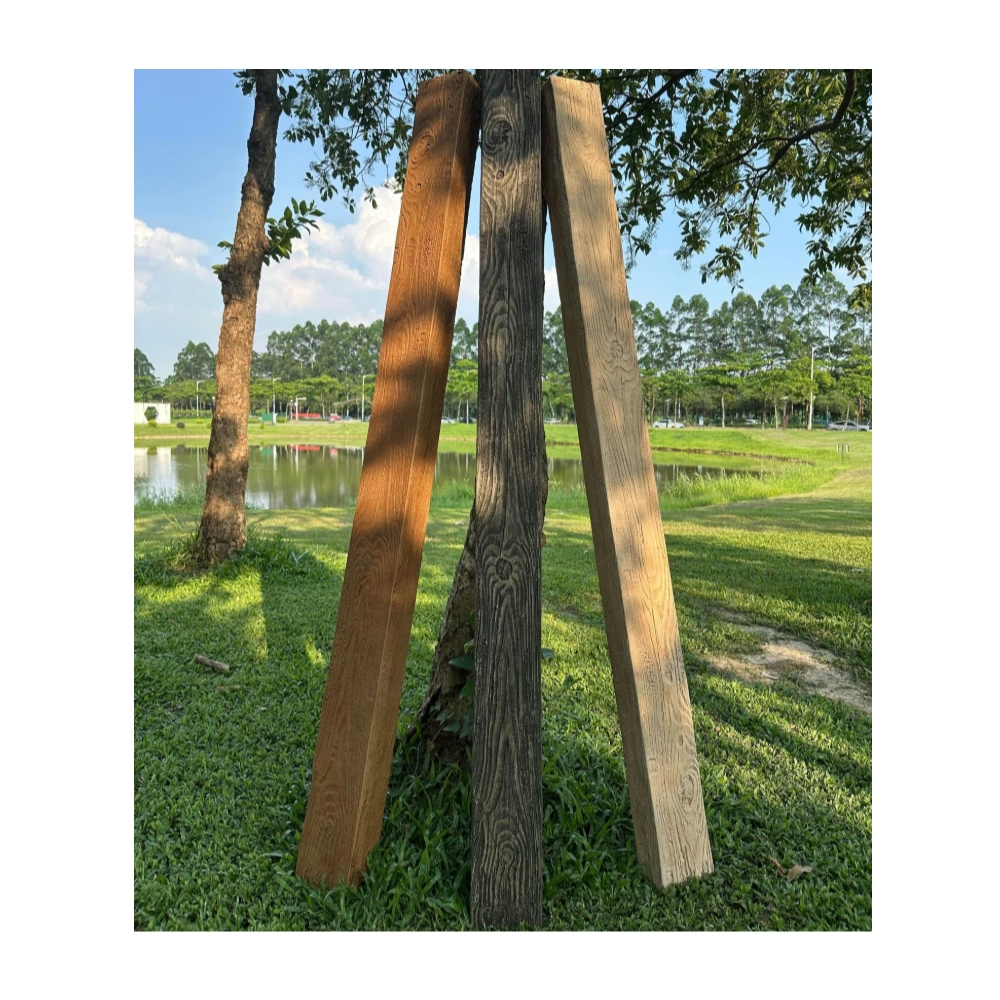
There's a particular shade of grey that driftwood takes on after months in salt water and sun—silvered, slightly blue, with darker streaks where the grain was softer. It's the color most people picture when they imagine coastal architecture, weathered barnwood, or seaside pergolas. Real driftwood isn't practical as a building material; it splits, decays, and attracts insects. Polyurethane faux timber beams finished in driftwood grey deliver that color reliably, with structural performance that actual driftwood can't approach.
For homeowners designing yard structures—pergolas, pavilions, outdoor kitchens, covered porches—driftwood grey PU faux beams offer the weathered coastal look without the maintenance headaches of real timber exposed to the elements.
Why driftwood grey works in yard settings
Driftwood grey has visual properties that make it work especially well in outdoor environments. The color recedes against bright sky and green foliage, which keeps the beams from dominating the visual composition. It harmonizes with stone, concrete, and metal landscape materials. It ages gracefully because the underlying grey tones already match what natural materials become after weathering.
For coastal homes, lake houses, and properties with water views, driftwood grey connects the architecture to its setting. The beams don't compete with the landscape; they belong to it.
For inland homes, driftwood grey introduces a coastal aesthetic without requiring coastal context. The look reads as weathered and established regardless of geography, which is why the finish has migrated from coastal markets into mainstream residential design.
For commercial yard settings—resort pool areas, restaurant patios, wedding venue pergolas—driftwood grey signals relaxed upscale. The color works equally well in bright sun and shaded structures. It photographs well for marketing materials. It doesn't show pollen, dust, or water spots the way darker finishes do.
Outdoor performance of PU faux beams
Polyurethane faux beams are formulated specifically for outdoor service when manufactured for exterior applications. The differences from interior-grade beams include:
UV-stable topcoat
The topcoat includes UV absorbers that prevent the finish from breaking down under prolonged sun exposure. Interior-grade finishes will chalk, fade, and lose color within 12 to 24 months of direct sunlight. Exterior-grade driftwood grey finishes hold their color for 5 to 10 years depending on climate and exposure.
Closed-cell substrate
The polyurethane foam is closed-cell, meaning the cells don't connect to each other. Water that gets past the surface coating cannot migrate through the substrate. The beam won't absorb water, swell, or develop the rot and mold that plague real timber in outdoor conditions.
Flexible coating system
The exterior coating system is formulated to accommodate thermal expansion and contraction across the temperature range the beam will experience. Interior coatings become brittle in cold weather and can crack when the substrate moves. Exterior coatings remain flexible through freeze-thaw cycles.
Corrosion-resistant hardware
Exterior beam installations use stainless steel or hot-dip galvanized mounting hardware. Standard zinc-plated hardware will rust within a season in outdoor exposure, leaving streaks down the beam face and weakening the mounting.
A serious manufacturer marks exterior-grade beams with a specific designation—often "EXT" in the SKU—and provides matching exterior-grade touch-up paint. The marking matters because interior and exterior beams look similar at the point of purchase but perform very differently in service.
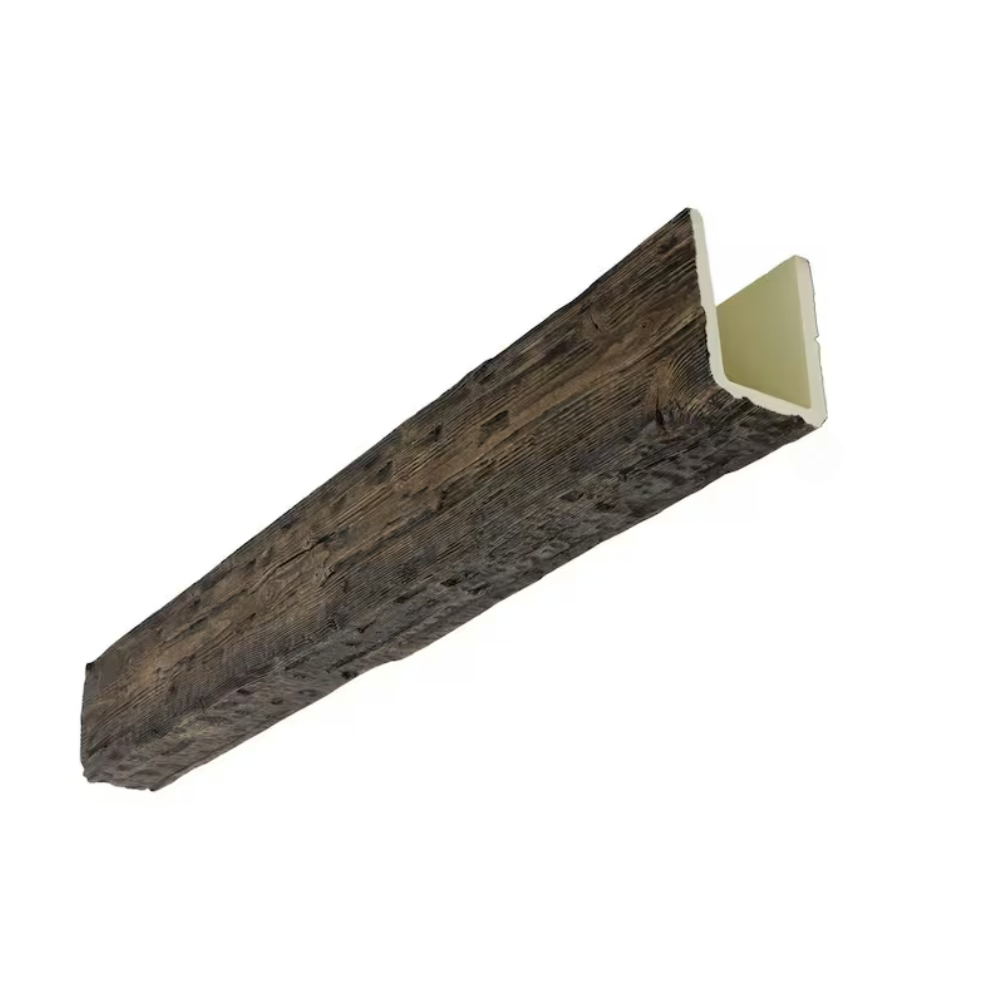
Where driftwood grey beams work in yard decor
Driftwood grey PU faux beams serve a wide range of outdoor applications. Each application has slightly different requirements that the manufacturer should address in the specification.
Pergolas and arbors
Pergolas are the most common application for driftwood grey beams. The beams form the primary horizontal structure that supports the open roof grid. They define the outdoor room.
For pergola applications, beam profiles typically run between 6x8 and 10x10, with lengths between 8 and 20 feet depending on the pergola footprint. The beams are usually spaced 4 to 6 feet apart along their length, with cross beams at each end to frame the structure.
Driftwood grey against the sky and surrounding foliage creates the relaxed coastal aesthetic that most pergola designs aim for. The beams don't need additional stain or sealer after installation; the factory finish is the final finish.
Pavilion ceilings
Pavilions are larger covered structures that often include ceiling beams below the roof structure. The ceiling beams are visible from below and define the underside of the roof.
For pavilion ceilings, beam profiles typically run heavier than pergola beams—8x10 to 12x12—with longer lengths to span the pavilion width. The beams can run parallel to the roof ridge or perpendicular, depending on the architectural intent.
Driftwood grey pavilion ceilings work especially well when the pavilion houses an outdoor kitchen, dining area, or lounge. The weathered finish doesn't compete with food presentation or table settings the way darker finishes can.
Outdoor kitchen overheads
Outdoor kitchens increasingly include overhead beam structures that frame the cooking zone and provide mounting for hoods, lighting, and accessories. The beams also define the kitchen zone within a larger patio or yard.
For outdoor kitchen applications, beam profiles are often coordinated with the kitchen island dimensions. A 10-foot island might have a 10-foot beam above it, with the beam extending slightly beyond the island on each end to provide visual termination.
Driftwood grey beams above an outdoor kitchen harmonize with stone counters, stainless steel appliances, and tile backsplashes. The cool grey tone doesn't fight warm wood cabinets or competing color palettes.
Covered porch ceilings
Wraparound porches and covered porches benefit from beam ceilings that define the porch as outdoor living space. The beams add architectural substance to what would otherwise be a flat soffit.
For covered porch applications, beams typically run perpendicular to the house, projecting out from the wall plate. Spacing of 3 to 5 feet creates a comfortable rhythm without overwhelming the porch ceiling.
Driftwood grey porch beams paired with white columns and railings create the classic coastal porch look that has been popular in American residential architecture for over a century.
Garden structures and trellises
Garden structures—arbors, trellises, gates, focal points—sometimes incorporate heavier beam elements for visual impact. A substantial beam across a garden gate entrance signals that the garden is a designed space.
For garden structure applications, beam profiles are usually smaller (6x6 to 8x8) but with the same driftwood grey finish. The finish ties the garden structure to larger beams elsewhere on the property, creating material continuity across the landscape.

Installation considerations for outdoor beams
Outdoor beam installations require attention to details that interior installations don't. Water management, structural anchoring, and finish protection during installation all matter.
Water management
Beams mounted horizontally under open sky will collect water during rain. Even with closed-cell substrates, standing water against the beam finish can shorten the finish life. Best practice includes:
- Slight slope on horizontal beams to shed water (often achieved by varying mounting height slightly)
- Drainage gaps where beams meet vertical posts
- End caps or sealed ends on cut beams to prevent water infiltration at the substrate
- Flashing above beams where they meet walls or other vertical structures
The manufacturer's installation guide should address water management specifically for outdoor applications. Generic interior installation guides don't cover these details.
Structural anchoring
Outdoor beams face wind loads that interior beams don't. A beam installed in a backyard pergola may experience 50 to 80 mph wind loads during storms. The anchoring must transfer these loads to the structure without loosening.
For pergola applications, beams typically bolt through the posts with stainless steel through-bolts. The bolts are sized for the calculated wind load and the post dimensions. Adhesive alone is not adequate for outdoor structural connections.
For pavilion applications, beams may need additional lateral bracing where wind loads are higher. The bracing is usually hidden in the roof structure but should be detailed in the engineered drawings.
Finish protection during installation
The driftwood grey finish is the most visible feature of the beam. Protecting the finish during installation requires care that interior installations don't demand.
Installers should:
- Handle beams with clean gloves to prevent fingerprints in the finish
- Stage beams on padded surfaces to prevent scratching
- Cut beams with sharp blades that don't tear the finish at the cut edge
- Seal cut ends immediately with manufacturer-supplied end sealer
- Touch up any installation damage with manufacturer-supplied touch-up paint before final inspection
Following these steps preserves the finish integrity that the manufacturer built into the beam. Skipping them leads to visible installation damage that the homeowner will notice immediately.
Maintenance through the seasons
Driftwood grey PU faux beams require minimal maintenance, but some seasonal attention extends their service life.
Spring
After winter, beams should be inspected for any damage from ice, falling branches, or animal activity. Loose mounting hardware should be tightened. Any finish damage from winter exposure should be touched up.
A mild soap wash removes accumulated winter grime and prepares the finish for the coming year. Avoid pressure washing, which can damage the finish.
Summer
Summer maintenance focuses on keeping the beams clean and on monitoring for any pest activity. While PU faux beams don't attract insects the way real timber does, insects sometimes build nests in the voids behind beams and leave stains that run down the beam face when it rains.
Trimming nearby vegetation to maintain airflow around the beams helps prevent this. Removing any visible nests immediately prevents staining.
Fall
Fall maintenance prepares the beams for winter. Leaves and debris that have accumulated on top of beams should be cleared. Gutters and downspouts that direct water onto beams should be redirected.
This is also a good time to apply a fresh coat of manufacturer-recommended protective sealer if the finish is showing wear. The sealer extends the finish life and refreshes the color.
Winter
Winter is mostly hands-off for beam maintenance. Avoiding direct contact with ice melt chemicals, which can damage the finish, is the main concern. If ice accumulates on beams, allowing it to melt naturally is better than attempting to chip it off.
Yard design integration
Driftwood grey beams work with most yard design styles, but they harmonize especially well with certain palettes.
Coastal landscapes—grasses, weathered teak furniture, white painted structures—pair naturally with driftwood grey. The beams reinforce the coastal aesthetic without adding new colors to the palette.
Modern landscapes—concrete pavers, geometric plantings, dark metal accents—also work with driftwood grey. The grey tones bridge the cool concrete and the warm wood furniture that often appears in modern outdoor rooms.
Traditional landscapes—manicured lawns, brick pavers, classical garden structures—work with driftwood grey when the surrounding palette is already muted. Bright primary colors in the landscape would clash with the subtle grey tones of the beams.
Xeriscape and desert landscapes—gravel, succulents, drought-tolerant plantings—pair well with driftwood grey because both palettes are muted and harmonize with the bright sky.
Cost considerations
Driftwood grey exterior-grade PU faux beams cost more than interior-grade beams of the same profile and length. The premium covers the UV-stable topcoat, the closed-cell substrate certification, and the exterior-grade hardware.
For homeowners budgeting a yard project, the premium is modest relative to the total project cost. A typical pergola project that costs $8,000 to $15,000 in materials and labor might add $500 to $1,500 for the exterior-grade beam upgrade. The upgrade extends the service life from 10 to 15 years (interior grade in outdoor exposure) to 20 to 30 years (exterior grade in outdoor exposure).
For contractors and designers specifying yard projects, the upgrade is almost always worth recommending. The marginal cost is small compared to the project total, and the extended service life avoids the awkward conversation with the homeowner about why their beams are fading after two years.
Working with suppliers
For homeowners, the supplier relationship matters because exterior-grade beams need to be specified correctly at the time of order. An interior-grade beam shipped to an outdoor jobsite will fail prematurely, regardless of how well it's installed.
For contractors, the supplier relationship matters because the manufacturer should provide exterior-grade touch-up paint, end sealer, and matching hardware. Without these supporting materials, the installation can't be completed to manufacturer specifications.
For landscape designers, the supplier relationship matters because the manufacturer's finish card should show exterior-grade driftwood grey alongside interior-grade driftwood grey options. The two finishes are similar but not identical; specifying the correct one requires seeing both on the finish card.
The visual outcome
A yard finished with driftwood grey PU faux beams has a specific character. It feels established rather than new. It feels connected to landscape rather than imposed on it. It feels coastal regardless of geography. It photographs well in any light.
That visual character is what homeowners are buying when they choose driftwood grey beams over other finish options. The performance characteristics—weather resistance, low maintenance, long service life—matter, but they're the underlying support for the visual outcome. The look is the point.
For projects where that visual outcome aligns with the homeowner's intent, driftwood grey PU faux beams deliver consistent results across a wide range of yard applications. The combination of material performance and aesthetic character is difficult to replicate with real timber at any price, and impossible to replicate with most alternative materials.
Yard decor lives or dies on its ability to look intentional. Driftwood grey PU faux beams make the yard look intentional—weathered, established, and connected to its environment—without the maintenance and replacement cycle that real timber would impose. For homeowners investing in their outdoor spaces, that combination is hard to beat.
Technical References
ASTM standards cited in every specification
Test Data
Lab results from internal testing program
Updated 2026
Reviewed against current product specs