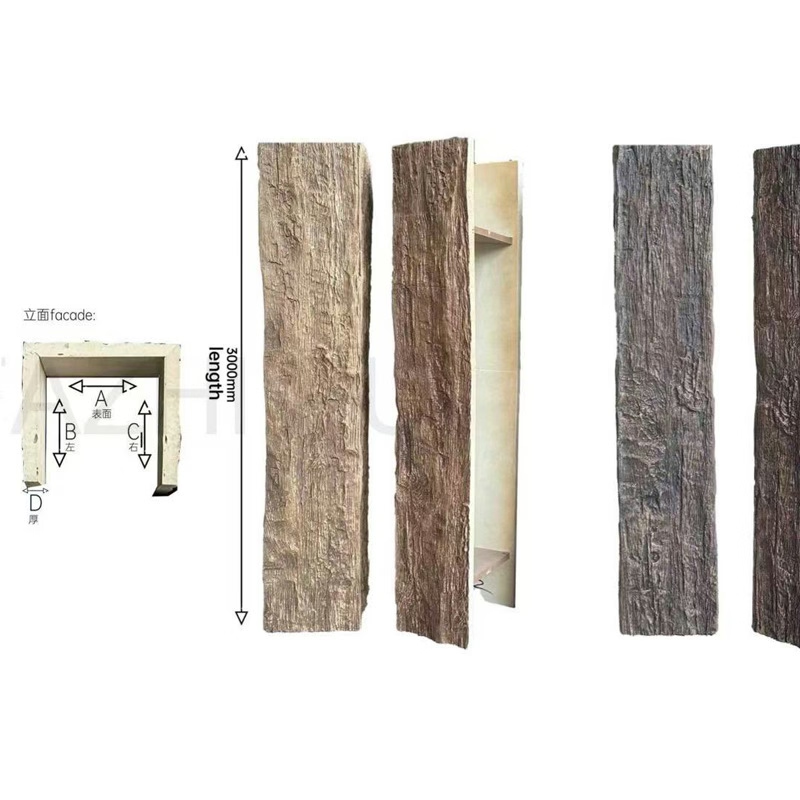
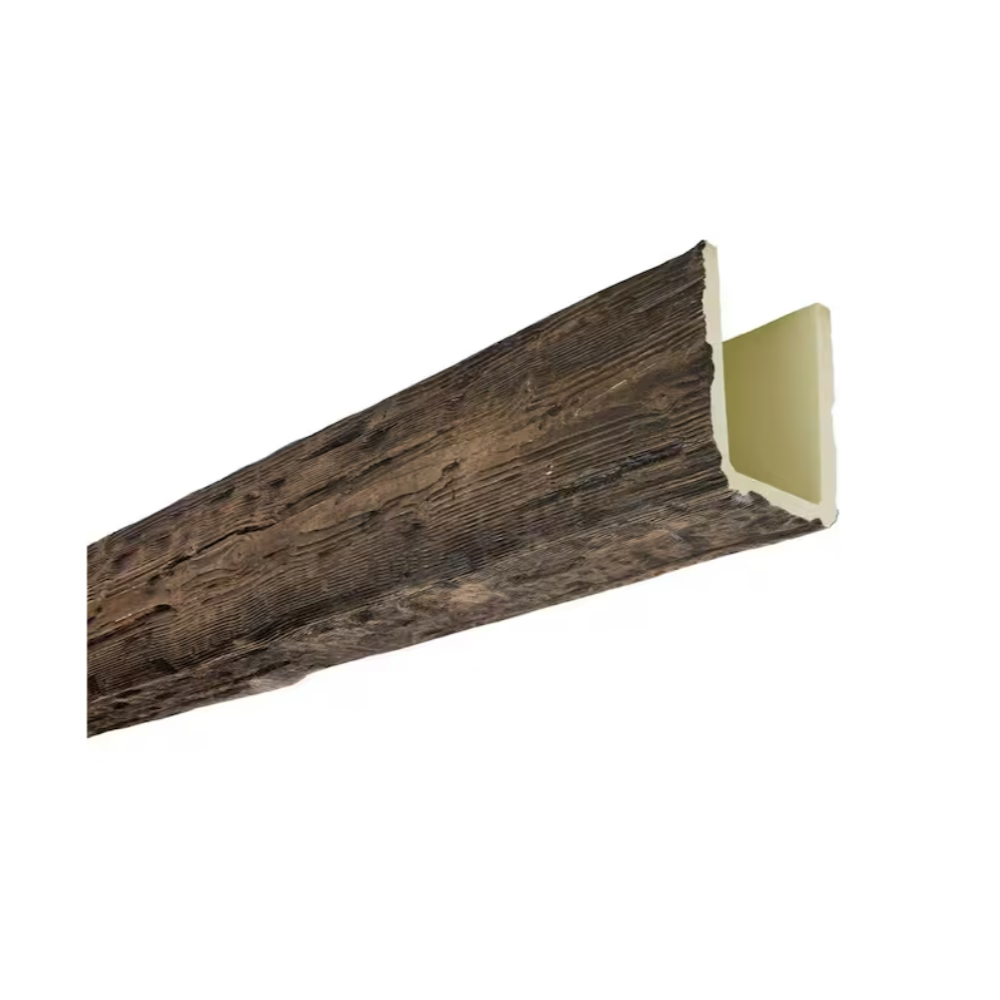
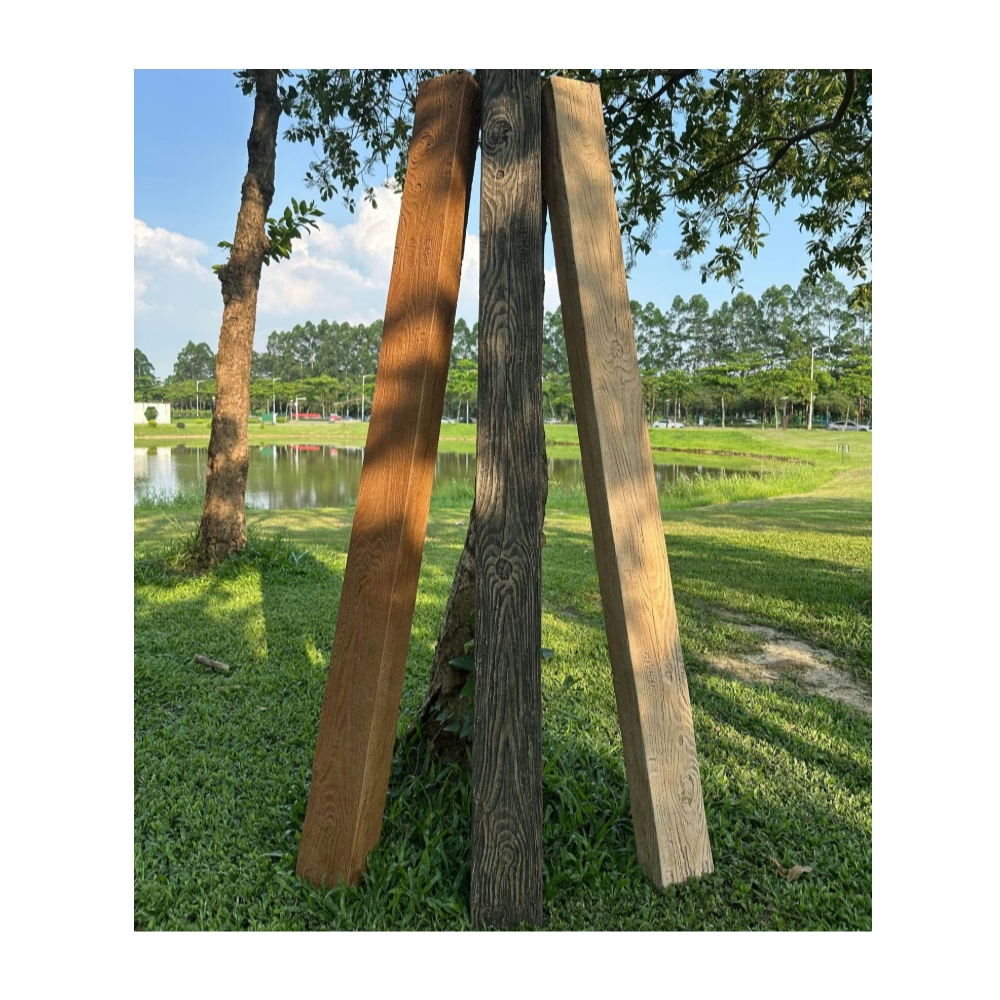
Genuine reclaimed barn wood carries a kind of patina that no factory finish can imitate easily. Sun-faded greys, oxidized iron stains, circular nail shadows, occasional saw marks, and decades of grain checking combine into surfaces that designers chase relentlessly. The problem is that real barn wood has become scarce, expensive, and difficult to source responsibly. Many old barns are protected structures, salvage operations are limited, and the carbon cost of transporting heavy timber across continents is significant.
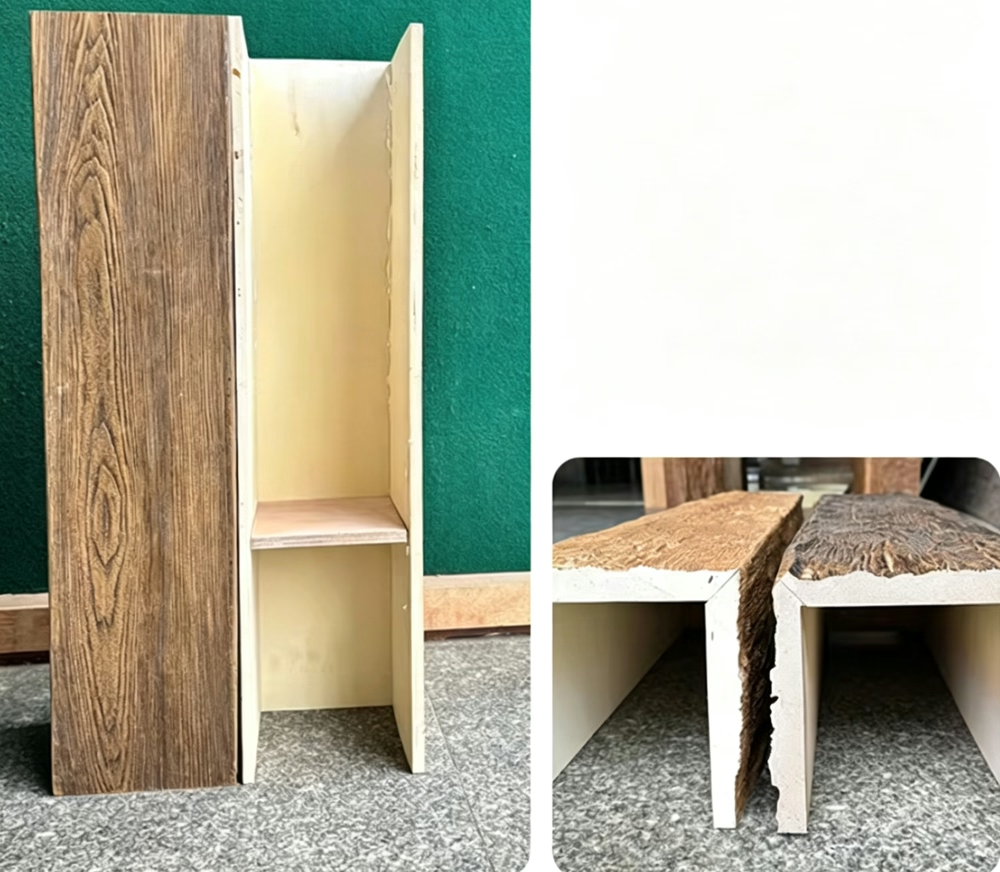
Polyurethane faux timber beams captured directly from authentic barn wood originals have matured into a serious alternative. The replication process starts with carefully selected antique boards, often sourced from dismantled 19th-century barns in the American Midwest or historic European farmsteads. Each original is documented, photographed, and then used as a master pattern for high-resolution silicone molds. Liquified polyurethane resin captures the finest grain detail, including the subtle depressions of oxidized nail heads and the micro-cracks that develop over a century of seasonal movement.
How faithful replication actually works
The most convincing faux barn wood beams are not generic wood grain patterns dressed up with a weathered stain. They are direct casts. A board with a particularly expressive combination of knots, sun-bleached streaks, and insect tracks becomes the master for an entire production run. The resulting polyurethane beams carry those exact details on every piece, with subtle variation introduced during the molding process so the run does not look mechanical.
Finishing is what really brings the cast texture to life. A typical production sequence involves a base coat in warm brown or tan to mimic the wood beneath the weathered surface, followed by a grey wash applied unevenly to suggest sun bleaching. Iron-oxide stains are sometimes hand-applied near knot areas or simulated nail holes to suggest the original oxidation patterns. A final matte topcoat seals the surface without adding artificial gloss.
The result reads as authentic barn wood in nearly every lighting condition. Up close, the texture feels like aged timber because it is, in a sense, the original surface cast into a new material. From normal viewing distance, the eye reads genuine weathering, color variation, and structural character. For designers building farmhouse interiors at scale, this level of fidelity changes what is possible.
Why designers specify faux over real
There are practical reasons beyond aesthetics. Genuine barn wood beams often weigh 60 to 120 pounds per linear foot, depending on species and dimension. They require structural support to mount, sometimes requiring additional blocking or engineered headers. Polyurethane faux beams weigh a fraction of that, usually under 5 pounds per linear foot, so a standard ceiling can hold them without modification.
Availability is the second reason. A designer specifying real barn wood for a multi-unit residential development quickly runs into supply limits. No salvage operation has thousands of matching boards in inventory. Faux beams can be produced in any quantity with consistent character. Multiple buildings or homes get the same visual identity without depending on whatever weathered boards happen to be available that quarter.
The third reason is regulatory. Many jurisdictions restrict the movement of reclaimed timber due to pest concerns, particularly after discoveries of emerald ash borer and other invasive species. Importers of real barn wood often need heat treatment certificates, kiln drying records, and phytosanitary documentation. Polyurethane beams are inert and have no such requirements. They pass through customs without fumigation, inspection, or quarantine.

Finish families for farmhouse applications
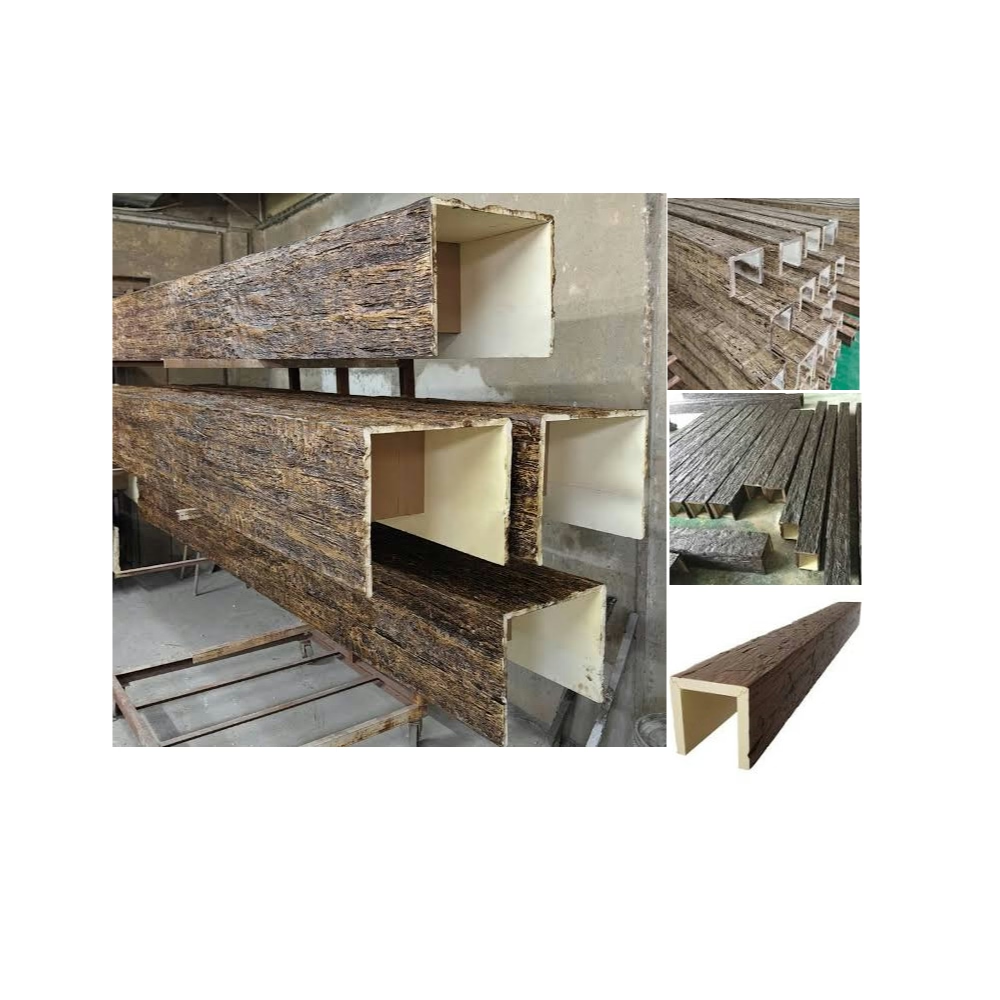
Several finish directions have emerged for faux barn wood beams, each suited to a different farmhouse sub-style. Classic weathered grey replicates the silver-grey surface of barns exposed to decades of rain and sun. The finish works in modern farmhouse interiors where white shiplap walls and stainless fixtures provide a clean counterpoint to the rough beam texture.
Warm driftwood is a softer alternative that combines the grey of weathered surfaces with the warmth of underlying wood tone. It pairs well with cream-painted cabinetry, butcher-block counters, and natural-fiber textiles. This finish reads as inviting rather than rustic-rugged, which suits kitchens and family rooms where comfort matters more than visual drama.
Deep weathered brown suits farmhouse interiors that lean toward traditional rather than modern. Knotty, dark, and rich with simulated oxidation, this finish recalls tobacco barns and 19th-century timber frames. It anchors spaces with stone fireplaces, antique furniture, and muted earth tones. Some designers combine deep brown and warm driftwood finishes in the same ceiling for layered character.
Installation considerations
Faux barn wood beams install much like other polyurethane faux timber products, but the heavy weathered character invites a few specific techniques. Mounting brackets should be selected to handle the slightly increased beam weight compared to smooth faux wood, though still well within residential structural limits. Standard L-brackets and blocking systems work for most applications.
Joint treatment matters more on heavily textured faux barn wood than on smoother faux timber. Deep grain patterns can exaggerate minor gaps at seams, so careful fitting during installation pays off. Some installers dry-fit the entire run before applying adhesive, checking for tight joints and adjusting cuts as needed. Color-matched caulk or wood filler handles minor gaps, and a final touch-up with stain marker blends the repair into the surrounding weathered surface.
End caps for faux barn wood beams are particularly important visually. A flat, unfinished end on a heavily textured beam looks obviously truncated. Prefabricated end caps cast from the same master pattern as the beam face produce a continuous, weathered character right to the tip. The end cap should be installed at the same time as the beam, not added later as an afterthought.
Where this look performs best
Rustic farmhouse decor covers a wide range of styles, and faux barn wood beams suit most of them. Modern farmhouse kitchens, the most common application, use beams to anchor white cabinetry and create contrast between rough and refined surfaces. Open-concept great rooms benefit from a single substantial beam that defines the living space without requiring a wall.
Bedrooms in farmhouse-style homes often use faux barn wood beams for accent rather than comprehensive coverage. A single beam running across the ceiling above the headboard creates a focal point and grounds the room. The weathered character complements linen bedding, vintage rugs, and warm wood furniture, which are common elements in this aesthetic.
Commercial applications include farmhouse-style restaurants, breweries, retail stores, and event venues. A bar with reclaimed-style beams overhead reads as authentic craft establishment in a way that smooth modern ceilings cannot match. For brand identity purposes, faux barn wood gives operators the look they want without the cost or logistical complications of sourcing and installing genuine reclaimed timber.
Sizing and specification guidance
Barn wood faux beams are typically specified in the same dimensional ranges as other faux timber products, with common profiles of 4x6, 6x8, 8x8, and 8x10. Lengths run from 4-foot minimums for accent applications up to 20 feet for long vaulted ceilings. Custom lengths can be produced in 6-inch increments, though most projects can be served from standard stock.
Finish consistency across an installation is important. Because faux barn wood relies on subtle color variation to read as authentic, batch-to-batch variation in finish tone can disrupt the illusion. Experienced suppliers dye-lot their finishes and assign beam batches by project so all beams for a single installation come from the same production run. For multi-phase projects spanning months, this becomes a procurement conversation that should happen early.
Sample evaluation is critical for this category. The eye reads weathered surfaces differently under different lighting, so a sample viewed in a warm-lit warehouse may look different in a north-facing great room. Requesting samples that can be evaluated on-site in the actual installation lighting is standard practice. The small cost of a sample board is trivial compared to the cost of installing beams that look wrong in the finished space.
Sustainability angle
Using faux barn wood instead of reclaimed timber has real environmental benefits that designers increasingly communicate to clients. Real barn wood is a finite resource. Every beam installed from a genuine barn is one less board available for restoration work on heritage structures. By substituting high-quality faux beams, designers preserve the genuine resource for the projects that actually require it.
The carbon footprint comparison also favors polyurethane. Real barn wood often travels thousands of miles from salvage site to project. It requires energy-intensive kiln drying and treatment. Polyurethane faux beams are lighter, pack more efficiently, and arrive ready to install with no additional processing. For projects targeting LEED certification or other green building standards, the documentation is straightforward.
Authenticity in farmhouse design no longer requires the sacrifice of an original barn. Polyurethane replicas have reached a level of fidelity where they satisfy the aesthetic goals of the style while addressing the practical concerns of supply, weight, cost, and sustainability. For most farmhouse projects today, faux barn wood is the more sensible answer to the question of how to achieve the look.
Technical References
ASTM standards cited in every specification
Test Data
Lab results from internal testing program
Updated 2026
Reviewed against current product specs