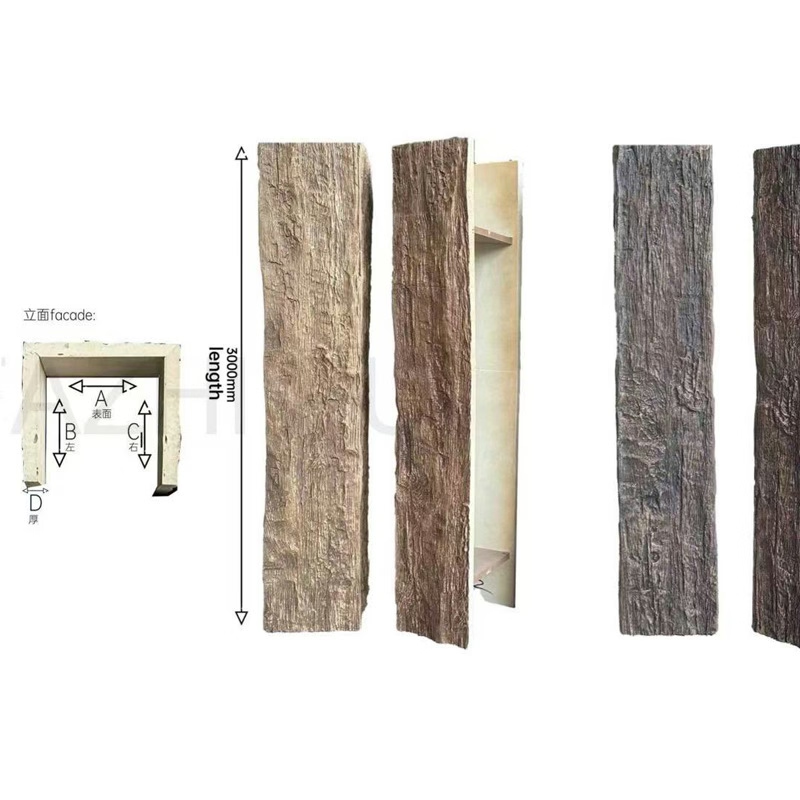
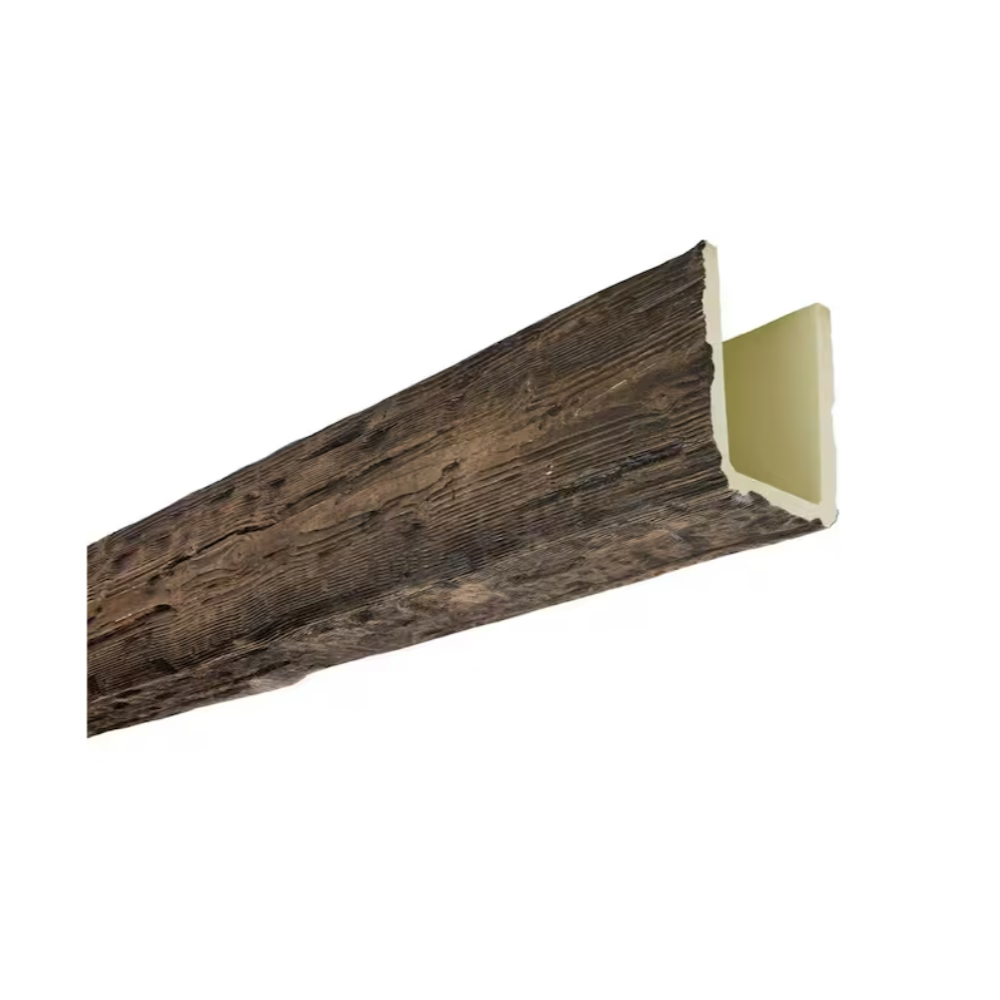
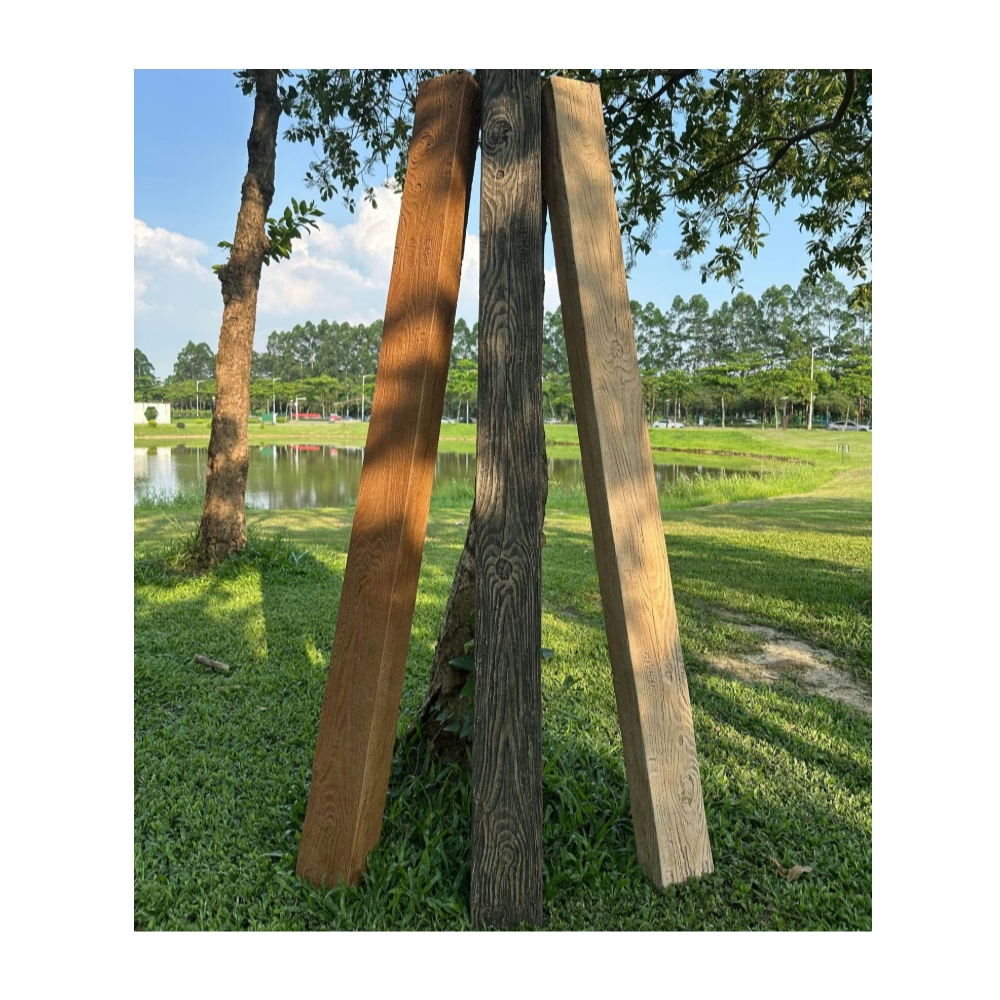
Brazilian cherry, known in the timber trade as jatoba, occupies a particular place in luxury interior design. Its color starts as a warm salmon-brown when freshly cut and deepens over months of exposure to a rich reddish-brown with subtle orange undertones. The grain is typically interlocked and moderately coarse, with occasional figuring that catches light differently across the surface. Mature trees produce boards with densities and hardness that translate into flooring and beams of exceptional durability, but those same characteristics make the wood expensive, heavy, and increasingly controversial from a sustainability perspective.
Polyurethane faux beams that replicate the Brazilian cherry look address all three concerns simultaneously. The visual character of genuine jatoba is captured in high-resolution molds taken from carefully selected boards, then finished with stains and glazes that match the wood's signature warm tone. The resulting beams weigh a fraction of solid timber, cost less per linear foot, and avoid the deforestation concerns associated with tropical hardwood sourcing.
For luxury residential projects, hotel lobbies, and high-end commercial spaces, faux Brazilian cherry beams offer a way to achieve the exotic wood aesthetic without compromise. Designers who specify them can meet client expectations for the look while satisfying increasingly stringent sustainability criteria that govern material selection in luxury developments.
Why Brazilian cherry appeals to luxury markets
Several characteristics combine to make jatoba particularly desirable for luxury applications. The color is the most obvious draw. The reddish-brown tone with warm undertones reads as opulent without being loud. It pairs well with both traditional luxury materials like marble and brass and with contemporary materials like brushed steel and natural stone. Few other woods offer this color versatility.
The grain pattern provides visual interest without becoming visually noisy. Unlike strongly figured woods such as zebrawood or purpleheart, Brazilian cherry has enough variation to avoid looking flat but maintains a coherent overall character. Beams finished in this style read as solid architectural elements rather than decorative accents.
The wood's natural density translates into perceived quality. Real Brazilian cherry is hard and heavy, which gives it a substantial feel that luxury clients associate with premium materials. Faux beams cannot fully replicate the weight, but the visual character suggests the same quality. In applications where beams are mounted overhead and not touched regularly, the weight difference is largely irrelevant.
The association with tropical hardwoods carries cachet in some luxury markets. Brazilian cherry signals an interior that uses materials from around the world rather than relying on common domestic species. Even when the beam is faux, the visual reference to tropical hardwood maintains that exotic association.
How the look is replicated in polyurethane
Capturing the Brazilian cherry look in faux beams requires careful attention to both color and texture. The mold process begins with selecting real jatoba boards that show the species' characteristic grain pattern, color variation, and surface character. Boards with particularly attractive figuring are preferred because the resulting cast surface will carry that figuring into every beam produced.
The base color for Brazilian cherry replicas starts with a rich reddish-brown stain applied evenly across the cast surface. The exact tone varies depending on whether the goal is to match fresh-cut jatoba or the deeper aged color that develops over time. Most luxury applications target the aged appearance because that is the color most clients associate with mature Brazilian cherry installations.
Glazing adds depth and dimension to the finish. A darker glaze is applied and partially wiped back, leaving pigment concentrated in the grain recesses and around any knots or figuring. This step is what creates the visible grain pattern that distinguishes real wood from a uniformly colored surface. Without glazing, even a perfectly cast beam looks flat and artificial.
A toner wash introduces the subtle color variation across the surface that characterizes real timber. Some areas get slightly more red, others slightly more brown. This irregular distribution is critical to the authenticity of the finish. Uniform color, even at the right overall tone, immediately reads as artificial.
A final matte or satin topcoat seals the finish and provides the appropriate sheen level. Gloss topcoats are typically avoided because they create the plastic-looking reflection that breaks the illusion of natural wood. The protective topcoat still allows the rich color and grain detail to show through clearly.

Common applications in luxury interiors
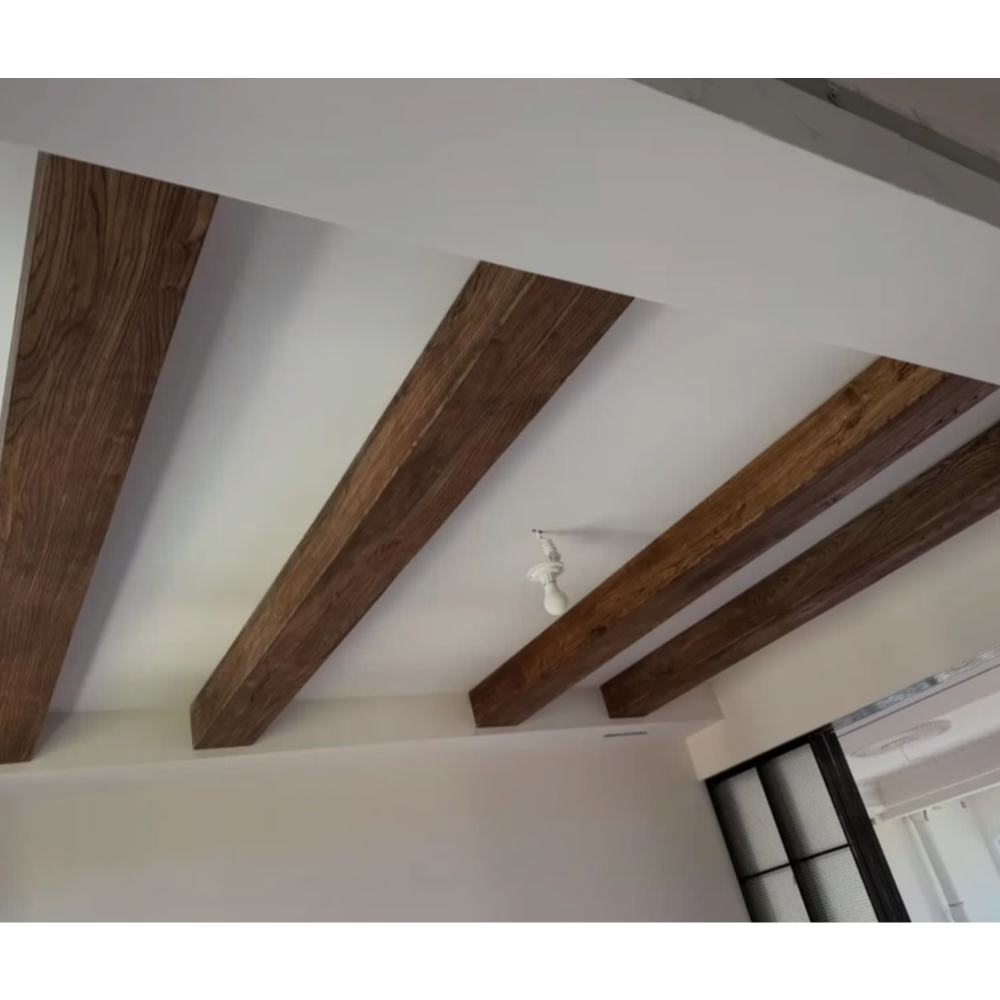
Brazilian cherry look faux beams appear in several luxury interior contexts. Hotel lobbies and reception areas use them to establish a sense of arrival and quality. A beam with rich reddish-brown tone crossing a high-ceilinged lobby signals luxury from the moment guests enter. The visual warmth pairs well with stone floors, brass fixtures, and leather seating that characterize upscale hospitality design.
Luxury residential great rooms incorporate faux Brazilian cherry beams to add architectural character to otherwise standard ceiling construction. The beams provide visual weight and interest in rooms with generous proportions where lighter finishes might feel insufficient. They also coordinate with Brazilian cherry flooring, which remains popular in upscale homes despite the cost and sustainability concerns.
Private libraries and studies benefit from the traditional luxury aesthetic that Brazilian cherry conveys. Wood paneling in this species has historical associations with gentlemen's clubs and executive offices. Faux beams extending from paneled walls to overhead soffits create a complete environment that suggests craftsmanship and quality. Modern interpretations may mix faux beams with contemporary furnishings for updated relevance.
Wine cellars and tasting rooms often use dark, rich wood tones to create intimate, sophisticated environments. Brazilian cherry faux beams above wine storage or tasting tables provide the visual warmth that complements the rich colors of wine itself. The faux material also handles the humidity conditions in wine cellars better than solid wood, which can warp or develop mold in damp environments.
High-end retail spaces, particularly those selling luxury goods, use Brazilian cherry beams to reinforce brand positioning. A boutique featuring leather goods, fine jewelry, or premium spirits benefits from the same warm luxury aesthetic that hotels and residences pursue. The beams contribute to an environment that justifies premium pricing by signaling quality throughout the space.
Sustainability advantages
The sustainability argument for faux Brazilian cherry is significant. Genuine jatoba comes from tropical forests in South America, where logging has contributed to deforestation and habitat loss. While certified sustainable harvesting operations exist, the supply of certified material is limited and the cost is high. Many luxury projects specify Brazilian cherry aesthetic without the ability to verify sustainable sourcing.
Faux beams eliminate these concerns entirely. The polyurethane material is manufactured from industrial feedstocks that do not contribute to deforestation. No tropical trees are harvested to produce faux Brazilian cherry beams. The visual character is captured from legally and ethically sourced reference boards used only for mold making, with the bulk production consuming no additional timber.
For projects pursuing LEED certification, Living Building Challenge compliance, or other green building standards, faux Brazilian cherry beams contribute to material credits without the documentation challenges of certified tropical hardwood. The environmental product declaration for polyurethane is straightforward, and the absence of endangered species concerns simplifies compliance.
Clients who care about sustainability but love the Brazilian cherry aesthetic no longer have to choose between their values and their design preferences. Faux beams deliver the look they want without the ethical compromise. Communicating this benefit to clients has become an important part of how designers position faux tropical hardwood alternatives.
Performance characteristics
Beyond appearance and sustainability, faux Brazilian cherry beams offer performance advantages over the real wood. Polyurethane is dimensionally stable, meaning the beams will not expand, contract, or warp with humidity changes the way solid Brazilian cherry does. In luxury installations where precision matters, this stability ensures that joints remain tight and finishes remain intact over decades.
Weight reduction is significant. A solid Brazilian cherry beam of substantial dimensions can weigh 50 to 100 pounds per linear foot, requiring engineered support. Faux beams weigh a fraction of that, typically under 5 pounds per linear foot. Standard residential or commercial ceiling construction can support faux beams without structural modification.
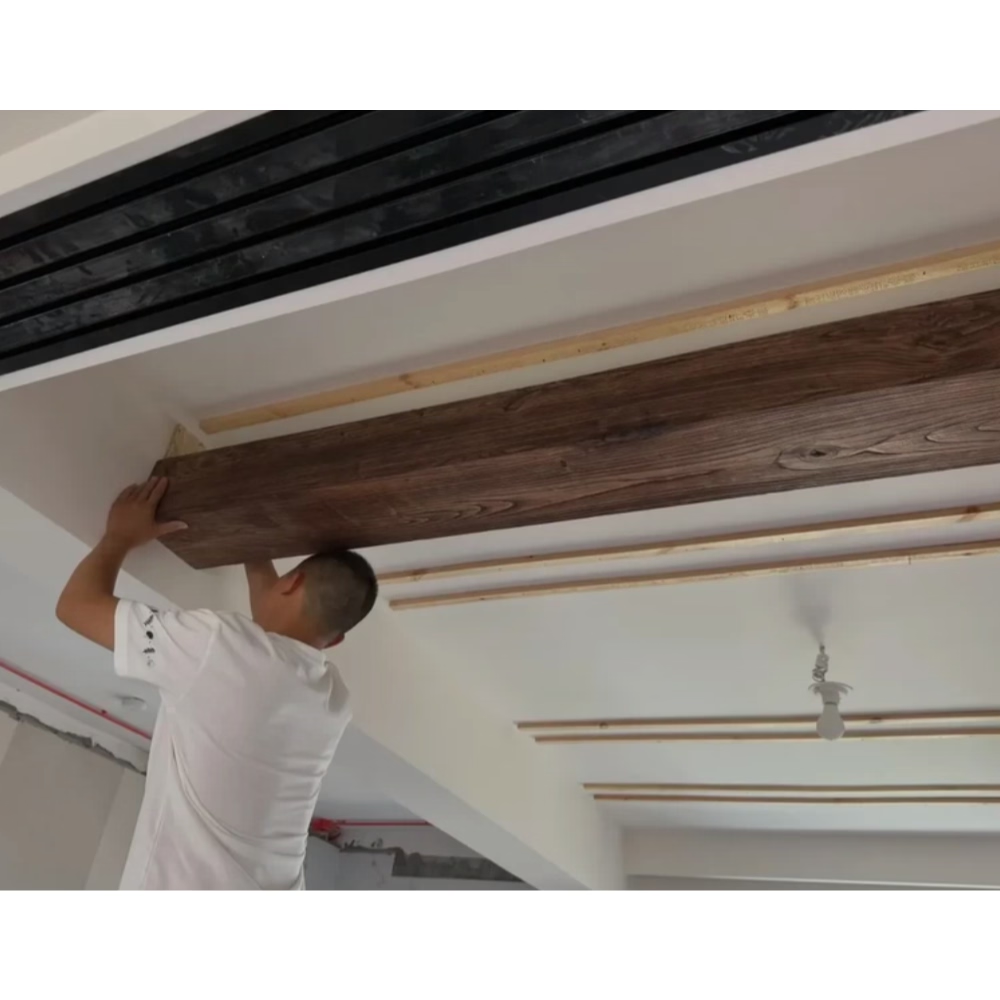
Installation is simpler with faux beams. The lighter weight reduces labor requirements and safety concerns during mounting. Many faux Brazilian cherry beams can be installed by two workers without mechanical lifting equipment, whereas solid timber beams of the same visual size require cranes or multi-person teams with extensive rigging.
Finishes on faux beams hold up well under normal interior conditions. The protective topcoat resists scuffs and marks that would damage unfinished or lightly finished solid wood. Minor surface damage can be repaired with color-matched fillers that blend invisibly into the surrounding finish. Major damage is rare because the material does not develop the stress fractures or checking that affects solid timber.
Specification considerations
When specifying faux Brazilian cherry beams, several details deserve attention. The reference material used for the mold should be documented. Premium manufacturers can identify which jatoba boards their molds were taken from and provide reference photographs. This documentation matters for projects that want to verify the authenticity of the species representation.
The finish specification should include color coordinates or reference samples. Brazilian cherry varies in tone from board to board in nature, so some variation is authentic. However, the overall color should fall within a defined range. Providing the manufacturer with physical samples or color coordinates from approved references ensures consistent results.
Sheen level should be specified explicitly. Matte finishes read as natural and understated. Satin finishes provide a slight reflectivity that suits more formal environments. Gloss finishes are generally inappropriate for wood looks regardless of the underlying species. Explicit specification prevents misunderstandings that lead to incorrect sheen levels.
Sample approval under the actual installation lighting is essential. Brazilian cherry's reddish-brown tone can appear differently under different light sources. Warm 2700K to 3000K lighting flatters the wood. Cooler 4000K lighting can make the red tones appear muted. Evaluating samples under the planned lighting prevents specification errors that are expensive to correct.
Working with manufacturers on custom variations
Some luxury projects require Brazilian cherry variants that go beyond standard offerings. A particular color tone, grain pattern, or finish level may be specified to match existing elements in the space. Manufacturers experienced in luxury work can develop custom variations based on the standard Brazilian cherry line.
Custom color matching involves matching a physical sample provided by the designer. The manufacturer adjusts the stain and glaze combination until the sample and the production beam match under agreed lighting conditions. This process takes time and typically requires several rounds of sample submission and approval, but produces results that satisfy exacting specifications.
Custom grain selection involves choosing reference boards with specific grain characteristics for the mold. If the designer wants particularly prominent figuring or specific knot patterns, the manufacturer can source reference material that matches those requirements. The resulting beams carry the desired character consistently across the entire production run.
Custom finish development addresses projects that need sheen levels, protective qualities, or aging effects beyond standard offerings. A matte finish with extra UV protection for sun-exposed installations, for example, requires custom formulation. A pre-aged patina that mimics decades of wear in a heritage property is another custom request that experienced manufacturers can fulfill.
Technical References
ASTM standards cited in every specification
Test Data
Lab results from internal testing program
Updated 2026
Reviewed against current product specs