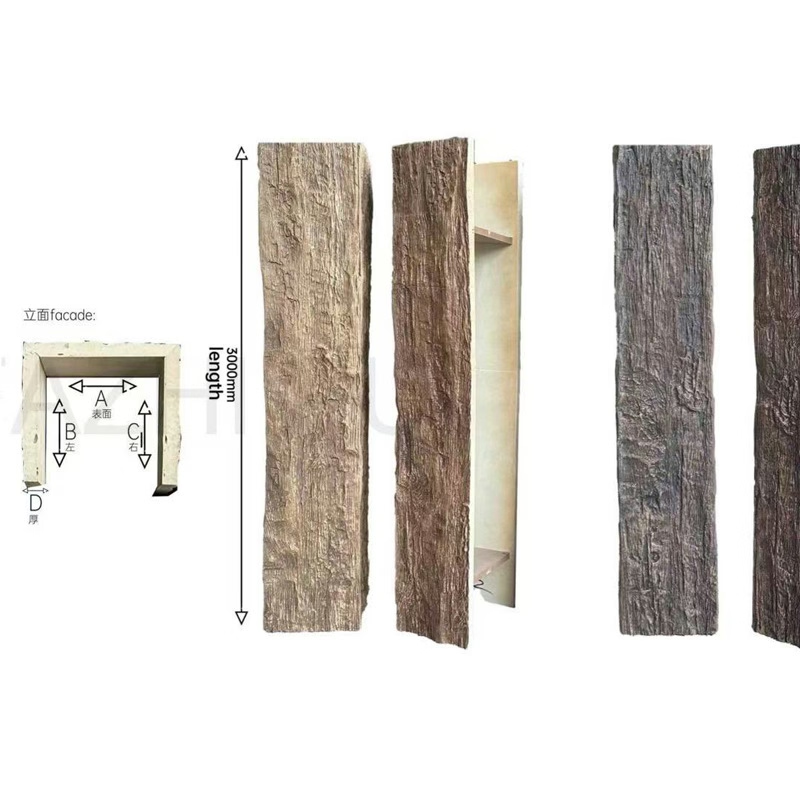
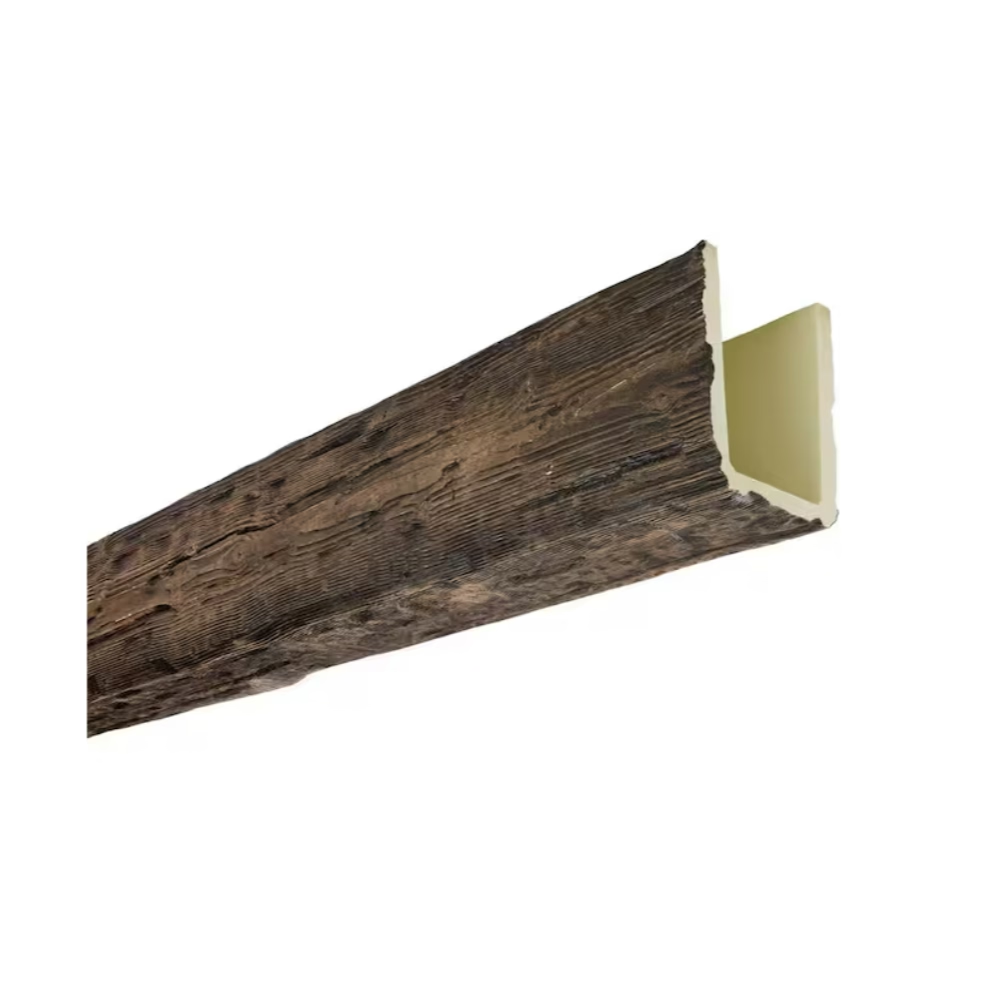
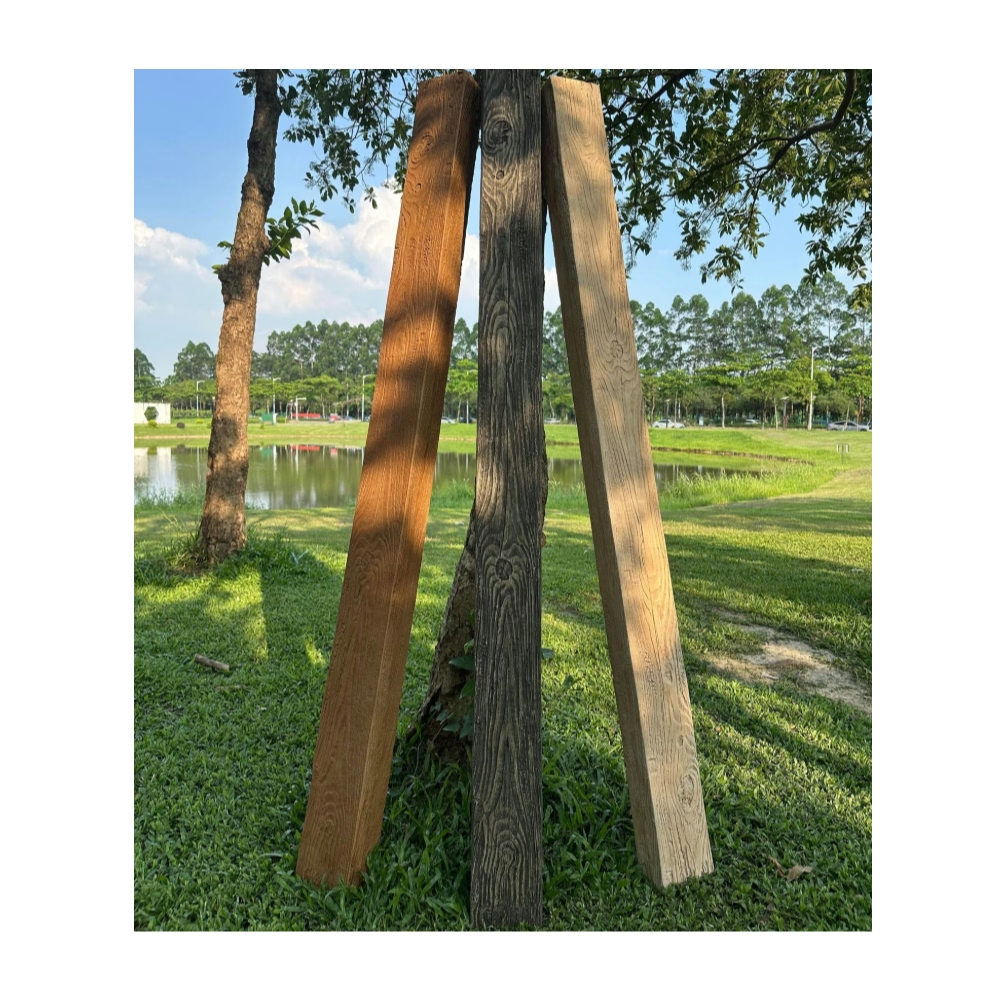
Weathered teak occupies an almost mythical place in tropical and coastal design. The wood starts as a warm honey-brown when freshly milled, then gradually silvers and grey-greens as decades of sun, salt air, and monsoon rains work on its surface. Mature weathered teak shows a complex patina that combines silver-grey tones with darker streaks where the grain has resisted weathering, occasional iron stains from old hardware, and subtle checking that develops as the wood ages. Genuine boards with this character command extraordinary prices and are increasingly scarce.
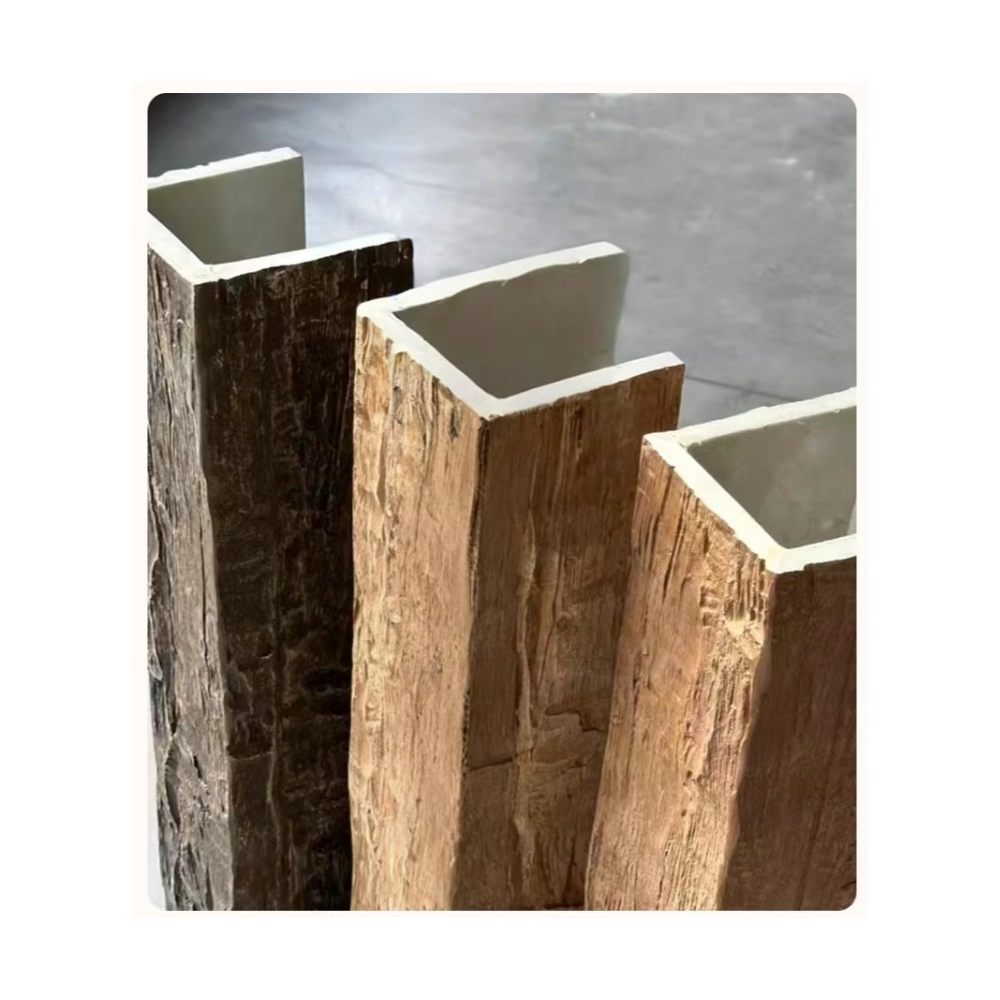
Polyurethane faux beams that capture the weathered teak texture offer a way to achieve this aesthetic in new construction and renovation projects. High-resolution molds taken from authentic reclaimed teak boards transfer every detail of the weathered surface into the cast polyurethane. Multi-step finishing processes recreate the complex color variations that make genuine weathered teak so visually compelling. The result reads as authentic to all but the most experienced observers.
For luxury tropical resorts, high-end residential projects in coastal markets, and commercial spaces pursuing the tropical modern aesthetic, faux weathered teak beams provide a practical path to a design vocabulary that would otherwise be limited by material availability and budget.
The unique character of weathered teak
Several qualities distinguish genuine weathered teak from other aged wood looks. The silver-grey oxidation is the most obvious. Unlike the grey that develops on oak or pine, the teak patina has a slight green or olive undertone that comes from the wood's natural oils interacting with UV exposure. This color cannot be replicated with simple grey stain because it has a luminous quality that flat grey lacks.
The grain pattern in weathered teak remains visible despite the surface oxidation. The denser late wood retains its darker tone longer than the early wood, so the grain pattern shows through as subtle contrast even on heavily weathered boards. This contrast is what gives weathered teak its visual depth, distinguishing it from woods that weather to a more uniform grey.
Checking and surface texture develop over years of tropical exposure. Small cracks form along the grain as the wood expands and contracts through humidity cycles. The surface develops a slight roughness as the softer early wood erodes faster than the dense late wood. These tactile qualities contribute to the wood's appeal but also make it vulnerable to damage in applications where it receives physical contact.
Iron staining from old hardware is another characteristic feature. Nails, brackets, and other metal components leave dark stains as they rust and the oxidation bleeds into the surrounding wood. These stains appear as irregular dark patches that interrupt the otherwise silver-grey surface. They are not flaws but rather evidence of the wood's history.
How manufacturers capture the weathered look
The replication process begins with sourcing authentic reclaimed teak boards with the desired level of weathering. Boards from dismantled boats, old buildings, and decommissioned bridges in Southeast Asia provide reference material with established patina. The boards are photographed, documented, and then prepared as masters for high-resolution silicone molds.
The mold captures every detail of the weathered surface, including the silver-grey oxidation pattern, the grain visibility, the checking, and any iron staining. When polyurethane is cast into these molds, the resulting surface carries the exact topographic relief of the original board. This depth is what allows faux weathered teak to look authentic even under close inspection.
The finishing process for weathered teak replicas is more complex than for fresh-cut wood looks. The silver-grey base color must be developed carefully, often using multiple glaze layers to build up the luminous quality of genuine oxidation. Some manufacturers add subtle green or olive tints to the base to capture the characteristic undertone. The grain pattern is enhanced with selective glazing that darkens the late wood slightly relative to the early wood.
Iron stain effects are added during finishing, either through applied stain techniques or through the use of metallic-oxide pigments that simulate the appearance of rusted hardware bleeding into surrounding wood. These details are subtle but contribute significantly to the overall authenticity of the weathered look.
A final topcoat protects the finish while maintaining the matte, slightly powdery appearance of genuine weathered teak. Gloss finishes would completely undermine the weathered aesthetic, so matte or low-sheen topcoats are standard. Some manufacturers add slight texture to the topcoat to mimic the tactile quality of genuinely weathered wood.

Tropical style applications
Weathered teak faux beams appear throughout luxury tropical design. Resort villas in Bali, Phuket, and the Maldives use them extensively in open-air living pavilions where the silver-grey patina complements the surrounding landscape. The beams provide architectural definition without competing with views of ocean, jungle, or formal gardens.
High-end residential projects in coastal Florida, the Caribbean, and Southern California incorporate weathered teak beams to establish the tropical modern aesthetic. The beams work particularly well in indoor-outdoor living spaces where they bridge the architectural transition between conditioned interior and exposed exterior. Their visual character suggests durability in the face of tropical conditions even when the actual material is protected indoors.
Restaurant and hotel design in tropical destinations relies heavily on the weathered teak look for ambiance. A ceiling of weathered beams in a beachfront dining room reinforces the location's tropical character without resorting to literal theming. The beams provide warmth and visual interest while maintaining the sophisticated tone that luxury hospitality demands.
Yacht and superyacht interiors specify weathered teak finishes extensively, and faux beams provide a way to extend this aesthetic into larger architectural elements without the weight and cost of solid timber. Marine applications benefit particularly from the dimensional stability of polyurethane, which does not respond to humidity changes the way real wood does in ocean environments.
Spa and wellness environments in tropical resorts use weathered teak beams to create calming, nature-connected atmospheres. The silver-grey tones are restful to the eye and pair naturally with stone, water features, and tropical plantings. The faux material handles the humidity conditions of spa environments better than solid teak, which can develop mold or mildew in consistently damp locations.
Comparison with reclaimed solid teak
The case for faux over reclaimed solid teak comes down to several practical considerations. Weight is the most immediate. Solid weathered teak beams weigh 40 to 80 pounds per linear foot depending on dimensions. Faux beams of equivalent visual size weigh under 5 pounds per linear foot. For ceiling applications, this difference determines whether standard construction can support the installation or whether structural reinforcement is required.
Cost is another significant factor. Genuine reclaimed weathered teak beams, when available, can cost $200 to $500 per linear foot depending on dimensions, weathering character, and provenance. Faux beams providing the same visual character typically cost $40 to $100 per linear foot. For a project requiring multiple beams, the cost difference is substantial.
Supply reliability favors faux as well. Reclaimed teak is a finite resource. The supply depends on what structures happen to be dismantled in any given year, and quality varies considerably based on the source. Faux beams can be produced in consistent quality at any quantity, with delivery schedules that do not depend on finding suitable reclaimed material.
Installation is faster with faux beams. The lighter weight reduces labor requirements and allows faster mounting. Pre-finished faux beams eliminate the on-site finishing work that solid reclaimed teak sometimes requires to achieve consistent appearance across multiple beams. The overall installation timeline is typically half or less than the equivalent solid timber installation.
Maintenance favors faux over solid teak in many applications. Genuine weathered teak requires periodic cleaning to prevent mold and mildew in tropical environments. Some applications benefit from occasional oiling to maintain the silver patina rather than letting the wood weather to darker tones. Faux beams require only occasional dusting and do not develop the biological growth that affects solid wood in humid conditions.
Sustainability and certification
The sustainability profile of faux weathered teak is strong. Genuine reclaimed teak, when sourced from documented deconstruction of old structures, can be a sustainable choice. However, the supply of such material is limited, and some reclaimed teak on the market is actually harvested from existing forests rather than recovered from dismantled structures. Verification of genuine reclamation is difficult.
Faux weathered teak eliminates these concerns. The polyurethane material is manufactured from industrial feedstocks, and the mold-making process consumes minimal timber. The visual reference boards are typically small sections used only for casting, not the large structural timbers that genuine reclaimed teak provides.
For projects pursuing green building certifications, faux weathered teak contributes to material credits without the documentation challenges of verified reclaimed timber. The supply chain is transparent, the environmental product declaration is straightforward, and there are no concerns about illegal logging or habitat destruction.
Some manufacturers offer faux weathered teak beams with recycled content in the polyurethane formulation, further improving the sustainability profile. The recycled content may come from post-industrial polyurethane scrap or from post-consumer materials that would otherwise be landfilled. Specifying recycled content variants adds another layer of environmental benefit.
Specification details for tropical projects
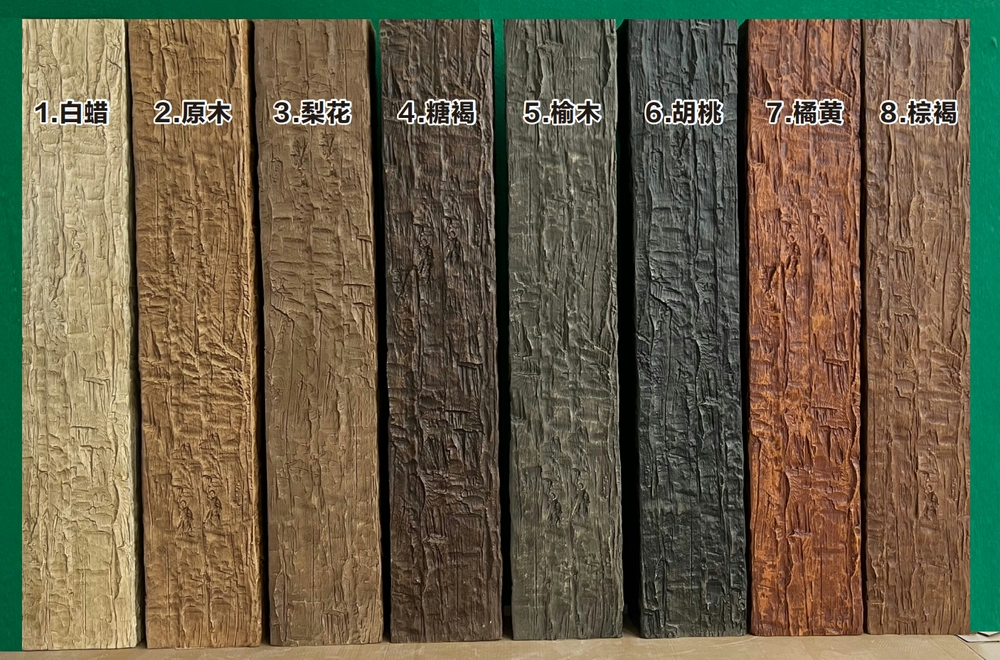
Specifying faux weathered teak beams for tropical projects requires attention to several details beyond basic profile and finish. The level of weathering should be matched to the design intent. Light weathering shows the wood still mostly honey-brown with subtle silver-grey developing. Medium weathering shows balanced silver and honey tones. Heavy weathering shows predominantly silver-grey with darker grain contrast. Each level communicates a different design message.
The presence or absence of iron staining affects the overall character significantly. Projects that want a pristine, well-maintained appearance should specify beams without iron staining. Projects that want the most authentic aged appearance should include simulated iron staining in the finish specification. The choice should align with the overall design narrative.
Finish sheen should be matte for the most authentic weathered appearance. Satin finishes are sometimes acceptable for projects that want slightly more reflectivity, but gloss finishes generally undermine the weathered aesthetic. The matte finish also better matches the visual texture of genuine weathered teak, which has a slightly powdery surface quality.
Sample approval under actual installation conditions is particularly important for weathered teak because the color is complex. Silver-grey tones can shift dramatically under different lighting conditions. Tropical sunlight brings out warm undertones that artificial lighting may suppress. Evaluating samples at the actual installation site during different times of day provides the most reliable assessment.
Customization possibilities
Custom weathered teak finishes can be developed for projects with specific design requirements. A resort chain that wants a consistent brand appearance across multiple properties might work with a manufacturer to develop a proprietary weathered finish that is exclusive to their installations. The custom finish becomes part of the brand identity, recognizable to guests who have experienced the brand before.
Custom weathering levels allow designers to specify exactly the character they want rather than choosing from standard offerings. A project that needs particularly heavy weathering, with deep silver patina and prominent iron staining, can be developed as a custom run. The lead time and cost are higher than for standard products, but the result is a unique finish that distinguishes the project.
Custom dimensions and profiles accommodate non-standard architectural requirements. A barrel-vaulted ceiling, an unusually long span, or a specific profile shape can be produced as custom work. The weathered teak finish can be applied to standard profiles or to custom profiles, giving designers flexibility in both structural and aesthetic dimensions.
The most sophisticated customization involves matching faux beams to existing genuine teak elements in a renovation. When a project incorporates both original weathered teak features and new faux beams, careful color and texture matching ensures the new and old elements integrate seamlessly. Skilled manufacturers can analyze existing teak and develop a finish that blends with it convincingly, making the boundary between original and new essentially invisible.
Technical References
ASTM standards cited in every specification
Test Data
Lab results from internal testing program
Updated 2026
Reviewed against current product specs