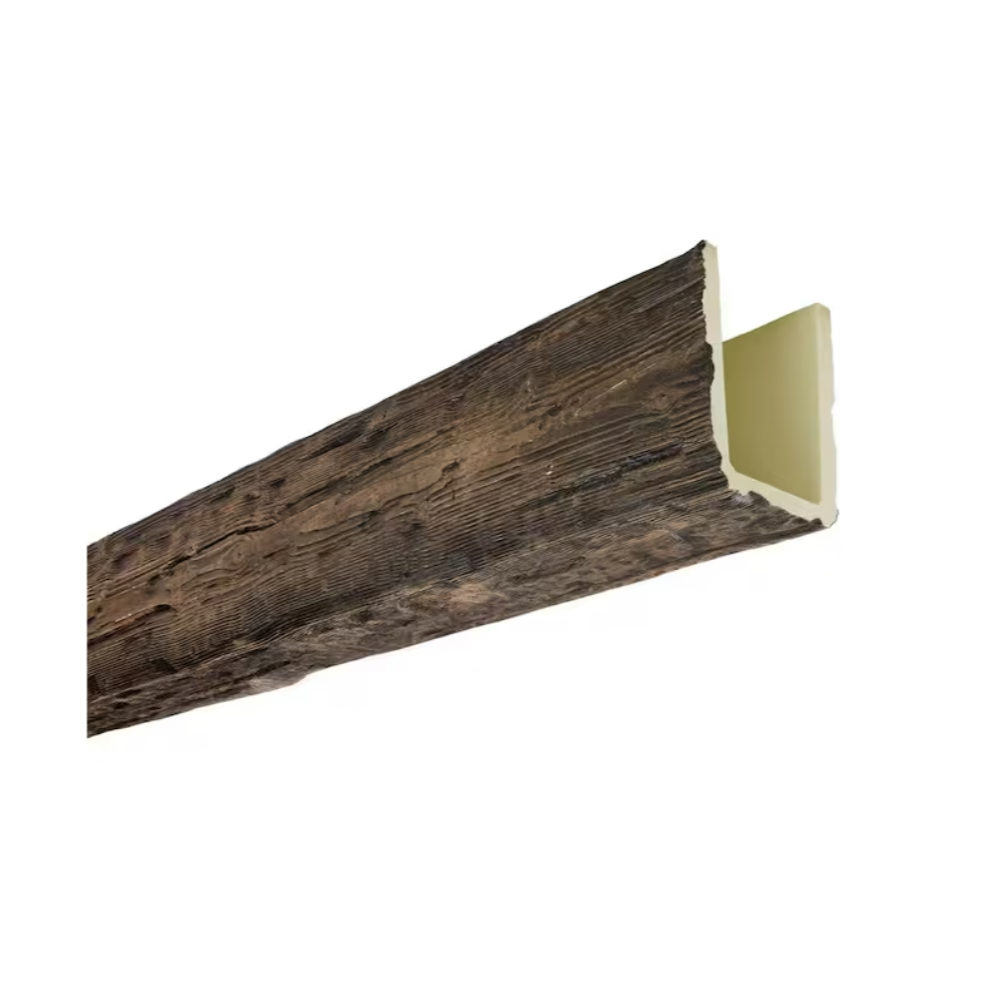
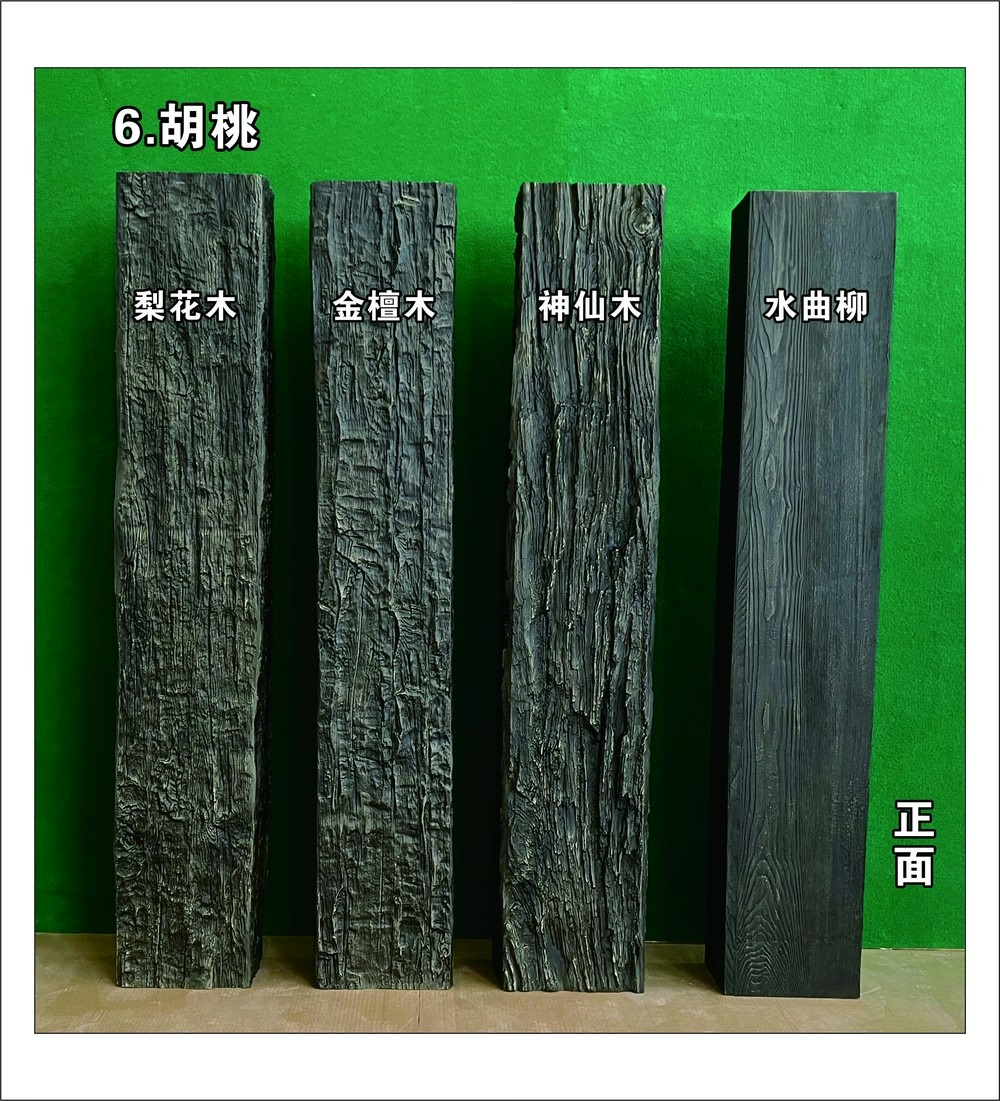
Precision in faux wood beams isn't accidental. Every consistent, accurate beam represents decisions made during manufacturing — compound formulations, mold engineering, process controls, and quality systems. Premium beams look identical across thousands of pieces not because craftsmen hand-match each one but because manufacturing technology produces consistency automatically. Understanding these production methods helps buyers distinguish genuinely premium products from inferior imitations and enables fair value comparisons.
Modern PU beam manufacturing combines chemistry, engineering, and process control in ways that produce remarkable consistency. The difference between commodity products and premium offerings often comes down to investments in these technologies that buyers cannot directly observe but certainly experience in installation and performance.
Precision molding technology
The foundation of consistent beam production:
CAD/CAM mold design
Premium manufacturers use computer-aided design for mold creation:
- Precise tooling geometry eliminates draft angle problems
- Optimized parting lines hide seams in low-visibility areas
- Venting systems prevent surface defects from trapped air
- Cooling channel placement ensures uniform temperature during cure
Molds machined to 0.001-inch tolerances produce beams with proportional precision.
Multi-axis CNC machining
Complex mold surfaces are machined, not hand-finished:
- Consistent quality across all production pieces
- Complex textures reproduced identically
- Undercuts and details captured accurately
- No hand-tool marks or irregularities
CNC production eliminates the variability inherent in manual mold finishing.
High-durometer tooling
Premium molds use durable materials:
- Extended production runs without dimensional drift
- Consistent surface finish throughout mold life
- Reduced per-piece tooling cost at volume
Lower-quality manufacturers use soft tooling that wears quickly, producing progressive quality decline across a production run.
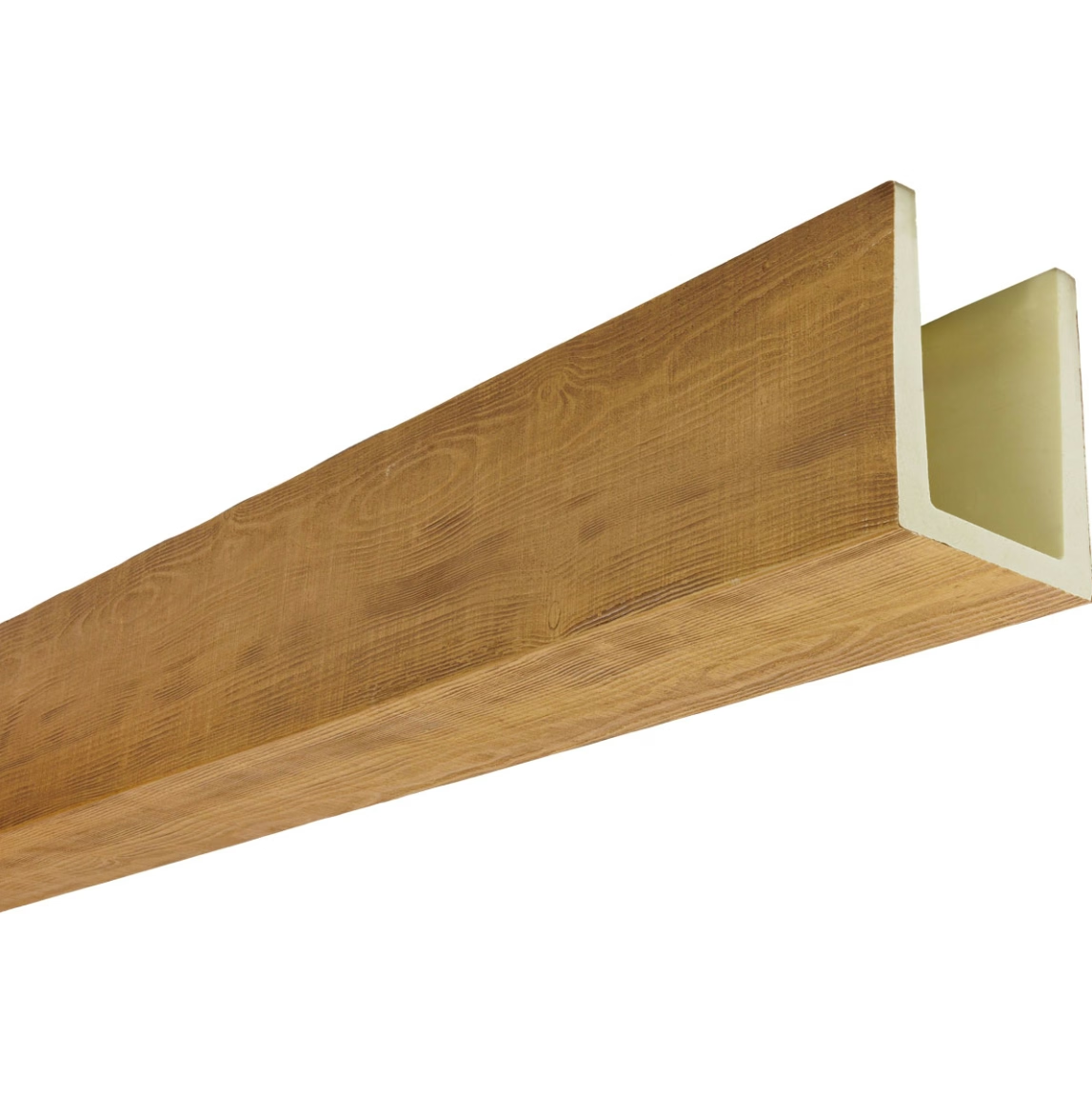
Advanced polyurethane chemistry
Raw material formulation determines finished product characteristics:
Closed-cell foam technology
Premium beams use closed-cell foam cores:
- Consistent density throughout the cross-section
- Superior surface reproduction from smooth mold surfaces
- Better dimensional stability across temperature ranges
- Reduced weight without sacrificing strength
Open-cell formulations produce lighter but less consistent products with poor surface reproduction.
UV-stable pigment systems
Color consistency requires sophisticated chemistry:
- Titanium dioxide and iron oxide pigments resist fading
- In-mix colorants rather than surface application
- Batch-to-batch color matching systems
- Light-fast organic pigments for specialty colors
Interior products can use simpler color systems; exterior-grade beams require UV-stable chemistry.
Impact-modifying additives
Durability requires additives that resist damage:
- Rubberized impact modifiers prevent cracking on impact
- Flexural modifiers accommodate thermal movement
- Anti-static additives reduce dust attraction
- Mold-release agents enable clean separation from molds
These additives improve long-term performance without affecting appearance.
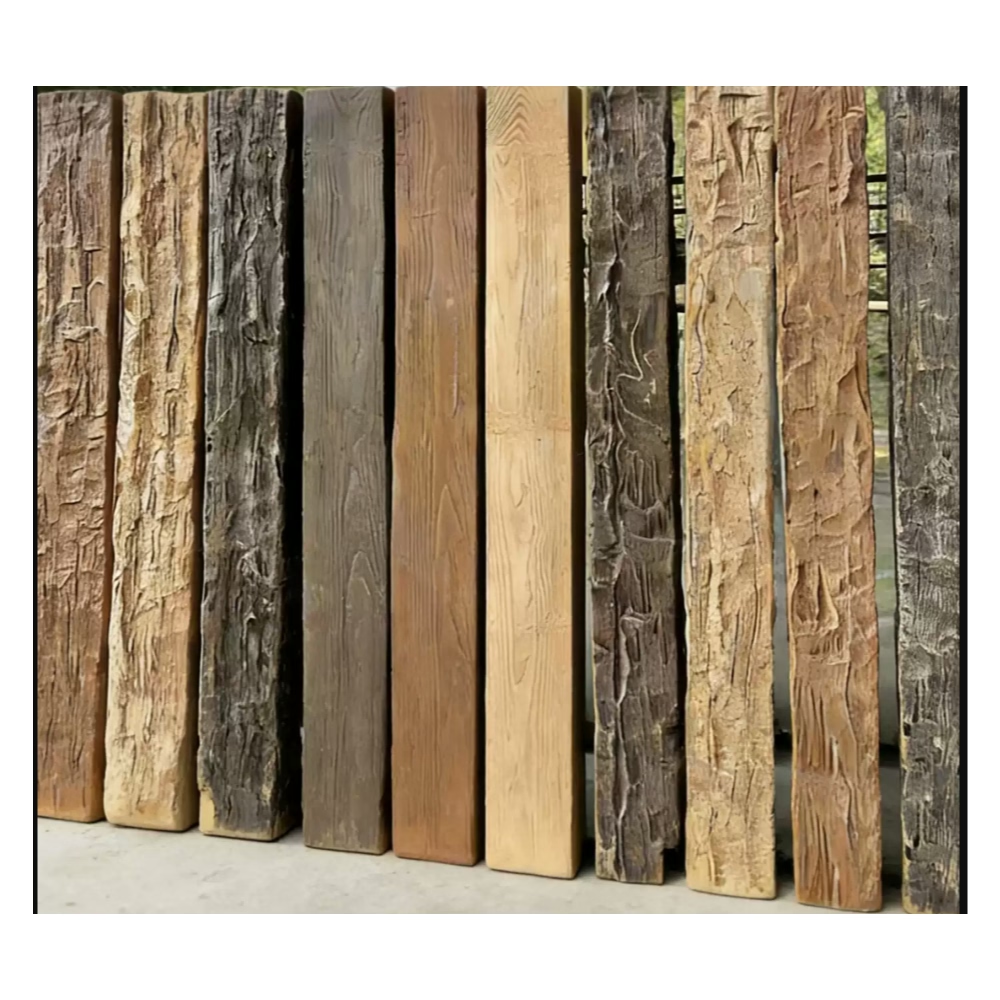
Process control systems
Consistent production requires measurement and control:
Statistical process control (SPC)
Premium manufacturers monitor production variables:
- Raw material temperature and humidity
- Mixing ratios and times
- Injection pressure and flow
- Cure temperature and time
SPC data identifies trends before quality problems develop, enabling preventive adjustments.
Automated mixing systems
Precise chemistry requires automated proportioning:
- Metered addition of multiple components
- Computer-controlled mixing sequences
- Batch documentation for traceability
- Reduced human error in critical processes
Manual mixing introduces variability that automated systems eliminate.
Temperature-controlled production
Polyurethane chemistry is temperature-sensitive:
- Climate-controlled mixing rooms
- Heated molds for consistent cure rates
- Temperature monitoring throughout production
- Chill water systems for rapid cooling when needed
Environmental control separates premium from commodity production.
Quality verification
Production precision requires verification:
Dimensional inspection
Every beam should meet tolerance specifications:
- Automated dimensional scanning for 100% verification
- Random sampling for detailed measurement
- Statistical tracking of mean and variance
- Rejection of out-of-tolerance products
Premium manufacturers reject any piece not meeting specifications, regardless of whether defects are visible.
Surface quality grading
Appearance quality requires systematic evaluation:
- Lighting standards for consistent inspection
- Defined defect categories and acceptance criteria
- Inspector training and certification
- Customer claim tracking to identify systemic issues
Surface quality inspection catches problems that dimensional verification misses.
Performance testing
Physical property verification confirms formulation quality:
- Density verification
- Impact resistance testing
- Flexibility testing at temperature extremes
- Adhesion testing for finish systems
Periodic testing confirms that production processes continue to produce specified properties.
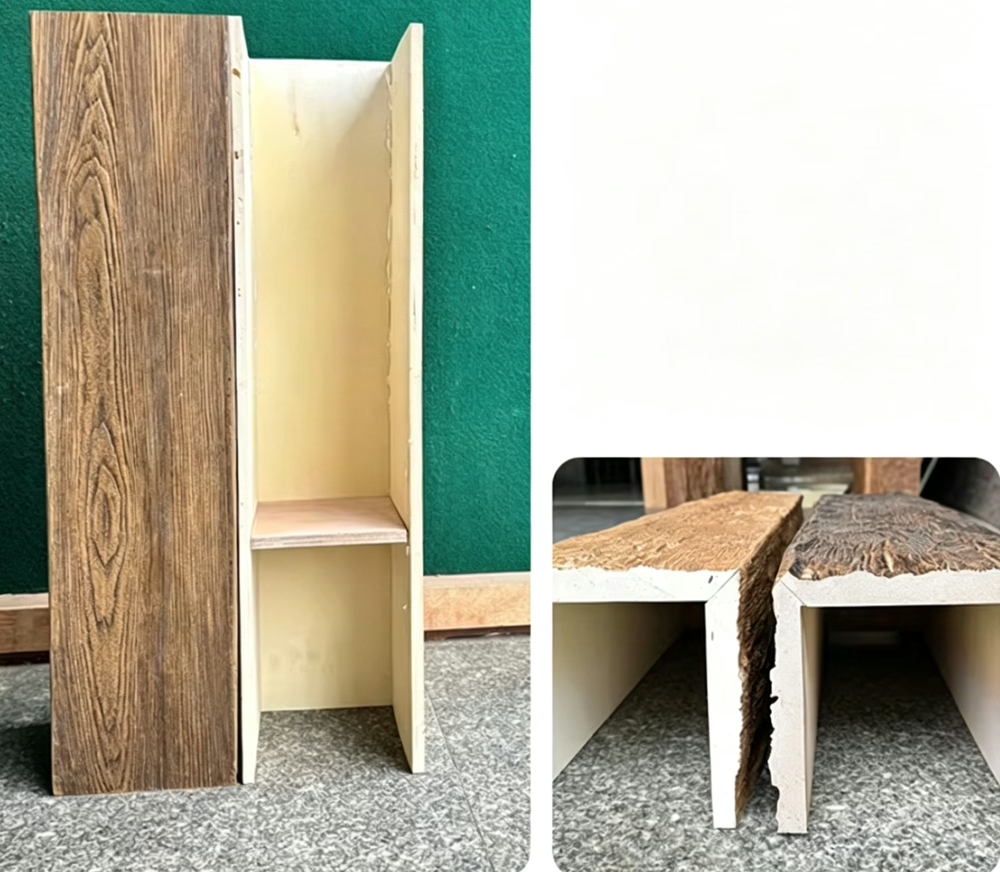
Technology investment differences
Premium manufacturing requires significant capital:
Mold tooling — precision CNC molds cost $10,000-50,000 per design
Process equipment — mixing systems, conveyors, climate control
Inspection systems — coordinate measuring machines, automated scanning
Quality systems — documentation, training, continuous improvement
Lower-priced products often result from manufacturers who skip these investments. The cost savings appear in lower prices but manifest as quality and consistency problems.
Choosing manufactured precision
Understanding manufacturing technology enables informed purchasing:
- Request quality documentation from suppliers
- Compare tolerance specifications across suppliers
- Verify manufacturing capabilities before placing large orders
- Consider total cost including installation and callbacks, not just unit price
Premium manufacturing technology produces premium products. The investment in advanced production methods shows in every beam delivered.
Technical References
ASTM standards cited in every specification
Test Data
Lab results from internal testing program
Updated 2026
Reviewed against current product specs