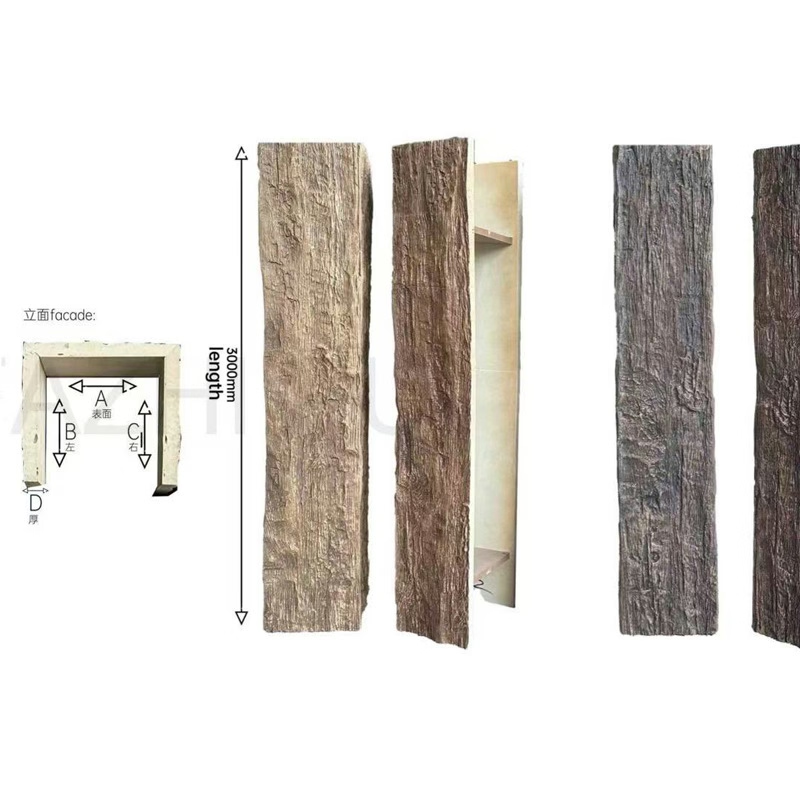
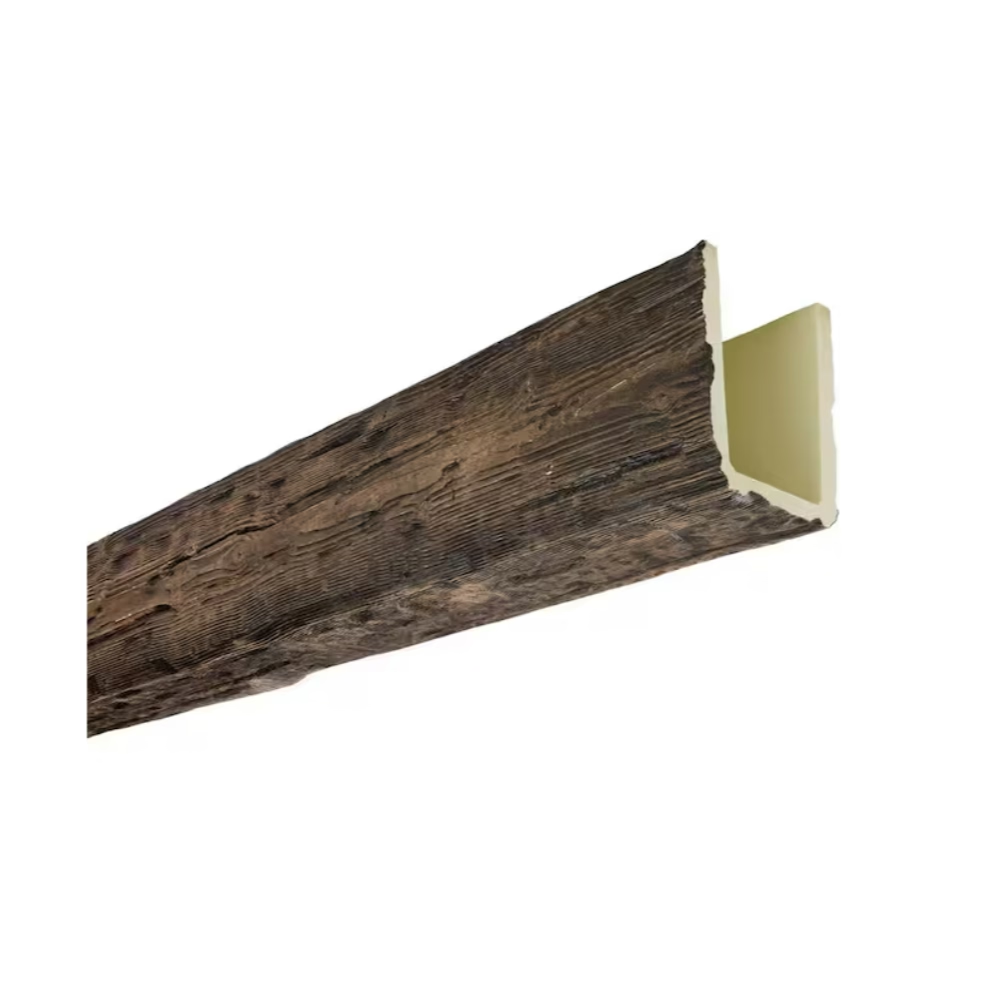
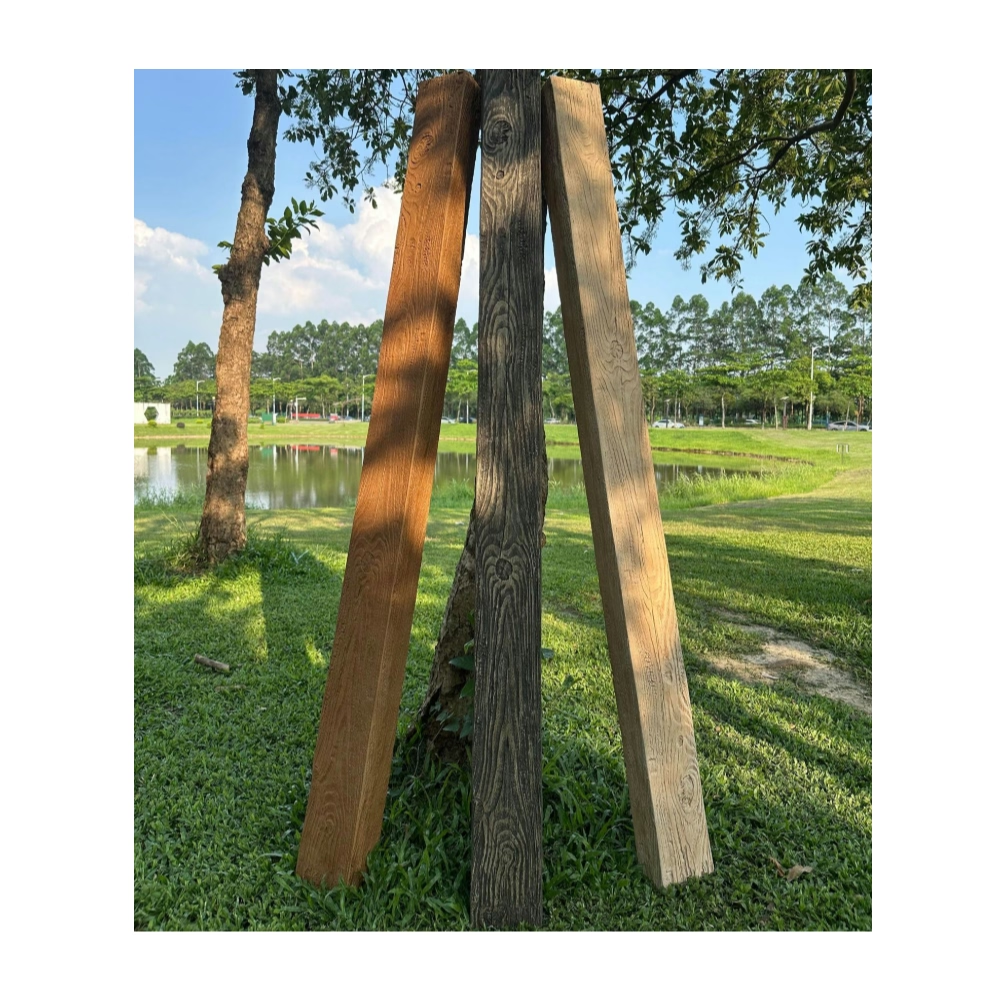
Walk into a private villa in Tuscany, Dubai, or coastal Spain and the first thing your eye follows is the line where the ceiling meets the wall. When that line is a curve — a soft barrel vault, a domed foyer, a coffered alcove — the beam that traces it has to look like it grew there, not like it was forced into place. Custom curved polyurethane resin decorative beams solve a problem that stock timber simply cannot: delivering an unbroken, hand-finished arc that matches the architectural intent down to the millimeter.
Why Curved Beams Are a Different Animal
A straight beam is a forgiving product. A curve has to honor the radius, the rise, and the tangent points where it meets adjacent walls or ridge lines. The radius of a typical barrel vault in a high-end villa ranges from 1.8 meters to 4.5 meters, while decorative arches over doorways or window seats often sit between 0.6 and 1.2 meters. Stock faux beams come in 3 or 4 meter lengths and a fixed profile; they cannot accommodate these geometries without leaving a visible kink or a butt joint at the worst possible spot.
Custom curved PU resin beams are molded over CNC-machined forms. The mold captures the precise radius the architect or interior designer specified on the drawing, so the finished piece arrives on site ready to lift into position. No field bending. No steam-pressing. No compromise on grain direction or stain tone across the curve.
For luxury residential work, that consistency matters. A buyer who has commissioned Italian marble floors and hand-glazed lime plaster walls notices immediately when a beam jogs or shows a seam. The whole point of curved millwork is continuity.
The Material Logic Behind PU Resin
Polyurethane resin, when formulated for architectural millwork, is a closed-cell, high-density foam with a polymer skin. The interior is rigid enough to span long distances without sagging, but light enough that two workers can carry a 3-meter curved arch. Compared to solid oak or reclaimed chestnut, the weight savings typically run between 70 and 85 percent. For a curved vault that needs twelve or fifteen repeating ribs, that is a structural and handling difference that affects the whole installation method.
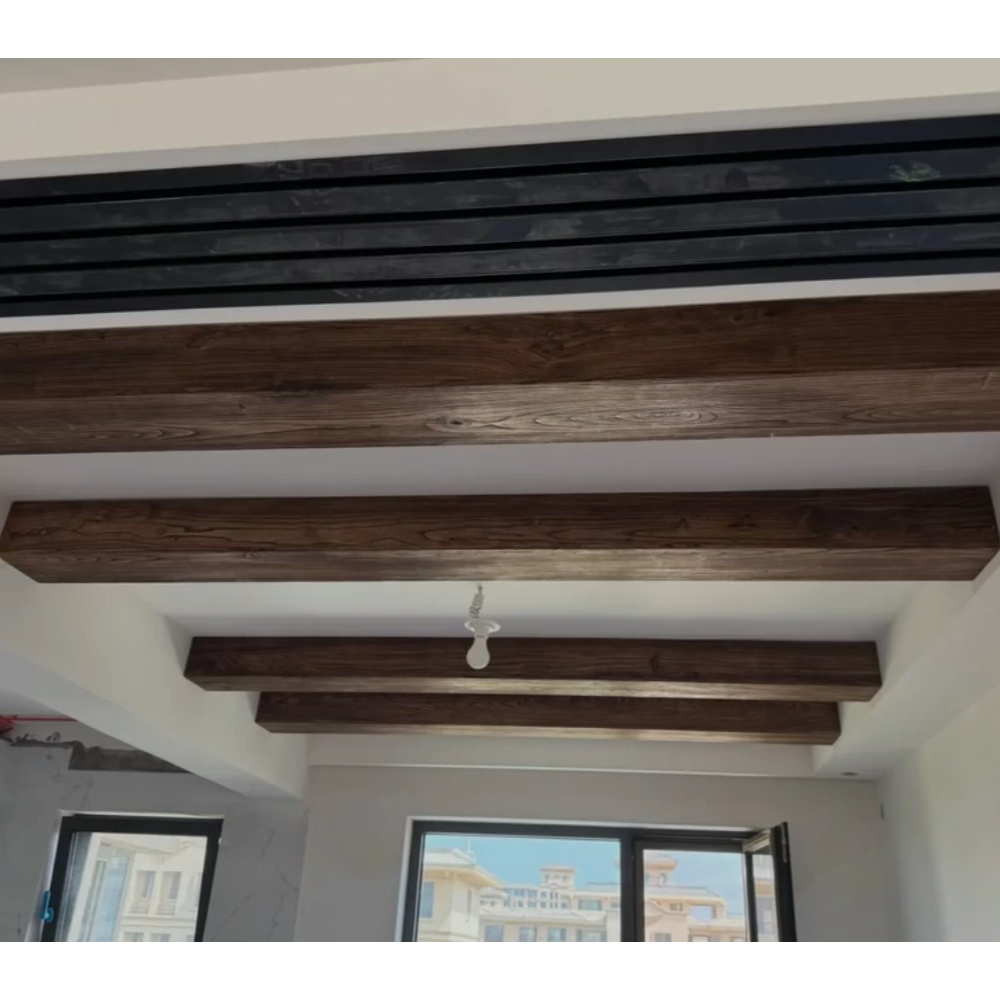
The resin accepts stains, washes, glazes, and patinas the same way cast plaster does. A skilled finisher can lay down base color, dry-brush highlights, and seal the surface so the beam reads as quarter-sawn white oak, antique chestnut, or weathered driftwood — depending on what the room needs. The molded grain is deep enough to catch shadow, but it does not splinter, check, or attract insects.
For outdoor-facing soffits, loggia ceilings, and covered terraces in a villa project, exterior-grade PU resin is UV-stabilized and treated against moisture absorption. The same curved beam that runs above an interior dining hall can continue across a covered breezeway without changing material.
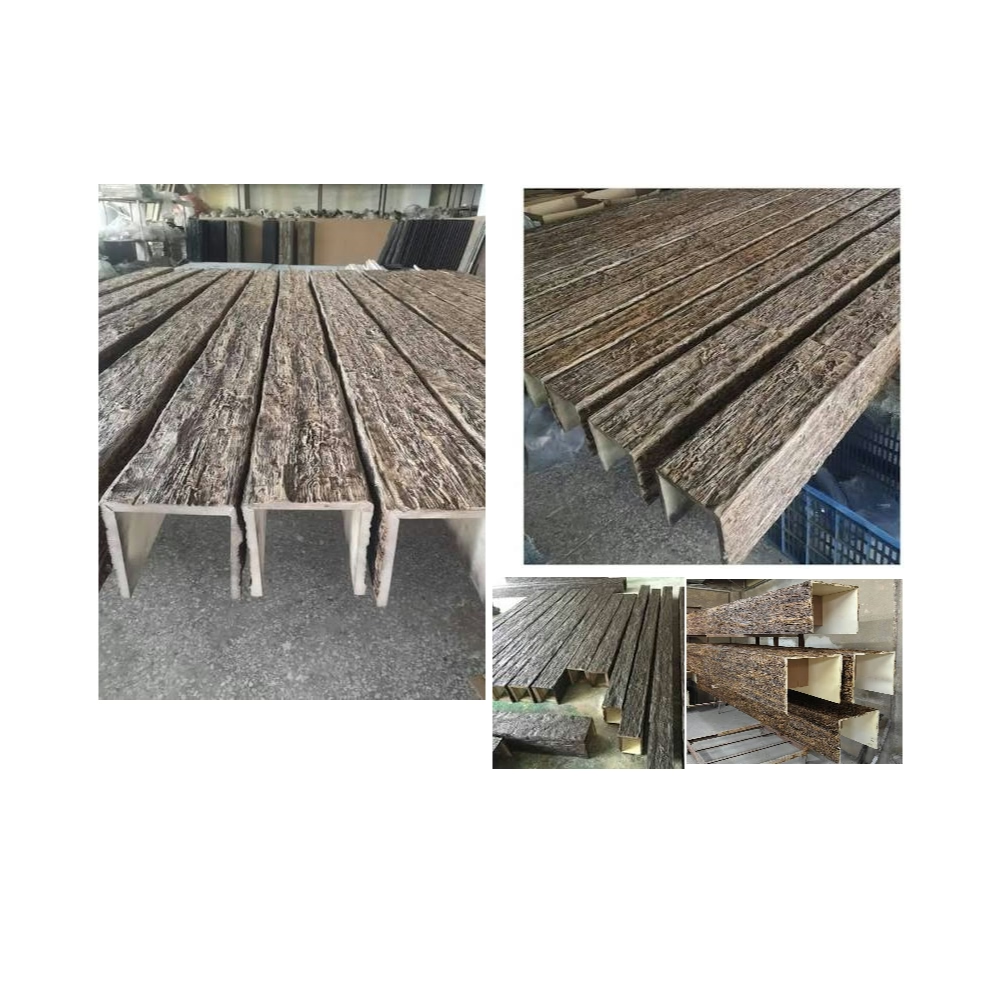
Geometry Options for Villa Ceilings
The most common curved profiles requested for villa ceilings fall into a handful of categories. Understanding these helps specifiers brief the factory accurately and avoid the most common curve mistakes.
| Curve Type | Typical Radius | Where It Appears |
|---|---|---|
| Barrel vault | 1.8 – 4.5 m | Hallways, libraries, master suites |
| Half dome | 1.2 – 2.5 m | Foyers, reading alcoves, spa rooms |
| Cove / quarter arc | 0.6 – 1.2 m | Window surrounds, headboard walls |
| Eyebrow / shallow arc | 1.5 – 3.0 m | Doorways, transitions between rooms |
| Compound S-curve | Variable | Stair landings, mezzanine edges |
For any of these, the specifier should provide the inner radius, the outer radius, the chord length, and the rise. A drawing with these four numbers allows the factory to cut the mold form correctly the first time. Sending only a photograph leads to a sample that looks close but sits proud of the wall by 20 millimeters at the apex.
Working With the Factory on a Custom Order
Most reputable PU beam factories work from a brief, a sketch, and a sample of the desired finish. The process typically runs four to six weeks for a first article, depending on mold complexity. Subsequent runs of the same curve drop to two to three weeks because the mold is reusable.
For a villa project, the order usually breaks into three phases. First, the architect confirms the curve geometry and the beam profile — width, depth, and any decorative edges or coffering details. Second, the factory produces a sample length of 300 to 500 millimeters so the designer can approve the grain depth, color, and finish in hand. Third, full production runs are cut, finished, crated, and shipped with each piece individually wrapped to protect the curved surface during transit.
Lead times for full villa packages — sometimes twenty or thirty distinct curved pieces — generally run eight to ten weeks from approved sample to on-site delivery. Designers who plan backward from a target installation date and build in this buffer avoid the most common cause of curved-beam project delays.

Installation Considerations
Curved PU beams install differently from straight ones. Because the curve carries its own rigidity, the installer cannot rely on simple blocking at each end. The standard approach is a continuous curved track — a plywood or metal ribbon bent to match the beam radius and screwed into the ceiling framing at 400 to 600 millimeter centers. The PU beam is then screwed or glued to the track, with the fasteners hidden along the bottom edge where shadow conceals them.
For a barrel vault where the beam repeats every 800 millimeters, the track system is the most efficient install method. For a single decorative arch over a doorway, a couple of well-placed blocking points and construction adhesive are usually sufficient.
Because PU resin does not split when drilled, installers can pre-set all mounting holes at the factory and ship the beam with a paper template that marks every fastener location. On a curved surface, this is a significant time-saver in the field and reduces the chance of misaligned fasteners showing through the stain.
What Drives the Price
Custom curved PU beams cost more per linear meter than stock faux beams for two reasons. First, each radius requires its own mold or mold adjustment. Second, the finishing time is longer because the artisan has to follow the curve when applying stain, glaze, and sealer. For a barrel vault project requiring fifteen identical ribs in the same radius, the per-piece cost drops considerably once the mold is amortized across the run.
For an importer or contractor pricing a villa package, the key variables to clarify upfront are the number of unique curves, the number of repeats per curve, the finish complexity (single-tone stain versus multi-layer antique patina), and the packaging requirements for export. Each of these affects the landed cost and should be in the purchase order from the first inquiry.
When to Specify PU Resin Over Real Timber
There are still projects where solid timber is the right answer — historical restorations, structural members, or installations where the weight of the beam is part of the design language. For everything else, curved PU resin delivers the visual result without the structural headaches.
In a villa with curved ceilings, the structural framing is usually already in place. The decorative beam exists to define the line and carry the aesthetic. PU resin does that work cleanly. It does not check when humidity shifts between the dry season and the rainy season. It does not require a structural engineer to specify fastening. It does not arrive on site with knots that read differently under the dining room chandelier than they did in the showroom sample.
For villa projects where the curve is a defining feature of the architecture, custom PU resin beams are the most reliable path to a finished ceiling that looks like the rendering.
Finish Palette for Mediterranean and Middle Eastern Villas
Villa projects in different regions tend to favor different finish palettes, and the factory's finishing process adapts accordingly.
Mediterranean villas — in Italy, Spain, Greece, and the south of France — typically favor warm honey oak, antique chestnut, and bleached driftwood tones. The grain is usually deep and rustic, with a dry-brushed highlight that emphasizes the natural variation in the timber character. The sealer is typically a matte or low-sheen finish that reads as oiled rather than lacquered.
Middle Eastern luxury villas — in the UAE, Saudi Arabia, and Qatar — favor deeper tones: walnut, ebony, and dark mahogany. The grain is often more refined, with a higher gloss finish that reflects the more elaborate lighting design common in the region. The beam is as much a lighting surface as an architectural element.
Coastal and island villas — in Southeast Asia, the Caribbean, and the Pacific — often specify a weathered grey or washed white finish that coordinates with the bleached limestone, white plaster, and natural textiles common in tropical architecture. The finish has to handle higher humidity without yellowing, which requires a UV-stable top coat even for interior applications.
The factory's finish library includes standard tones in each category, but custom finishes are always an option. A designer who has specified a specific paint color or stain tone can provide a sample or a color reference, and the factory will match it.
Coordinating With Interior Design Studios
Luxury villa projects are typically managed by an interior design studio or an architectural firm that acts as the client's representative. The studio coordinates the ceiling beam specification with the rest of the millwork, the casework, the flooring, and the decorative lighting.
The most efficient coordination process starts at the concept design phase. The millwork supplier is brought into the conversation when the ceiling geometry is being established, not after the drawings are complete. This early involvement allows the supplier to flag any geometric concerns — a radius that is too tight for the available beam depth, a transition that will be difficult to detail — before they become expensive problems.
For interior design studios working on international projects, the factory can provide a technical liaison who speaks the studio's language and understands the design intent. This liaison coordinates the sample approval process, manages the production schedule, and handles the documentation requirements for export.
Shipping and Logistics for Villa Projects
International villa projects — particularly those in remote locations or on islands — have logistics requirements that domestic projects do not. The factory's logistics team handles the export documentation, the container booking, and the freight forwarding.
For projects in the Mediterranean, the most common route is ocean freight to a regional port, then overland transport to the site. The factory provides crating that is rated for ocean freight, with moisture barriers and desiccant packs for the container.
For projects in the Middle East or Asia, the crating is heavier to account for the longer transit time and the handling at multiple ports. The factory coordinates with the freight forwarder to ensure that the crating meets the requirements of each port in the route.
For island projects — Bali, Phuket, the Maldives, the Caribbean — the logistics require a port call that can accept a container, plus overland transport to the site. The crating has to survive a barge transfer in addition to ocean freight, which adds another layer of packaging complexity.
The factory provides a logistics estimate with the quotation, including the estimated freight cost, the transit time, and the required lead time for the logistics to be arranged. Projects that plan backward from the installation date and build in this logistics buffer avoid the delays that come from an unprepared shipping arrangement.
Technical References
ASTM standards cited in every specification
Test Data
Lab results from internal testing program
Updated 2026
Reviewed against current product specs