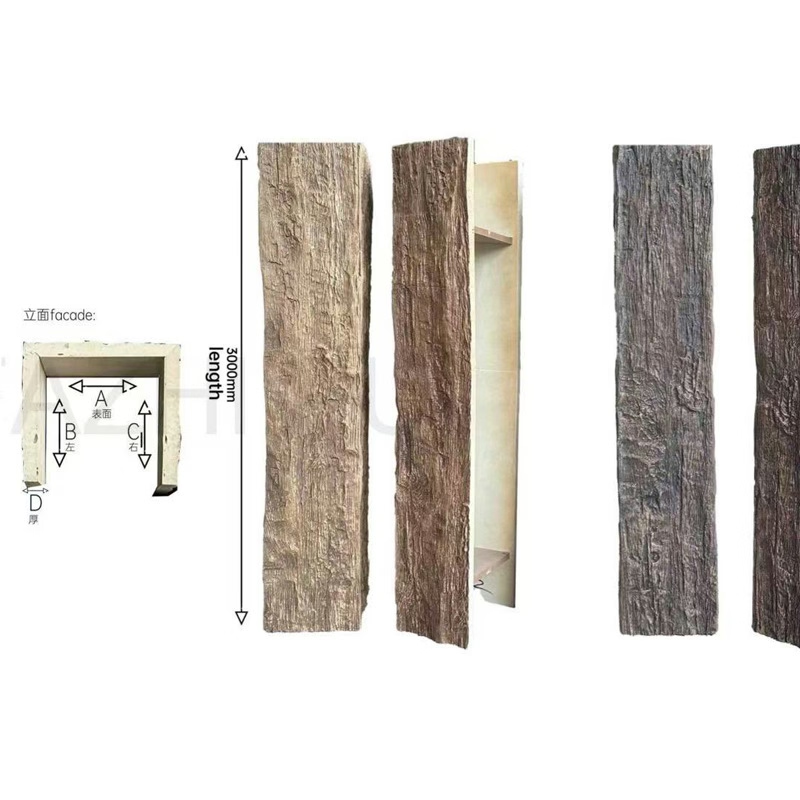
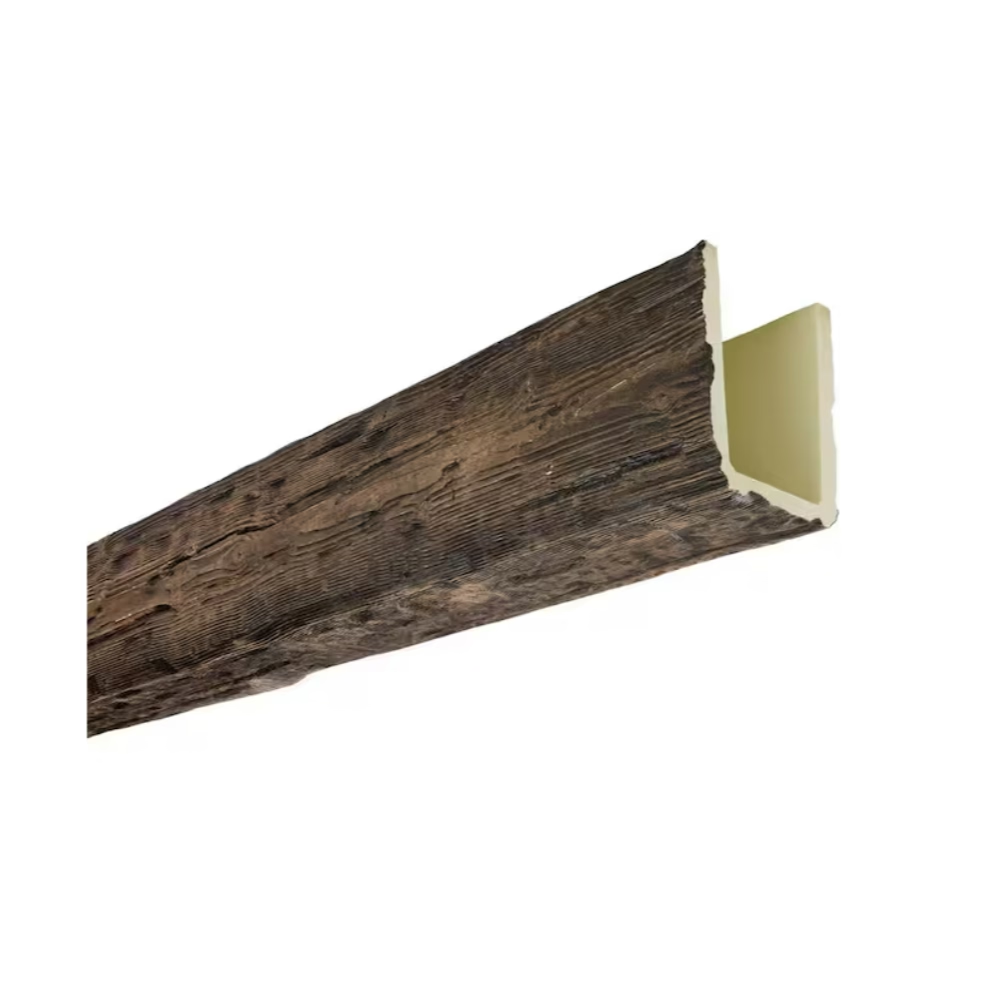
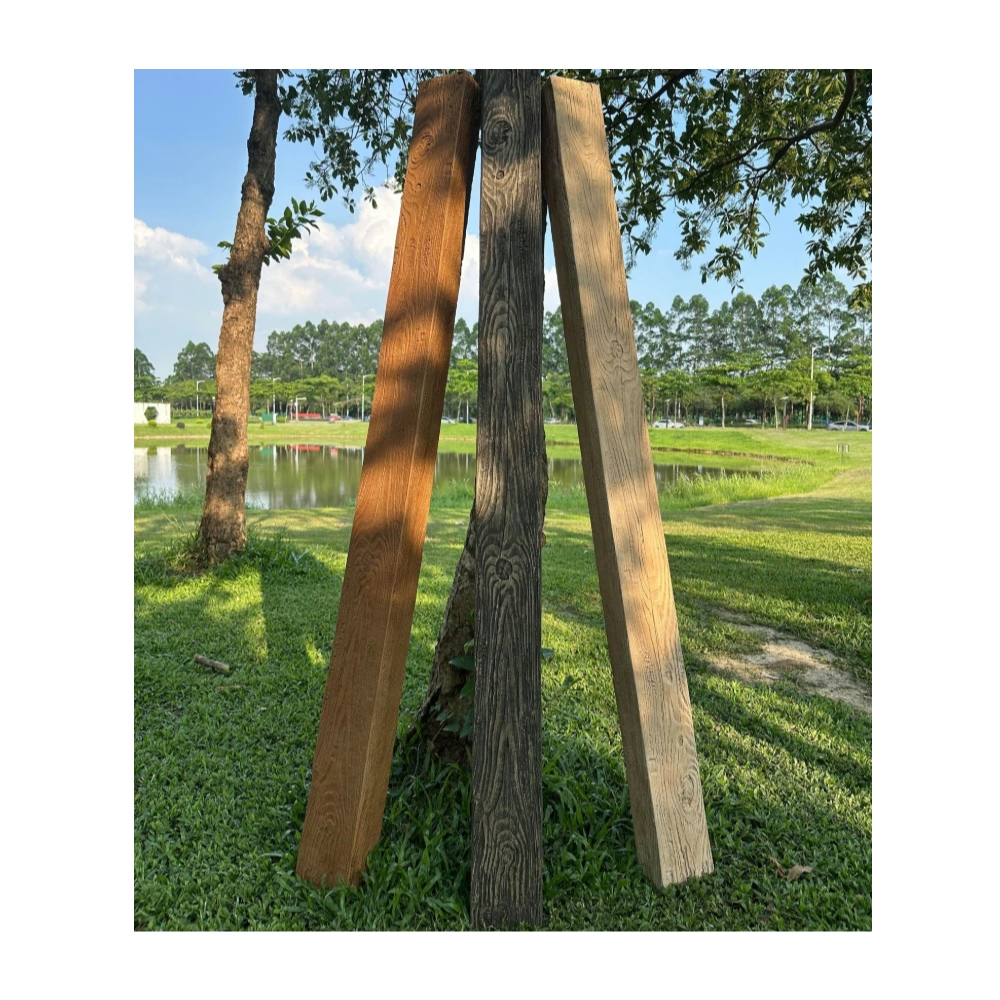
California homes run the gamut from 1920s Spanish Revival to ultra-contemporary tech mansion, but they share one practical constraint that matters for beam installation: seismic codes. Any decorative element that could fall in an earthquake is a liability. Real timber beams, with their weight and structural anchoring requirements, create genuine problems in this context. Polyurethane faux beams sidestep those problems entirely while delivering the same visual result.
Why California contractors specify faux over real timber
A solid Douglas fir beam at 8 by 10 inches and 12 feet long weighs roughly 280 pounds. A polyurethane faux beam at the same dimensions weighs under 40 pounds. That difference changes the entire installation approach — no structural steel, no engineered hanging brackets rated for seismic loads, no inspection sign-offs.
California's Title 24 energy code also plays a role. Polyurethane has a significantly lower thermal conductivity than wood, which means less heat transfer through the beam if it's spanning an unconditioned attic. For older California homes where the ceiling plane is also the attic floor, this matters.
The wildfire risk in many parts of California also influences material choice. Polyurethane faux beams are rated for non-combustibility in terms of flame spread when properly finished with our fire-retardant topcoat. Real wood, even with intumescent coating, performs differently in a fire exposure scenario.
Custom dimensions for California architecture
California's housing stock includes a disproportionate share of non-standard ceiling heights and unusual room proportions. A 1920s craftsman might have 9-foot ceilings with 2 by 10 ceiling joists. A new build in the Bay Area might have 11-foot ceilings with engineered trusses. Neither is a standard beam application.
Custom height and width for California projects is among our most common requests. We regularly produce beams in 5-inch, 7-inch, and 9-inch heights — between the standard sizes — because California homes seem to fall on those measurements more often than national averages suggest.
The most frequent custom spec for California is depth. Older homes often have ceiling joist depths that are shallower than standard, so the hollow shell of a faux beam needs to be thinner to fit without projecting below the joist plane. We adjust the internal bracing and wall thickness to accommodate these variations.
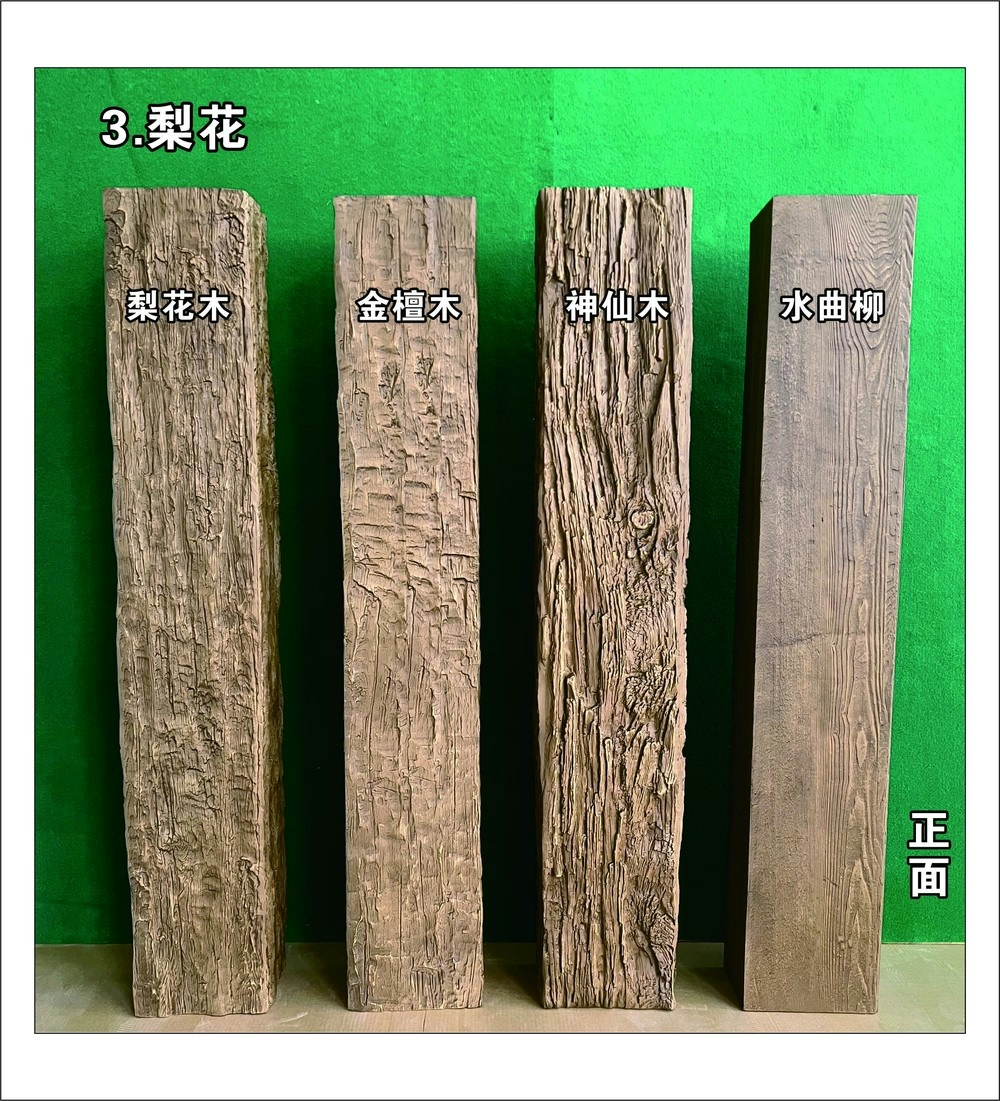
Finish matching for California design styles
California's dominant interior design styles for renovation work cluster around a few key aesthetics:
Modern Mediterranean — Common in coastal Southern California and the Central Coast. These projects favor warm terracotta-adjacent tones: honey oak, warm walnut, sometimes a sand-colored wash over the grain. The grain pattern should be fairly tight and regular, suggesting aged but stable timber rather than reclaimed barn wood.
Craftsman — The craftsman tradition runs deep in Northern California, especially the Bay Area and Pasadena. Original craftsman homes often feature dark stained beams with visible joinery. A reproduction beam should have a hand-distressed finish with slightly deeper grain lines and a matte topcoat. The walnut and golden oak tones are most requested.
Modern farmhouse — Found throughout the state, particularly in the exurban areas of the Central Valley and Inland Empire. White-washed or white-painted beams over shiplap ceilings. The finish should be consistent white with a very subtle grain hint — not plastic-looking solid white, but not heavily grained either.
Contemporary minimalist — The default for Silicon Valley and LA tech-adjacent builds. Light natural oak or white oak grain, very clean lines, minimal distressing. The beams are often architectural in profile rather than rustic — sharp edges, consistent grain, no simulated wear.
Each style maps to a specific finish tier in our system. Communicating the design intent clearly gets us to the right finish faster.
Seismic-safe installation for California
Though faux beams are light enough to sidestep most seismic engineering requirements, proper installation is still critical. A beam that falls because it was inadequately fastened is a liability regardless of what the code says about its weight.
Our recommended installation for California homes:
- Backer boards — Run a continuous 1-inch by 3-inch furring strip along the ceiling at each beam location. Secure with screws into every ceiling joist, not just every third or fourth joist.
- Beam attachment — Apply construction adhesive along the full length of the beam's top surface, then screw through the beam's internal mounting points into the backer board every 16 inches.
- Mechanical fastening — For beams longer than 8 feet, add two lag screws through the top of the beam at each end. These should go into the backer board, not just the drywall.
- Joinery at corners — Where beams meet at corners or intersect, use stainless steel mending plates concealed behind the beam faces. Do not rely on adhesive alone at these joints.
This approach will hold in a seismic event that would shatter drywall anchors. It adds perhaps 45 minutes of labor for a typical room and costs almost nothing in materials.
Regional logistics and lead times
We ship to California regularly. The two main freight lanes are from our West Coast distribution partner in Phoenix to the major metro areas, and direct LTL from our main warehouse for large orders.
For contractors in the LA basin, standard lead times are 5 to 7 business days from order confirmation to jobsite delivery. For the Bay Area, add a day or two depending on freight carrier routing. For rural areas in the Sierra foothills or the North Coast, add 2 to 3 days.
Importers serving California retail customers through distribution should note that California's Proposition 65 labeling requirements apply to certain chemical compounds used in the foam production process. We provide Prop 65-compliant labels on all products shipped to California addresses. This is handled automatically in our order system but importers should be aware if they're drop-shipping.
For large projects — tract developments, hotel renovations, apartment complex common areas — we work with California-based freight partners who understand the state's weight restrictions for oversized loads on certain highways. This is especially relevant for beams longer than 20 feet, which require pilot car escort on some state routes.
Working with California designers and architects
We maintain relationships with several design firms in Los Angeles, San Francisco, and San Diego who specify our beams regularly. The workflow for a custom project typically involves:
Initial consultation — usually a phone call or video meeting — where we review drawings, discuss dimensional requirements, and identify any finish challenges.
Sample provision — two to four sample beams in the target dimensions and finish, shipped to the designer's office or the jobsite. These typically ship within 5 working days of the consultation.
Specification documentation — we provide CAD blocks of our standard and custom profiles, finish specification sheets, and installation guidelines formatted for inclusion in project manuals.
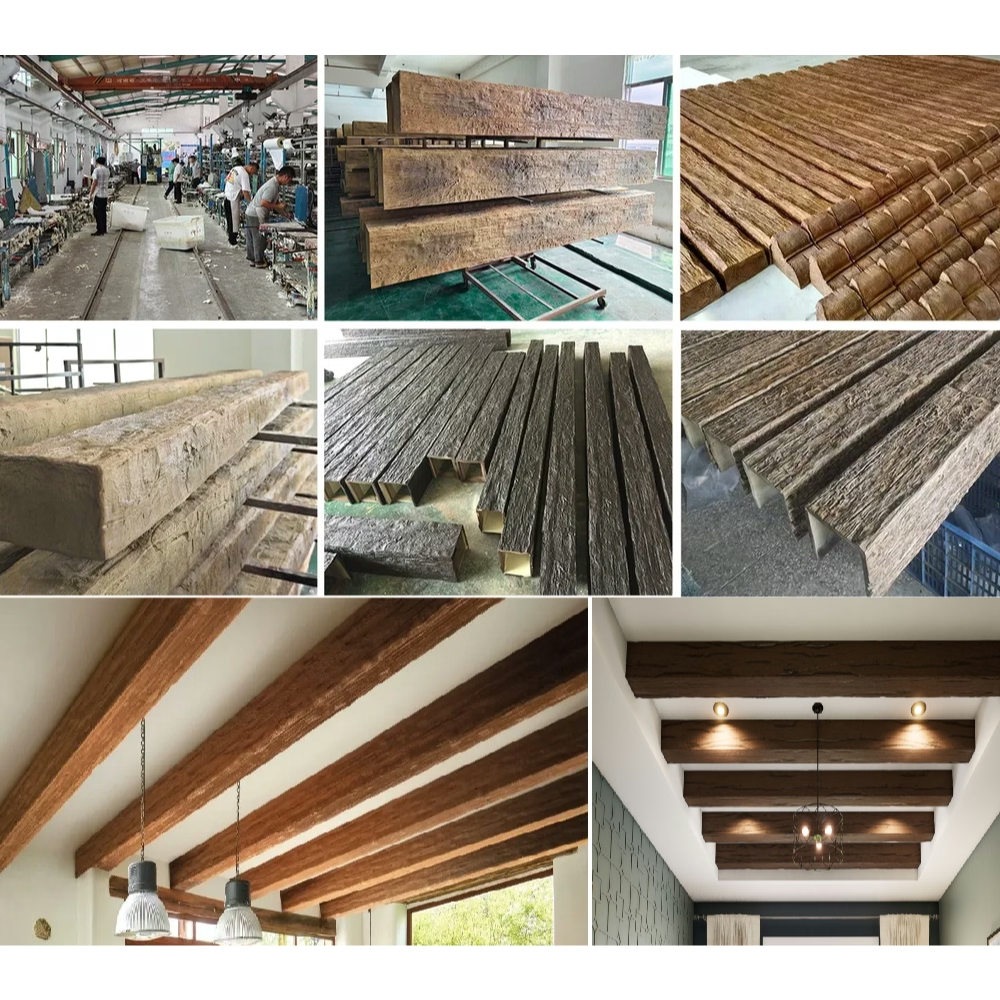
Production and QC — we photograph every custom beam before shipping, not just for our records but for the client's review if requested. For projects where the finish must match across multiple beams, we batch-produce all beams in a single finishing run to minimize batch-to-batch variation.
The feedback we get from California designers is consistent: they appreciate the responsiveness and the willingness to accommodate non-standard specs. California renovation projects move fast and change frequently. A supplier that can adapt to last-minute dimension changes without penalizing the project is worth more than the lowest quoted price.
California's Title 24 and beam performance
California's Title 24 building energy efficiency standards affect what materials can be used in certain building applications, and understanding where beams fall within this regulatory framework matters for specifiers.
For decorative interior beams — the vast majority of what we produce — Title 24 does not apply directly. The standard applies to components that affect building envelope thermal performance: insulation, glazing, roofing, and similar elements. A decorative beam that is mounted on the interior surface of a ceiling does not change the building's thermal envelope.
However, there are indirect considerations. In older California homes with inadequate attic insulation, a real timber beam that spans from the interior ceiling to an unconditioned attic can act as a thermal bridge — conducting heat from the interior to the attic. A hollow polyurethane beam has a significantly lower thermal conductivity than timber, which means it reduces this bridging effect. This is a minor benefit in most contexts, but in a borderline Title 24 compliance situation, it can be a contributing factor.
For beams installed in exterior applications — covered patios, loggias, exterior architectural features — the material's thermal performance becomes more relevant. Our exterior-rated beams with marine-grade topcoat are evaluated for thermal performance as part of our standard product development process.
California construction industry practices
California's construction industry has distinctive practices that affect how beams are specified and installed.
Finish carpenters in California are among the most skilled in the country, and the standard of finish quality is high. A beam installation in a California home is expected to meet a level of precision — consistent joints, clean transitions, invisible fasteners — that may exceed the standard in other regions. Our products are produced to meet this expectation, and we calibrate our finishing quality accordingly.
The use of Building Information Modeling (BIM) is more advanced in California than in most other US markets. Architects working in BIM can import our CAD blocks directly into their models, which improves coordination between the beam specification and the other building systems. We provide BIM objects for Revit and ArchiCAD on request.
California's contractor licensing requirements mean that many beam installations are performed by licensed contractors rather than handymen, which generally results in higher-quality installations. Our installation guidelines are written to the standard of a licensed finish carpenter.
Local supply chains and distribution in California
The California market is served by several distribution channels, each with different lead times and cost structures.
Direct factory shipping from our West Coast distribution partner in Phoenix provides the fastest delivery to major California metros: 5 to 7 business days to Los Angeles, San Diego, San Francisco, and Sacramento. This channel is best for small to medium orders.
Regional distributors in California carry stock beams in standard sizes and finishes. Delivery from a local distributor is typically 1 to 3 business days, but the available sizes and finishes are limited to what the distributor stocks. This channel is best for urgent small orders or for standard products needed on short notice.
For large projects — tract home developments, hotel renovations, apartment complex common areas — direct factory shipment in full container loads or consolidated LTL shipments provides the best pricing. The lead time is longer (2 to 3 weeks from order to delivery) but the unit cost is significantly lower.
For projects in California's rural areas — the Sierra Nevada, the Central Valley, the North Coast — the distribution options are more limited and delivery times are longer. We work with specialized freight carriers who understand the road conditions in these areas and can deliver to non-standard addresses.
Proposition 65 compliance for California buyers
California's Proposition 65 (Prop 65) requires products sold in California to carry warnings if they contain chemicals known to cause cancer or reproductive harm. Polyurethane foam is produced using diisocyanates, which are listed under Prop 65.
All products shipped to California addresses carry Prop 65 compliant labeling. The warning is typically a small label on the product packaging and is included in the product documentation. For importers distributing to California, this labeling is handled automatically by our order processing system.
The Prop 65 warning for polyurethane foam is not an indication of unsafe product — the chemical in question is bound within the polymer matrix and is not released during normal use. The warning is a regulatory disclosure requirement, not a safety warning.
For commercial buyers in California who have questions about Prop 65 compliance, we provide detailed chemical safety documentation including the Safety Data Sheet (SDS) for our foam products.
Technical References
ASTM standards cited in every specification
Test Data
Lab results from internal testing program
Updated 2026
Reviewed against current product specs