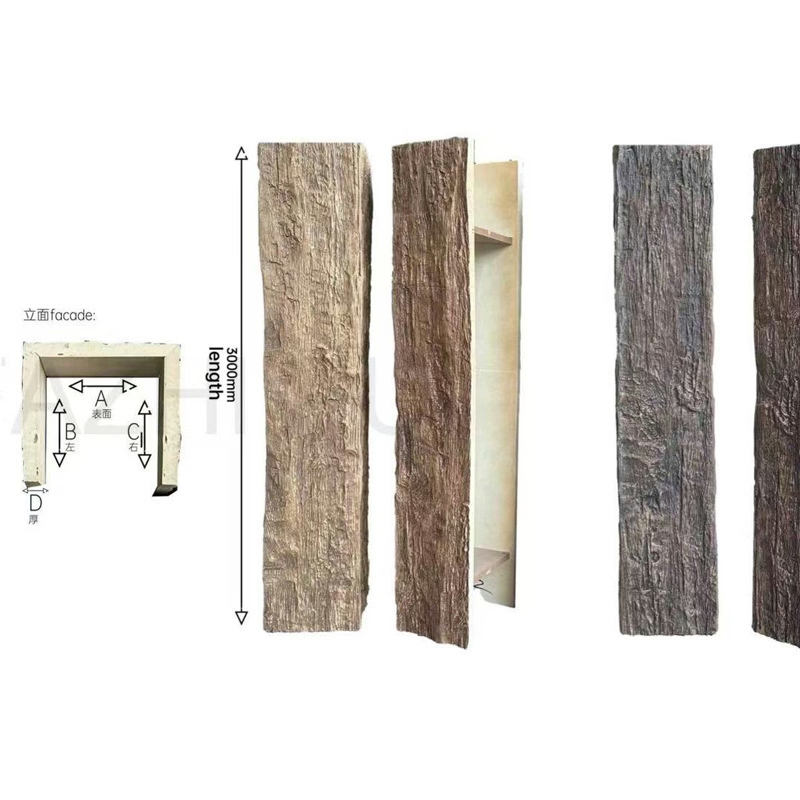
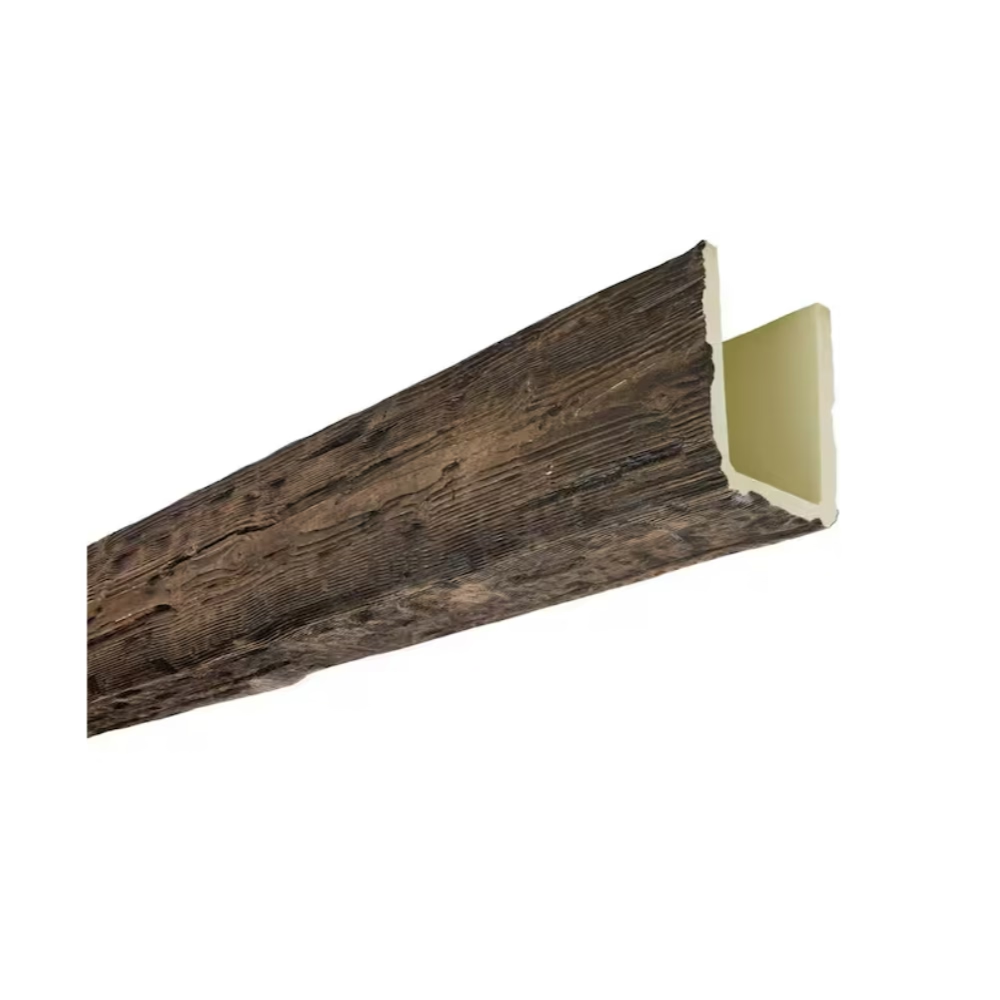
Guesthouses — whether a dedicated guest house on a residential property, an inn or bed-and-breakfast, or a boutique accommodation property — occupy a specific niche in hospitality design. They are more personal than a hotel: guests expect a sense of home, a crafted environment, and an attention to detail that distinguishes the guesthouse from generic lodging.
Beams in a guest room contribute to that crafted, home-like atmosphere. A room with beams feels more established, more intentional, more like a place someone chose to live in rather than a room that was built to a budget.
Scale considerations for guest rooms
Guest rooms are typically smaller than the great rooms and living rooms where beams most commonly appear. A standard guest bedroom is 12 by 14 feet with an 8 or 9 foot ceiling. The beam specification must be scaled to this smaller environment.
A beam that is too large for a small room — an 8-inch beam in a room with an 8-foot ceiling — makes the room feel compressed. The beam claims too much of the visible ceiling and the room loses its sense of openness.
The recommended beam height for guest rooms with 8 to 9 foot ceilings is 4 to 6 inches. The width should be proportional — 4 to 6 inches for a 6-inch-tall beam. The beam length should span the room or the primary zone within it without appearing cramped.
Beam spacing in a small guest room should be wider than in a large room. 24 to 36 inches on center is appropriate for a 12-foot room. Wider spacing prevents the beams from making the ceiling feel busy.
Guest comfort considerations
The guest room is a place of rest, and the beam specification should support that function rather than undermine it.
Visual calm — Dark, heavily textured beams in a small room can create visual agitation rather than calm. For guest rooms, the finish should be warm but not overwhelming. A natural oak or light walnut multi-tone finish reads well and contributes warmth without dominating the room.
Acoustic benefit — Beams contribute modestly to room acoustics by adding mass and irregularity to the ceiling plane. In a guest room, this is a positive: a slightly less live acoustic environment is more conducive to sleep than a room with bare drywall.
Lighting compatibility — The room's lighting plan should account for the beams. A bedside lamp that throws a shadow across the ceiling because a beam is in the wrong place is a design error. The beam layout should be coordinated with the lighting plan.
Finish selection for guest rooms
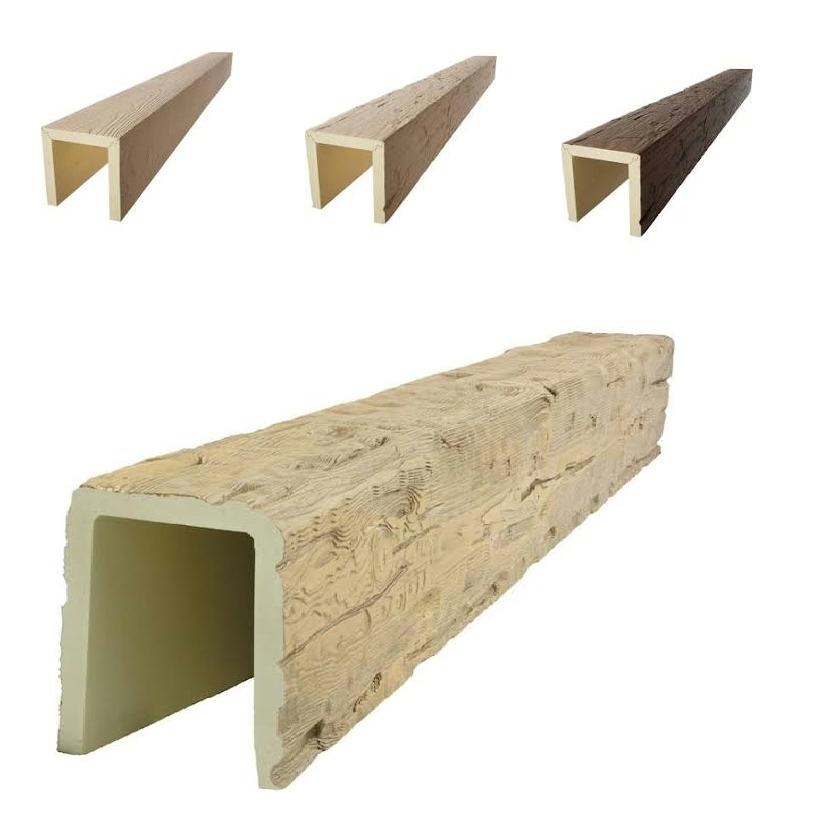
The finish in a guest room beam should complement the room's bedding, wall color, and furniture. The most versatile finishes for guest rooms:
Natural oak — A mid-tone wood that reads as warm and natural. Works with most color palettes, from cool grays to warm taupes. The grain pattern is present but not dominant.
Light walnut — Slightly darker than natural oak, with a richer brown tone. Appropriate in rooms with warm earth-tone palettes or dark furniture.
White or off-white — For rooms with a light, airy design direction, white beams add architectural interest without the visual weight of wood tones. Works well in coastal or farmhouse-style guesthouses.
Weathered gray — A gray-toned wood finish that reads as aged and natural. Appropriate in rooms with a rustic or farmhouse aesthetic, or in modern minimalist rooms where the gray provides a neutral contrast.
Layout for guest room types
Standard guest bedroom — A single beam running the full length of the room, centered on the bed. The beam creates a visual anchor above the bed without requiring a full parallel installation. This is the most minimal approach and works well in smaller rooms.
Larger guest suite — Two or three parallel beams running perpendicular to the room's primary axis. The beams define the sleeping zone while leaving the rest of the room for furniture and movement.
Open-plan guest suite — A suite with sleeping, sitting, and bathing areas in one open space requires a beam layout that acknowledges the different zones. A beam over the sleeping area, transitioning to a lighter treatment (or no beams) over the sitting area, creates a visual separation without a physical partition.
Loft guest room — A guest room in a loft or mezzanine space has a unique ceiling configuration — typically sloped, exposed, or partially open to a higher adjacent space. Beams in this context should follow the ceiling geometry and may be more substantial than in a standard room.
Guesthouse common areas
Beyond individual guest rooms, guesthouses often have common areas — a shared living room, a dining room, a covered porch — where beams contribute to the overall atmosphere.
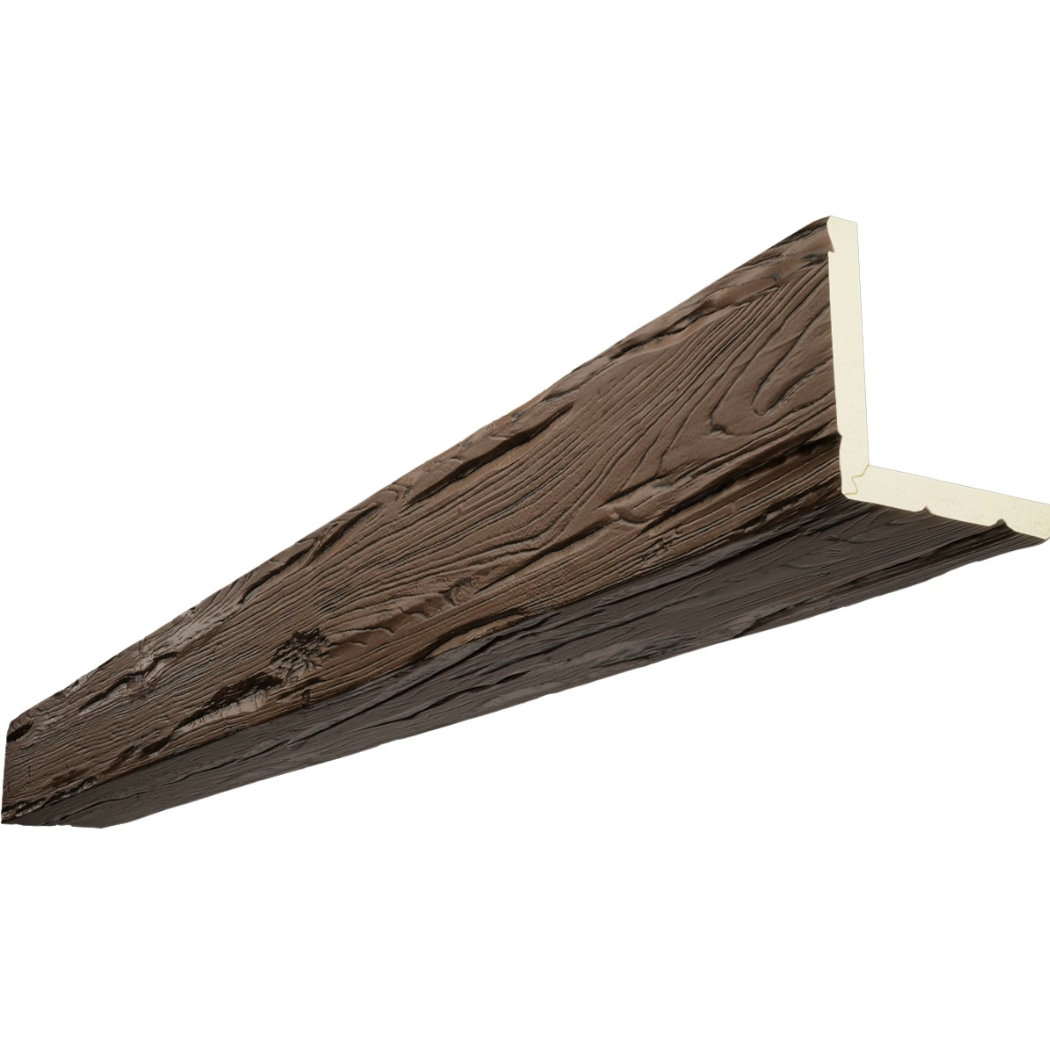
Common living room — A more generous beam installation is appropriate in a shared living room. Parallel beams, a larger profile, and a richer finish signal that this is a communal space, not a private room.
Dining room — Beams in a guesthouse dining room create the intimate, focused atmosphere appropriate for shared meals. A single beam over the dining table, or two parallel beams framing the table, is sufficient.
Covered porch or loggia — Exterior-covered spaces in a guesthouse property benefit from beams for the same reasons interiors do: they add warmth, scale, and architectural character. For exterior applications, the marine-grade topcoat is required.
For guesthouse operators and designers
Guesthouse beam specifications should be made with the guest experience in mind. The beams should contribute to a sense of welcome and comfort, not to a sense of formality or coldness. Warm finishes, modest scale, and a layout that acknowledges the room's function are the guiding principles.
For property developers building multiple guesthouse units, we offer project pricing that provides consistent beam specifications across all units. The same finish, the same profile, and the same layout in every room creates the consistency that guests expect from a hospitality brand while the craftsmanship of the beams creates the differentiation that keeps them coming back.
Technical References
ASTM standards cited in every specification
Test Data
Lab results from internal testing program
Updated 2026
Reviewed against current product specs