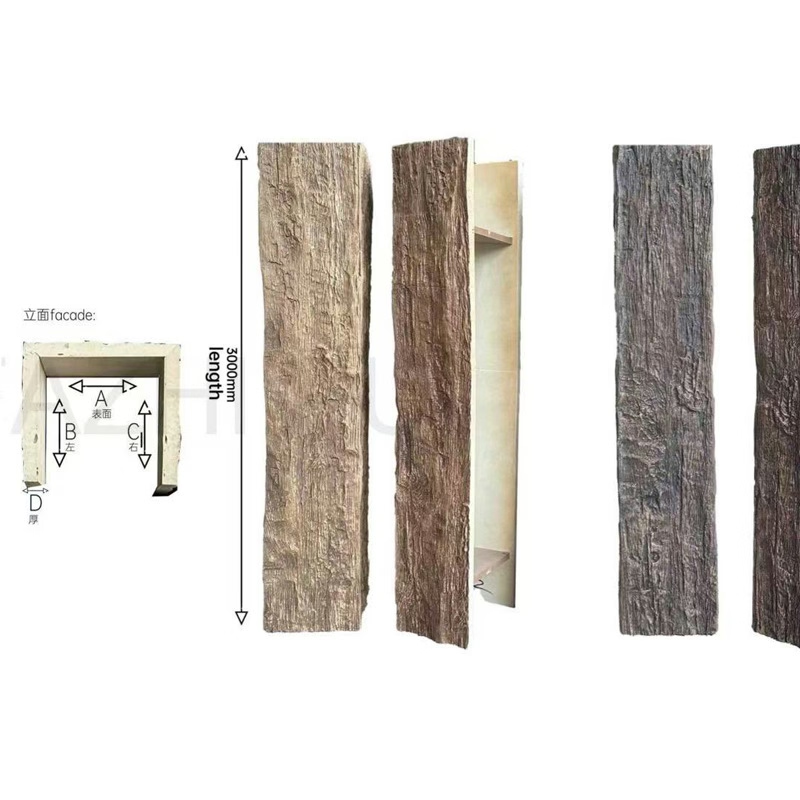
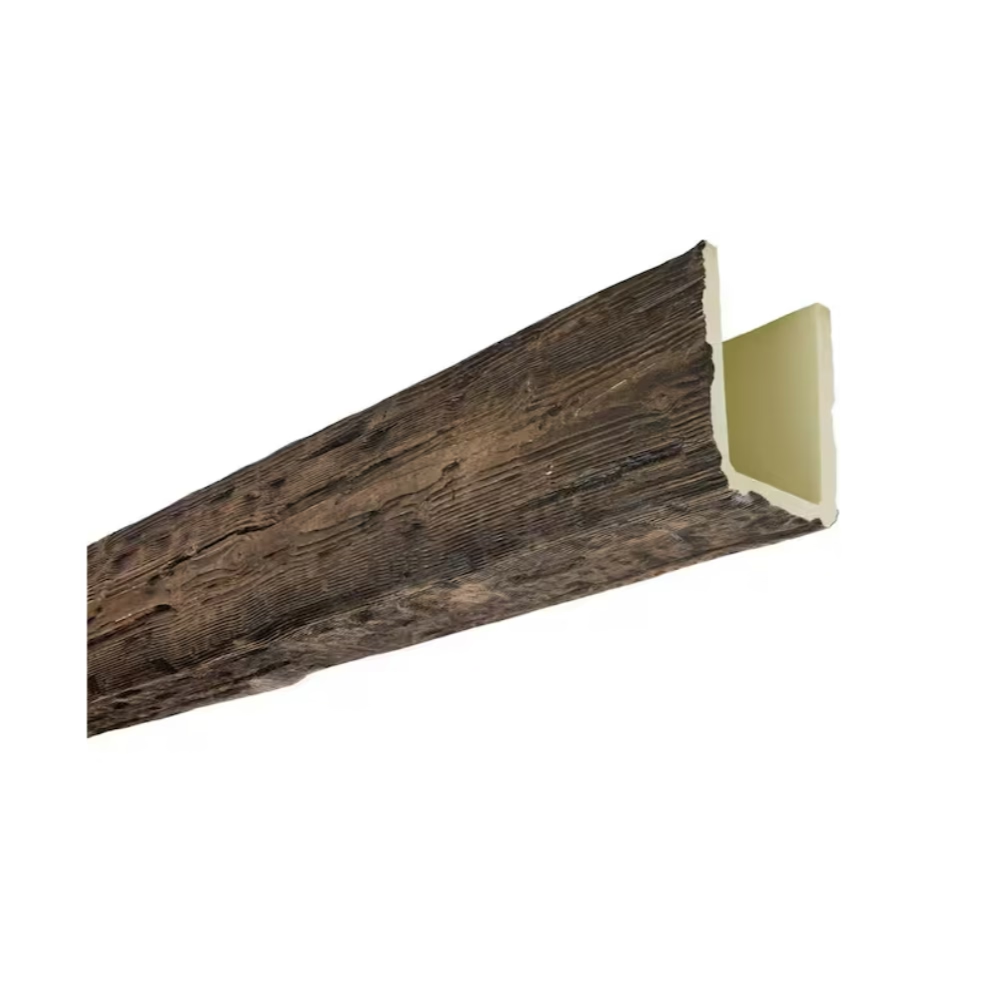
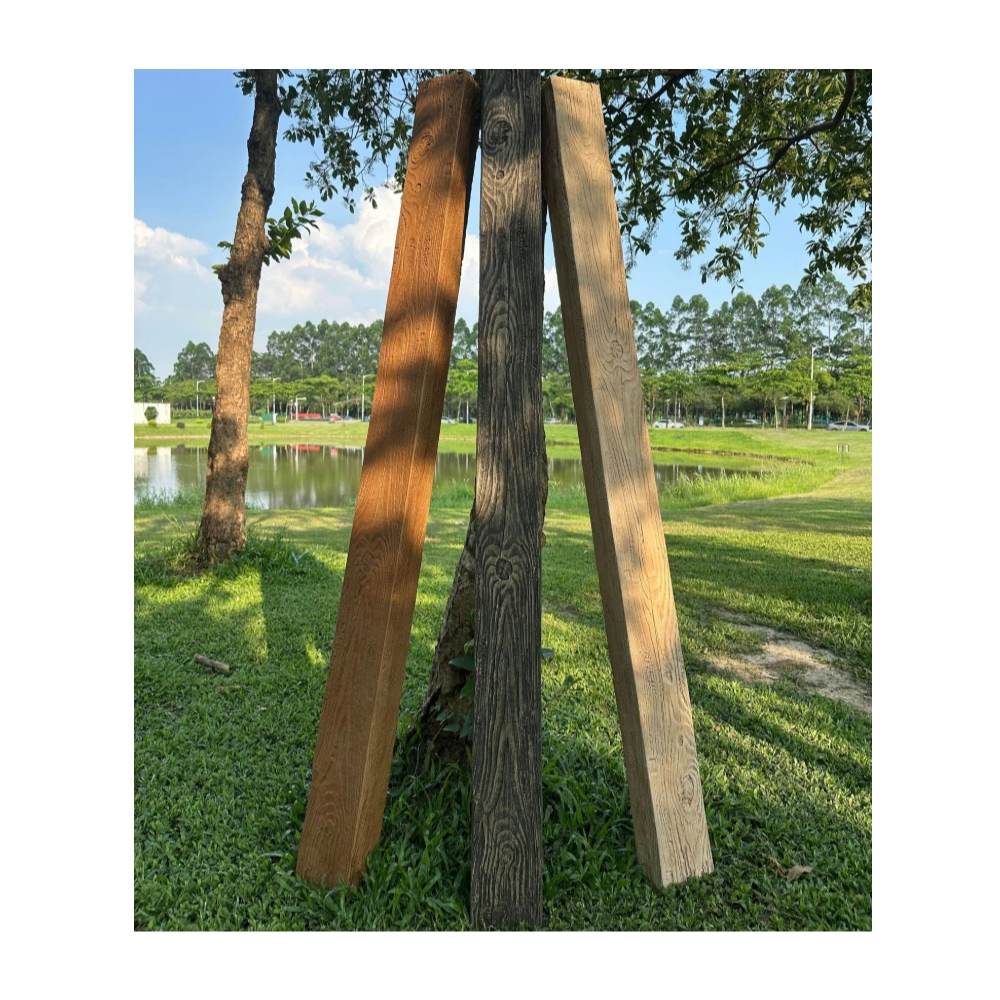
There's something special about a covered patio with exposed beams overhead. It feels like an extension of the home that happens to be outside, and the ceiling is what makes it work. Real timber has been the traditional choice for patio ceilings, but it brings real problems — warping in humidity, fading under UV, and the eventual rot that comes with any material that can't quite escape the weather. Faux wood beams have become a smart alternative for patios and other semi-outdoor spaces, and the reasons are worth understanding.
This article walks through where faux beams work in patio and covered outdoor applications, what to look for in a weather-resistant product, and how to install them so they look great for years.
The Patio Ceiling Challenge
Three Different Environments
A patio ceiling lives in a kind of in-between environment. It's not fully indoors, where climate is controlled and stable. It's not fully outdoors, where rain and direct sun beat down on every surface. A covered patio is somewhere in between, and the materials used there have to handle all three conditions to varying degrees.
Even under a well-built roof, a patio ceiling experiences:
- Higher humidity than interior spaces, especially in coastal or tropical climates
- Greater temperature swings between day and night, and between seasons
- Significant UV exposure from sidelight and reflected light
- Occasional windblown rain if the roof isn't perfectly sealed
- Insects, bird droppings, and other outdoor contaminants
Real timber handles these conditions by developing character — weathering, cracking, fading — that some people love and others find problematic. Faux beams handle them by holding their original appearance essentially forever.
The Fade Test
UV exposure is the most aggressive degradation factor for most ceiling materials. Real wood fades to gray, sometimes unevenly, depending on how the sun hits it. Many painted surfaces chalk and lose their color. Faux beams with proper UV inhibitors hold their color through years of exposure, even on south-facing patio ceilings.
Not all faux beams are created equal on UV performance. The cheaper products with light stabilizer packages can show noticeable fading within a few years in high-UV environments. The better products with heavier stabilizer packages can go a decade or more without visible color shift. For patio applications, it's worth confirming the manufacturer's UV performance data before specifying.
Where Faux Beams Work on Patios
Fully Covered Patio Ceilings
A fully covered patio — one with a solid roof overhead and walls on at least two sides — is essentially an outdoor room. The ceiling sees indirect weather at most. Faux beams in this environment perform almost exactly like they would indoors, with the same finishes and the same installation methods.
This is the easiest patio application for faux beams, and it's also where the visual impact is highest. A covered patio with beams overhead reads as a deliberate architectural extension of the home rather than an afterthought deck.
Pergola Ceilings With Slatted Roofs
Pergolas with slatted or lattice roofs are a more challenging environment. The beams get direct sun for part of the day, and rain reaches them through the gaps in the slats. Faux beams in this application need to be specified for full exterior exposure, not just covered patio use.
Many manufacturers offer exterior-grade faux beams with enhanced UV protection and water-shedding surface treatments. These products work well in pergola applications and provide the warm wood look that pergola owners typically want.
Loggia and Screened Porch Ceilings
Loggias and screened porches occupy a middle ground. The roof is solid, the screens block insects and most debris, and the space is essentially a sheltered outdoor room. Faux beams in these applications perform very well, holding their color and shape through years of seasonal exposure.
Sunroom Ceilings
Sunrooms are an interesting case because they have solid roofs and walls of glass. The ceiling sees the full thermal cycling of an outdoor space, with hot summers and cold winters, but it's protected from direct precipitation. Faux beams in sunrooms handle these conditions easily and add the architectural warmth that makes sunrooms feel like extensions of the home.
Outdoor Kitchen Ceilings
Outdoor kitchens are increasingly elaborate spaces, often with substantial roof structures overhead. Faux beams in outdoor kitchen ceilings add the architectural detail that ties the kitchen into the home's overall design language. They also provide mounting surfaces for lighting, fans, and hanging utensil racks.

Material Choices for Outdoor and Patio Use
Polyurethane Density
For patio applications, the density of the polyurethane matters. Higher-density products resist impact better and hold their shape longer in extreme temperatures. Lower-density products are more affordable but more prone to damage in hard-use environments.
Most manufacturers offer at least two density options, with the higher density recommended for patio and exterior-adjacent applications. The upcharge for higher density is usually modest and well worth it for the longer service life.
UV Inhibitor Packages
UV inhibitors are additives that slow the degradation of polyurethane under UV exposure. Different products have different inhibitor packages, and the difference shows up in long-term color stability. For patio applications in high-UV climates — desert regions, tropical locations, south-facing exposures — the heaviest inhibitor package is the right choice.
Surface Coatings
The topcoat applied to the beam is the first line of defense against UV and moisture. Quality manufacturers use exterior-grade topcoats that are specifically designed to handle the patio environment. Cheaper products may use interior-grade topcoats that perform poorly outdoors.
For maximum service life, some installers apply an additional coat of exterior-grade clear finish on site after installation. This adds a day to the schedule but can extend the service life significantly.
Color and Finish Considerations
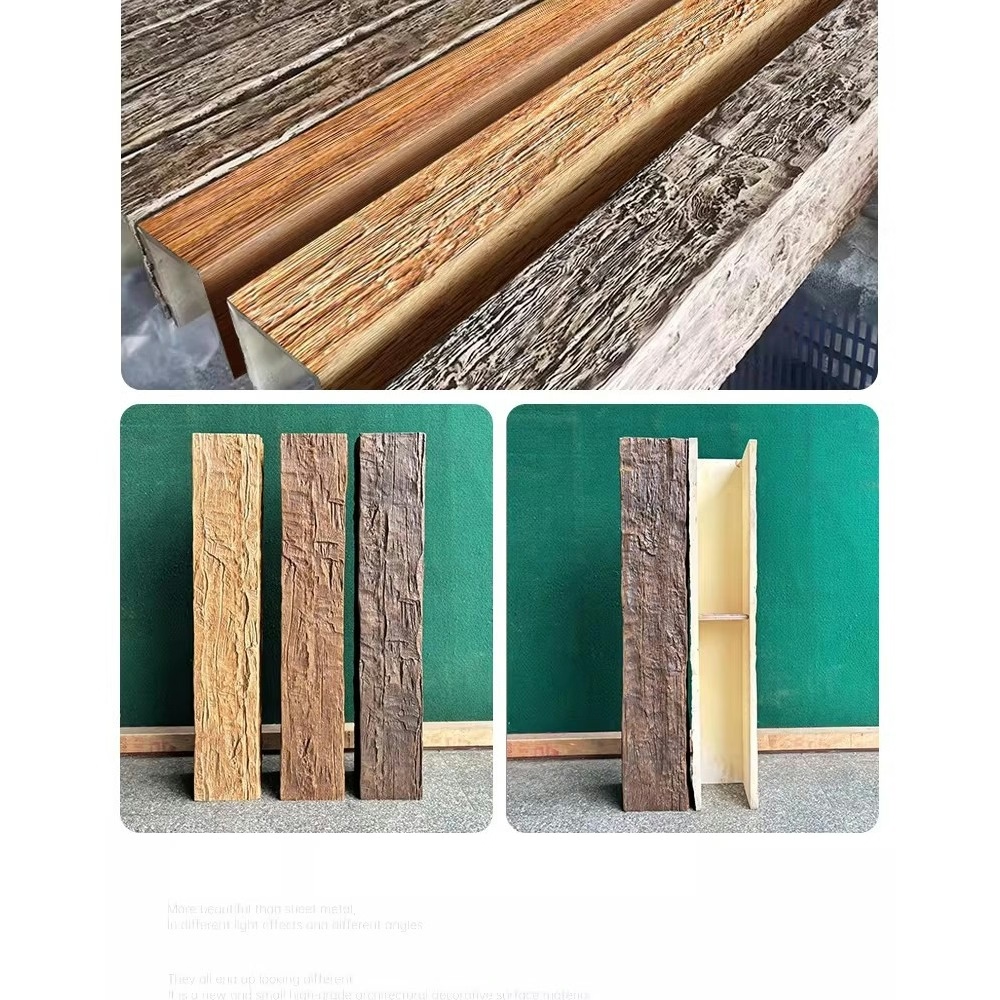
Darker finishes generally hold their color better than lighter ones in outdoor applications, because the pigments in darker stains are more UV-stable. White and pickled finishes are the most vulnerable to UV fading and may need refreshing every few years in high-exposure applications.
The texture of the beam also matters. Heavily textured beams with deep grain patterns hide minor color variations that might develop over time. Smooth beams show every change, which is why most patio installations use textured profiles.
Installation Techniques for Patio Ceilings
Mounting to Different Structures
Patio ceilings are typically built with one of several structural systems, and the mounting method needs to match the system:
- Exposed rafters — the most common patio ceiling structure. Faux beams mount perpendicular to the rafters with blocking between them or directly to the rafter faces with long screws.
- Solid roof deck — a plywood or OSB deck over the rafters. Faux beams mount to blocking that is fastened through the deck into the rafters below.
- Vaulted or cathedral ceiling — a structural ridge beam and rafters forming an angled ceiling. Faux beams typically run perpendicular to the rafters to emphasize the vaulted geometry.
- Existing finished ceiling — drywall or tongue-and-groove over the structure. Faux beams mount to cleats fastened through the finish into the structure above.
Working With Outdoor Conditions
Patio installations happen outdoors, which means the installer is at the mercy of the weather. Most faux beam products can be installed in a wide range of temperatures and humidity levels, but extreme conditions — very hot days, freezing temperatures, heavy rain — make the work harder and can affect adhesive curing.
The best practice is to schedule the installation during moderate weather when possible. If the work has to happen in less-than-ideal conditions, the installer can use faster-curing adhesives and adjust the workflow to keep the materials dry.
Coordinating With Other Patio Features
Patio ceilings usually integrate several other features — ceiling fans, lighting, speakers, heaters, retractable screens, even outdoor TVs. All of these have to be coordinated with the beam layout so the finished ceiling looks intentional rather than pieced together.
The reflected ceiling plan should show every element together. Where a beam and a feature conflict, the beam is usually easier to adjust because the other features (especially electrical and plumbing) are usually already roughed in.

Long-Term Performance Expectations
How Long Do Patio Faux Beams Last?
Quality exterior-grade faux beams in a covered patio application typically last 20+ years with minimal intervention. In a fully protected application (sunroom, loggia, well-covered patio), they can last 30 years or more.
The first thing to show age is usually the topcoat, not the polyurethane itself. A light refinishing every 10 to 15 years keeps the beams looking new indefinitely. The refinishing is a weekend project for a typical patio, and it doesn't require any specialized equipment.
What About Damage?
Patio ceilings occasionally get damaged — a falling branch, a wayward ladder, an insect infestation in adjacent wood. Faux beams are easy to repair with flexible filler and matching finish. The closed-cell polyurethane doesn't host insects or absorb moisture, so the kinds of damage that destroy real wood (termites, rot, mold) don't affect faux beams at all.
Comparing Lifecycle Costs
When you add up the initial cost plus the maintenance costs over 25 years, faux beams typically come out ahead of real timber in patio applications. The initial cost is comparable, the maintenance is dramatically less, and the lifetime is longer. The math gets even better in harsh climates where real timber needs more frequent attention.
Bringing Indoors and Outdoors Together
The strongest design move with faux beams in patio applications is using the same beam profile inside the home and on the covered patio. The continuous ceiling language ties the spaces together and makes the patio feel like a genuine extension of the home rather than an exterior add-on. This design approach has become very popular in modern residential architecture, and faux beams make it practical to execute.
Wrapping Up
Indoor and covered patio ceilings take a beating from conditions that destroy most materials over time. Faux wood beams handle those conditions gracefully, holding their color and shape through years of UV, humidity, and temperature swings. For homeowners who want the warmth of timber on their patio without the maintenance load, faux beams are the practical choice that doesn't compromise on appearance.
Technical References
ASTM standards cited in every specification
Test Data
Lab results from internal testing program
Updated 2026
Reviewed against current product specs