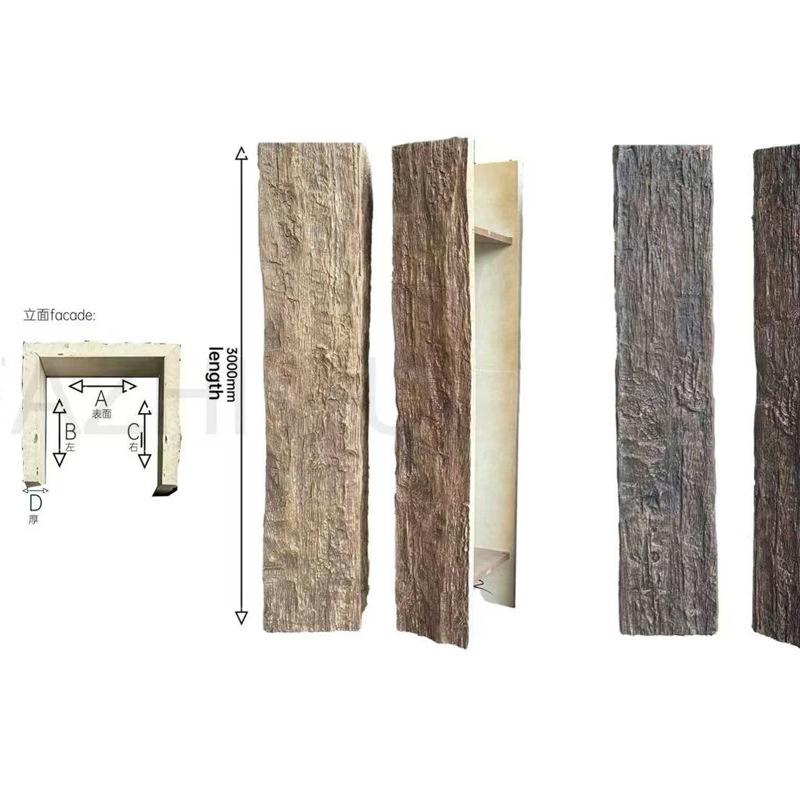
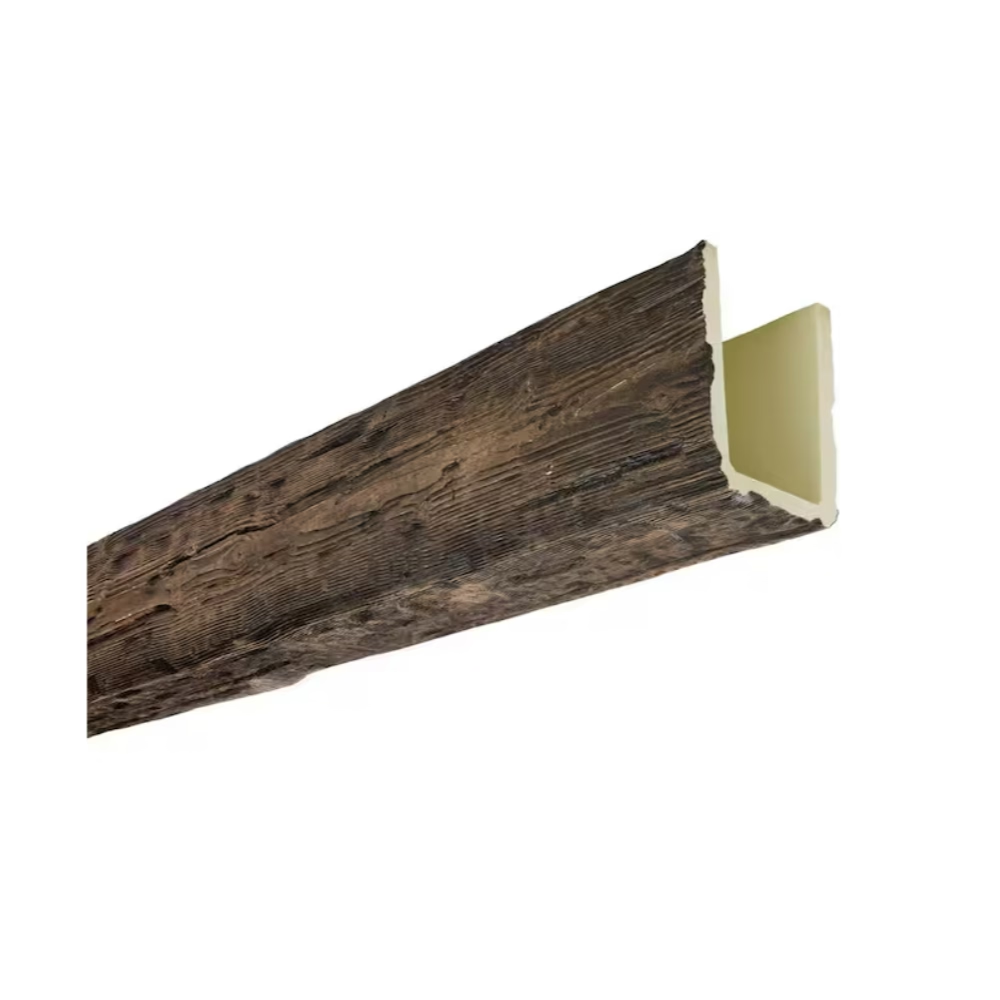
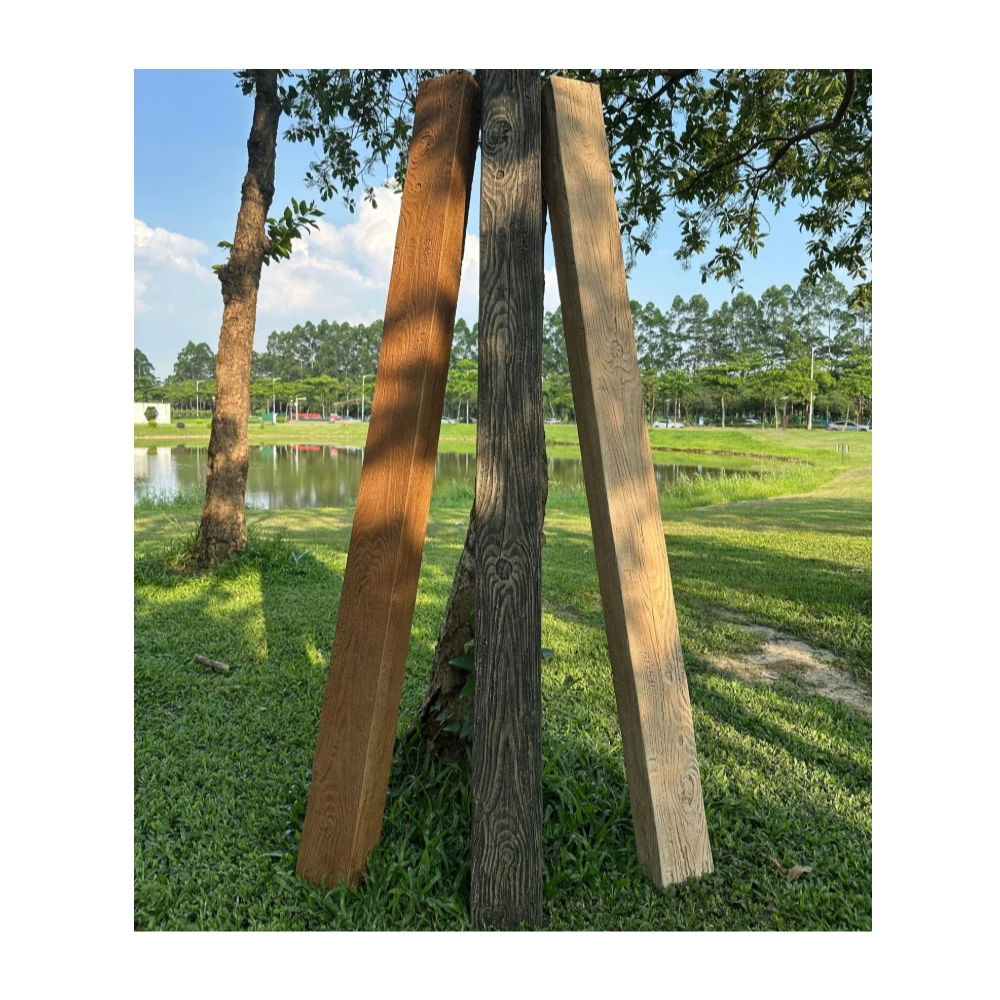
The fireplace mantel is one of the focal points of a home. It's where stockings hang at Christmas, where family photos get displayed, where the eye lands during a quiet evening by the fire. A great mantel anchors the room and makes the fireplace feel like the architectural heart of the home. Faux wood fireplace mantels made from premium polyurethane have become the smart way to get that great mantel without the weight, cost, or installation complexity of solid timber.
This article walks through what makes premium PU mantels such a strong choice, what to look for when selecting one, and how to install it so it looks like it has always been part of the home.
Why Faux Wood Mantels Work
The Solid Timber Problem
Solid timber mantels look beautiful when they're first installed, but they bring a few real problems. The weight is the first one — a substantial oak or walnut mantel can weigh hundreds of pounds, which means it requires serious structural support, often including a dedicated mounting beam or steel bracket hidden inside the wall.
The cost is the second problem. Solid timber mantels, especially in larger sizes or in premium species, can run thousands of dollars. Custom millwork adds even more.
The third problem is stability. Solid timber moves with humidity changes, which can crack the finish, open joints, or warp the mantel over time. In a home with significant seasonal humidity swings — which is most homes — this movement is essentially guaranteed.
Faux wood mantels made from premium PU solve all three problems. They're a fraction of the weight, a fraction of the cost, and they don't move with humidity because the polyurethane is dimensionally stable.
What "Premium PU" Means
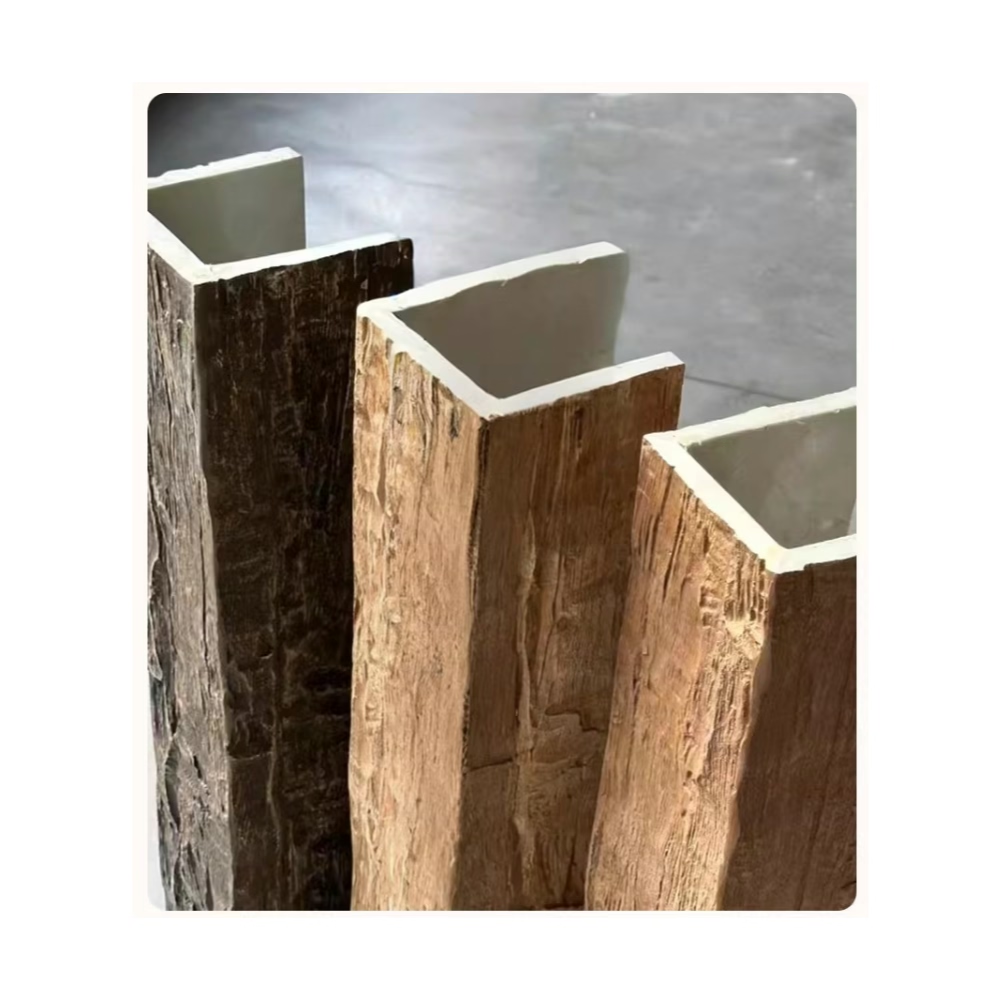
Not all faux wood mantels are created equal. The premium products use high-density closed-cell polyurethane with realistic molded grain patterns, multi-step factory finishes, and engineering details that make them look genuinely wood-like at any zoom level.
The lower-end products use lower-density foam with shallower grain patterns and simpler finishes. They look acceptable from a distance but don't hold up to close inspection. For a fireplace mantel, where the eye is naturally drawn close to examine the craftsmanship, the premium product is well worth the modest upcharge.
Realism at Close Range
The fireplace mantel is one of the few architectural elements where guests routinely stand within a few feet and examine the material. Photos from across the room look fine with lower-quality faux products, but up close the differences show. Premium PU mantels use deeper grain patterns, more realistic color variation, and more convincing edge details that hold up at close range.
A well-made premium PU mantel is genuinely difficult to distinguish from solid timber at conversational distance. Most guests never realize they're looking at polyurethane until they're told.
Styles and Profiles
Rustic and Hand-Hewn
Rustic mantels with hand-hewn textures work well in lodge, farmhouse, and heritage-style homes. The deep grain patterns and irregular surfaces of these mantels hide any minor variations in the wall behind them, which makes them forgiving to install.
The premium PU versions of rustic mantels use multiple mold textures to create the irregular surfaces that real hand-hewn timber has. The result looks genuinely crafted rather than uniformly molded.
Smooth and Refined
Smooth mantels work in contemporary, transitional, and traditional homes where the design language is cleaner. Premium PU smooth mantels use subtle grain patterns that suggest wood without dominating the visual field. The mantel reads as a refined architectural element rather than a rustic focal point.
Smooth mantels are particularly effective in homes with minimal ornament, where the mantel itself becomes the statement piece on the wall.
Beam-Style Mantels
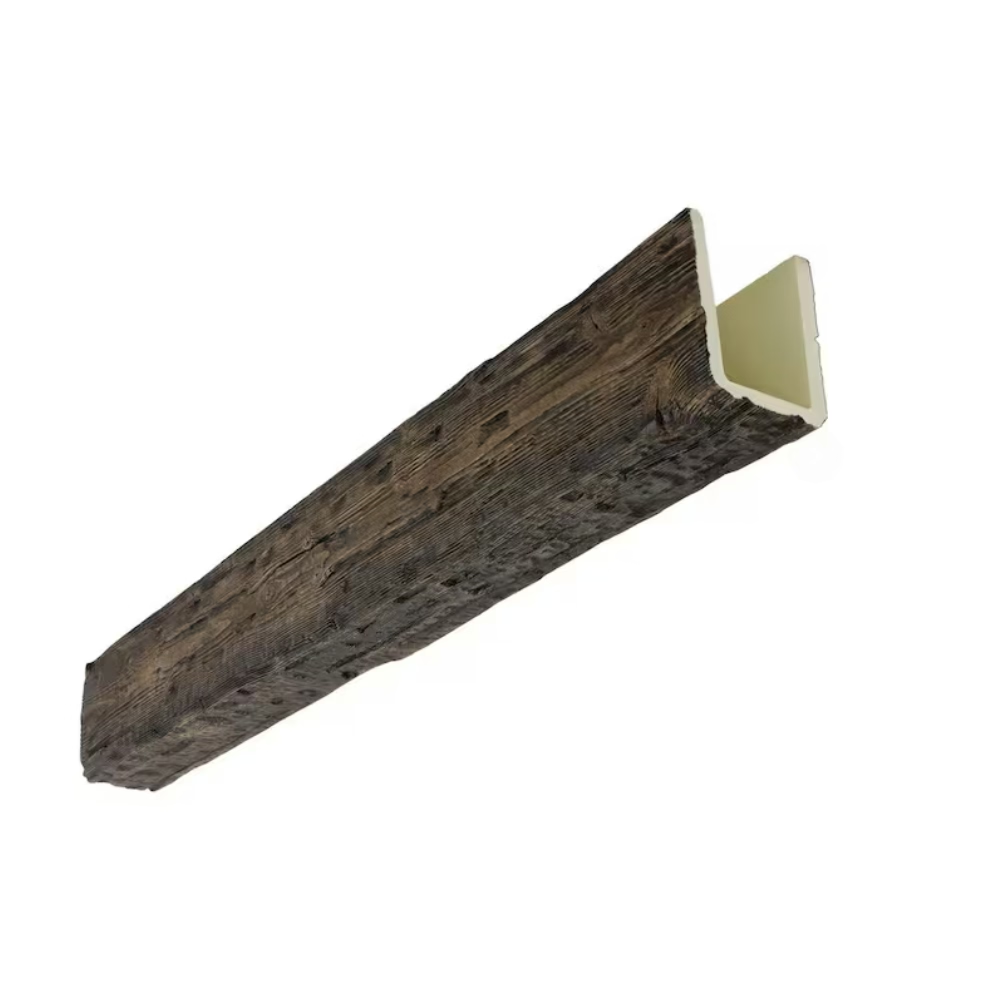
Beam-style mantels are essentially thick beams mounted horizontally above the fireplace opening. They work well in homes with existing beam treatments elsewhere, because they tie the fireplace into the overall ceiling design language.
Premium PU beam-style mantels can be specified in the same profile and finish as overhead beams, which creates a continuous architectural vocabulary throughout the home. This consistency is one of the most popular design moves in modern residential interiors.
Decorative and Traditional
Traditional mantels with applied moldings, corbels, and decorative details are still popular in colonial, craftsman, and Victorian-inspired homes. Premium PU versions capture these details convincingly, including the fine edges and tight corners that would be difficult to achieve in lower-density foam products.
Sizing the Mantel to the Room
Proportion Guidelines
A mantel that's too small disappears into the wall. A mantel that's too large overwhelms the fireplace and the room. The right size depends on the fireplace opening, the wall size, and the room's overall scale.
A few practical guidelines:
- The mantel should extend at least 3 inches beyond each side of the fireplace opening.
- The mantel height (the vertical face below the top shelf) should be proportional to the fireplace opening, typically 6 to 8 inches for a standard residential fireplace.
- The mantel depth (the shelf projection) should be at least 6 inches for functional display, 8 to 10 inches for more substantial display.
- The mantel length should not exceed about 75% of the wall width, to leave visual breathing room on either side.
Working With Different Fireplace Types
The mantel design has to coordinate with the fireplace type below it:
- Wood-burning fireplaces — typically have larger openings and chimneys, allowing for heavier, more substantial mantels.
- Gas fireplaces — come in many configurations, often with shallower depths that work better with lighter-looking mantels.
- Electric fireplaces — usually the most flexible, allowing for any mantel style and proportion.
- Decorative fireplaces (no actual fire) — the mantel becomes even more important because it's the focal point of a wall that has no other visual interest.
Considering the Surround
The mantel typically sits above a surround — the material that frames the fireplace opening. Common surround materials include stone, brick, tile, plaster, and wood paneling. The mantel should complement the surround rather than compete with it.
Stone surrounds look great with both rustic and refined mantels. Brick surrounds lean toward rustic mantels in most cases. Tile surrounds can go either direction depending on the tile style. Plaster surrounds typically work with refined mantels. Wood paneling surrounds blend naturally with beam-style or wood-finished mantels.
Installation Process
Locating the Mounting Surface
The mounting surface behind the mantel needs to be solid enough to hold the weight securely. Drywall alone isn't enough — the mantel needs to be screwed into blocking, studs, or masonry behind the wall surface.
For new construction, blocking can be installed during framing at the exact mantel location. For existing walls, the installer needs to locate studs or add backing through a small access opening. A stud finder and a careful measurement usually identify suitable mounting points.
Mounting Hardware
Premium PU mantels are typically mounted with a cleat-and-bracket system. A steel or wood cleat is fastened to the wall at the exact mantel location, then the mantel slides over the cleat and locks in place. The cleat carries the weight while the mantel's finished surfaces remain unblemished by visible fasteners.
The cleat is usually painted or finished to match the wall behind, so it's invisible once the mantel is in place. Some installers add a small bead of construction adhesive between the mantel and the wall for extra security and to eliminate any gap.
Handling Large Mantels
Larger mantels — over 6 feet long, for example — usually come in two pieces that join on site. The joint is typically hidden at the centerline of the mantel and finished with a flexible filler that moves with the building. A careful installer can make the joint essentially invisible.
For very large mantels or mantels installed above particularly wide fireplaces, additional mounting support may be needed at the centerline. The manufacturer usually provides guidance for these situations.
Working Around Heat
For wood-burning and gas fireplaces, the mantel has to maintain proper clearance from the heat source. Building codes typically require at least 6 inches between the top of the fireplace opening and the bottom of the mantel, with additional clearance if the mantel protrudes more than a certain distance.
Premium PU mantels handle the heat exposure of normal residential fireplaces without issue, but they're not designed for direct flame contact or extreme heat. The manufacturer's installation instructions should be followed carefully for fireplace applications.

Styling the Mantel
Display Considerations
The mantel is a natural display surface for photos, artwork, candles, vases, and seasonal decorations. The mantel depth should be sized to accommodate the typical display items. A deeper mantel (8 to 10 inches) allows for layered displays, while a shallower mantel works best with single-row displays.
The mantel length affects how much can be displayed. A longer mantel can host a more elaborate arrangement, while a shorter mantel needs a more curated approach.
Visual Weight Above and Below
The wall above the mantel is a prime location for artwork, mirrors, or televisions. The visual weight of whatever hangs above should balance the visual weight of the mantel itself. A heavy mirror above a substantial mantel creates a confident, anchored look. A small piece of art above a heavy mantel can look unbalanced.
Seasonal Styling
One of the joys of a fireplace mantel is the opportunity for seasonal styling. Holiday decorations, seasonal flowers, candles in different colors — the mantel becomes a changing display that reflects the time of year.
Premium PU mantels handle seasonal styling well because the surface is durable enough for repeated placement of objects without showing wear. The finish holds up to candlestick bases, picture frames, and the occasional spilled glass of wine.
Long-Term Performance
Stability Through Seasonal Changes
The biggest performance advantage of premium PU mantels over solid timber is dimensional stability. Through years of seasonal humidity changes, the PU mantel holds its shape and finish. Solid timber mantels often develop cracks, gaps, or warps within a few years in most homes.
Finish Durability
The factory finish on premium PU mantels is engineered for long-term durability. It resists fading, scratching, and staining better than most site-applied finishes on solid timber. A periodic wipe-down is usually all that's needed to keep the finish looking new.
Repair and Refinishing
If a premium PU mantel ever gets damaged, repairs are straightforward with flexible filler and matching finish. The mantel can also be completely refinished after many years of service to look essentially new. The refinishing process is a weekend project for most homeowners.
Wrapping Up
Premium PU faux wood fireplace mantels give homeowners the look and feel of a custom timber mantel without the weight, cost, or stability concerns of solid wood. They install in hours rather than days, they hold their appearance for decades, and they look genuinely wood-like at close range. For homeowners planning a fireplace renovation or new construction, premium PU mantels are worth considering seriously — they deliver the architectural focal point that a great fireplace deserves.
Technical References
ASTM standards cited in every specification
Test Data
Lab results from internal testing program
Updated 2026
Reviewed against current product specs