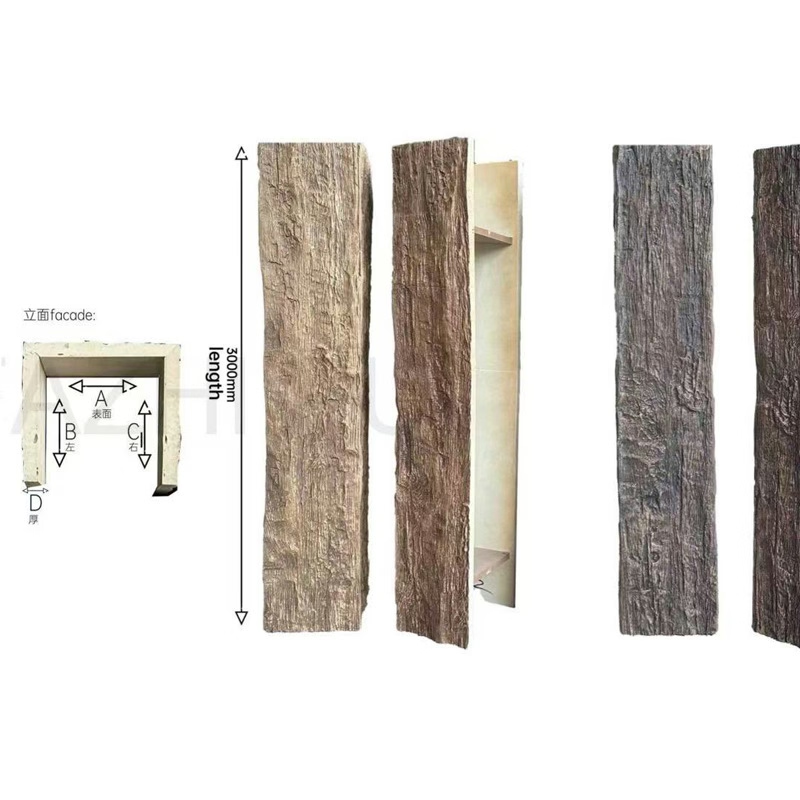
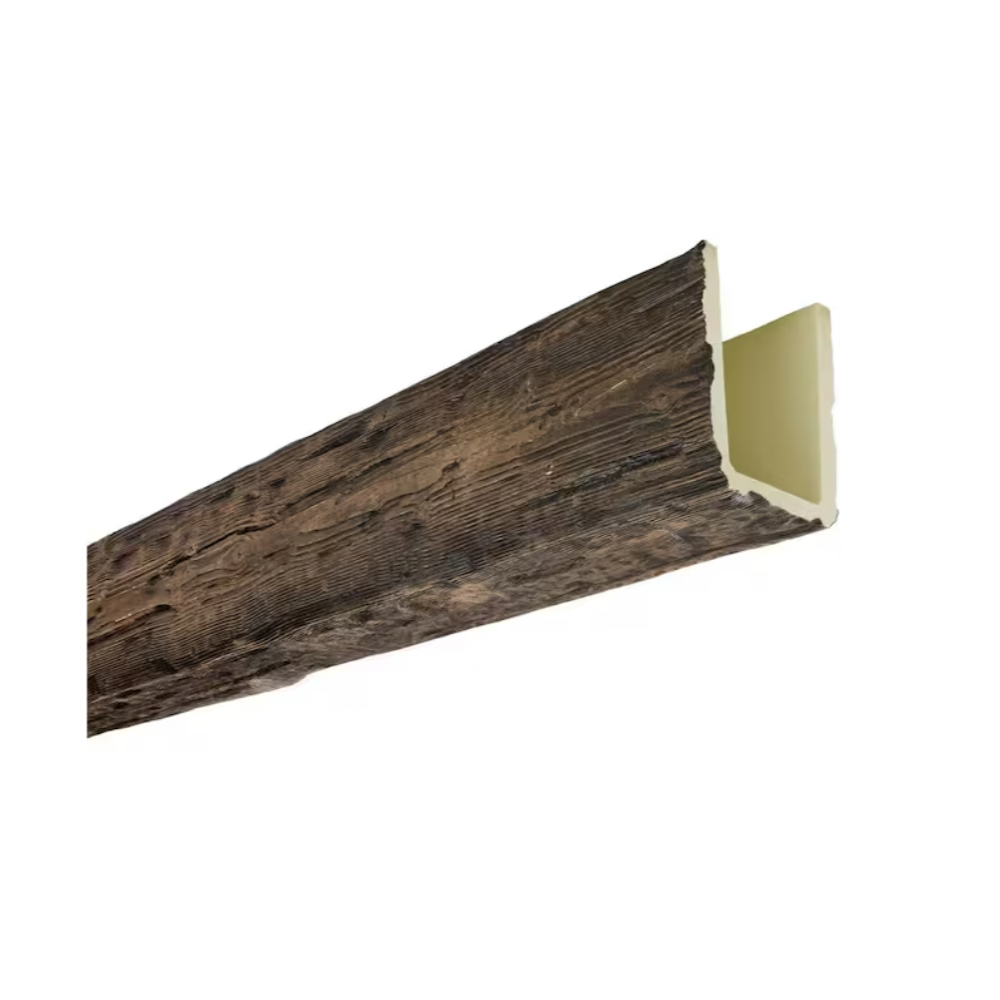
Homeowners put a lot of thought into the materials they live with for years. A flooring choice, a countertop decision, a paint color — these are decisions that affect daily life for a decade or more. Ceiling beams are in that same category for many homes, and faux wood polyurethane beams have become a popular choice for homeowners who want the warm look of timber without the long-term commitments that real wood demands.
This article looks at why faux PU beams work so well for long-lasting home decor, where they shine in residential applications, and what homeowners should expect from them over the years.
Why Homeowners Choose PU Beams for Decor
The Long Game in Residential Design
Most home decor decisions get evaluated over years, not months. A beam that looks beautiful on day one but starts checking and warping by year three isn't a good long-term investment. A beam that holds its appearance for fifteen or twenty years is.
Faux wood polyurethane beams are designed for that long game. The closed-cell polyurethane doesn't absorb moisture, doesn't respond to humidity changes, and doesn't host the insects and microorganisms that eventually degrade real wood. The factory finish is engineered to hold its color and surface integrity through years of UV exposure, cleaning, and the general wear of daily life.
For homeowners who want to install a beam once and enjoy it for the next two decades, faux PU is the practical choice.
The Maintenance-Free Promise
Real wood beams in residential interiors need occasional attention. Dust accumulates in the grain. The finish dulls over time. Small cracks develop as the wood moves with seasonal changes. Every few years, the beams need to be cleaned, possibly touched up, and eventually refinished.
Faux PU beams need almost none of that attention. An occasional dusting or a wipe with a damp cloth is usually enough. There's no refinishing cycle to plan for, no cracks to monitor, no insects to worry about. The maintenance savings over twenty years can be substantial in both time and money.
Style Flexibility
Homeowners often redecorate over the years. A living room might get a new color scheme. A dining room might shift from traditional to contemporary. A bedroom might transition from adult to teen to guest over the life of a home.
Faux PU beams adapt to these changes gracefully. They can be repainted in place if the color story shifts. They can be refinished with a new stain color. They can be removed and reinstalled in a different configuration if the layout changes significantly. The flexibility makes them a strategic asset for homeowners who expect their design preferences to evolve.
Rooms Where PU Beams Shine
Living Rooms and Family Rooms
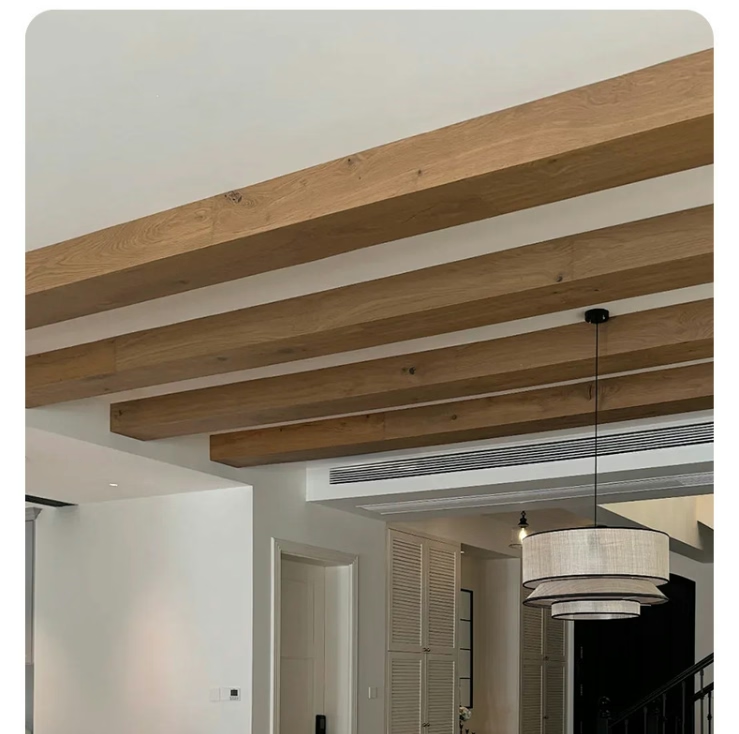
The living room is the most common room for decorative beams, and faux PU beams work beautifully there. They add the warmth and architectural interest that make a living room feel like the heart of the home. The molded grain pattern catches the light from floor and table lamps in ways that create genuine warmth at any time of day.
For living rooms with vaulted or cathedral ceilings, PU beams emphasize the height and volume of the space. For living rooms with flat ceilings, beams add the architectural detail that the room would otherwise lack.
A common pattern is to run beams across the ceiling perpendicular to the longest wall of the room, which makes the room feel wider and more grounded. For open-plan living areas, beams can define the living room zone without enclosing it.
Dining Rooms
Dining rooms benefit from the focused, intimate feel that beams overhead provide. A dining room with a coffered or beamed ceiling reads as a considered, intentional space — a place for gatherings and conversation rather than a pass-through.
For dining rooms with chandeliers or statement light fixtures, beams provide a structural-looking anchor that ties the lighting into the room's architecture. The chandelier hangs against the beams rather than floating in empty space.
Kitchens
Kitchen ceilings have become more interesting in recent years as homeowners move away from the flat white ceiling look. Faux PU beams in kitchens add character without sacrificing the clean, functional feel that kitchens need.
For kitchens with islands, beams overhead can define the island zone and provide a mounting surface for pendant lights, pot racks, or hanging herb planters. For kitchens with eating nooks, beams create a more intimate dining zone within the larger kitchen space.
Bedrooms
Bedrooms are an underrated location for decorative beams. A coffered ceiling over the bed creates a strong focal point and makes the bed feel like the centerpiece of the room. A few beams across the bedroom ceiling add architectural interest without overwhelming the typically modest proportions of the space.
For master bedrooms, beams can be combined with other natural materials — wood furniture, natural-fiber rugs, linen bedding — to create a layered, restful environment.
Home Offices
Home offices became essential during the pandemic era and have stayed popular since. A home office with beams overhead feels more like a dedicated workspace than a corner of a bedroom. The beams add the kind of architectural detail that makes working from home feel more professional and considered.
Bathrooms
Bathrooms are a more adventurous location for beams, but they work well in the right application. For larger bathrooms with vaulted ceilings or freestanding tubs, beams add the spa-like architectural detail that elevates the space. PU beams handle the bathroom humidity without any of the warping or mold concerns that real timber would bring.
Entryways and Foyers
Entryways are the first interior space a visitor sees, and beams overhead create a sense of arrival and welcome. A coffered entry ceiling or a single dramatic beam across the foyer makes a strong first impression.

Style Choices for Residential PU Beams
Rustic and Heritage Styles
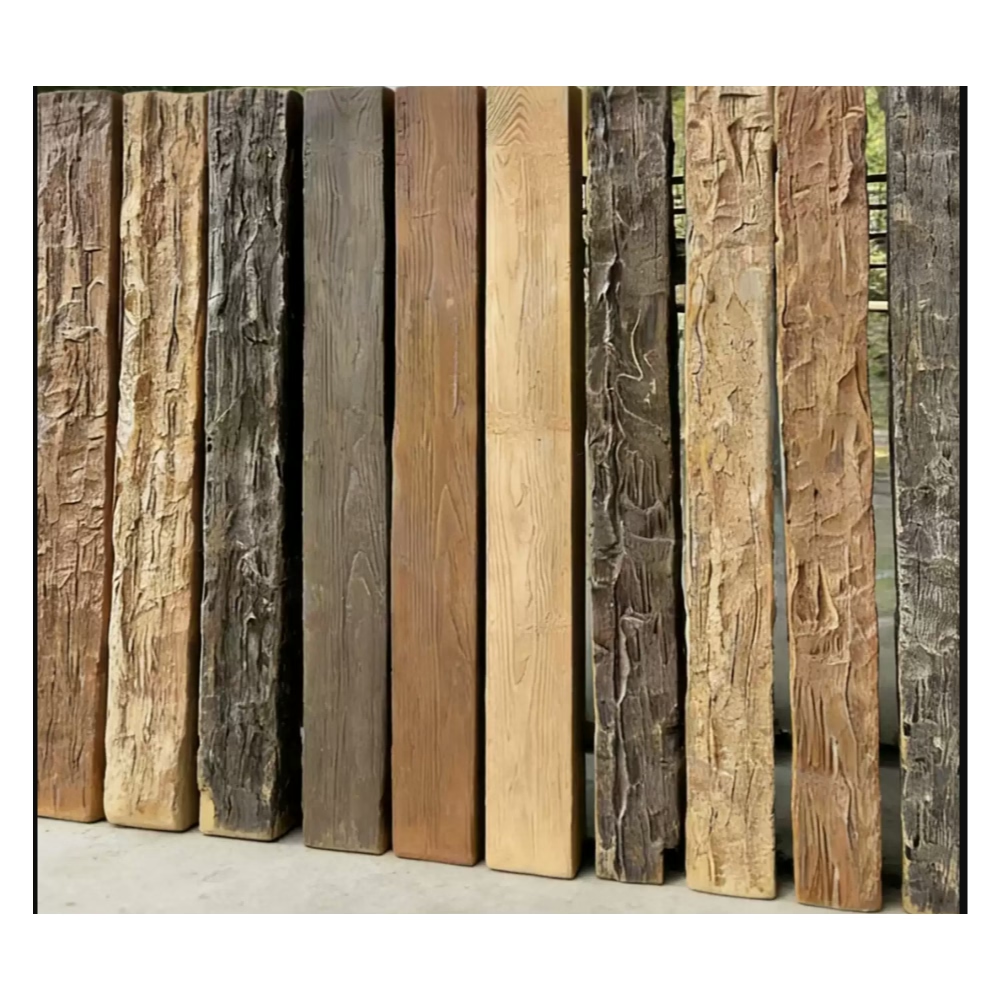
Rustic PU beams with hand-hewn textures work well in farmhouse, craftsman, lodge, and heritage-style homes. The deep grain patterns and irregular surfaces read as authentic rustic elements that have been part of the home for generations.
The premium PU versions of rustic beams use multiple mold textures to create genuine irregularity. The result looks crafted rather than uniformly molded.
Contemporary and Minimalist Styles
Contemporary homes with cleaner design languages benefit from smoother PU beams in lighter finishes. The beams add warmth without dominating the space, and the simpler profiles integrate well with contemporary furniture and finishes.
For minimalist homes especially, the beams become one of the few ornamental features in the room. Choosing the right profile and finish matters more in a minimalist setting because there's less competing detail.
Coastal and Transitional Styles
Coastal homes often feature beams in weathered, driftwood, or whitewash finishes. PU beams achieve these looks convincingly and handle the humidity of coastal environments without the warping that real timber would suffer.
Transitional homes blend traditional and contemporary elements, and beams in transitional finishes — medium tones, moderate texture, classic profiles — work well across both halves of the style spectrum.
Industrial and Urban Styles
Industrial-style interiors have become more sophisticated over the years, and beams are part of the vocabulary. PU beams in darker finishes with more pronounced grain patterns support the industrial look without the rough-hewn edges of actual reclaimed timber.
Practical Considerations for Homeowners
The Ceiling Question
Homeowners sometimes worry that beams will make their ceiling feel lower. In most cases, the opposite is true — beams actually emphasize the height of the ceiling by providing a reference point at the top of the room. A ceiling that previously felt like a blank white surface suddenly has structure and rhythm.
For homes with genuinely low ceilings (under 8 feet), thinner beams work better than heavy profiles. A 4x6 beam on a low ceiling reads as an architectural detail. An 8x10 beam on the same ceiling reads as a crushing weight.
Working With Existing Architecture
PU beams can be added to most existing homes without significant structural work. The beams are light enough to mount to standard ceiling framing with appropriate blocking, and the installation doesn't require any changes to the existing walls or ceilings.
For homes with challenging existing conditions — uneven ceilings, exposed ductwork, awkward angles — experienced installers can plan beam layouts that work around the conditions rather than fighting them.
Coordinating With Lighting
Most residential beam installations include lighting as part of the design. The beams can support surface-mounted fixtures, hanging pendants, or integrated lighting channels. The lighting design should be planned in conjunction with the beam layout from the start.
A common approach is to run beams perpendicular to the room's longest dimension, then hang pendant lights from the beams at regular intervals. The pattern creates both architectural interest and functional task lighting.
Working With HVAC and Other Systems
Residential ceilings typically contain HVAC ducts, electrical wiring, and sometimes plumbing. PU beams can be installed around these systems without major rework, but the layout should be coordinated with the existing systems to avoid conflicts.
For homes with exposed ductwork (which is increasingly popular in modern residential design), beams can be designed to complement rather than conceal the mechanical systems. The combination reads as intentionally industrial rather than unfinished.
Long-Term Care
Daily and Weekly Care
The day-to-day care of PU beams is minimal. A weekly dusting with a microfiber cloth or a soft brush removes the accumulation that would otherwise settle into the grain. For deeper cleaning, a damp cloth with a mild wood-surface cleaner works well.
The closed-cell polyurethane doesn't absorb cleaning solutions, so there's no risk of damage from reasonable cleaning products. Avoid abrasive cleaners and scrub brushes, which can dull the finish over time.
Dealing With Damage
Despite best efforts, beams occasionally get damaged — a child's toy, a moving ladder, a falling branch through a nearby window. PU beams are forgiving of damage because the surface can be repaired with flexible filler and matching finish.
For deeper damage that exposes the polyurethane underneath, the repair process involves filling the damaged area, sanding it smooth, and applying matching finish coats. The repair is usually invisible once it's complete.
Refinishing After Many Years
Even with the best care, PU beams will eventually show their age after 15 to 20 years of service. The factory finish may dull slightly, or the homeowner may simply want a different color. In either case, the beams can be refinished in place.
A refinishing project typically takes a weekend for an average room. The beams are lightly scuffed, cleaned, and given a new topcoat in the desired color. The result looks essentially new, and the new finish adds another 10 to 15 years of service life.
Pulling It Together
Faux wood polyurethane beams give homeowners a decor upgrade that lasts for decades with minimal maintenance. They look like solid timber at any zoom level, install in hours rather than days, and adapt to changing design preferences over the life of the home. For homeowners thinking about beams as a long-term investment in their living space, PU beams are worth serious consideration.
Technical References
ASTM standards cited in every specification
Test Data
Lab results from internal testing program
Updated 2026
Reviewed against current product specs