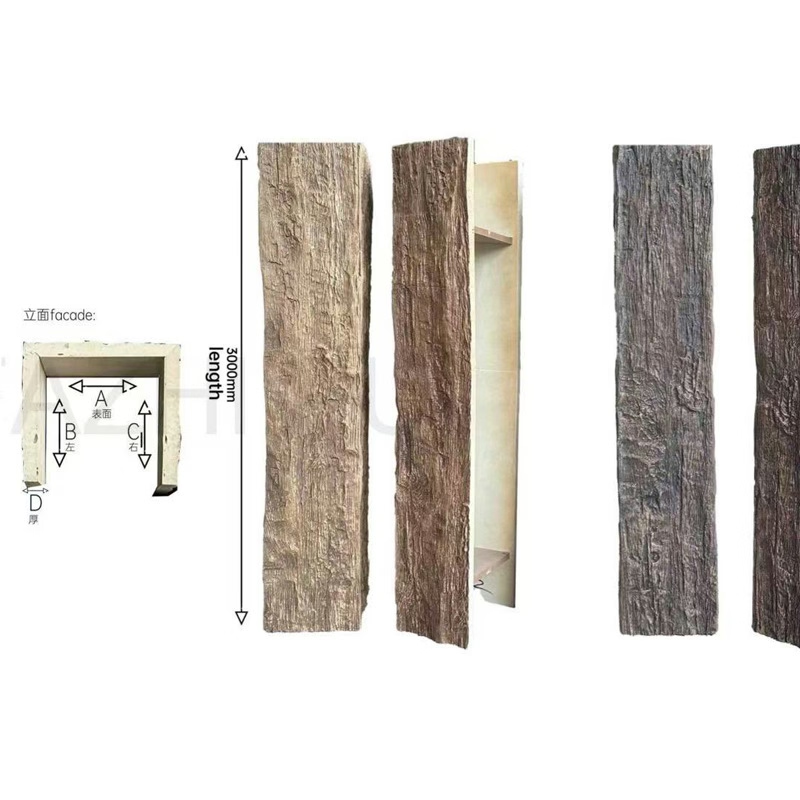
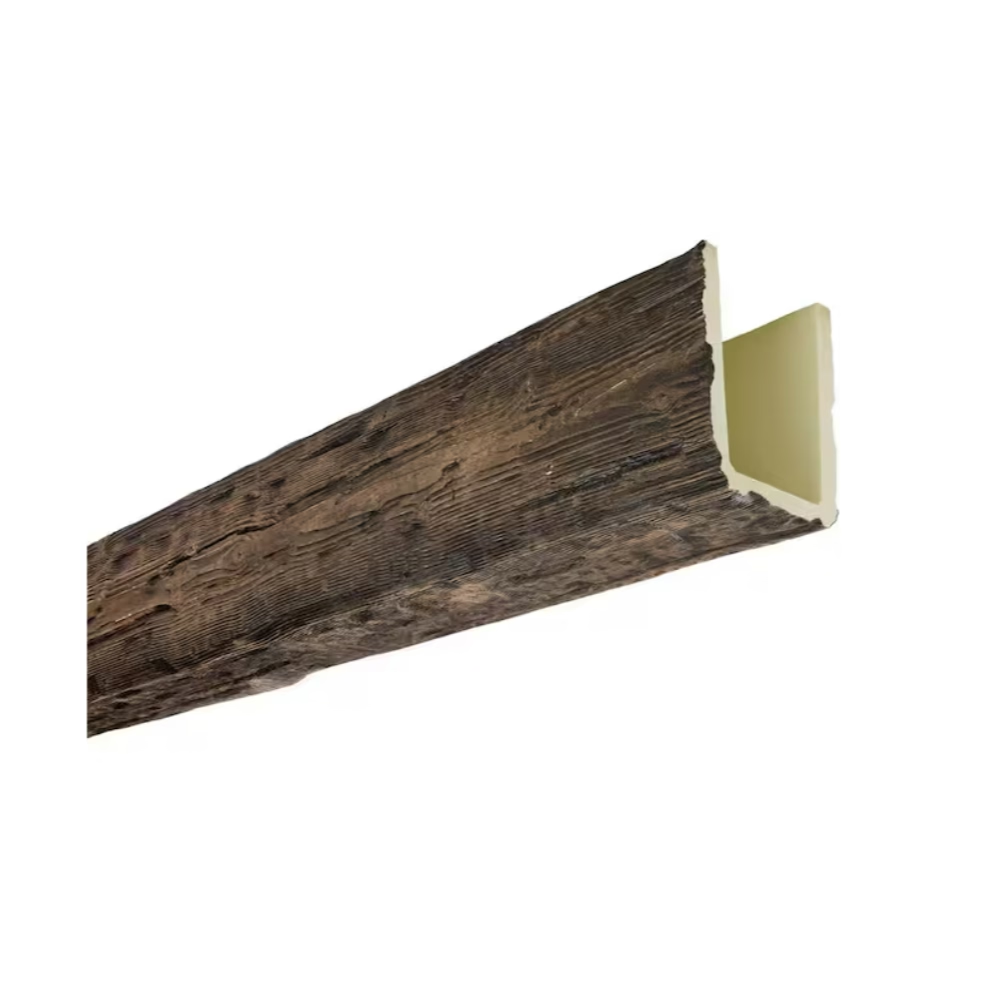
The first thing visitors notice about a bedroom with a vaulted ceiling is how exposed it feels. The pitch rises overhead, light bounces off the angled walls, and the volume of the room seems to float untethered from anything human-scaled. That openness is exactly what makes vaulted ceilings attractive in real estate listings, but it also leaves the room wanting a visual anchor. A run of decorative faux beams across the slope gives the eye something to hold onto.
Why a vaulted ceiling needs beams overhead
A vaulted ceiling without architectural detail feels like an unfinished idea. The homeowner who buys a vaulted room wants the feeling of openness, but the eye still scans for structure. Beams satisfy that scan by introducing geometry overhead. The room stops reading as an empty wedge and starts reading as a deliberately shaped volume.
In practical terms, faux beams address two more problems that come with vaulted ceilings. First, the angled ceiling often leaves a wall of unused vertical space where lighting is hard to mount. Beams create natural pockets for recessed fixtures. Second, vaulted ceilings are acoustically reflective, which can make a bedroom feel hollow or distant. The textured underside of faux beams softens those reflections in a way that flat drywall cannot.
Selecting a layout that suits the pitch
The pitch of the ceiling should guide the layout. Shallow pitches around 6/12 call for beams that run horizontally across the narrow dimension, breaking the slope into rhythmic bands. Steeper pitches around 10/12 or 12/12 work better with beams that follow the ridge line, drawing the eye toward the peak and emphasizing the height.
A common mistake is to assume that more beams create more drama. In a vaulted bedroom, three to five beams usually read better than seven or nine. Each beam needs at least 18 inches of unencumbered ceiling on either side to register as a separate line. Crowding the slope with tightly spaced beams flattens the perspective and undermines the very openness that made the ceiling attractive in the first place.
Choosing profiles that flatter vaulted geometry
The shape of the beam matters as much as the layout. Smooth, square-edged profiles feel modern and do not fight with the clean planes of a vaulted ceiling. Rough-sawn or hand-hewn profiles add visible texture that reads across a long sloping run, particularly under raking light from a window.
For bedrooms with ceilings over 12 feet at the peak, profiles in the 8-by-10 inch range feel proportionate. Anything thinner tends to look like a piece of trim rather than a structural member. For shallower vaults, 6-by-8 inch profiles can carry the look without making the room feel heavier than it is.
Working with the ridge beam
Many vaulted ceilings already have a structural ridge beam at the peak. A faux beam running alongside or directly against that ridge is a common design choice. The faux member can be sized slightly larger or smaller than the structural one to suggest a hierarchy, or matched exactly when the goal is to read the entire ridge as a single architectural gesture.
When the goal is to integrate new beams with an existing ridge, the finisher should order beams in the same stain tone as the ridge's current polyurethane or varnish. If the original ridge is solid timber, the faux side beams can be matched by sending a physical sample to the manufacturer for custom tinting.
Finish choices for bedroom vaulted ceilings
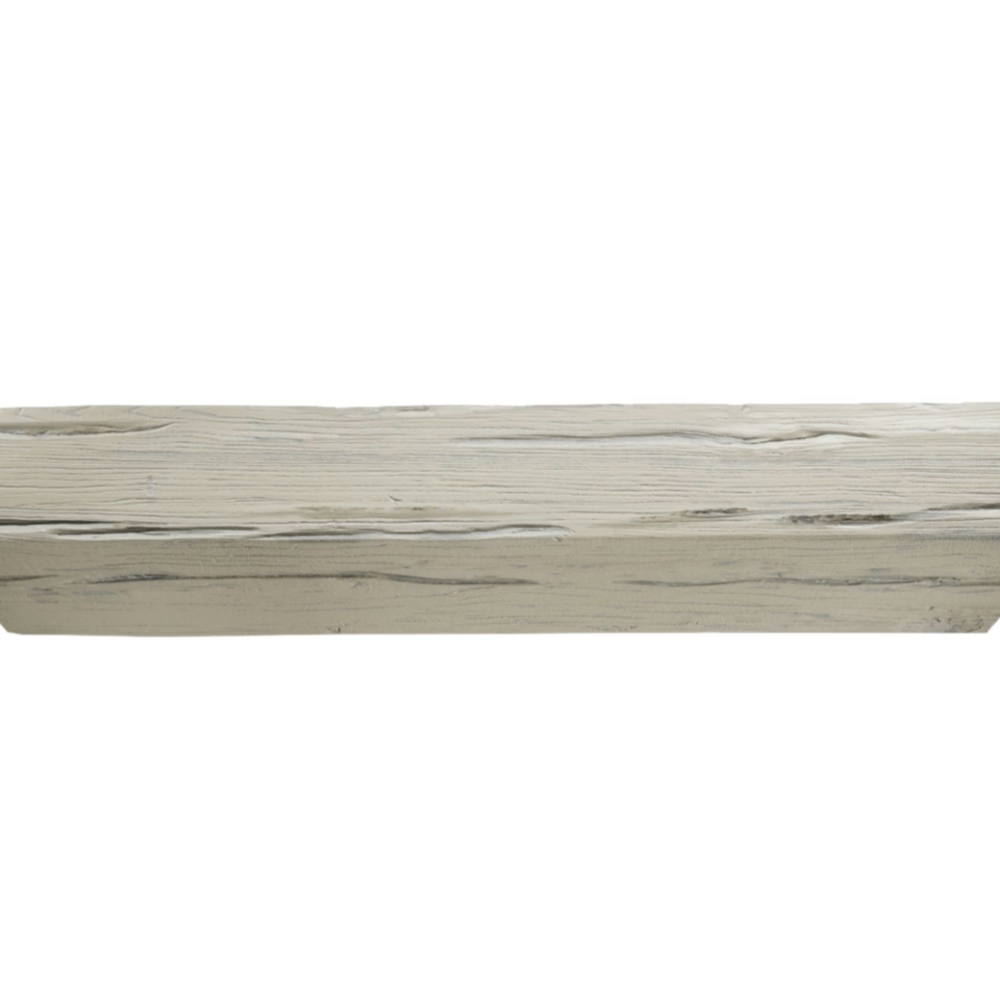
Color and grain are where the bedroom finally stops reading as a generic upgrade and starts reading as a personal space. Warm oak and golden walnut finishes introduce a soft amber tone that flatters soft morning light. Driftwood gray and whitewashed finishes recede into the background and let the architectural geometry speak for itself. Dark walnut or ebony finishes create dramatic contrast, particularly in rooms with light walls and tall windows, but they also darken the perceived volume and may not suit north-facing bedrooms that already feel cool.
A practical approach is to request small finish samples from the manufacturer and tape them to the vault under different lighting conditions for two or three days. The eye makes surprisingly different decisions in morning light, late afternoon light, and artificial light at night. A finish that flatters all three is the safe pick.
Working with darker stains on vaulted ceilings
Dark stains on vaulted ceilings create a feeling of compression at the peak. In tall rooms, this compression is welcome and emphasizes the geometry. In shorter rooms, it can make the ceiling feel like a lid. Designers sometimes alternate dark and medium tones, with the deepest color closest to the ridge and a softer tone moving down the slope. This gradient effect preserves the openness of the lower walls while giving the peak a weighted, intentional feel.
Lighting integration along the slope
Vaulted ceilings make lighting harder than flat ceilings. Wall-mounted fixtures cast light along the slope rather than downward, and recessed cans become visible against the angled plane. Beams offer a third option: fixtures mounted along the beam face that wash the slope with indirect light.
A typical arrangement uses small LED pucks or linear strips along the underside of each beam, pointed toward the ceiling. The beam face stays in soft shadow while the slope receives a gentle wash. In a bedroom, this is gentle enough for evening use without harsh glare at eye level when the occupant is reading or settling in.
Recessed lights between beams
For rooms that need more substantial illumination, recessed fixtures can be placed in the gaps between beams. Because the gaps correspond to the flat ceiling plane between beam runs, the cans sit at a uniform angle. This approach provides task lighting while letting the beams themselves remain quiet, sculptural elements.
Fans and skylights
Vaulted bedrooms frequently include either a ceiling fan or a skylight. Faux beams can be coordinated with both. A fan can be mounted on a beam-bracket system that tucks the wiring through the hollow polyurethane core, or centered between two parallel beams. Skylight wells can be framed with a short beam ring that emphasizes the opening rather than competing with it.
Acoustics and comfort in the bedroom
A vaulted bedroom absorbs and reflects sound differently from a flat-ceiling bedroom. Footsteps, HVAC cycles, and outdoor noise travel upward into the peak before echoing back down. Even with carpet and drapery, the room can feel echoey, particularly during the quiet hours when occupants are most likely to notice.
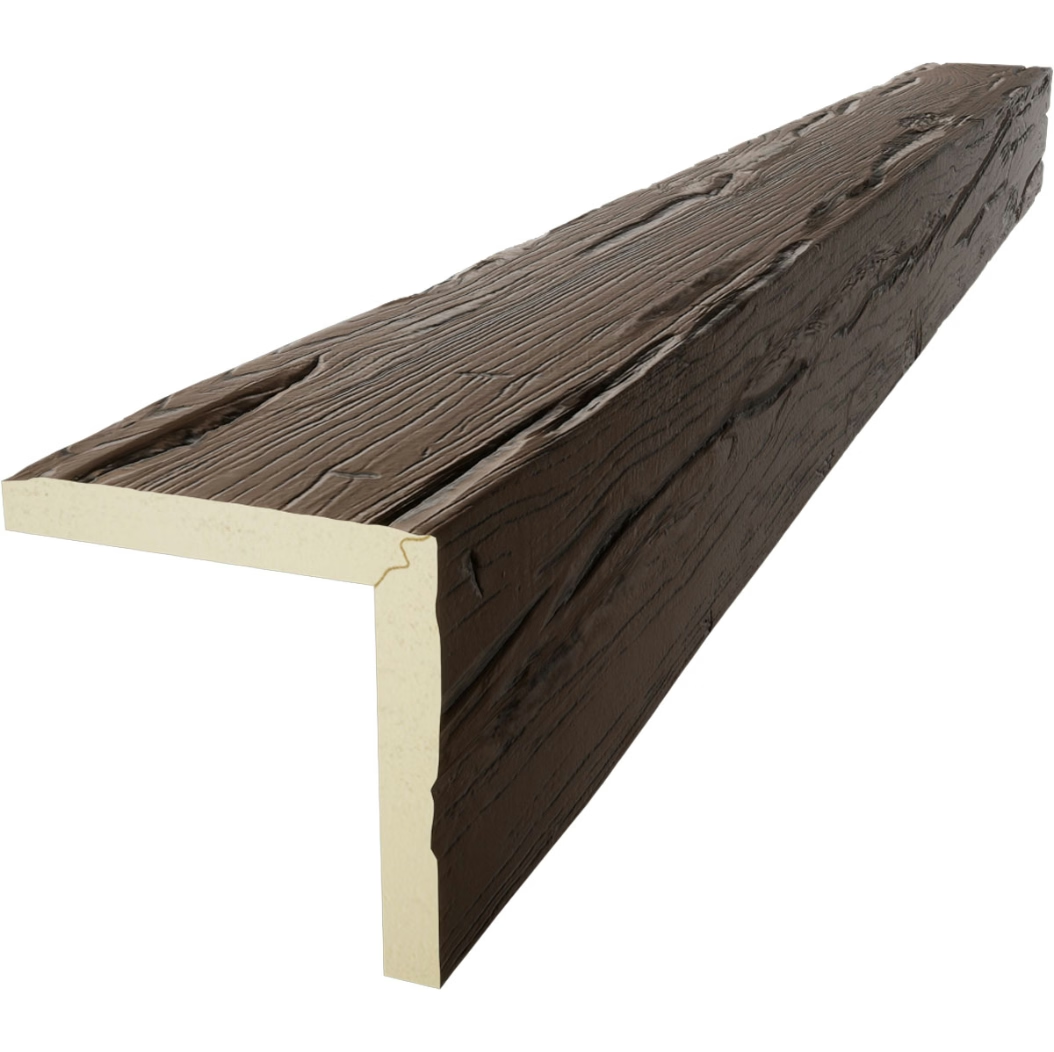
Adding faux beams is a small acoustic intervention that helps. Each beam introduces a textured surface that diffuses reflections. Combined with upholstered furniture, fabric wall panels, and soft window treatments, the beams contribute to an overall acoustic softness that translates directly into improved sleep. Designers and acousticians sometimes describe the difference as a shift from "hard and reflective" to "warm and contained."
Practical installation notes
Installing faux beams on a vaulted ceiling requires careful layout work. Each beam has to land on solid framing or on cross-blocking installed between rafters. Many installers will run chalk lines first, then verify framing with a stud finder or by exposing small inspection holes.
Most polyurethane beams arrive in lengths that are easy to handle by two people on ladders or a small scaffold. For vaulted work at significant height, installers sometimes pre-assemble sections on the floor and lift them into place with a scissor lift. This reduces overhead work and improves alignment for long runs.
Sealing and finishing on site
Once the beams are mounted, the seams at corners and at butt joints receive a small bead of paintable caulk. After curing, the seams are lightly sanded and touched up with the manufacturer's stain. The end caps and any decorative corbels or knee braces are installed last, sometimes as decorative-only pieces that fit over the structural connection to keep the working hardware out of sight.
A short case study in proportions
Consider a master bedroom with a 14-by-18 foot footprint and a vaulted ceiling that runs from 9 feet at the eaves to 14 feet at the ridge. Three beams running parallel to the ridge, spaced about 4 feet apart along the slope, give the room a strong central rhythm. The two outer beams sit at the eave line, and the middle beam aligns with the peak of the bed's headboard below. The visual effect is a clear axis: the bed below the central beam, framed by the two outer beams, with the ceiling rising to the ridge between them.
Add indirect lighting along the underside of each beam, with one recessed downlight between each pair for ambient fill, and the room feels warmly composed even when the bed itself is the only piece of furniture. This is the kind of overnight transformation that drives residential remodels and is one of the strongest arguments for considering faux beams whenever a vaulted bedroom is being redecorated.

Maintenance over the long term
Polyurethane beams are finished at the factory and require very little once installed. An annual dusting with a microfiber cloth keeps the surface clean. If a stain gets scuffed near the seam, a small brush and matching stain restores the appearance. Unlike solid timber, polyurethane does not need to be re-oiled, and it does not check or cup when the room's humidity shifts.
The most common long-term issue is the appearance of small cracks along the ceiling line where seasonal movement in the framing pulls at the caulk. These cracks are straightforward to monitor, and a quick touch-up during the bedroom's annual repaint cycle keeps the installation looking pristine. With this kind of modest maintenance, a vaulted bedroom with faux beams will look essentially the same at year ten as it did on installation day.
Technical References
ASTM standards cited in every specification
Test Data
Lab results from internal testing program
Updated 2026
Reviewed against current product specs