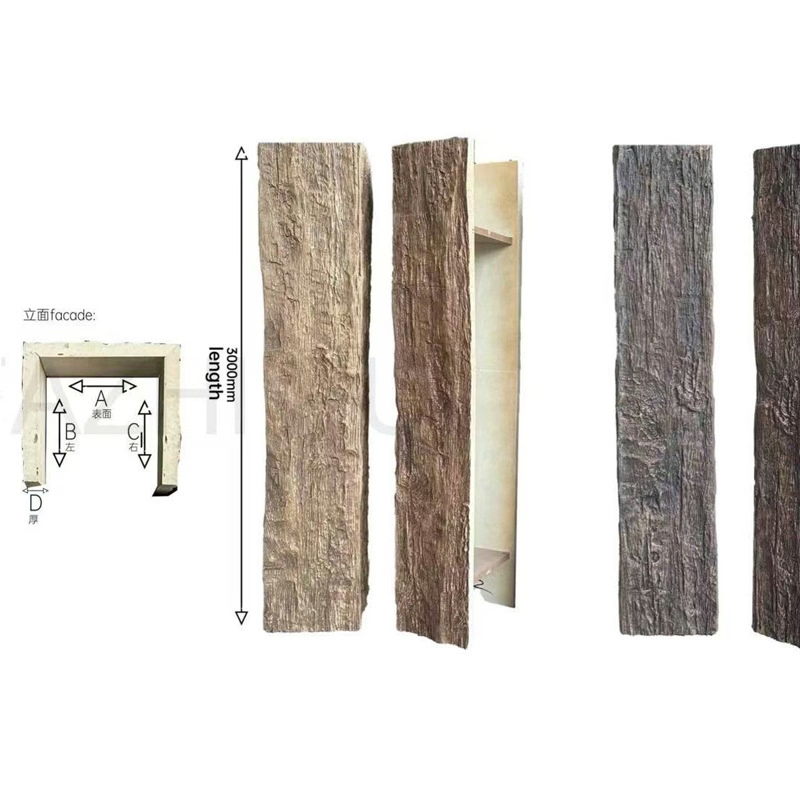
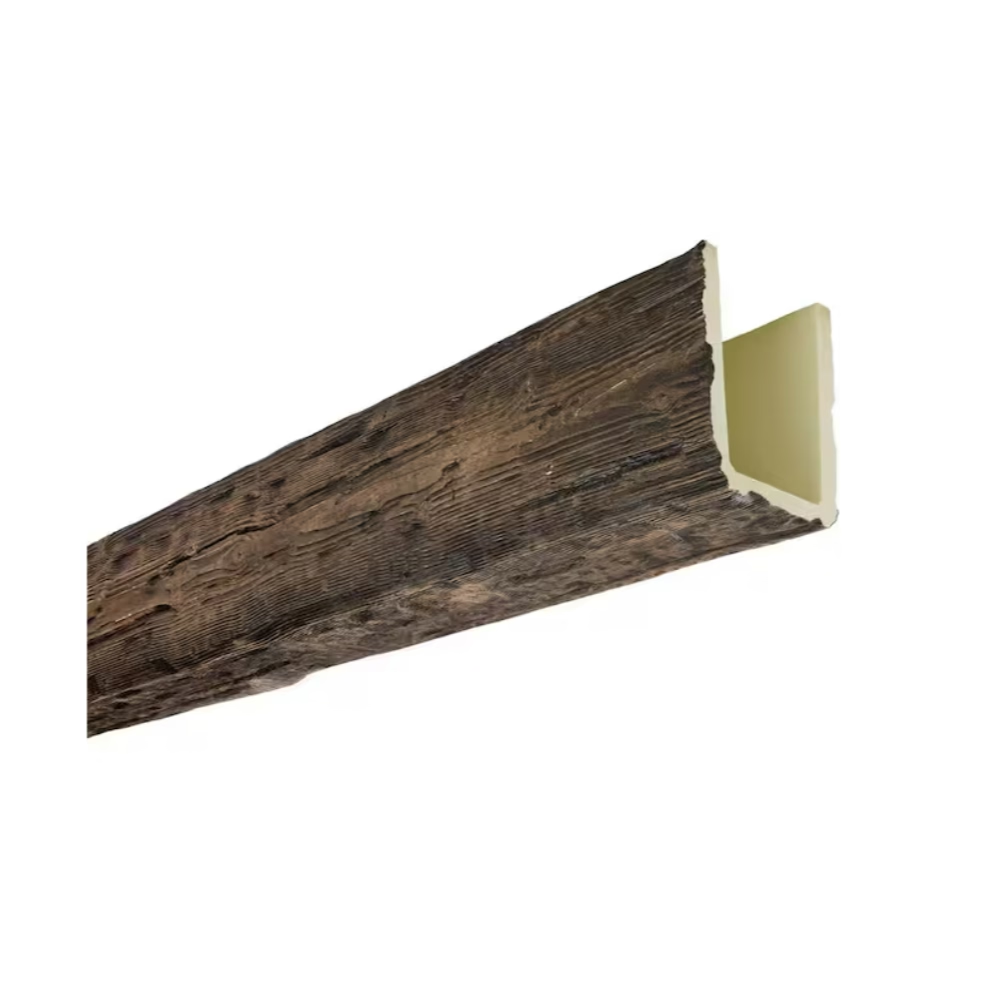
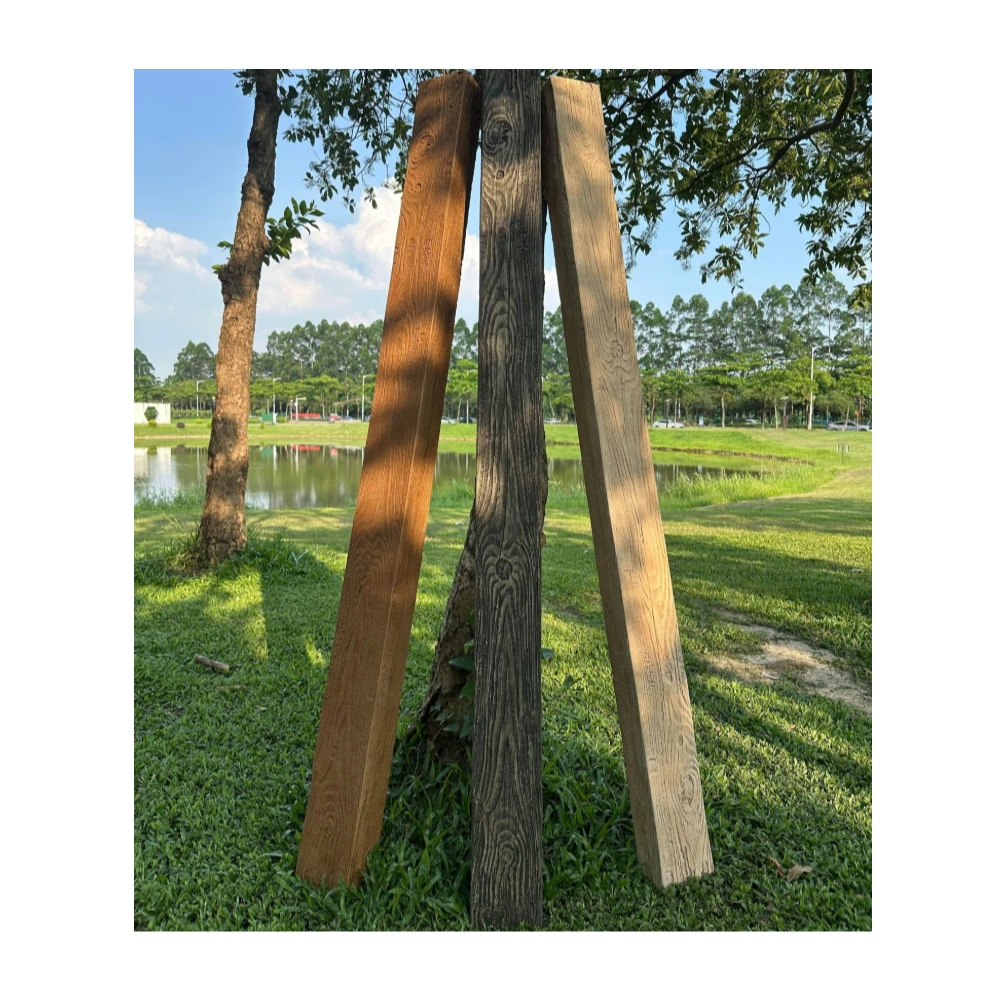
A library is a room that should feel rooted. Whether it is a small residential reading room or a grand private study, the space benefits from a sense of permanence overhead. PU faux wood beams offer the classical weight of an old-world library without the structural complications that come with installing real timber.
Why traditional library design leans into beams
The classical library is one of the few rooms where exposed beams are not just decorative but expected. Visitors read the room differently when beams are overhead. Books feel more anchored, leather chairs feel more appropriate, and the reading lamp on the side table feels like part of a coherent scene rather than an accessory. The room takes on the feeling of a place built for slow, deliberate thought.
A brief history of the beamed library
The library as we know it is a relatively recent invention. Before the 18th century, books were stored in chains in lecture halls or in private closets within larger apartments. The private library as a separate room emerged with the rise of the gentry class and the bourgeois reading habit. Timber ceilings were a natural choice for these rooms because they were already the structural reality of the architecture. The visual language carried forward even after plaster ceilings became dominant.
The psychological effect of beamed overhead
People behave differently in rooms with visible overhead structure. They speak more quietly. They move more carefully. They settle in. A library should do all of these things. Beams signal that the room is enclosed in the sense of being finished and considered, not merely closed.
Selecting the right faux beam profile for a library
The profile choice depends on the architectural style the library is evoking. Different historical periods favor different proportions.
Tudor and Jacobean libraries
Tudor and Jacobean rooms feature chunky, deeply textured timber with visible tool marks. Faux beams in this style are typically 8-by-10 or 10-by-12 inches, with pronounced grain and irregular edges. The finish is usually aged oak, with darker walnut accents in the deep grain.
Federal and Georgian libraries
Federal and Georgian architecture favor more refined beams with cleaner profiles. Smooth surfaces with crisp edges, in rich mahogany or cherry tones, suit these interiors. Beam profiles in the 6-by-8 to 8-by-10 inch range work well, with a slight chamfer or bevel on the lower edges for added refinement.
Arts and Crafts libraries
Arts and Crafts interiors favor exposed structure with honest materials. Faux beams in this style are often 8-by-10 inches in quarter-sawn oak or fir tones, with a slightly rough texture that emphasizes the wood grain. The ceiling may include cross-beams and even knee braces for a more structural appearance.
Modern traditional libraries
Modern libraries that lean traditional often use cleaner profiles with simpler finishes. Walnut or medium oak tones, smooth surfaces, and profiles in the 6-by-8 inch range create a quiet, refined atmosphere that suits a wide range of book collections.

Working with coffered ceilings in libraries
The coffered ceiling is the most elaborate expression of the beamed library. Beams arranged in a grid create rectangular or square coffers overhead. Each coffer can be finished in a contrasting color, lined with fabric, or left to read as bare ceiling. The effect is significant and classical, and it works beautifully in libraries with adequate ceiling height.
When coffered ceilings work
Coffered ceilings require a minimum ceiling height of about 9 feet. Below that, the coffers feel cramped and the room becomes busy. Above 10 feet, the coffers have room to breathe and the grid pattern becomes a defining feature.
Combining coffered ceilings with crown molding
A coffered ceiling in a library almost always pairs with substantial crown molding. The molding runs around the perimeter of the room, framing the coffered area and providing the transition from wall to ceiling. PU crown molding in the same finish as the beams ties the design together.
Lighting coffered ceilings
Each coffer is an opportunity for a small light fixture or a recessed downlight. The lights wash the coffer sides with grazing light, which emphasizes the depth of the coffers and the texture of the beam faces. In a library, this kind of lighting is ideal because it provides even, indirect illumination that does not glare off book covers or reading surfaces.
Library-specific installation considerations
Libraries are full of books, which means the room is often packed floor to ceiling with shelving. The beam installation has to navigate around bookshelves, ladders, and reading furniture.
Working around built-in shelving
Built-in shelving often runs floor to ceiling. Beams that cross the room will likely cross several shelving units. The brackets should be mounted to the ceiling framing, not to the shelves themselves. The beams can sit above the shelving or can pass over the top of the shelves with a small gap.
Sliding library ladders
Many traditional libraries include sliding ladders on metal rails. The rails mount to the shelving, but the ladder swings across the front of the shelves. Beams overhead should not interfere with the ladder's swing path. Designers should confirm ladder clearance before finalizing the beam layout.
Reading nooks and built-in window seats
Libraries often include reading nooks with built-in window seats. Beams overhead the nook can create a cozy, sheltered feeling. Where the nook is below a window, beams can be placed to frame the window from above without blocking significant amounts of natural light.

Acoustic and lighting qualities
Libraries need quiet and good light. Beams contribute to both when planned with these needs in mind.
Acoustic behavior
Books absorb sound well, and the textured undersides of beams contribute additional absorption. A traditional library with beamed ceiling, full bookshelves, and a wool rug is one of the quietest rooms in any house. Polyurethane beams preserve this quality because their surface texture is consistent and slightly rough, which helps scatter high-frequency sound.
Layered lighting for evening reading
A traditional library benefits from layered lighting: ambient light from above, task light from a reading lamp, and accent light from a small picture light over a featured artwork. Beams can host any of these. Surface-mounted picture lights or small directional fixtures on the beam faces add the third layer without requiring additional ceiling fixtures.

Practical challenges and how to solve them
A few challenges appear often enough in library beam installations to deserve specific attention.
The fire-rated ceiling in some homes
Some jurisdictions require fire-rated ceilings in rooms with extensive built-ins or in attached garages that have been converted. Adding polyurethane beams to a fire-rated ceiling should not compromise the rating, but installers should confirm with the local code official before beginning work.
Acoustic isolation between floors
In homes where the library is on an upper floor, the floor below may be a quiet bedroom or study. Beams do not transmit sound in any meaningful way, but the installation process can create noise. Drilling, cutting, and mounting all produce transient noise that should be planned around quiet times if the floor below is occupied.
Coordinating with HVAC
Libraries often have radiators, floor vents, or rarely, overhead ductwork. The beam layout should avoid crossing supply ducts. Return ducts can usually be navigated by notching the beam slightly. Radiators under windows do not affect the ceiling, but they can affect the wall finish choice, which in turn affects the beam finish selection.
Matching beams to furniture and finishes
A library's beams should relate to the furniture below them. The most successful designs create a direct visual link between the overhead structure and the most important pieces in the room.
Beam finish and desk wood
A writing desk is often the focal point of a private library. If the desk is in walnut, the beams in walnut create a clear visual conversation. If the desk is in mahogany or cherry, the beams can match. This kind of finish repetition is one of the simplest ways to make a room feel composed.
Beam finish and book leather
Traditional libraries often include leather-bound books or leather chairs. Warm-toned beams pair with these materials naturally. Painted beams in pale tones would feel out of place in a room with rich leather. The choice of beam finish should consider the existing palette.
Beam finish and rug color
Wool rugs in deep reds, blues, or earth tones are common in traditional libraries. Beams with a medium tone, neither too dark nor too pale, tie the rug color into the ceiling. Very dark beams and very dark rugs create a heavy room. Very pale beams and very pale rugs create a washed-out room. The middle ground works best.
A short note on bookshelves as architecture
In many traditional libraries, the bookshelves themselves are architectural elements. They have crown molding, base molding, and pilasters that frame each section. Beams overhead should respect this architectural language. The simpler the beam profile, the more the bookshelves can carry the design. The more elaborate the beam profile, the simpler the shelves should be. The two elements together should feel like a coordinated whole, not a competition.
Technical References
ASTM standards cited in every specification
Test Data
Lab results from internal testing program
Updated 2026
Reviewed against current product specs