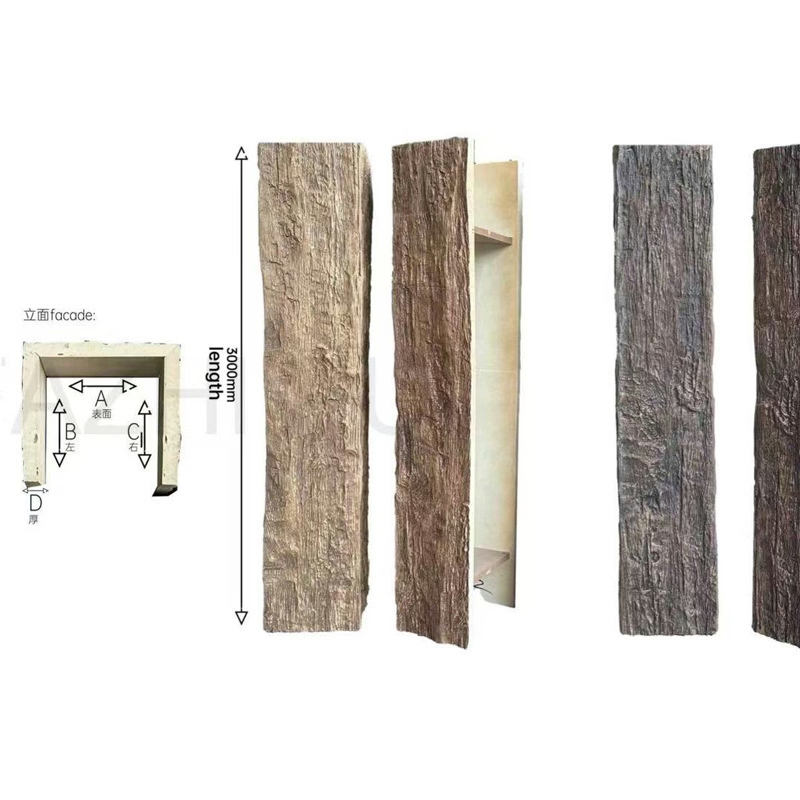
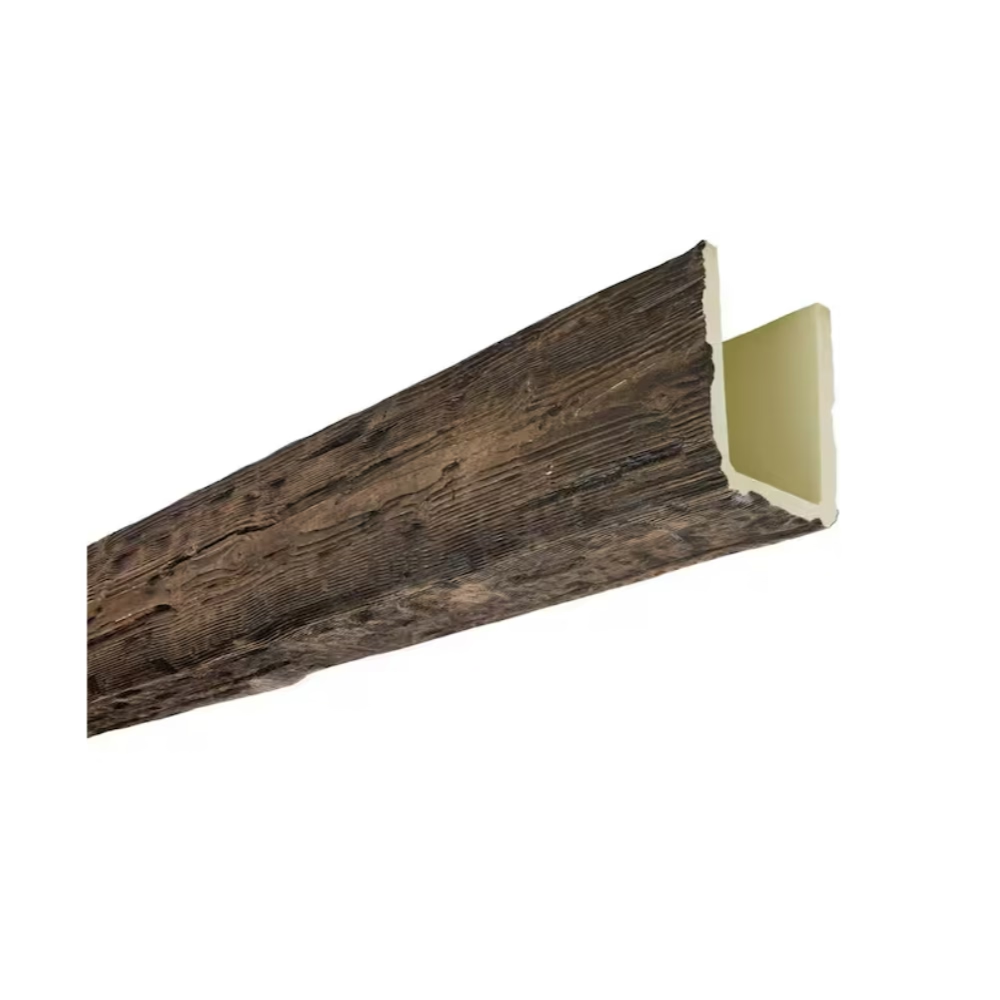
A modern dining room is often the room in the house with the least amount of stuff. There is a table, a set of chairs, a pendant overhead, and not much else. That minimalism can read as serene in a magazine and slightly underwhelming in real life. PU faux wood beams give the modern dining room the architectural structure it needs without adding visual clutter.
Why modern dining rooms benefit from beams
Modern design removes a lot of the trim, molding, and ornamentation that traditional interiors rely on. The result is clean, but it can also feel unfinished. Beams are a way to add architectural intent without reintroducing traditional detail. They are functional in feel, sculptural in proportion, and they integrate with the lighting that the room depends on.
Defining the table in an open plan
Modern homes tend to be open plan. The kitchen, dining area, and living area share one continuous volume. Without a clear ceiling structure, the dining table can feel like furniture placed in a room rather than a destination in its own right. Beams overhead the table create the boundary that defines the dining zone. Two parallel beams with the pendant between them read as deliberate architecture, and the table below feels intentionally placed.
Anchoring the pendant light
Pendant lights in modern dining rooms tend to be sculptural: a long linear fixture, a single oversized globe, or a cluster of small pendants at varying heights. These fixtures need a structured overhead context. A flat ceiling provides nothing. A beamed ceiling provides exactly the right amount of structure to make the pendant feel anchored.
Beam profiles that suit modern interiors
Modern design favors simple geometry. The beam profile should be straightforward, with clean lines and minimal ornament.
Square-edged profiles
Square or rectangular profiles with crisp edges are the modern default. They read as architectural elements rather than decorative ones. Common sizes are 6-by-8 inches for 8 to 9 foot ceilings, and 8-by-10 inches for 9 to 10 foot ceilings.
Beveled lower edges
A slight bevel along the lower edges of the beam adds a subtle refinement. It catches light along the chamfer and prevents the beam from looking like a simple box. This profile works particularly well in modern interiors that are not strictly minimalist.
Inset or recessed details
Some modern beam profiles include a small inset or recess along the side faces. This adds depth without adding visual weight. The recess can host a thin LED strip for indirect lighting, which is a popular feature in contemporary interiors.
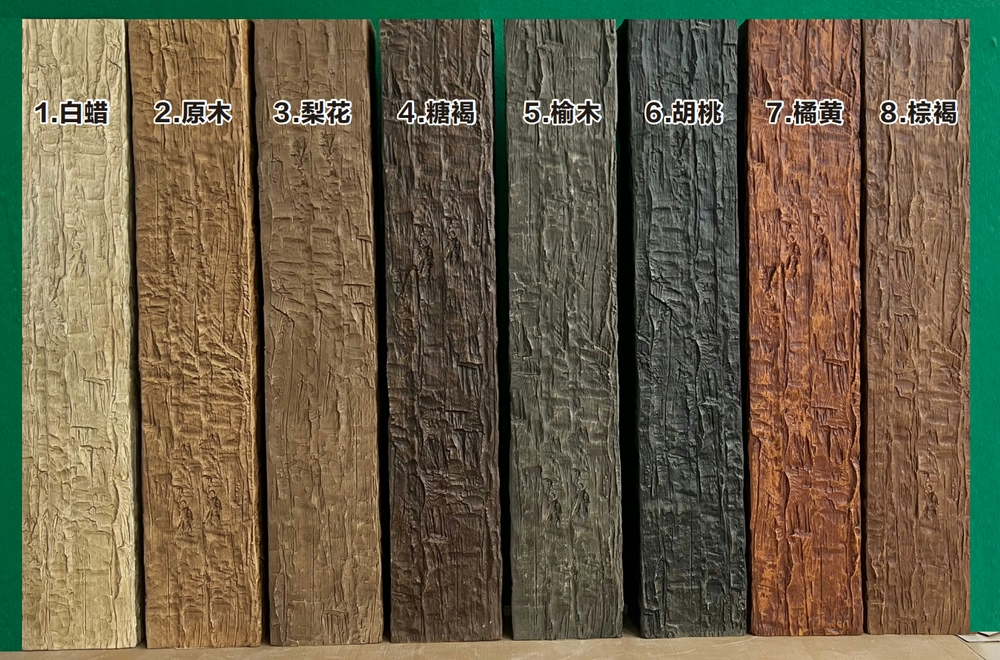
Color and finish for modern dining rooms
Color choice is the strongest signal of the room's character. Modern interiors can swing from warm and material-focused to cool and pale, and the beam finish should match.
Warm walnut and oak tones
Warm walnut or medium oak beams pair with white walls, pale floors, and a wood dining table. The room feels contemporary but not cold. This is the most popular choice for modern Scandinavian and mid-century-inspired interiors.
Charcoal and black beams
Charcoal, black, or very dark walnut beams read as graphic elements. They work well in modern industrial interiors, in rooms with high contrast, or in spaces where the beam is meant to be a deliberate focal feature.
Pale oak and whitewashed finishes
Pale oak, whitewashed, or limed finishes keep the room light. They pair with white walls, pale floors, and light wood furniture. The beams provide overhead structure without adding visual weight, which suits minimalist and Japanese-inspired interiors.
Two-tone beams
A two-tone finish, with a slightly darker top edge and a paler face, creates a subtle depth effect. This is a sophisticated choice that works well in upscale modern interiors. The transition can be soft and gradual, or sharp and architectural.
Working with modern lighting schemes
Lighting is the strongest design element in most modern dining rooms. Beams should support the lighting plan rather than compete with it.
Linear pendants between parallel beams
Two parallel beams running perpendicular to the table's long axis, with a linear pendant between them, is the modern dining room classic. The pendant runs parallel to the beams and to the table. The composition is balanced, and the beams hide the wiring that drops to the pendant.
Statement pendants on a single beam
A single oversized pendant, like a globe or a drum, can hang from a single beam if the bracket is strong enough. The beam becomes the structural anchor for the pendant, even though the actual electrical support runs through the ceiling above. The composition works particularly well in dining rooms with high ceilings where a single beam crossing the room makes a strong architectural statement.
Recessed downlights integrated into the beam layout
For minimalist modern interiors where a pendant feels too decorative, recessed downlights between beams provide even illumination. The beams create the rhythm, and the downlights provide the light. This is a clean, restrained approach that works well in apartments and smaller dining areas.
Indirect lighting from LED tape
Thin LED tape can be recessed into the inner corner where the beam meets the ceiling. The light washes the ceiling, providing indirect illumination that is gentle on the eyes. This is a feature of contemporary dining design that pairs naturally with polyurethane beams, which are easy to modify for small recesses and channels.
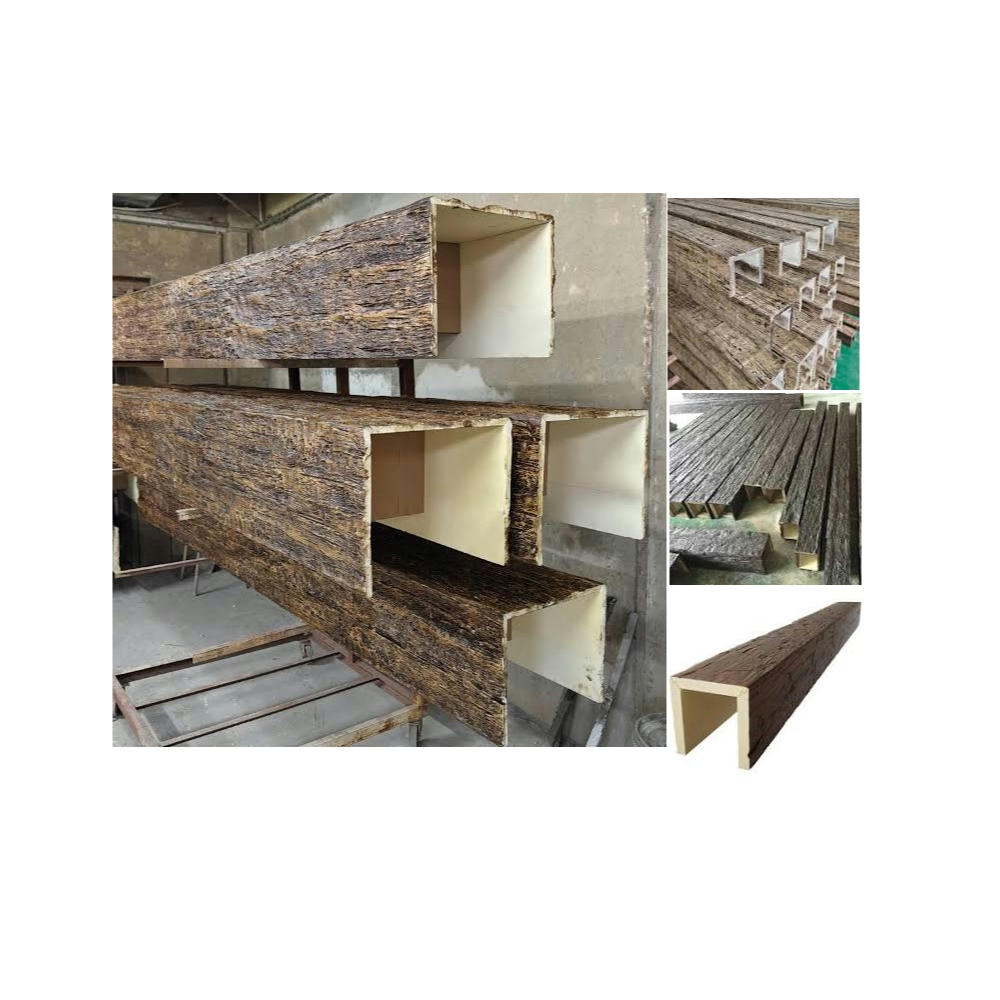
Materials, finishes, and the rest of the room
Modern dining rooms tend to feature a tight material palette. The beams should fit within that palette rather than introducing a new element.
Wood as a unifying material
If the dining table is in walnut and the sideboard is in oak, the beams can tie these together in one finish. The room reads as material-coherent. This is a simple and effective way to make a modern room feel composed.
Mixing materials carefully
If the dining table is glass or stone, the beams become the warm element that prevents the room from feeling cold. The contrast between a stone table and wood beams is one of the strongest material conversations in modern interior design, and it works especially well in larger spaces.
Coordinating with art and accessories
Modern dining rooms often include a single piece of art or a sculptural accessory as a focal point. The beams should not compete with this focal point. A neutral beam finish that recedes behind the focal point, or a beam finish that echoes the art's color palette, keeps the composition coherent.

Installation in modern ceiling conditions
Modern homes often have complex ceiling conditions: recessed lighting, ceiling speakers, sprinklers, and HVAC. Polyurethane beams work with these elements, but the planning should happen before the beams are ordered.
Working with concrete ceilings
Modern apartments and condos often have concrete ceilings. Mounting beams to concrete requires concrete anchors, which are straightforward but require a hammer drill and the appropriate drill bits. The lightweight nature of polyurethane beams means that smaller anchors work, and the install can proceed without major structural concerns.
Working with dropped ceilings
Some modern interiors have dropped ceilings or tray ceilings as a deliberate design element. Beams can be installed on the dropped portion, framing the lower ceiling area, or they can run across the higher ceiling above the dropped section. Either approach works; the dropped ceiling often benefits from being visually anchored by a beam at its perimeter.
Working with existing track lighting
Track lighting is common in modern dining areas. Beams can be installed alongside existing tracks, with the tracks running between beams or being replaced by fixtures mounted to the beam faces. Many designers prefer this approach because it eliminates the visual clutter of separate track systems and integrates the lighting into the architectural ceiling.
The role of faux beams in apartment dining areas
Apartment dining areas are often small corners of larger rooms, defined only by a table and a pendant. Beams can create the sense of a separate room without adding walls. Two beams overhead the table, with a pendant between them, define the dining zone with very little footprint. This is one of the most useful applications of faux beams in modern apartment design.
Working with rental restrictions
Renters cannot always drill into concrete ceilings or make permanent modifications. Faux beams in rental situations can be mounted with construction adhesive rated for overhead use, combined with a few small screws into the existing structure where allowed. When the lease ends, the beams come down with minimal patching. The original ceiling is largely intact, and the renter's deposit stays intact as well.
How to avoid common modern dining room mistakes
The most common mistake is beams that are too small for the ceiling. Modern dining rooms often have higher ceilings than expected, especially in apartments with double-height volumes. A 6-by-8 inch beam in a 12-foot ceiling looks timid. The proportions should match the volume.
The second most common mistake is beams that are too dark for the room. A black beam in a small white dining room overwhelms the space. The beam should match or slightly contrast the room's dominant tone, not invert it.
The third is beams placed without reference to the table. Beams should align with the table's long axis or run perpendicular to it, but they should relate to the table somehow. Beams that ignore the table's position feel arbitrary and undermine the design.
Technical References
ASTM standards cited in every specification
Test Data
Lab results from internal testing program
Updated 2026
Reviewed against current product specs