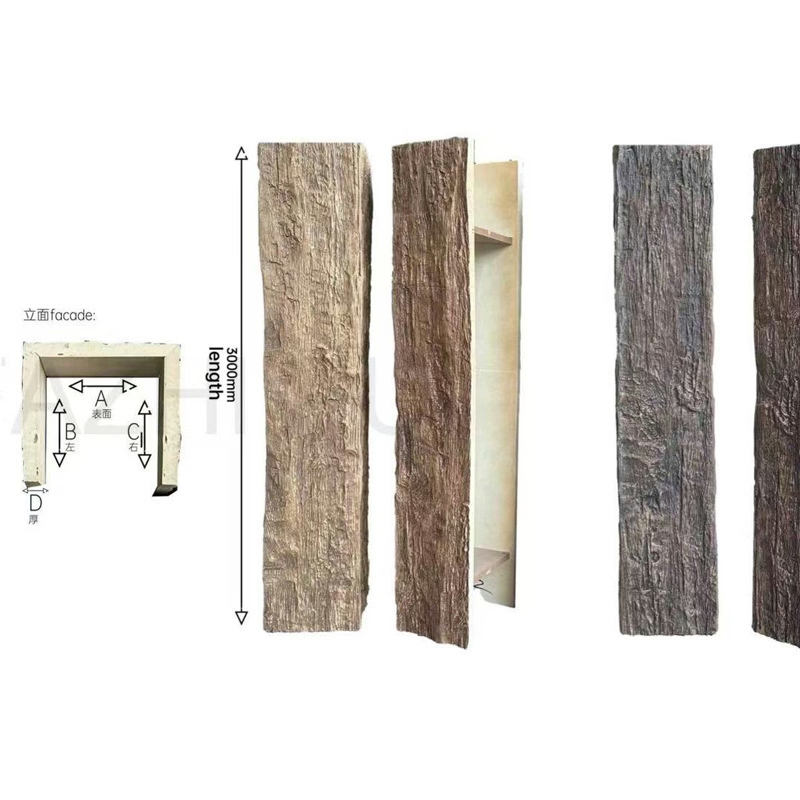
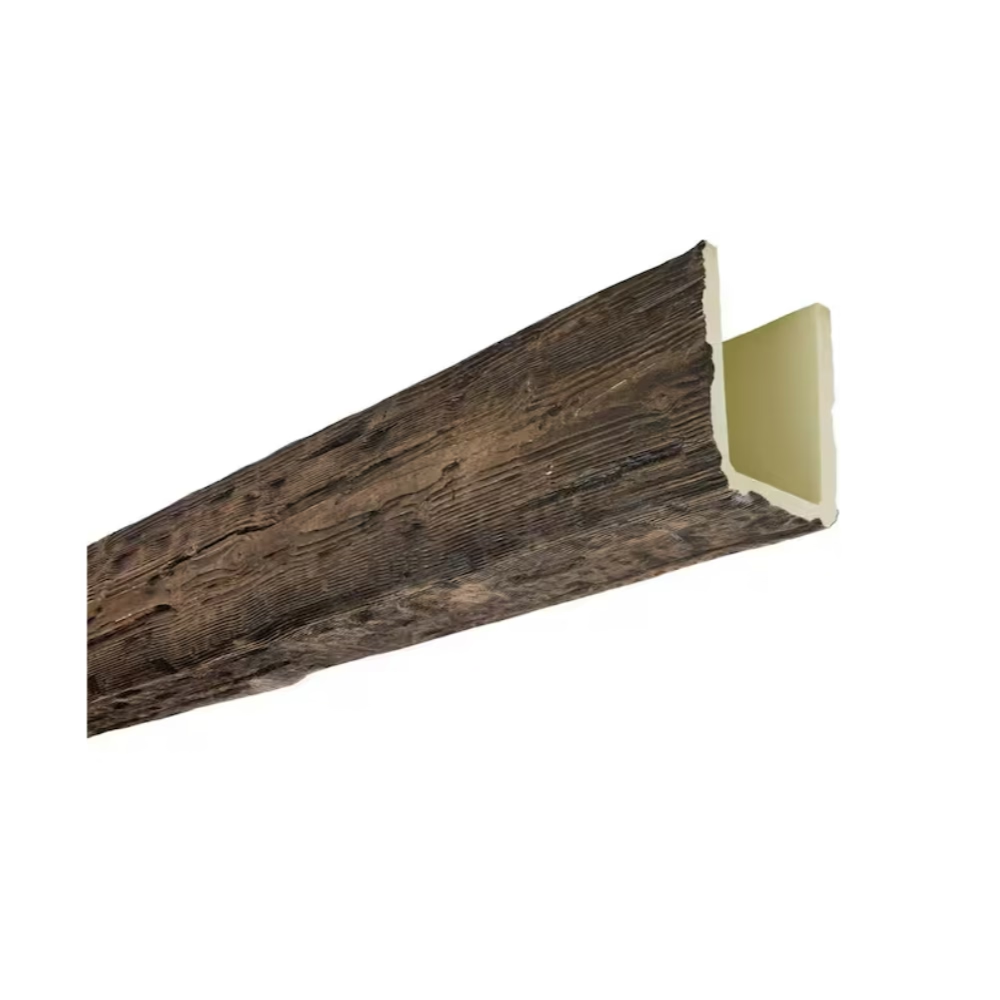
A study room is a place for sustained attention. The desk, the chair, the bookshelf, and the lamp all support concentration, but the ceiling overhead often does the opposite. A flat, featureless ceiling pulls attention upward and outward, which is the opposite of what a study room needs. PU faux wood beams close the room in a calm way, providing the architectural enclosure that focused work requires.
Why a study room is different from other rooms
Most rooms in a home are designed for social interaction. They need to feel welcoming, generous, and visually engaging. A study room is the opposite. It is a room for one person, for thinking, reading, writing, or working. The design language should be quiet, restrained, and personal. The ceiling should support rather than compete with the activity below.
The acoustic role of a beamed study ceiling
Study rooms are usually small, with hard floors and minimal soft furnishings. Footsteps, HVAC cycles, and external sounds all become distractions when the room has no absorption overhead. The slightly uneven underside of faux beams scatters high-frequency sound, which reduces flutter echo and softens the room's overall acoustic profile. Combined with a rug, lined curtains, and upholstered furniture, a beamed ceiling makes a study room genuinely quiet.
The visual role of a beamed study ceiling
A beamed ceiling tells the eye that the room is finished and bounded. The eye registers the beams and stops searching for visual detail overhead. This frees attention for the desk, the screen, or the page. It is a small change with measurable effects on comfort and concentration.
Choosing a beam profile for a study room
Study rooms favor calm, restrained profiles. Loud or rustic beams can be distracting in a small room.
Simple square-edged profiles
A simple square-edged beam in a 5-by-7 or 6-by-8 inch profile works in most study rooms. The proportions are clean, the lines are quiet, and the profile does not pull attention away from the work surface.
Slim profiles for small study rooms
In small study rooms where the ceiling is at or below 8 feet, a slim profile in the 4-by-6 inch range prevents the beams from feeling heavy. The visual rhythm is preserved without compressing the ceiling.
Heavier profiles for libraries and studies
In larger study rooms or in dedicated libraries with high ceilings, a heavier profile in the 8-by-10 inch range can be appropriate. The beams read as architecture rather than decoration, and the room takes on the quality of a private reading room.

Finish and color choices for a study room
The finish of a study room beam should match the room's purpose. Most study rooms use one of three finish families.
Warm walnut or oak for traditional studies
A traditional study room with leather chairs, wood paneling, and classic books pairs with warm walnut or oak beams. The finish ties the ceiling to the wood furniture and the bookshelves, creating a coherent traditional palette.
Pale oak for modern and Scandinavian studies
A modern study with white walls, pale floors, and minimal accessories pairs with pale oak or whitewashed beams. The room feels light, clean, and contemporary. The beams provide structure without adding visual weight.
Charcoal for contemporary studies
A contemporary study with dark walls, modern art, and a sleek desk pairs with charcoal or dark-stained beams. The room takes on a quiet, sophisticated quality. The beams recede into the architecture rather than standing out.
Integrating task lighting
Task lighting is the most important element in a study room. The desk lamp, the floor lamp, and the overhead fixture all need to coordinate.
Beam-mounted task lights
A small adjustable spotlight mounted on the underside of a beam above the desk provides focused light without taking up desk space. The wiring runs through the hollow beam profile, and the fixture attaches to the beam face with a small bracket. This is a clean way to integrate task lighting into a beamed ceiling.
Recessed downlights between beams
For ambient lighting, recessed downlights between beams provide even illumination across the room. The lights wash the desk area, the reading chair, and the bookshelves with even, indirect light. This is ideal for evening work when general illumination is required without glare on the work surface.
Pendant lights for visual balance
A small pendant light, sized in proportion to the room, can serve as a visual anchor that balances the composition. The pendant hangs from the ceiling at a height that does not interfere with the desk or the work surface. It is decorative and functional, providing a soft glow that complements the task lighting.
Coordinating with a desk lamp
The desk lamp is the primary task light in most study rooms. Beams should not cast shadows across the work surface from the desk lamp. The beam layout should account for the desk lamp's position and aim, ensuring that the light reaches the work surface without obstruction.
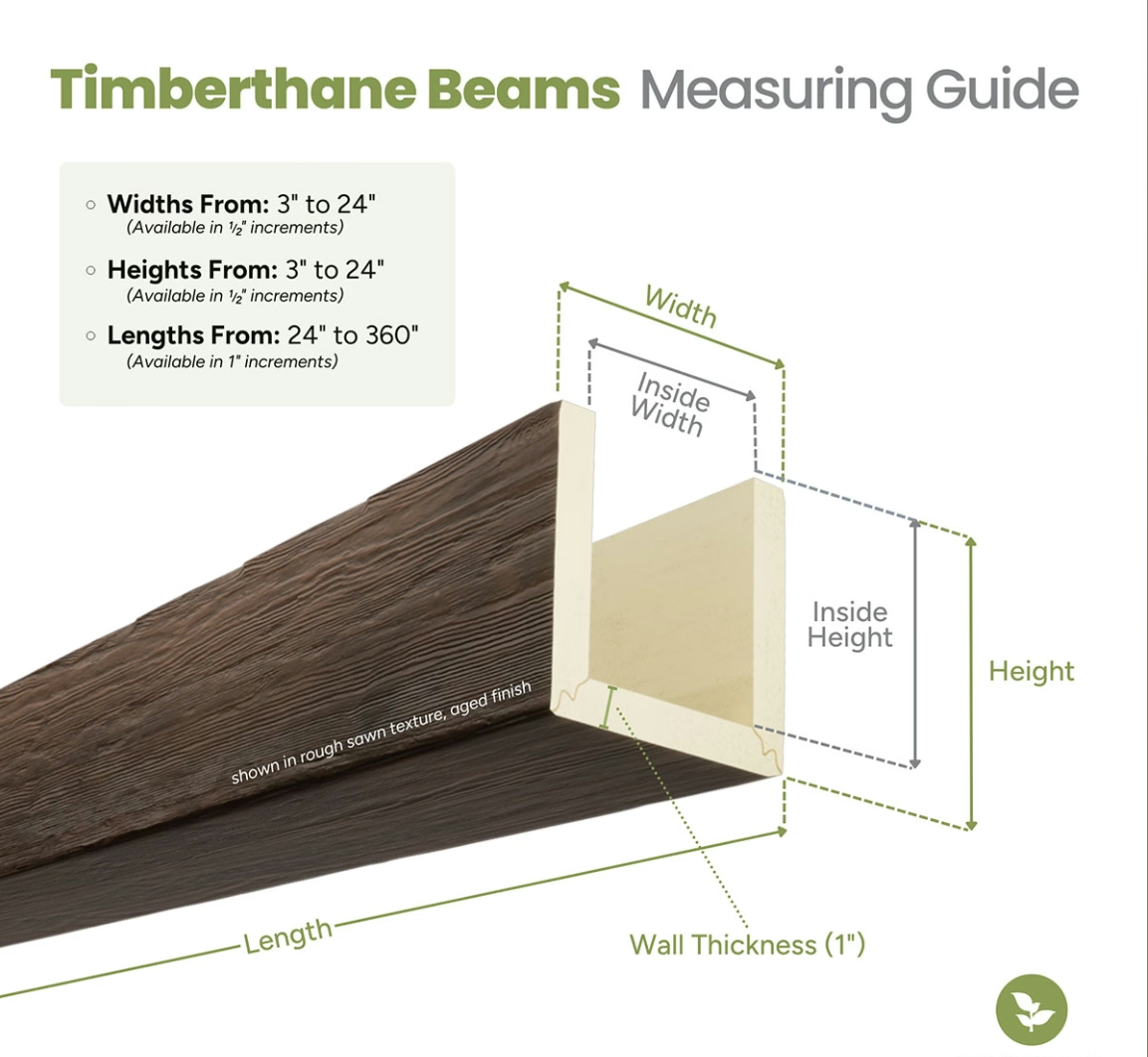
Hiding services in a beamed ceiling
Study rooms often have multiple services overhead: data cabling, speaker wires, projector mounts, and HVAC ducts. Beams are a useful way to hide some of these.
Data and power cabling
Modern study rooms often have multiple devices that need power and data cables. A beam overhead the desk can hide these cables inside its hollow profile. The cables drop down to the desk through a small conduit or a recessed outlet in the beam.
Speakers and audio systems
Some study rooms include built-in audio systems for music or for video calls. Speakers can mount to the beam faces with the wiring hidden inside the beam. This provides clean audio without visible cables.
Projector mounts
Some study rooms include a small projector for presentations or media viewing. A projector can mount directly to a beam if the bracket is structurally appropriate. The projector hangs below the beam at the appropriate throw distance, with all cabling hidden inside the beam profile.
Acoustic isolation in a study room
A study room should be acoustically isolated from the rest of the home. Beams contribute to this isolation by absorbing some of the airborne sound that would otherwise bounce around the room. For higher levels of isolation, additional acoustic treatments can be added behind or between the beams.
Acoustic panels in beam bays
The bays between beams can host acoustic panels covered in fabric that matches the room's color scheme. The panels are barely visible but provide measurable absorption. This is a popular feature in study rooms used for video calls or for focused listening work.
Door seals and window treatments
Beams alone cannot solve a noise problem from an adjacent room or an outside source. Door seals, double-glazed windows, and lined curtains all contribute. Beams should be considered one element of a broader acoustic strategy, not the whole strategy.

Common layouts for a beamed study room
A few layouts appear often enough to deserve mention.
A single beam above the desk
In small study rooms, a single beam crossing the ceiling above the desk is often enough. The beam creates a visual focus, hides the desk lamp wiring, and provides a sense of enclosure without overwhelming the room.
Two parallel beams above the desk
In larger study rooms, two parallel beams above the desk provide stronger structure. The beams can host a small recessed light between them, and they create a clear ceiling zone that frames the work area.
A perimeter band with a central panel
In study rooms with higher ceilings, a perimeter band of beams with a central clear panel creates a tray-like effect. The central panel can be painted a slightly darker tone, or it can host a pendant light. The beams define the perimeter, and the central panel receives focused light.
Beams aligned with bookshelves
Where the study room has built-in bookshelves along one or more walls, beams can be aligned with the shelf sections. Each beam runs above a shelf bay, reinforcing the architectural rhythm. This is a particularly satisfying layout in study rooms with full walls of bookshelves.
Working with built-in desks and shelves
Many study rooms include built-in desks and shelves that occupy most of the wall space. Beams overhead should coordinate with these elements.
Aligning beams with desk sections
Where the desk runs along a wall, a beam overhead the desk can align with the desk's centerline. The beam creates a visual focus above the work surface, and it hides the data and power cabling that the work surface requires.
Coordinating finish with built-ins
If the built-ins are in a particular wood finish, the beams should match. The room reads as a coherent composition rather than as separate elements that happen to occupy the same space.
Integrating with shelving ladders
Some study rooms include sliding ladders on tall bookshelves. The beams should not interfere with the ladder's swing path. Designers should confirm the ladder's reach and arc before finalizing the beam layout.
The role of faux beams in temporary study rooms
Not all study rooms are permanent. Many homeowners create a study area in a corner of a larger room, in a converted closet, or in a repurposed dining room. Faux beams work in all of these situations.
Beams in a corner study
A corner study in a larger room can be defined by two beams that form an L-shape overhead the desk. The beams create a ceiling zone that separates the study from the rest of the room, without requiring a wall. The composition is quick to install and easy to remove if the room's purpose changes.
Beams in a converted closet
A converted closet study is a small, often narrow space. A single beam across the ceiling can transform the space into a deliberate room. The beam provides structure, hides lighting wires, and creates the sense of a finished study.
Beams in a repurposed room
A repurposed room, such as a guest bedroom that now serves as a study, often has elements from its old function. The homeowner can hide some of these elements with beams, or use beams to draw attention away from features that no longer match the new use.
Long-term satisfaction with a beamed study
A beamed study room tends to deliver long-term satisfaction disproportionate to its cost. The room becomes a place where the occupant spends hours each day, and the overhead structure quietly supports that time. Polyurethane beams in particular hold up well to years of daily use, and they require virtually no maintenance beyond occasional dusting.
The decision to add beams to a study room is one of the more cost-effective upgrades a homeowner can make. The beams add architectural character, hide services, support lighting, and create a calm overhead environment that supports focus. For anyone who works from home, this is an upgrade that pays back every day.
Technical References
ASTM standards cited in every specification
Test Data
Lab results from internal testing program
Updated 2026
Reviewed against current product specs