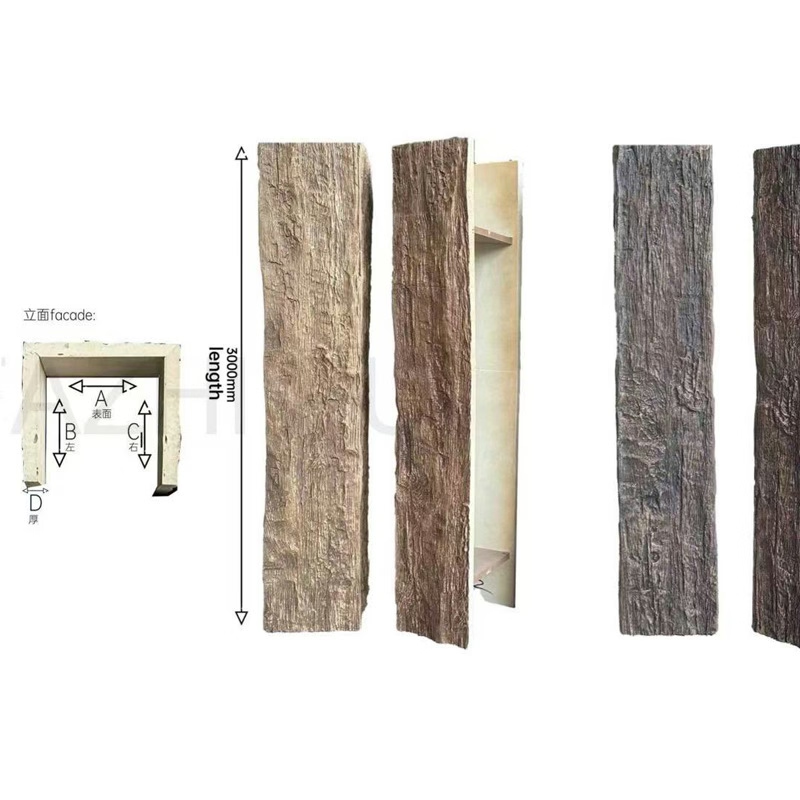
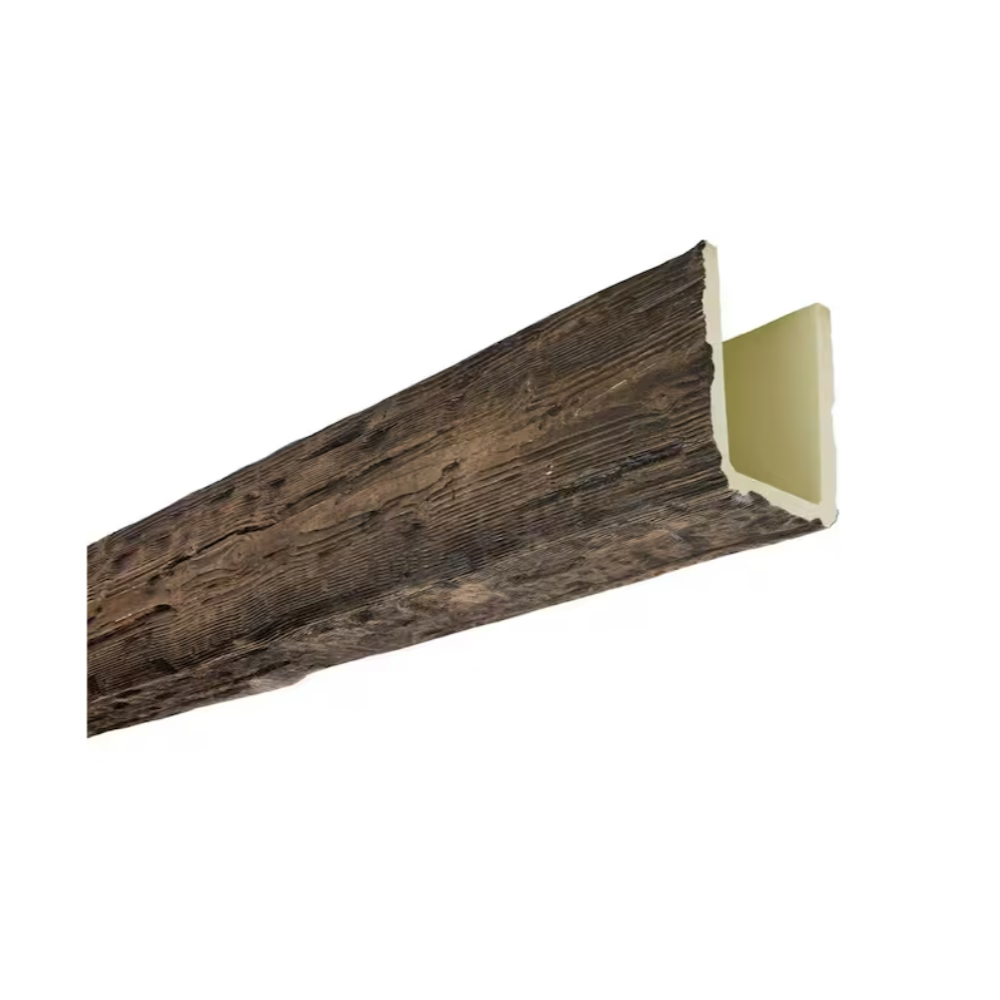
The master bedroom is the room where couples spend the most personal time, yet it is often the last room in the house to receive design attention. PU faux ceiling beams give a modern master bedroom the kind of architectural composition that designers usually reserve for public rooms, applied with the restraint that the bedroom's quiet purpose requires.
Why the master bedroom deserves the same attention as public rooms
Public rooms are designed for visitors, but the master bedroom is where the homeowners spend their most private hours. The quality of that environment affects rest, mood, and daily wellbeing. A designed ceiling, with the rhythm and warmth that beams provide, contributes to a sense of being in a finished, considered space rather than a default box.
The calming effect of overhead structure
Bare ceilings make bedrooms feel slightly unfinished. The eye keeps searching for visual detail overhead and cannot settle. Beams provide a clear answer to that search. Once the eye registers the beams, attention returns to the bed, the bedding, the bedside tables, and the small objects that make the room personal.
Architectural counterpart to the bed
The bed is the largest piece of furniture in the room. A beamed ceiling above the bed creates an architectural counterpart to the bed's mass. The composition feels intentional, with two strong horizontal elements framing the room's center.
Profile and proportion for the modern master bedroom
Modern master bedrooms call for clean profiles that suit contemporary materials and finishes. The right profile depends on the ceiling height, the room's dimensions, and the desired visual weight.
Slim profiles for low ceilings
In modern apartments and smaller master bedrooms, ceilings are often 8 to 9 feet. Slim profiles in the 4-by-6 to 6-by-8 inch range provide architectural detail without compressing the space. The beams read as deliberate but not heavy.
Standard profiles for typical ceilings
In most modern master bedrooms with 9 to 10 foot ceilings, profiles in the 6-by-8 to 8-by-10 inch range work well. The proportions are balanced, and the beams feel appropriate to the room's scale.
Larger profiles for vaulted ceilings
In modern master bedrooms with vaulted ceilings or double-height volumes, larger profiles in the 8-by-10 to 10-by-12 inch range are appropriate. The beams hold their own against the volume overhead.
Beveled or inset details for refinement
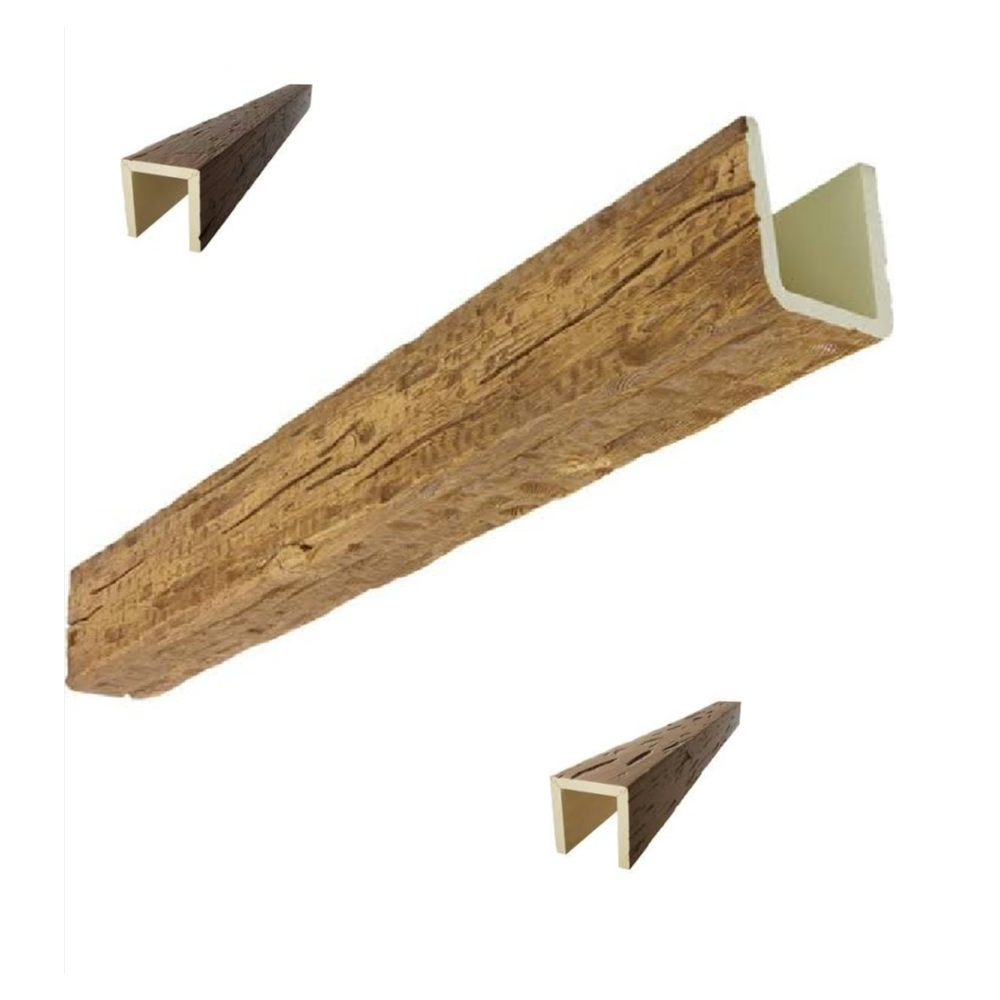
Modern interiors often benefit from a slightly refined profile, with a small bevel along the lower edge or an inset detail on the face. These subtle touches add craftsmanship to the beams without introducing traditional ornament.
Color and finish choices
The finish should support the modern master bedroom's design language. The wrong finish can introduce a tone that conflicts with the rest of the room.
Warm walnut
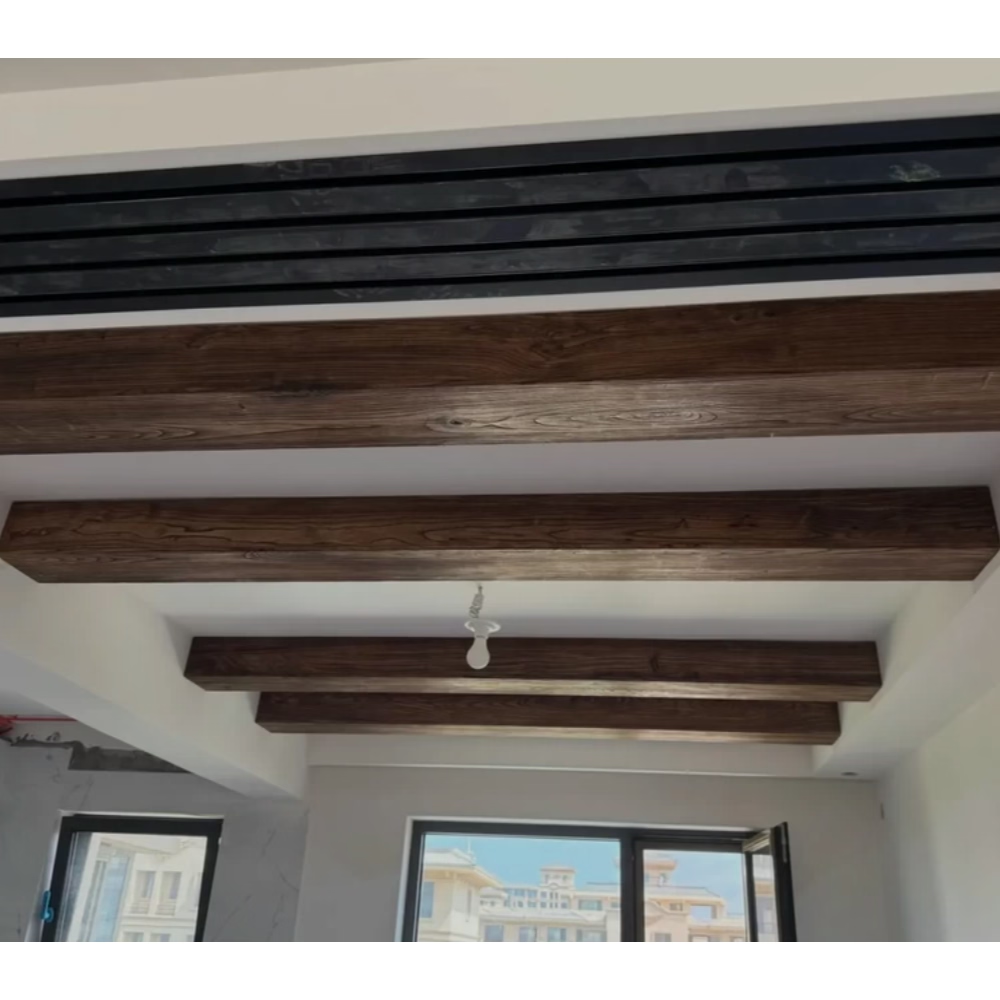
Warm walnut is the most popular finish for modern master bedrooms. It works with white walls, pale floors, and natural textiles. The warmth prevents the room from feeling cold, which is a common concern in modern interiors.
Pale oak
Pale oak or limed finishes suit very minimalist and Scandinavian modern bedrooms. The room stays light and bright, with the beams providing overhead structure without adding visual weight.
Charcoal
Charcoal or very dark stained beams suit modern industrial and high-contrast bedrooms. The beams become a graphic element that anchors the composition. This finish is dramatic and works best in larger rooms where the visual weight does not feel oppressive.
Two-tone and matte options
Two-tone finishes with a slightly darker top edge and a paler face, or matte finishes that suppress any glossy appearance, suit contemporary interiors with refined material palettes.
Layout patterns for the master bedroom
The right beam pattern depends on the bedroom's shape, the bed's position, and the homeowner's preferences.
Beams above the headboard
Two beams running perpendicular to the bed, positioned just above the headboard, create a strong focal point behind the bed. The beams function as an architectural headboard element. They can also host wall-mounted reading lights or small pendant fixtures.
Beams running across the room
Three or four beams running parallel across the room, perpendicular to the bed, provide a steady rhythm overhead. This pattern suits larger master bedrooms with the bed centered between the beams. The composition feels balanced and intentional.
A single statement beam
A single beam crossing the ceiling above the bed's centerline creates a more dramatic statement. This works well in modern master bedrooms with high ceilings or in rooms where the bed is positioned against a feature wall.
Beams integrated with a tray ceiling
In master bedrooms with a tray ceiling or a stepped soffit, beams can run along the perimeter of the tray or across its center. The combination of tray and beams is one of the most architectural approaches to a modern master bedroom ceiling.
Beams aligned with feature walls
Some master bedrooms include a feature wall behind the bed, with paneling, wallpaper, or a contrasting paint color. Beams can extend from this feature wall, with the wall treatment terminating where the beams begin. The composition feels integrated rather than assembled.
Coordinating with bedroom lighting
Lighting is the most functional element in a master bedroom. Beams need to work with the lighting design rather than constrain it.
Reading lights at the bedside
Reading lights at the bedside are essential. Beams overhead the bed can host pendant fixtures that drop down to the appropriate reading height. The wiring runs through the beam profile, and the pendant hangs at the bed's centerline.
Wall sconces coordinated with beams
Wall sconces are an alternative to pendant reading lights. They mount to the wall above the headboard or to the bedside tables, providing focused reading light without taking up ceiling space. Beams above the sconce locations can hide the wiring that drops to the sconces.
Recessed lighting between beams
Recessed downlights between beams provide ambient illumination across the room. They wash the bed, the bedside tables, and the other furniture with even light. Dimmers let the homeowner adjust the brightness for different activities.
Smart lighting integration
Modern master bedrooms increasingly include smart lighting that adjusts color temperature and brightness based on the time of day. Beams host the fixtures, and the smart controls can be mounted at the bedside or integrated with the home's broader smart home system.
Avoiding glare in the bed
Bedroom lighting should be gentle. Beams help by hosting indirect lighting that washes the ceiling rather than the bed. Direct downlights should be aimed away from the bed to avoid glare for people lying down.
Acoustic and thermal considerations
Master bedrooms need to be quiet and comfortable. Beams contribute to both.
Acoustic behavior
The textured underside of faux beams scatters high-frequency echoes. A beamed ceiling, soft bedding, and a wool rug combine to create a room that is acoustically comfortable for sleep. The bedroom does not become anechoic, but the overall feeling shifts from hard and reflective to soft and restful.
Thermal behavior
Polyurethane beams do not have significant insulating properties, but they do not interfere with the existing ceiling insulation either. The beams install over the existing ceiling, leaving the insulation undisturbed.
Working with ceiling fans
Many master bedrooms include ceiling fans. The fan can be mounted between two beams, centered on a beam, or installed on a beam with appropriate reinforcement. The fan's air movement should not be obstructed by the beams.
Working around the headboard and bedding
The bed is the focal point of the master bedroom. The beam layout should support the bed, not compete with it.
Beams at the same height as the headboard
Beams that align horizontally with the top of the headboard create a unified composition. The eye reads the headboard and the beams as a single architectural element.
Beams that frame the bed from above
Beams that frame the bed from above, with the bed centered between them, create a sense of the bed being sheltered. This is a comforting visual gesture in a room designed for rest.
Beams that pass overhead the bed without touching it
Some homeowners prefer beams that pass overhead without specific reference to the bed. The beams are part of the overall room composition, not specifically tied to the bed. This is a more restrained approach that works in very minimalist bedrooms.
Coordinating with adjacent spaces
The master bedroom usually connects to a bathroom, a closet, or both. The beam finish should coordinate with these adjacent spaces.
Matching the bathroom
A master bathroom that includes a beamed ceiling creates a unified composition when the beam finish matches the bedroom. The two rooms read as part of the same suite.
Differentiating from the bathroom
A master bathroom with a different ceiling treatment, such as a flat ceiling with a different texture, can be visually separated from the bedroom by using a slightly different beam finish or no beams at all in the bathroom. The choice depends on the homeowner's preference for continuity or differentiation.
Working with walk-in closets
Walk-in closets often have flat ceilings with simple lighting. Beams in the bedroom can terminate at the closet entrance without continuing into the closet. The transition feels deliberate and avoids the visual clutter of beams in a small closet.
Common mistakes in master bedroom beam design
A few mistakes appear often enough to deserve specific attention.
Beams that are too large
The master bedroom is a personal space, not a public one. Beams that overwhelm the room create a sense of being in a public hall rather than a private retreat. Smaller, well-proportioned beams usually work better.
Beams in the wrong finish
A finish that conflicts with the room's palette creates visual tension. The bedroom should feel unified, and the beam finish should match the rest of the room's materials.
Beams that interfere with window light
Bedrooms often have windows that admit morning light. Beams should not block significant amounts of natural light. Beams running parallel to the window wall preserve the light better than perpendicular beams.
Beams without lighting coordination
Beams without a coordinated lighting plan become visual clutter without a function. The lighting and the beams should be designed together.

A short case study in master bedroom transformation
A young couple purchased a 1980s condo with a master bedroom that had a tray ceiling, plain walls, and a single ceiling fan. The tray ceiling felt dated, and the bedroom lacked the calm, modern atmosphere they wanted.
The renovation installed three PU faux beams running perpendicular to the bed's long axis, in a warm walnut finish, sized at 6-by-8 inches. Two of the beams were positioned just above the headboard, and the third was centered over the foot of the bed. The tray ceiling was retained, with the beams passing across it. Pendant reading lights were added, dropping from the beams above each side of the bed, and a small recessed downlight was added between each beam pair.
The bedroom now reads as a calm, contemporary retreat. The beams provide architectural structure without dominating the room, the warm walnut finish complements the natural wood accents in the furniture, and the layered lighting creates flexibility for different activities. The transformation took a weekend for the beam installation and a follow-up day for the electrical work, with the bedroom fully functional again by the end of the project.
Final thoughts on the master bedroom
A modern master bedroom with PU faux ceiling beams is a personal space that supports rest, reflects the homeowners' taste, and provides the kind of architectural detail that distinguishes a designed home from a decorated one. The investment is modest, the installation is fast, and the result lasts for decades. For homeowners who spend significant time in their bedroom, this is one of the more satisfying upgrades available.
Technical References
ASTM standards cited in every specification
Test Data
Lab results from internal testing program
Updated 2026
Reviewed against current product specs