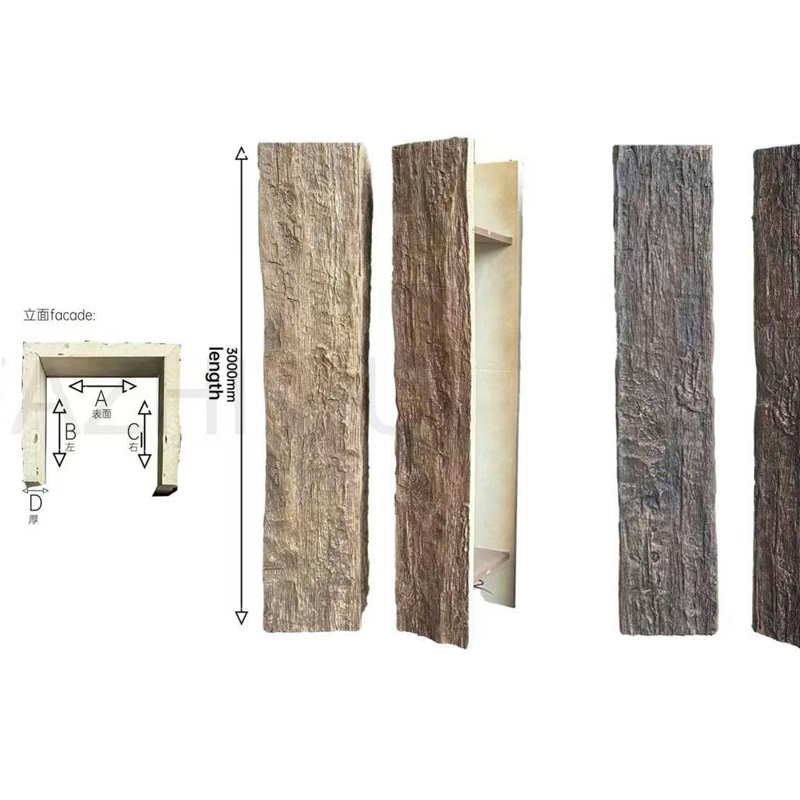
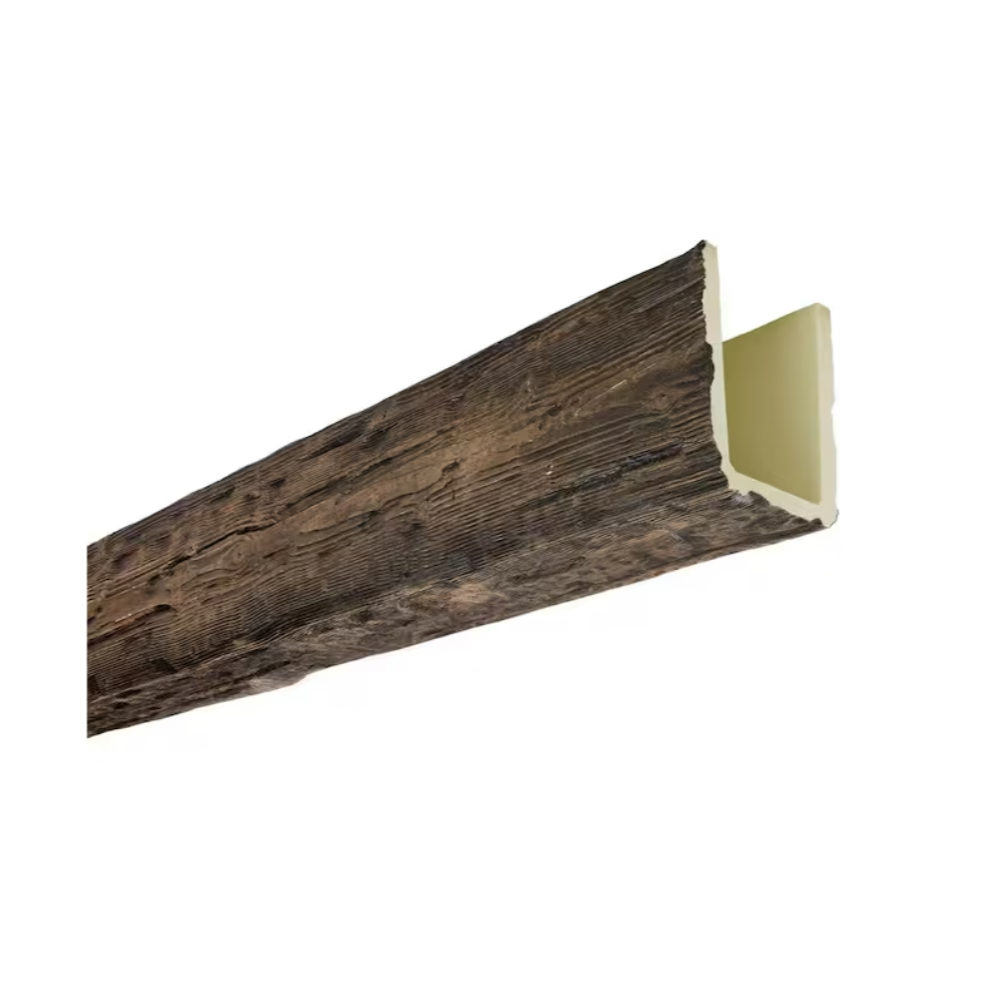
The bedroom is the one space in the home that is wholly the occupant's, which is why it deserves a ceiling that is warm, considered, and personal. PU faux wood beams deliver exactly that feeling without the complications that solid timber would introduce. The wood tone overhead turns an ordinary bedroom into a space that feels finished, restful, and quietly beautiful.
Why wood beams feel right in the bedroom
Wood has a natural warmth that few other materials can match. The grain pattern, the slight color variation, and the tactile quality of a wood surface create an immediate sense of comfort. In a bedroom, where the goal is to feel rested and safe, wood-finish beams overhead provide exactly the right kind of presence.
Psychological comfort from wood tones
Research on interior environments has consistently found that wood tones reduce stress and create a sense of calm. Bedrooms with wood elements score higher on perceived comfort than bedrooms with synthetic surfaces. The overhead presence of wood-finish beams extends this effect across the entire ceiling.
Aesthetic warmth
A bedroom with wood-finish beams overhead feels warmer than a bedroom with bare drywall. This warmth is especially valuable in modern and minimalist bedrooms where the wall and floor finishes tend toward cooler tones. The beams introduce the wood element that the rest of the room might lack.
Profile options for the bedroom
The profile choice affects the bedroom's overall character. Different profiles suit different bedroom styles.
Smooth square-edged profiles
Smooth profiles with crisp edges suit modern, transitional, and Scandinavian bedrooms. The clean lines complement contemporary furniture and uncluttered styling. Profiles in the 6-by-8 inch range work well for typical 8 to 9 foot ceilings.
Slightly distressed profiles
Distressed profiles with subtle grain texture and slight edge irregularity suit farmhouse, rustic, and craftsman bedrooms. The beams look as if they have been in place for years. Profiles in the 8-by-10 inch range add visual weight that matches the rustic aesthetic.
Heavier hand-hewn profiles
Heavy hand-hewn profiles with deep grain and irregular edges suit log cabin, lodge, and Tuscan bedrooms. The beams feel substantial and architectural. Profiles in the 10-by-12 inch range create a strong overhead presence.
Painted profiles
Painted profiles in white, cream, or soft gray suit coastal, cottage, and modern farmhouse bedrooms. The beams provide architectural detail without adding wood color. This works well in rooms where the walls and bedding carry the color palette.

Finish options that work in the bedroom
The finish is the strongest design choice in the bedroom. The right finish complements the bedding, the furniture, and the wall color.
Warm oak
Warm oak is the most popular choice for traditional and transitional bedrooms. The golden undertone pairs with most wall colors and most bedding palettes. The finish ages gracefully and feels inviting at any time of day.
Aged walnut
Aged walnut is a slightly darker option that adds drama to the bedroom. The deeper color pairs with rich wall tones, jewel-toned bedding, and traditional furniture. The finish is sophisticated without being overpowering.
Driftwood or whitewashed
Driftwood or whitewashed finishes suit coastal and modern farmhouse bedrooms. The pale, weathered appearance creates a relaxed atmosphere that suits casual bedding and bright wall colors.
Dark stained or charcoal
Dark stained or charcoal finishes create a more dramatic overhead presence. These finishes work in bedrooms with strong design statements, where the ceiling is meant to be a feature rather than a backdrop.
Two-tone finishes
Two-tone finishes with a slightly darker top edge and a paler face add depth and refinement. This option works in upscale bedrooms where the ceiling needs to feel considered without being loud.
Layout patterns for the bedroom
The right layout depends on the bedroom's shape, the bed's position, and the homeowner's preferences.
Beams above the bed
Two beams running perpendicular to the bed, positioned just above the headboard, create a strong architectural focus behind the bed. This is the most popular bedroom layout because it ties the bed to the ceiling and creates a clear focal point.
Beams across the room
Three or four beams running parallel across the room, perpendicular to the bed, create a steady rhythm overhead. This layout works in larger bedrooms and creates a sense of architectural scale.
A single beam
A single beam crossing the ceiling above the bed's centerline creates a more minimal but striking statement. This works in modern and minimalist bedrooms where less is more.
A perimeter band
A perimeter band around the edge of the ceiling creates a framed look without intruding into the central sightline. This works in bedrooms with high ceilings where the central area should remain visually open.
Coffered ceiling
A coffered ceiling with a grid of beams creates the most formal and elaborate overhead treatment. This works in larger master bedrooms where the scale justifies the complexity.

Coordinating with bedroom lighting
Bedroom lighting is critical. The beams need to support a lighting design that provides both general illumination and task lighting at the bedside.
Pendant reading lights
Pendant reading lights hung from the beams above each bedside are practical and beautiful. The wiring runs through the beam profile, and the pendants hang at the appropriate height for reading. This is one of the most popular bedroom lighting setups.
Wall sconces
Wall sconces above the headboard or beside the bed provide focused reading light without taking up ceiling space. Beams above the sconce locations can hide the wiring that drops to the sconces.
Recessed downlights
Recessed downlights between the beams provide general illumination. The lights should be dimmable so the homeowner can adjust the brightness for different activities.
Indirect coffer lighting
In a coffered bedroom ceiling, indirect lighting inside the coffers creates a soft glow. LED strips hidden inside the coffer rims wash the ceiling with light, providing general illumination without glare.
Working with the bed and headboard
The bed and headboard are the bedroom's most important elements. The beam layout should support them.
Aligning with the headboard height
Beams that align horizontally with the top of the headboard create a unified composition. The headboard and the beams read as part of the same architectural vocabulary.
Framing the headboard wall
Beams that frame the headboard wall from above create a deliberate architectural gesture. The headboard wall becomes a feature, with the beams emphasizing its importance.
Hanging pendant lights at the right height
Pendant lights hanging from beams above the bed should be at the appropriate height for reading. The bottom of the pendant should be about 24 to 30 inches above the mattress, depending on the homeowner's preference and the fixture's size.
Coordinating with upholstered headboards
Upholstered headboards in fabric or leather pair naturally with wood-finish beams. The combination of soft fabric and warm wood creates a tactile richness that suits the bedroom's purpose.
Acoustic and comfort considerations
Bedrooms need to be acoustically comfortable for sleep. Beams contribute to this in several ways.
Scattering high-frequency sound
The textured underside of faux beams scatters high-frequency echoes, reducing the flutter effect that bare ceilings produce. The bedroom becomes slightly calmer acoustically.
Working with soft furnishings
Bedrooms typically include bedding, curtains, rugs, and upholstered furniture. These elements combine with the beamed ceiling to create a room that is acoustically comfortable for sleep.
Quiet HVAC coordination
The bedroom HVAC should be quiet. Beams do not affect HVAC noise directly, but they can host acoustic insulation in the bays between beams if additional noise reduction is needed.
Coordinating with adjacent rooms
Most bedrooms connect to bathrooms, closets, or hallways. The beam finish should coordinate with these adjacent spaces.
Matching the bathroom ceiling
A bedroom and bathroom that share a beamed ceiling feel like part of the same suite. The transition between rooms feels designed rather than abrupt.
Differentiating from the bathroom
A bedroom with beams and a bathroom with a flat ceiling can still feel connected if the beam finish matches a wood element in the bathroom, such as a vanity or a mirror frame.
Working with walk-in closets
Walk-in closets usually have flat ceilings because they are small and need maximum headroom. The bedroom beams can terminate at the closet entrance without continuing into the closet. The transition feels deliberate.
Installation in different ceiling conditions
Bedrooms have various ceiling conditions. Polyurethane beams work with most of them.
Standard drywall ceilings
Standard drywall ceilings are the easiest condition for beam installation. The beams attach to existing framing with screws and brackets. The install takes a day or two.
Plaster ceilings
Plaster ceilings are common in older homes. The beams attach to the underlying framing, with care taken to avoid crumbling the plaster at the mounting points. The install takes slightly longer than on drywall.
Concrete ceilings
Concrete ceilings are common in apartments and modern homes. The beams attach with concrete anchors. The install takes longer because each anchor requires drilling, but the result is just as clean as on a framed ceiling.
Vaulted or angled ceilings
Vaulted or angled ceilings are a special case. The beams can run parallel to the slope, run perpendicular to the slope, or follow a stepped pattern. Each approach creates a different composition, and the homeowner can choose based on the room's character.
A short case study in bedroom transformation
A young family moved into a 1990s colonial home with a master bedroom that had a tray ceiling, plain walls, and a builder-grade ceiling fan. The tray ceiling felt like an unfinished feature, and the bedroom lacked the warmth and intimacy the homeowners wanted.
The renovation installed three PU faux wood beams in warm oak finish, sized at 6-by-8 inches, running perpendicular to the bed. Two of the beams were positioned just above the headboard, and the third was centered over the foot of the bed. Pendant reading lights hung from the beams above each bedside. A small recessed downlight was added between the beam pairs.
The bedroom now reads as a warm, finished retreat. The wood beams tie together the natural wood accents in the furniture and the warm wall color. The pendant lights provide comfortable task lighting for reading. The tray ceiling remains a feature, with the beams adding a complementary layer of structure. The transformation took a weekend for the beam installation and a follow-up day for the electrical work.

Common mistakes to avoid in bedroom beam design
A few mistakes appear often enough in bedroom beam installations to deserve specific attention.
Beams that are too large for the room
Oversized beams dominate the bedroom and create a sense of compression. The right beam size matches the ceiling height and the room's dimensions.
Beams in the wrong finish
A finish that conflicts with the wall color or the bedding creates visual tension. The bedroom should feel unified, and the beam finish should match the room's overall palette.
Beams that interfere with window light
Bedrooms need natural light. Beams should not block windows or significantly reduce the amount of daylight that enters the room. Beams running parallel to the window wall preserve more light than perpendicular beams.
Beams without coordinated lighting
Beams installed without a coordinated lighting plan become visual clutter. The lighting and the beams should be designed together, with the beams hosting the fixtures and the fixtures complementing the room's purpose.
Long-term satisfaction with beamed bedrooms
A bedroom with PU faux wood beams delivers long-term satisfaction disproportionate to its cost. The bedroom becomes a personal retreat that the occupants use every day. The overhead presence of wood-finish beams quietly supports that daily experience.
The investment is modest, the installation is fast, and the result lasts for decades with minimal maintenance. For homeowners who want a bedroom that feels truly finished, beams are one of the most effective upgrades available. The wood tone overhead turns an ordinary bedroom into a space that feels warm, inviting, and personally designed.
Technical References
ASTM standards cited in every specification
Test Data
Lab results from internal testing program
Updated 2026
Reviewed against current product specs