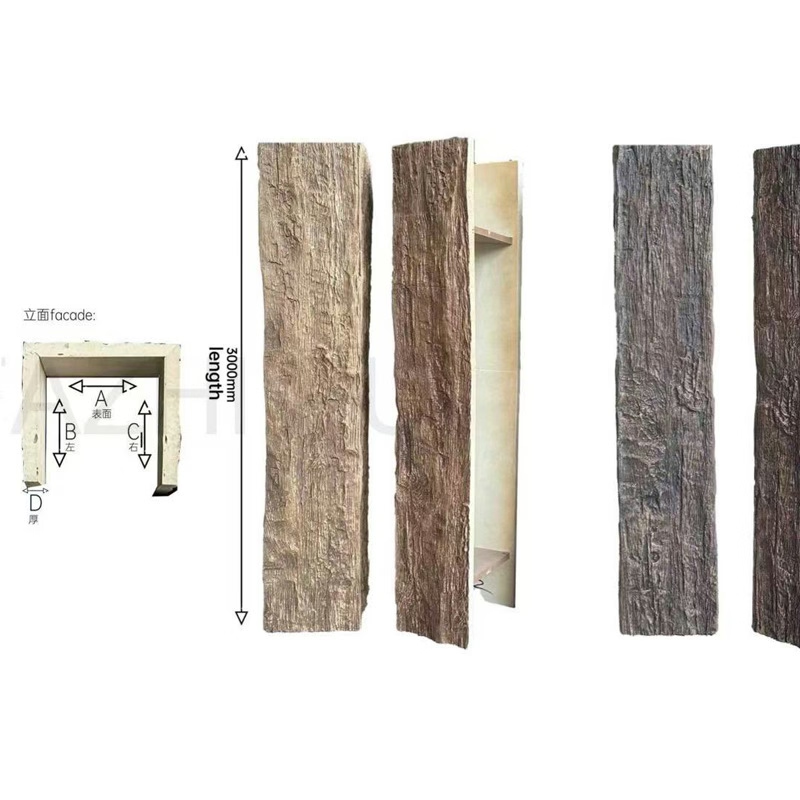
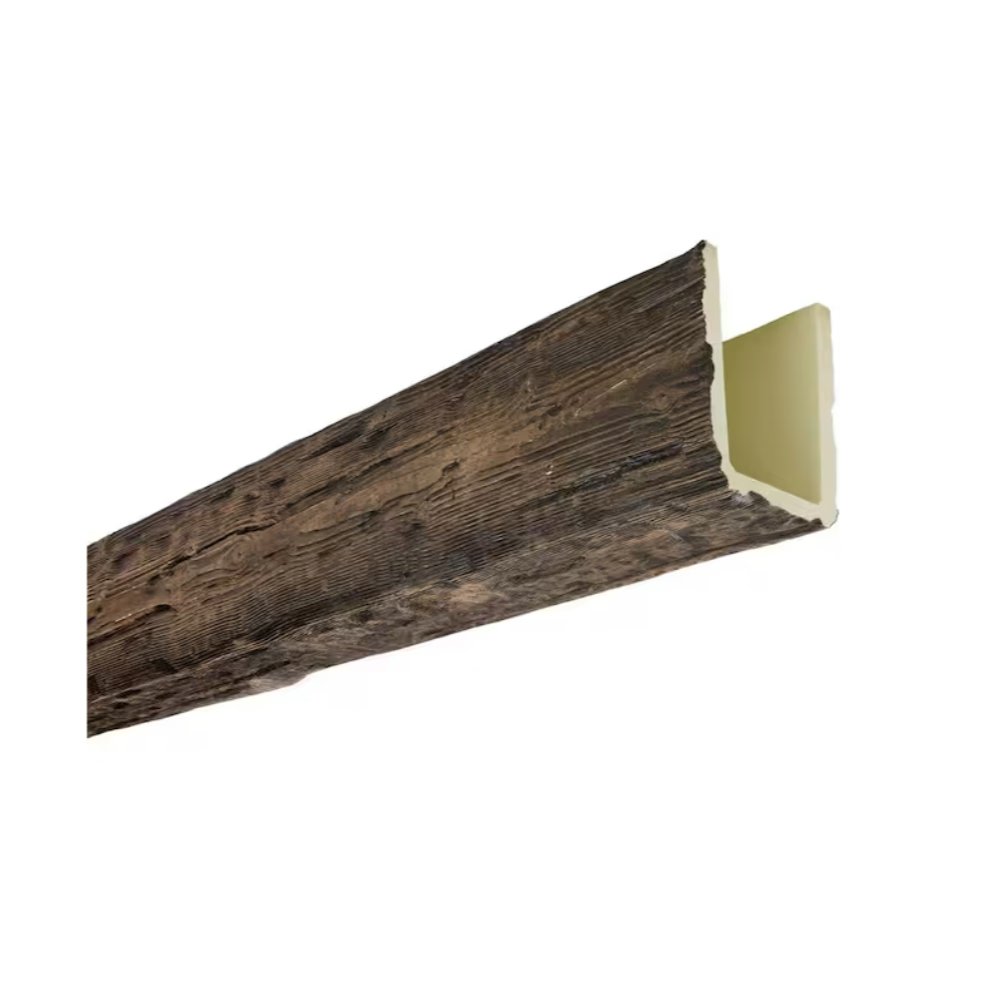
Modern dining rooms depend on a few strong design moves rather than many small details. The table, the chairs, the pendant, and the ceiling are the elements that do most of the work. A ceiling upgrade with PU faux wood beams is the move that ties everything else together and gives the room the kind of architectural statement that defines modern dining spaces.
Why the ceiling upgrade matters most in modern dining rooms
Modern dining rooms are usually restrained. The table is often a single piece of stone, glass, or refined wood. The chairs are usually slim and architectural. The pendant is a deliberate sculptural choice. None of these elements can carry the room alone. The ceiling has to do its share of the design work, and a flat ceiling cannot.
Beams as the missing fifth wall
Designers often talk about the ceiling as the fifth wall. In a modern dining room, this fifth wall is more visible than in almost any other room. The eye travels up from the table, past the pendant, and into the ceiling surface. That surface needs to be intentional.
Defining the dining zone in open plan
Modern homes are typically open plan. The dining area shares a volume with the kitchen, the living room, and sometimes the entry. Beams overhead the table create a clear ceiling boundary for the dining area. The zone becomes defined without requiring walls.
Profile selection for modern dining rooms
The profile should match the modern dining room's overall character. Different profiles create different impressions.
Square-edged profiles
Square-edged profiles with crisp lines are the modern default. They read as architectural elements rather than decorative ones. Common sizes are 6-by-8 inches for 8 to 9 foot ceilings, and 8-by-10 inches for 9 to 10 foot ceilings.
Beveled profiles
Beveled profiles with a small chamfer along the lower edge add subtle refinement. The chamfer catches light and prevents the beam from looking like a simple box. This works well in upscale modern interiors that are not strictly minimalist.
Slim profiles
Slim profiles in the 4-by-6 or 5-by-7 inch range suit apartments and smaller dining areas. The beams provide architectural detail without overwhelming the space. This works in modern interiors where the ceiling is lower or the room is more compact.
Inset details
Inset details along the side faces add depth without visual weight. This is a sophisticated option for upscale modern dining rooms. The inset can host a thin LED strip for indirect lighting, which is a popular feature in contemporary interiors.
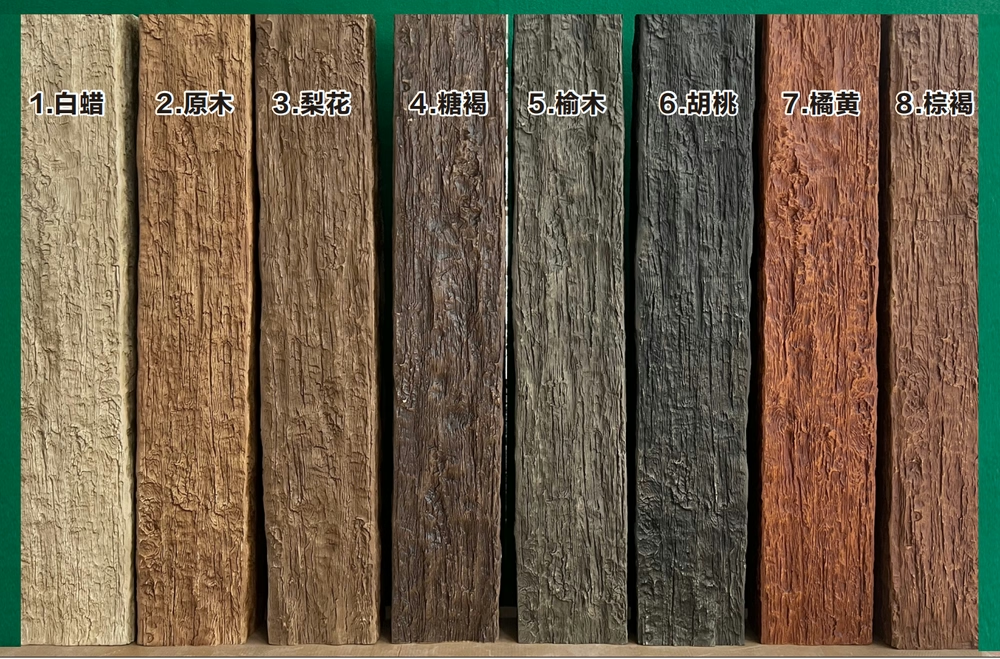
Finish selection
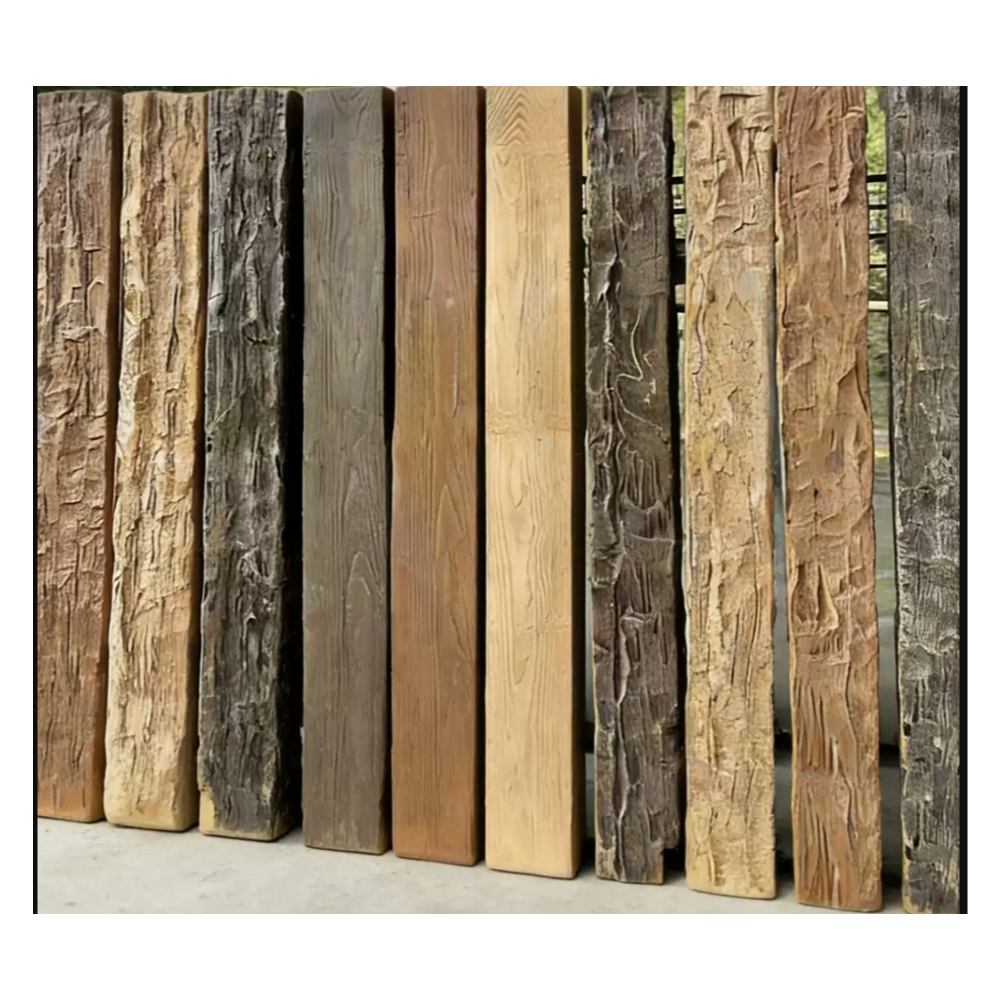
The finish is the strongest design signal in the room. The right finish matches the modern dining room's material palette.
Warm walnut
Warm walnut is the most popular choice for modern dining rooms. It works with white walls, pale floors, and natural wood furniture. The warm undertone prevents the room from feeling cold, which is a common concern in modern interiors.
Pale oak
Pale oak or limed finishes suit very minimalist and Scandinavian modern interiors. The room stays light and bright, with the beams providing overhead structure without adding visual weight.
Charcoal or black
Charcoal or very dark stained beams work in modern industrial and high-contrast interiors. The beams become a graphic element that anchors the composition. This finish is dramatic and works best in larger rooms where the visual weight does not feel oppressive.
Driftwood or whitewashed
Driftwood or whitewashed finishes suit coastal and modern farmhouse interiors. The beams provide warmth without heavy color, and they pair well with casual modern furniture.
Two-tone finishes
Two-tone finishes with a slightly darker top edge and a paler face add depth and sophistication. The transition can be soft and gradual or sharp and architectural. This works well in upscale modern interiors.
Layout patterns for modern dining rooms
The layout depends on the room's shape, the table's position, and the design intent.
Two parallel beams
Two parallel beams running perpendicular to the table's long axis is the most popular modern layout. The beams run on either side of the pendant, with the pendant centered between them. The composition is balanced and architectural.
Three parallel beams
Three parallel beams create a stronger rhythm and work in longer dining rooms or rooms with larger tables. The beams can host multiple pendant fixtures or recessed downlights between them.
A single statement beam
A single beam crossing the ceiling above the table's centerline creates a more dramatic statement. This works in rooms with high ceilings where the beam's presence is appropriate. The pendant hangs from the beam's center.
A perimeter band
A perimeter band around the edge of the dining room ceiling frames the room and brings down the visual height. The center of the ceiling remains clear for a statement pendant or a sculptural element.
Coffered ceiling
A coffered ceiling with a grid of beams creates the most formal modern dining ceiling. Each coffer can host a small fixture or remain empty for a clean, architectural look. This works in larger dining rooms where the scale justifies the complexity.
Coordinating with the pendant light
The pendant light is the modern dining room's signature element. The beams need to work with it.
Linear pendants between parallel beams
A linear pendant between two parallel beams is the modern dining room classic. The pendant runs parallel to the beams, centered between them. The composition is balanced, and the beams hide the wiring that drops to the pendant.
Drum pendants or globes on a single beam
A drum pendant or a single globe can hang from a single beam above the table. The beam becomes the anchor for the fixture, and the composition feels deliberate. This works in dining rooms with higher ceilings where the beam's presence is appropriate.
Cluster pendants in a coffered ceiling
A cluster of pendants or a single sculptural pendant in the center of a coffered ceiling is a sophisticated modern statement. Each pendant can be at a different height for visual interest, or all at the same height for a more uniform composition.
Recessed downlights for minimalist dining rooms
For minimalist modern dining rooms where a pendant feels too decorative, recessed downlights between beams provide even illumination. The beams create the rhythm, and the downlights provide the light. This is a clean, restrained approach that works well in apartments and smaller dining areas.
Material palette coordination
Modern dining rooms have a tight material palette. The beams should fit within this palette.
Wood as a unifying element
If the dining table is in walnut and the sideboard is in oak, the beams can tie these together in one finish. The room reads as material-coherent. This is a simple and effective way to make a modern room feel composed.
Mixing materials
If the dining table is glass or stone, the beams become the warm element that prevents the room from feeling cold. The contrast between a stone table and wood beams is one of the strongest material conversations in modern interior design.
Working with metal accents
Modern dining rooms often include metal accents in the chairs, the light fixtures, or the table base. The beam finish should complement these metal accents. Brass pairs with warm walnut and oak. Chrome and brushed nickel pair with pale oak or charcoal beams.
Coordinating with textiles
Dining room textiles include curtains, rugs, and chair upholstery. The beam finish should support the textile palette. Warm wood tones support most textiles, while very dark beams work best with lighter textiles and vice versa.
Installation considerations
A modern dining room ceiling upgrade usually happens in an occupied home. The installation should be efficient and minimally disruptive.
Timing the upgrade
The upgrade is often scheduled during a larger renovation, but it can also happen as a standalone project. Standalone projects usually take a weekend for the beam installation and a follow-up day for touch-up paint and cleanup.
Protecting the dining table
If the dining table cannot be moved, the installation team works around it with drop cloths and careful staging. Most polyurethane beam installations produce relatively little dust, but protection is always advisable.
Coordinating with electrical work
If the upgrade includes new wiring for pendants or recessed lights, the electrical work happens before the beam installation. This sequencing protects the finished beams from damage during the electrical work.
Quick turnarounds
Modern homeowners often want to minimize the disruption to their daily lives. Polyurethane beams install quickly enough that a typical dining room ceiling upgrade can be completed in a weekend, with the room fully functional again by the end of the project.

Working in open-plan layouts
Open-plan modern dining rooms require special consideration. The beam upgrade should integrate with the surrounding spaces.
Extending beams into the kitchen
A beam can run from the dining zone into the kitchen soffit, visually connecting the two spaces. The beam disappears into the kitchen ceiling at a logical transition point, such as where the kitchen has a dropped soffit or a different ceiling treatment.
Coordinating with the living area ceiling
The living area often has a different ceiling treatment. The dining room beams can either match the living area treatment or contrast with it. Matching creates continuity. Contrasting creates clearer separation.
Defining zones with floor and ceiling together
A combination of ceiling structure and floor material creates the strongest zone definition in an open plan. A rug under the dining table plus beams overhead the table creates a clearly defined dining zone without walls.
Common mistakes to avoid
A few mistakes appear often enough in modern dining room ceiling upgrades to deserve specific attention.
Beams that are too small for the ceiling
Modern dining rooms often have higher ceilings than expected, especially in apartments with double-height volumes. A 6-by-8 inch beam in a 12-foot ceiling looks timid. The proportions should match the volume.
Beams that are too dark for the room
A dark beam in a small white dining room overwhelms the space. The beam should match or slightly contrast the room's dominant tone.
Beams placed without reference to the table
Beams should relate to the table's position. Beams that float unrelated to anything below them feel arbitrary.
Beams installed without lighting coordination
Beams installed without a coordinated lighting plan become visual clutter. The lighting and the beams should be designed together.
Long-term value of the upgrade
A modern dining room ceiling upgrade adds value in several ways. The first is the daily experience. The homeowners use the dining room for meals, gatherings, and quiet moments. The beamed ceiling makes every one of those moments feel a little more composed. The second is the resale value. A finished ceiling reads as upgraded to a buyer. The third is the flexibility. Beams can be repainted, refinished, or removed without major disruption.
The upgrade is one of the highest-return investments a modern homeowner can make. The cost is a fraction of a full room remodel, and the result transforms the room in a way that no other single upgrade can match.
A short case study
A young professional couple lived in a modern apartment with an open-plan living and dining area. The dining table was a custom walnut piece, the chairs were mid-century inspired, and the pendant was a single oversized globe. The dining area was defined only by a rug under the table, and the rest of the room flowed continuously from the kitchen to the living area.
The upgrade added two parallel PU faux wood beams, 6-by-8 inches in a warm walnut finish, running perpendicular to the table's long axis. The pendant was repositioned to hang centered between the beams. A new dimmer was added for the pendant circuit. The existing recessed downlights were retained but supplemented with two new recessed fixtures between the beam pair.
The dining area is now clearly defined. The beams overhead create a deliberate architectural zone, the pendant is anchored by the beams above, and the warm walnut finish ties the ceiling to the dining table. The room reads as a designed composition rather than as a layout, and the upgrade took a single weekend to complete.
Final thoughts on the dining room upgrade
PU faux wood beams give a modern dining room the kind of architectural statement that defines the space, supports the lighting design, and ties the room's elements together. The installation is fast, the cost is moderate, and the result lasts for decades. For modern dining rooms that need an upgrade with significant visual impact, beams are the most effective choice.
Technical References
ASTM standards cited in every specification
Test Data
Lab results from internal testing program
Updated 2026
Reviewed against current product specs